
TL;DR
A Cycling Weekly retrospective traces Specialized’s Tarmac from its 2003 aluminium debut through nine carbon SL versions to the SL9. The report links key design changes to rider feedback and racing demands, while Specialized’s claim that the latest model is its fastest road bike remains a company claim.
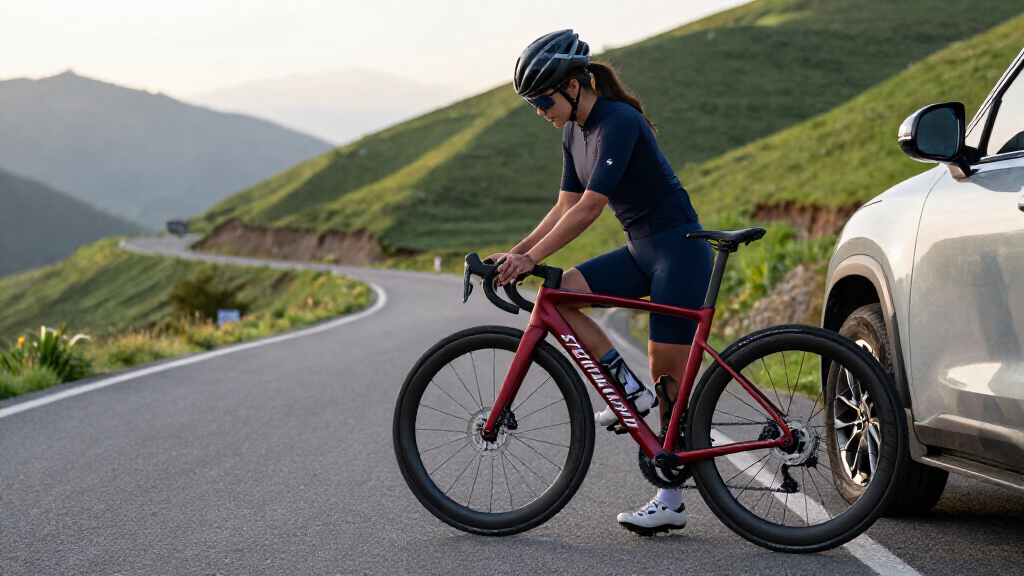
Cycling Weekly has published a retrospective on the Specialized Tarmac, charting the road bike’s development from its 2003 debut to the latest SL9 model. The report connects changes in the bike’s design to professional riders’ feedback and racing conditions, and records a run of high-profile victories that helped establish the Tarmac in road cycling.

Get business pricing on garage and car supplies
- Business-only prices and quantity discounts
- Tax-exempt purchasing
- Multiple users, one account, clear invoices
The report recounts how sprinter Tom Boonen challenged Specialized’s assumptions about the Tarmac SL in 2006. Although the company had tested stiffness and weight, Boonen told its staff the bike flexed too much when he was seated and accelerating for a sprint. Specialized responded by developing a new test and rear-end design for the SL2. Ben Capron, the company’s leader of brand voice, recalled that Boonen later called it the best bike he had ridden; Capron said Boonen had a successful season.
The Tarmac began with an E5 aluminium model in 2003, followed by nine carbon SL versions, according to the report. Specialized’s own history describes the SL2 as its first Tarmac that was both comfortable to ride and suited to racing. The story also traces the company’s move into professional road cycling: it sponsored Festina in 2000, and the team’s Marcel Wüst won a Tour de France stage that July on an M4 aluminium bike.
Later Tarmac models featured in major race wins. Alberto Contador won the 2010 Tour de France on an SL3, but was subsequently stripped of the title. Vincenzo Nibali won the Tour in 2014 on a Tarmac, and Peter Sagan used the bike for three consecutive road world championships from 2015 to 2017. The report says the latest model, the SL9, was inspired in part by Demi Vollering’s four-second loss in the 2024 Tour de France Femmes; she later rode it to a world championship victory in Montreal.
How Rider Feedback Shaped the Tarmac
The report’s account shows how race-day experience influenced design beyond standard measures such as weight and stiffness. Boonen’s complaint led Specialized to develop a new test and alter the rear of the bike; for the SL9, the company examined how riders’ bottle setup during breakaways affected aerodynamics. Those examples matter to readers because they explain the specific performance problems the manufacturer says it sought to solve.
The Tarmac’s record also helps explain its importance to Specialized’s road-bike business. Results across the Tour de France and world championships gave the model visibility at the sport’s highest level, while the report describes it as a choice for riders beyond the professional peloton. These race results establish the bike’s history, but do not by themselves prove that one model is best for every rider or that its claimed speed advantage applies in all conditions.
Products Worth Considering

DEWALT 20V MAX Brushless 3-Tool Combo Kit with Drill, Impact Driver, Oscillating Multi-Tool, 3 Batteries and Charger (DCK360D3)

DEWALT 20V MAX XR Brushless Hammer Drill and Impact Driver Combo Kit with Two 4 Ah Batteries and 4 A Charger

DEWALT 20V MAX Cordless Impact Wrench Kit (DCF900P1)
As an affiliate, we earn on qualifying purchases.
From Road-Bike Doubts to the Peloton
Specialized’s commitment to road bikes was not assured. Capron told Cycling Weekly that in the mid-to-late 1990s, road cycling represented a single-digit share of the company’s business. He recalled a meeting where staff considered leaving the road-bike market, until a teammate argued they should commit and aim to win the Tour de France. The episode gives context to the company’s later push to establish itself among road racers.
In 2000, Specialized began sponsoring Festina, at a time when other teams were reluctant to work with a brand known for mountain bikes, Capron said. The report notes the team was still associated with a doping scandal from 18 months earlier. Specialized’s riders initially raced on M4 aluminium bikes; the first Tarmac models arrived in 2003. Sponsorship of Quick-Step–Innergetic began at the end of 2005, shortly before Boonen’s feedback helped prompt the SL2 development.
““I don’t care about that.””
— Ben Capron, Specialized’s leader of brand voice, recalling Tom Boonen’s feedback
What the Speed Claim Establishes
The report presents Specialized’s description of the SL9 as its fastest road bike ever made, but does not provide independent testing, data or a detailed comparison with other models. It also does not specify the conditions under which any speed advantage was measured. The aerodynamic changes described by the company relate to a racing situation in which riders may use one bottle rather than two; the report does not quantify the effect.
Other details are also limited. The source does not provide the SL9’s full technical specifications, price, availability by market or a direct comparison with earlier Tarmac versions. Feather’s comments are a personal riding assessment, not a controlled test. The retrospective describes the SL9 as released “this summer,” but does not supply a publication date in the material provided, so that timing cannot be pinned to a specific calendar year here.
The SL9’s Performance in Use
The report identifies the next practical test as how the SL9 performs across different riding conditions and setups, particularly when riders carry one bottle rather than two. It does not announce a future Tarmac release, a scheduled product event or a new technical milestone. Readers looking for a purchase decision would need the manufacturer’s full specifications and pricing, along with independent testing that compares the bike under stated conditions.
The race history will continue to develop as riders use the SL9 and later Tarmac models in competition. For now, the confirmed account is that the SL9 has already been ridden to a world title in Montreal, while the broader claim about its speed remains Specialized’s own assessment.
Key Questions
When did the Specialized Tarmac first appear?
The report says the first Tarmac appeared in 2003 and was made from E5 aluminium. It counts nine later SL models.
Why did Specialized change the Tarmac for Tom Boonen?
Boonen said the Tarmac SL flexed too much when he was seated and accelerating for a sprint. Specialized developed a new test and rear-end design for the SL2 in response, according to the report.
What is the SL9, and what changed in its design?
The SL9 is the latest Tarmac model covered in the report. Specialized adjusted its front end for aerodynamics and examined how the frame shape could work when riders use one bottle during breakaway efforts.
Has the SL9 been proven to be the fastest road bike?
Specialized calls it “the fastest road bike ever made,” but the report supplies no independent test results or comparison data to verify that claim.
Source: cyclingweekly.com