
TL;DR
Thailand’s Board of Investment has approved Toyota’s 1.49 billion baht investment, reported as about €39 million, to establish Hilux fuel-cell production at its Ban Pho factory. Production is expected to start in December 2027, initially for export markets; Toyota has not announced local sales plans.
Thailand’s Board of Investment has approved Toyota’s planned investment of 1.49 billion baht, reported as about €39 million, to produce the hydrogen fuel-cell Hilux at the company’s Ban Pho plant. The project would make the pickup the first hydrogen fuel-cell vehicle manufactured in Thailand, according to the investment board, with production expected to start in December 2027.

Get business pricing on garage and car supplies
- Business-only prices and quantity discounts
- Tax-exempt purchasing
- Multiple users, one account, clear invoices
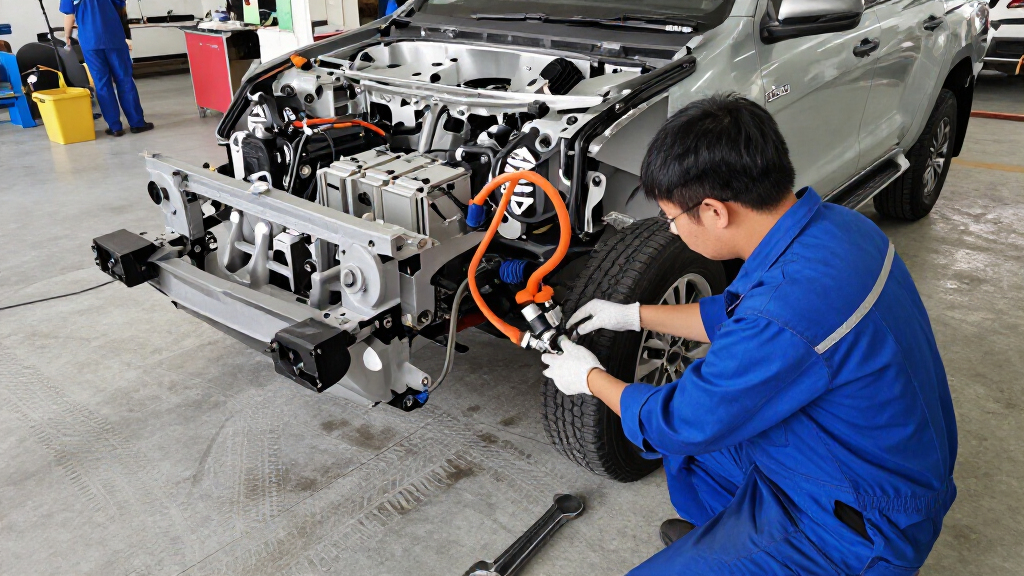
Toyota plans to install a new production line at its factory in Ban Pho, Chachoengsao Province. The plant already builds internal-combustion, mild-hybrid and battery-electric versions of the ninth-generation Hilux. The fuel-cell project also includes an on-site hydrogen refuelling station to support production and vehicle testing, according to the report by Electrive.
The first vehicles are intended for export rather than Thailand’s domestic market. European countries, Australia and New Zealand are identified as priority markets in a recent BoI announcement, Electrive reported. Toyota plans to make about 3,000 units a year, a stated production target that points to a limited-volume model rather than mass production.
Toyota has said it is targeting a driving range of more than 400 kilometres and towing capacity of up to 2.5 tonnes. Those are company targets, not independently confirmed production specifications. The company plans to launch the model in 2028, while the factory’s expected production start is December 2027.
A New Export Line for Hydrogen Hilux
The approval links Thailand’s established vehicle-manufacturing base with Toyota’s plan to develop a fuel-cell version of a high-profile pickup. If production proceeds on schedule, the country will add hydrogen fuel-cell vehicle manufacturing to its automotive output, while Toyota gains a production base for exports to markets it has identified as priorities.
The planned annual volume of 3,000 vehicles is modest compared with high-volume passenger-car production. That scale means the project is not, by itself, evidence of a broad shift to hydrogen vehicles. It does, however, give Toyota a route to test whether buyers in export markets want a fuel-cell pickup, including for uses where range and towing capability matter.
The refuelling station at the plant is intended to support production and testing. The report does not describe a wider public hydrogen network, so the approval should not be read as confirmation that refuelling will be readily available to customers in Thailand or export markets.
Products Worth Considering

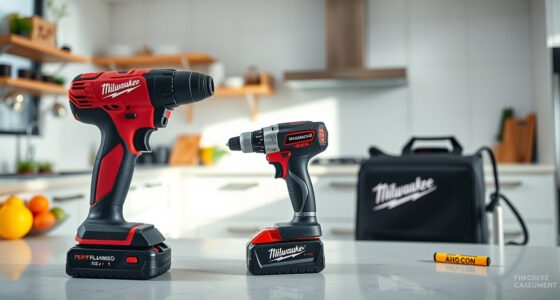
Milwaukee M12 FUEL 12V 1/4-Inch Hex Impact Driver Kit

DEWALT 20V MAX XR Brushless Hammer Drill and Impact Driver Combo Kit with Two 4 Ah Batteries and 4 A Charger

DEWALT 20V MAX Cordless Impact Wrench Kit (DCF900P1)
As an affiliate, we earn on qualifying purchases.
How the Hilux Fuel-Cell Plan Developed
Toyota has already introduced a battery-electric Hilux in Thailand, which Electrive reports was the first market worldwide to receive that variant. The planned fuel-cell model is a separate electric drivetrain: it uses hydrogen to generate electricity rather than relying solely on a rechargeable battery. The two versions share the Hilux name and production setting but are not the same vehicle technology.
At IAA Transportation 2026, Toyota showed teaser images of the FCEV. The images suggested small styling differences from other ninth-generation Hilux versions, including a segmented daytime-running-light pattern and a more closed upper grille. Those images were teasers, not a full production reveal.
Toyota’s motorsport division, Gazoo Racing, is also developing a hydrogen-powered Hilux for the Dakar Rally’s Future Mission 1000 category in 2027, according to the source report. That rally vehicle is described as having two fuel-cell stacks with a combined output of 400 kW and four hydrogen tanks holding 8.4 kilograms in total. Rally testing may provide data for technology development, but the competition vehicle’s specifications should not be treated as specifications for the production Hilux FCEV.
“The Hilux FCEV will be the first hydrogen fuel-cell electric vehicle manufactured in Thailand.”
— Thailand’s Board of Investment, as reported by Electrive
Costs, Specifications and Sales Still Open
The approval confirms the investment decision, but the available report does not give a full breakdown of the 1.49 billion baht budget, the number of jobs involved or the factory’s planned production capacity beyond Toyota’s stated annual target of 3,000 vehicles. It also does not provide a detailed schedule for factory construction or equipment installation.
Final vehicle specifications, pricing and the precise mix of export destinations have not been announced in the source material. Toyota’s range and towing figures remain targets, and it is not clear whether they refer to a final production configuration or testing conditions. The report says exports are planned initially, but does not establish whether Toyota could later offer the FCEV in Thailand.
The project depends on a supply and refuelling setup for hydrogen. The source confirms a station at the plant, but gives no details on hydrogen sourcing, operating capacity or refuelling infrastructure in customer markets. It is also not clear how Toyota’s annual production plan may change as the launch approaches.
Production Milestones Through 2028
The next major milestone is the expected December 2027 production start at Ban Pho. Before then, Toyota is expected to complete work on the production line and the on-site refuelling station, although the report does not specify interim dates.
Gazoo Racing’s planned Dakar activity in 2027 could provide development data for fuel-cell technology, but it is a separate programme from the production line. Toyota’s stated plan is to launch the Hilux FCEV in 2028. Further announcements will be needed to confirm final specifications, prices, export-market availability and whether the production timetable remains on track.
Key Questions
How much did Thailand approve for Toyota’s Hilux FCEV project?
The Board of Investment approved 1.49 billion baht, reported by Electrive as about €39 million, for the planned production project.
When is Hilux FCEV production expected to start?
Toyota expects production at the Ban Pho factory to begin in December 2027. The company plans to launch the model in 2028.
Will the hydrogen Hilux be sold in Thailand?
The report says Toyota initially plans to build the Hilux FCEV for export, with Europe, Australia and New Zealand identified as priority markets. It does not confirm domestic Thai sales.
How many Hilux FCEVs does Toyota plan to make?
Toyota plans to manufacture about 3,000 units annually. The report does not state whether that target will change after launch.
What range and towing capacity is Toyota targeting?
Toyota is targeting more than 400 kilometres of range and towing capacity of up to 2.5 tonnes. These figures are targets, not confirmed final production specifications.
Source: electrive.com