
TL;DR
ZF has introduced the High Revolution Drive, an integrated EV motor, power electronics and transmission designed to spin at up to 30,000 rpm. The company claims nearly 25% less weight and volume and half the magnet material than a comparable ZF unit, with production targeted for 2030. No automaker or vehicle has been named.
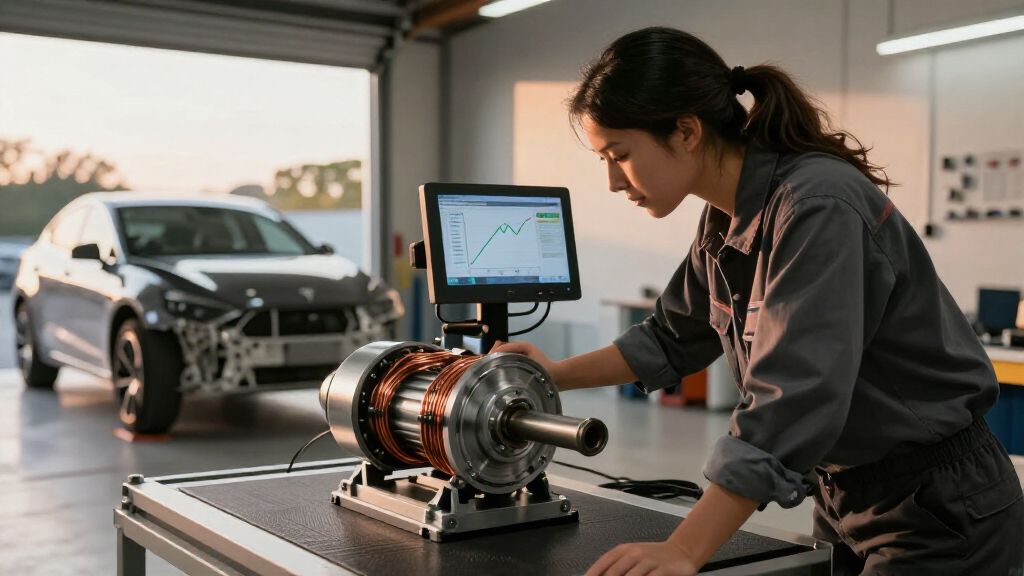
ZF has introduced a new electric-vehicle drive unit designed to spin at up to 30,000 rpm, aiming to deliver comparable power from a smaller, lighter package. The supplier says the High Revolution Drive could cut weight and volume by nearly 25% and use half the magnet material of a comparable ZF drive; production is targeted for 2030, but no vehicle customer has been identified.

Get business pricing on garage and car supplies
- Business-only prices and quantity discounts
- Tax-exempt purchasing
- Multiple users, one account, clear invoices
The High Revolution Drive combines an electric motor, power electronics and transmission in one housing. ZF says its reference point is a comparable Select drive unit that spins at up to 18,000 rpm. The company claims the new unit retains similar efficiency of almost 93% while reducing weight and volume by nearly a quarter and magnet mass by half. Those figures are company comparisons, not independent test results supplied in the announcement.
The version shown produces up to 268 horsepower. Its gearing, with a reduction ratio of about 18:1, lowers motor speed and increases torque delivered to the wheels; ZF lists peak wheel torque of 2,581 pound-feet (3,500 Nm). The stated torque is after the gearing multiplication. The description “two-stage transmission” refers to successive gear reductions, not a two-speed gearbox with separate driving ratios.
ZF says the production version is intended to cover outputs from 200 to 268 hp and work with both 400- and 800-volt vehicle platforms. It is based on the company’s modular Select architecture. ZF says that reuse could simplify installation and development and help control costs, while preserving manufacturing flexibility. It has not disclosed a price, a production volume or an automaker partner.
What Faster Motors Could Change
Higher motor speed can let a drive unit produce a given amount of power from a smaller motor, with gearing converting that speed into wheel torque. If ZF’s claimed reductions carry through to production, the smaller, lighter package could give automakers more flexibility in vehicle layout and reduce drive-unit mass. Lower mass can contribute to efficiency, though the actual effect on a car’s range depends on the full vehicle and its use.
Using less magnet material may also reduce exposure to the cost and supply of materials used in permanent-magnet motors. That does not establish how much the drive would save, or whether any savings would lower vehicle prices. For buyers, the practical value will depend on the final unit’s cost, performance, reliability and serviceability—not its peak rotational speed alone.
Products Worth Considering

Autel 50A Level 2 Hardwired EV Charger with 25 ft J1772 Cable

DEWALT 20V MAX Brushless 3-Tool Combo Kit with Drill, Impact Driver, Oscillating Multi-Tool, 3 Batteries and Charger (DCK360D3)

DEWALT 20V MAX XR 3-Speed Cordless Impact Driver Kit with Battery and Charger (DCF845P1)
As an affiliate, we earn on qualifying purchases.
ZF’s Drive Unit Baseline
ZF is a major automotive supplier, and its new unit is presented as an effort to make everyday EV hardware more compact rather than as a supercar-only motor. The comparison in the company’s announcement is with its own Select drive unit, whose stated maximum speed is 18,000 rpm. The claimed improvement should be read against that specific baseline, not as a general comparison with every EV motor.
Other high-output motor demonstrations are not directly comparable. For example, the source report describes a Yasa prototype with a short-term peak output above 1,000 horsepower and a motor weight of 28 pounds, while ZF’s weight claim covers an integrated drive unit. A motor-only figure excludes components such as gearing and power electronics, so it does not show the total installed system weight.
ZF has also presented repair kits intended to let workshops replace certain drive-unit components, including gearbox bearings, rather than swap a complete assembly. That is a separate development. The company has not said whether those kits will apply to the High Revolution Drive or whether its new unit will be designed for the same repairs.
“The company claims nearly 25% less weight and volume and half the magnet material compared with a comparable Select drive unit.”
— ZF
Customer and Production Details
No production vehicle has been named, and ZF has not announced which automakers it is speaking with or whether any discussions have led to a supply agreement. The 2030 production date is a target, not confirmation that the drive will enter production on that schedule.
It is also unclear whether the reported reductions in weight, volume and magnet material will remain the same in a production-ready unit. ZF has not published the test conditions behind its efficiency figure or explained how the claims were measured. There is no disclosed price, vehicle-level range estimate or evidence that the drive’s development will reduce costs for buyers. The separate repair kits do not establish that this new unit will be easier or cheaper to repair.
Automaker Talks and 2030 Target
ZF says it is in discussions with automakers and is targeting production in 2030. The next useful updates would identify a vehicle or customer, clarify whether the target date remains on track, and provide production specifications and test data. Until then, the High Revolution Drive is a development announcement with company-reported advantages, not a confirmed component in a consumer EV.
Readers should watch for details on vehicle applications, pricing and service arrangements. Those will show whether the compact design and reduced magnet use translate into measurable benefits beyond the engineering claims.
Key Questions
What is ZF’s High Revolution Drive?
It is an integrated EV drive unit that combines a motor, power electronics and transmission in one housing. ZF says the motor can spin at up to 30,000 rpm.
How much smaller or lighter does ZF say it is?
ZF claims nearly 25% less weight and volume and half the magnet material compared with a comparable Select drive unit. The figures are company claims, and the source material does not provide independent verification.
Does 30,000 rpm mean the car has a two-speed gearbox?
No. ZF’s “two-stage transmission” refers to successive gear reductions, not two selectable driving ratios. The gearing reduces motor speed and increases torque delivered to the wheels.
When will the drive appear in a production EV?
ZF is targeting production for 2030 and says discussions with automakers are underway. It has not named a customer or vehicle, so no specific model or launch date is confirmed.
Will the drive reduce EV prices or make repairs easier?
That is not yet known. ZF has not disclosed pricing or confirmed that savings would reach buyers. Its separately announced repair kits have not been linked to the High Revolution Drive.
Source: insideevs.com