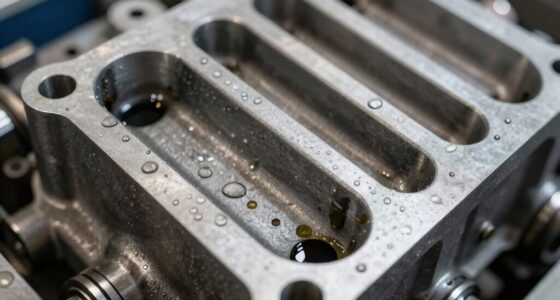

You’ll find that keeping your industrial gearbox clean is more important than just choosing a top oil brand. No matter how good your oil is, dirt, debris, or water can quickly ruin lubrication and cause damage. Proper maintenance, regular inspections, and sealing are key to preventing contamination. When your gearboxes stay clean, they perform better and last longer. Want to know how to implement these practices effectively? Keep exploring for more essential tips.
Key Takeaways
- Cleanliness prevents contamination that can degrade oil performance, regardless of oil brand quality.
- Regular maintenance and inspections ensure dirt and debris are removed, maintaining optimal gearbox function.
- Proper sealing and enclosure integrity stop dirt, dust, and water ingress, safeguarding oil quality.
- Consistent cleaning routines and adherence to standards are more crucial than choosing a premium oil brand.
- Clean gearboxes reduce wear, failures, and downtime, offering greater reliability than relying solely on oil brand.
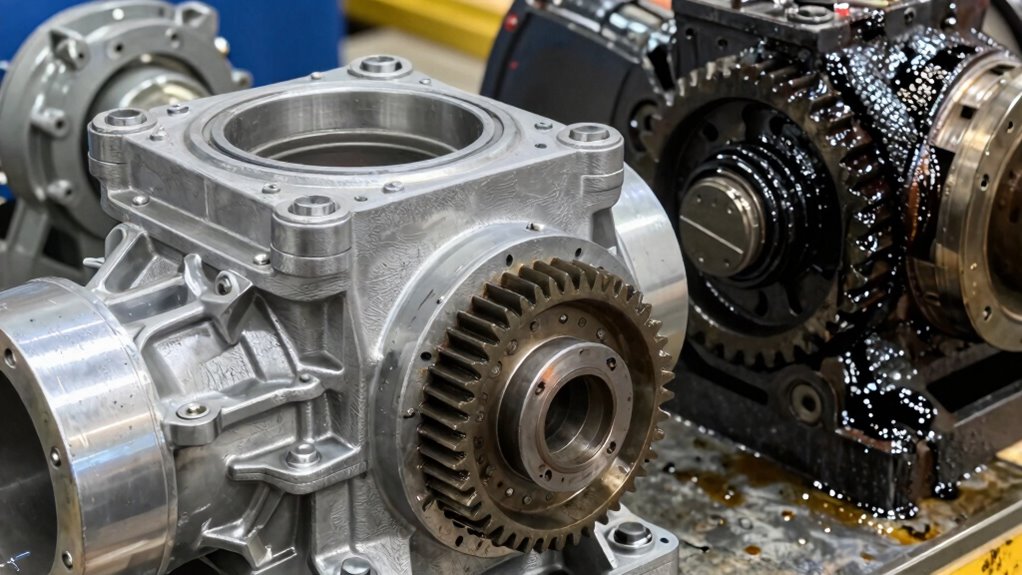
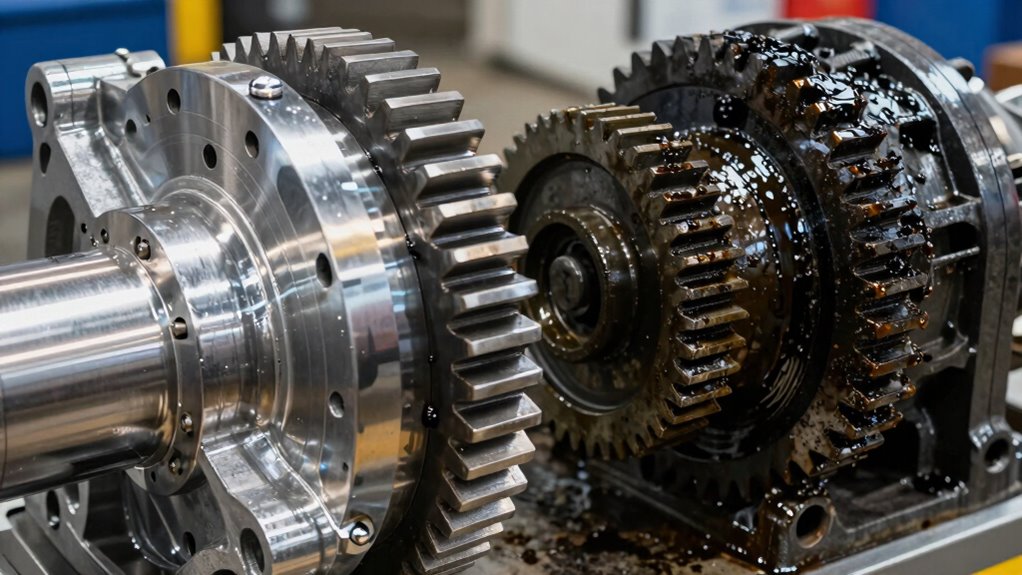
Maintaining cleanliness in industrial gearboxes is crucial for ensuring peak performance and longevity. When you prioritize a clean environment inside the gearbox, you reduce the risk of wear, corrosion, and unexpected failures. A clean gearbox operates more smoothly, and its components last longer, saving you money and downtime in the long run. One of the key factors in this process is adhering to proper lubrication standards. Good lubrication isn’t just about choosing the right oil brand; it’s about maintaining clean, uncontaminated oil that can do its job effectively. Contaminants like dirt, metal particles, and water can compromise lubrication, leading to increased friction and accelerated component wear. When you follow lubrication standards, you ensure that the oil remains clean and effective, which directly impacts the gearbox’s lifespan and performance.
Clean gearboxes last longer—prioritize proper lubrication standards to prevent contamination and ensure peak performance.
To keep your gearboxes clean, you need to stick to well-planned maintenance schedules. Regular inspections and timely oil changes are crucial. These schedules help catch dirt and debris before they cause significant damage. During maintenance, you should check for contamination, replace filters, and clean components as necessary. This proactive approach prevents the buildup of harmful particles that can compromise the entire system. Proper maintenance schedules also include monitoring oil levels and quality, ensuring that the lubrication remains ideal. When you maintain a disciplined schedule, you minimize the chances of dirt ingress and oil degradation, both of which threaten the health of your gearbox. Contamination control is vital to maintaining a clean environment inside the gearbox.
Focusing on cleanliness also means paying attention to sealing and enclosure integrity. Damaged seals or openings allow dirt, dust, and moisture to enter, which can quickly degrade the lubrication and cause corrosion. Regularly inspecting and replacing worn seals ensures that contaminants stay out. When combined with strict adherence to lubrication standards and maintenance schedules, this creates an environment where your gearboxes can perform at their best. It’s not just about adding oil; it’s about maintaining a clean, sealed, and well-lubricated system.
In the end, cleanliness beats oil brand because no matter how high-quality your oil is, if your gearbox isn’t clean or properly maintained, its performance and lifespan will suffer. Consistent cleaning routines, adherence to lubrication standards, and disciplined maintenance schedules form the backbone of reliable, long-lasting gearboxes. When you prioritize these practices, you’re fundamentally giving your equipment the best chance to operate efficiently, reducing costs and downtime over time. Cleanliness isn’t just a superficial concern—it’s the foundation of effective gearbox management.

Cutting fluid filter paper, machine tool filter paper, grinder filter paper, mixed fiber material, suitable for filtering industrial oils such as cooling fluid and cutting(Size:40cmX100m(1.31×328 ft))
Dimensions: The dimensions of industrial filter paper are: width: 40cm, 50cm, 60cm, 70cm, 72cm, 80cm, 90cm, 100cm, 110cm,…
As an affiliate, we earn on qualifying purchases.
As an affiliate, we earn on qualifying purchases.
Frequently Asked Questions
How Often Should Industrial Gearboxes Be Cleaned for Optimal Performance?
You should clean your industrial gearboxes regularly, ideally during scheduled maintenance. Follow proper lubrication techniques and adhere to your maintenance schedules, typically every three to six months, depending on usage and environment. Regular cleaning prevents dirt buildup, corrosion, and contamination, ensuring peak performance. Keep an eye on operating conditions and adjust cleaning frequency accordingly, because maintaining cleanliness is essential for extending gear life and avoiding costly repairs.
What Are the Signs of Contamination in Gearbox Oil?
You’ll know contamination is lurking in your gearbox oil when you notice dark sludge, gritty particles, or a foul smell—these are signs of serious trouble. Contamination detection is essential, so don’t ignore it! Regular oil analysis reveals metal shavings, water presence, or foam, signaling contamination. If you catch these signs early, you can prevent catastrophic failures and keep your gearboxes running smoothly.
Can Cleaning Methods Damage the Gearbox Components?
Cleaning methods can damage your gearbox components if you’re not careful. Abrasive cleaning, for example, can wear down surfaces or cause scratches, leading to premature failure. Chemical damage is another risk if you use harsh cleaners that aren’t compatible with the materials. Always choose gentle, compatible cleaning methods and avoid aggressive abrasives or chemicals to safeguard your gearbox’s integrity and ensure long-term performance.
What Types of Cleaning Agents Are Safest for Gearboxes?
You should use biodegradable solvents and ultrasonic cleaning agents for gearboxes because they’re safe and effective. Biodegradable solvents break down naturally, reducing environmental impact, while ultrasonic cleaning gently removes dirt and debris without harming delicate parts. These methods guarantee thorough cleaning without damaging components, helping you maintain peak gearbox performance and longevity. Always follow manufacturer guidelines to choose the safest, most compatible cleaning agents for your specific gearbox.
How Does Cleanliness Impact the Lifespan of Industrial Gearboxes?
You notice your gearbox’s lifespan improves when you prioritize cleanliness, like in a recent factory case where regular dirt removal reduced wear. Dirt accumulation hampers lubrication maintenance, causing increased friction and potential failures. Keeping gearboxes clean minimizes debris, ensuring ideal lubrication, which extends their service life. By consistently maintaining cleanliness, you prevent premature breakdowns and costly repairs, ultimately maximizing your equipment’s longevity and operational efficiency.
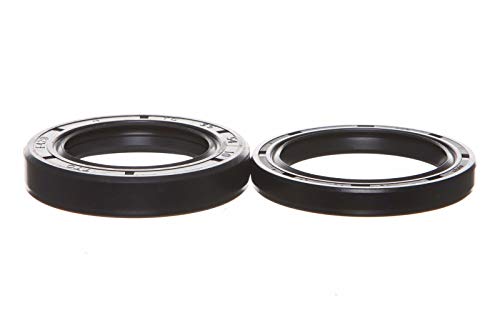
Input and Output Shaft Seal for Rotary Cutter Gearbox 40HP & 50 HP Seal Set – Gearbox Oil Seals Set, Replaces Oil Seals for Omni, ITG, Grizzly Gearboxes and More – 2 Pack
𝗖𝗼𝗺𝗽𝗮𝘁𝗶𝗯𝗶𝗹𝗶𝘁𝘆 : For rotary cutters with 40HP gearboxes Such as For Alamo, Servis Rhino, King Kutter, Woods, Landpride,…
As an affiliate, we earn on qualifying purchases.
As an affiliate, we earn on qualifying purchases.
Conclusion
Think of your gearbox as a delicate garden. No matter how premium the seeds (oil) you plant, if the soil (cleanliness) is muddied and neglected, your garden won’t thrive. Cleanliness acts like the nourishing sun and pure water, ensuring everything functions smoothly. Without it, even the finest oil can’t save your equipment from decay. Prioritize cleanliness, and you’ll cultivate a resilient, thriving system that endures through time’s storms.

Brake Piston compressor Tool, Gloves, 2 Hooks, Disc Lube, Wire Brush. 5 in 1 Professional Brake Caliper Compression Tool Kit Ratcheting Brake Caliper Tool for Single/Twin/Quad Brake pad spreader tool
[Heavy-Duty Brake Piston Tool] Professional brake piston tool built from durable carbon steel for strength and reliability. Designed…
As an affiliate, we earn on qualifying purchases.
As an affiliate, we earn on qualifying purchases.

CRC Handbook of Lubrication and Tribology, Volume III: Monitoring, Materials, Synthetic Lubricants, and Applications, Volume III
As an affiliate, we earn on qualifying purchases.
As an affiliate, we earn on qualifying purchases.