Balancing reliability and efficiency in gearboxes means understanding that tight manufacturing tolerances and proper lubrication boost reliability but can limit efficiency due to increased friction. Looser tolerances and high-quality lubrication can improve efficiency but risk wear and early failure. You must find the right compromise based on your application’s needs, considering factors like load, speed, and maintenance practices. Staying aware of these design choices helps you optimize performance—stay tuned to learn more about achieving that balance.

Get business pricing on garage and car supplies
- Business-only prices and quantity discounts
- Tax-exempt purchasing
- Multiple users, one account, clear invoices
Key Takeaways
- Tighter manufacturing tolerances improve reliability but may reduce efficiency due to increased friction and wear.
- Proper lubrication enhances reliability and efficiency, but over- or under-lubrication can compromise both.
- Balancing cost-effective tolerances with maintenance strategies optimizes reliability without sacrificing efficiency.
- Design choices, such as material selection and gear geometry, influence the reliability-efficiency tradeoff.
- Regular inspection and maintenance help sustain both reliability and efficiency over the gearbox’s lifespan.
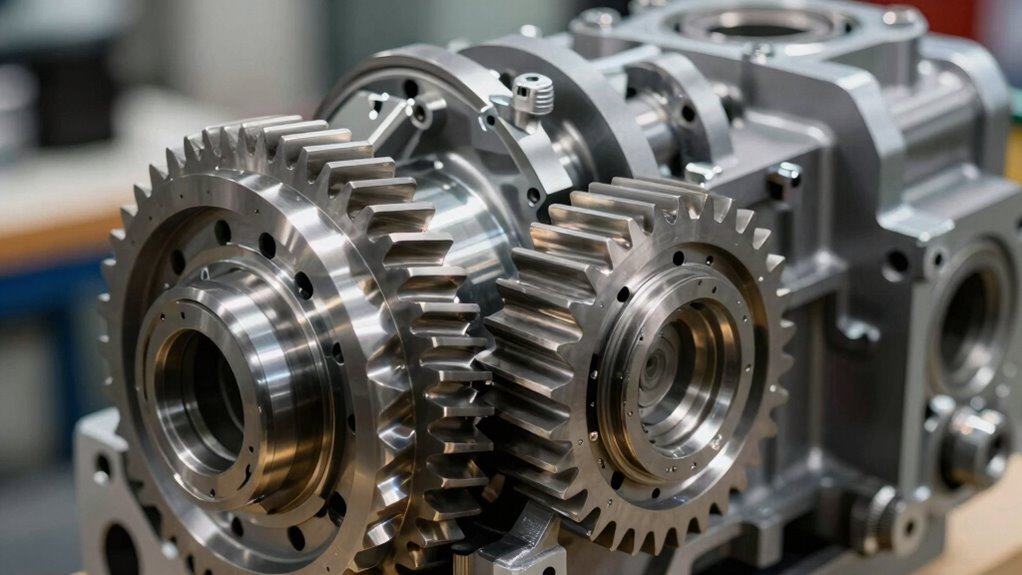
When choosing a gearbox for your machinery, balancing reliability and efficiency becomes essential, yet these two qualities often seem at odds. Reliability depends on consistent performance over time, while efficiency aims to maximize energy output with minimal losses. Striking the right balance requires understanding how design factors influence both aspects. One key challenge is managing lubrication, as inadequate lubrication can lead to increased wear, overheating, and ultimately, gearbox failure. Ensuring proper lubrication involves selecting suitable lubricants and maintaining optimal application, which can be complicated by operational conditions. For example, high speeds or heavy loads can cause lubricant breakdown or contamination, reducing the gearbox’s lifespan. Addressing lubrication challenges is crucial to maintaining reliability without sacrificing efficiency, because poor lubrication not only risks breakdowns but also increases friction losses, lowering efficiency.
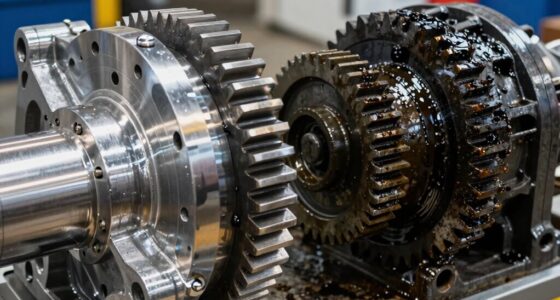
Proper lubrication is vital for gearbox reliability and efficiency, preventing wear, overheating, and energy losses.
Manufacturing tolerances play a significant role in this balancing act. Tight tolerances ensure precise gear meshing, reducing backlash and uneven wear, which directly enhances reliability. However, manufacturing with very tight tolerances often raises costs and complexity. Conversely, looser tolerances might lower manufacturing expenses but can lead to increased vibrations, noise, and uneven load distribution, impairing both reliability and efficiency. When tolerances aren’t carefully controlled, misalignments and gear backlash can cause excessive wear and energy losses, undermining the gearbox’s performance. Therefore, manufacturing tolerances must be optimized to achieve a sweet spot where the gearbox operates smoothly, with minimal wear and energy loss, without incurring prohibitive costs. Additionally, understanding measurement accuracy and how it impacts manufacturing quality can help in maintaining tight tolerances efficiently.
You also need to consider how these factors interact. For instance, a gearbox designed with very tight tolerances might initially run efficiently but could become less reliable if lubrication isn’t properly maintained. On the other hand, a robust design with looser tolerances might rely more heavily on superior lubrication and maintenance to sustain efficiency. The key is to understand the specific demands of your application—whether reliability or efficiency takes priority—and design accordingly. Regular inspections and maintenance become vital in this approach, as they help detect early signs of lubrication issues or manufacturing imperfections, preventing costly failures.
Ultimately, balancing reliability and efficiency isn’t about maximizing one at the expense of the other but understanding how lubrication challenges and manufacturing tolerances influence both. By carefully selecting materials, manufacturing processes, and maintenance routines, you can optimize your gearbox’s performance, ensuring it delivers consistent, efficient operation over its lifespan.
gearbox reliability testing tools
As an affiliate, we earn on qualifying purchases.
As an affiliate, we earn on qualifying purchases.
Frequently Asked Questions
How Does Temperature Affect Gearbox Reliability and Efficiency?
Temperature directly impacts your gearbox’s reliability and efficiency. When it gets too hot, thermal expansion can cause components to misalign, increasing wear and risking failure. Efficient heat dissipation is vital to keep temperatures in check, preventing overheating. By managing heat effectively, you extend your gearbox’s lifespan and maintain peak performance, reducing downtime and costly repairs. Always monitor temperature levels and guarantee proper cooling to protect your gearbox’s reliability and efficiency.
What Are the Maintenance Practices That Optimize Both Reliability and Efficiency?
Ever wonder how you can maximize both reliability and efficiency? You should implement predictive maintenance practices like vibration analysis and regular inspections. These techniques help identify potential issues early, preventing unexpected failures and optimizing gear lubrication. Keeping up with maintenance schedules, monitoring temperature, and addressing wear promptly guarantee your gearbox runs smoothly. Isn’t it smarter to catch problems early than face costly breakdowns later? Stay proactive to get the best balance.
Can Advanced Materials Improve Gearbox Durability Without Sacrificing Efficiency?
Advanced materials can considerably improve gearbox durability without sacrificing efficiency. By using high-performance alloys, composites, or surface treatments, you can reduce wear and tear, extending lifespan and maintaining smooth operation. These materials are often lighter and more resistant to fatigue, helping you achieve a durable gearbox that performs efficiently over time. Incorporating advanced materials is a smart way to enhance durability improvements while keeping efficiency at its peak.
How Do Different Gearbox Designs Impact Long-Term Performance?
You’ll find that different gearbox designs dramatically influence long-term performance. Opt for a poorly optimized design, and you’ll face frequent failures, costly repairs, and endless frustration. On the other hand, design optimization reduces gearbox failure risks and enhances durability. So, if you want your gearbox to last, prioritize smart design choices—because a well-designed gearbox not only works better but also saves you from the headache of constant breakdowns.
What Role Does Lubrication Play in Balancing Reliability and Efficiency?
Lubrication plays a vital role in balancing reliability and efficiency by reducing wear and friction. You should follow strict lubrication standards and choose the right oil viscosity to guarantee peak performance. Proper lubrication minimizes heat and prevents gear failure, boosting reliability. At the same time, it enhances efficiency by reducing energy loss. Regular maintenance and selecting the correct lubricant help you achieve the best balance between gearbox longevity and performance.
industrial gearbox lubrication products
As an affiliate, we earn on qualifying purchases.
As an affiliate, we earn on qualifying purchases.
Conclusion
Remember, balancing gearbox reliability and efficiency is essential. Did you know that increasing efficiency by just 1% can reduce energy costs by up to 5%, but often at the expense of reliability? Prioritize your application’s needs—sometimes a slightly less efficient but more reliable gearbox saves you from costly downtime. Ultimately, understanding this tradeoff helps you make smarter choices, ensuring your system performs at its best without unexpected failures.
precision gear manufacturing tolerances
As an affiliate, we earn on qualifying purchases.
As an affiliate, we earn on qualifying purchases.
gearbox maintenance inspection kit
As an affiliate, we earn on qualifying purchases.
As an affiliate, we earn on qualifying purchases.
Fall Picks
fall essentials
As an affiliate, we earn on qualifying purchases.