Splash lubrication works well for many engine parts by flicking oil onto components, but it has its limits. When engine speed is high or geometries are complex, oil may not reach all critical areas like bearings or piston pins effectively. Small gaps and tight spaces can prevent sufficient lubrication, increasing wear risks. External factors like oil level and viscosity also cause inconsistent coverage. To learn how these limitations are managed, keep exploring the details below.
Key Takeaways
- High engine speeds and complex geometries hinder oil dispersion, preventing effective reach to all critical areas.
- Small gaps and distant components may remain inadequately lubricated due to limited oil splash reach.
- External factors like oil viscosity, level, and engine orientation cause inconsistent oil film coverage.
- Splash lubrication alone may not provide sufficient lubrication in high-load or tight-clearance engine zones.
- Supplemental pressurized oil systems are often necessary to ensure proper lubrication where splash method fails.
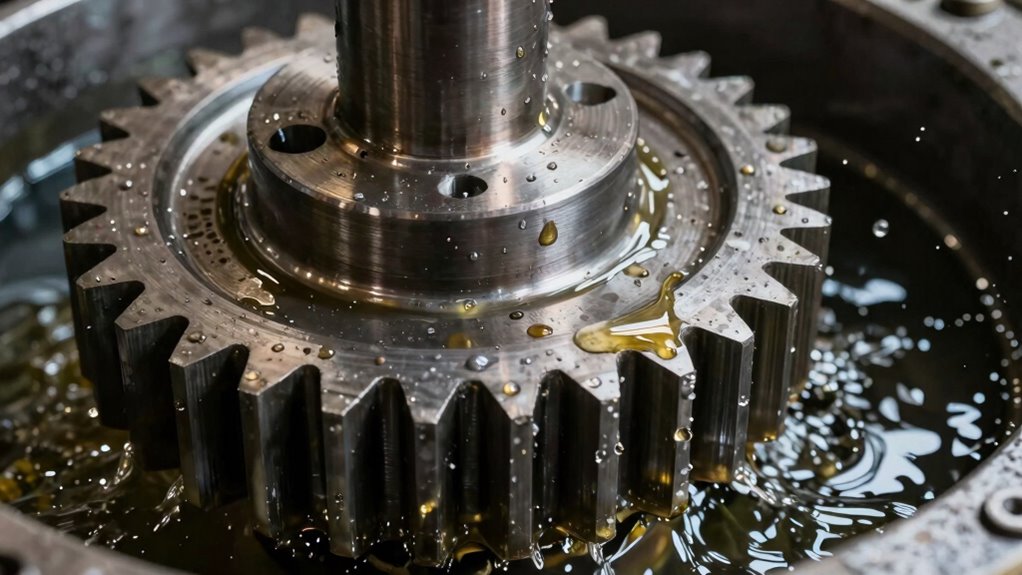
Have you ever wondered how splash lubrication manages to keep engine parts properly lubricated? It all comes down to the process of oil film formation, which is essential for reducing friction and wear inside the engine. When the engine runs, the moving parts—like the crankshaft, connecting rods, and pistons—rely on this thin layer of oil to glide smoothly against each other. Splash lubrication works by throwing oil around the crankcase, creating lubrication zones where these parts can stay coated with oil. But despite its simplicity, this method has limits, especially when it comes to reaching every critical area.
Splash lubrication relies on oil film formation to reduce friction but has limitations in reaching all critical engine areas effectively.
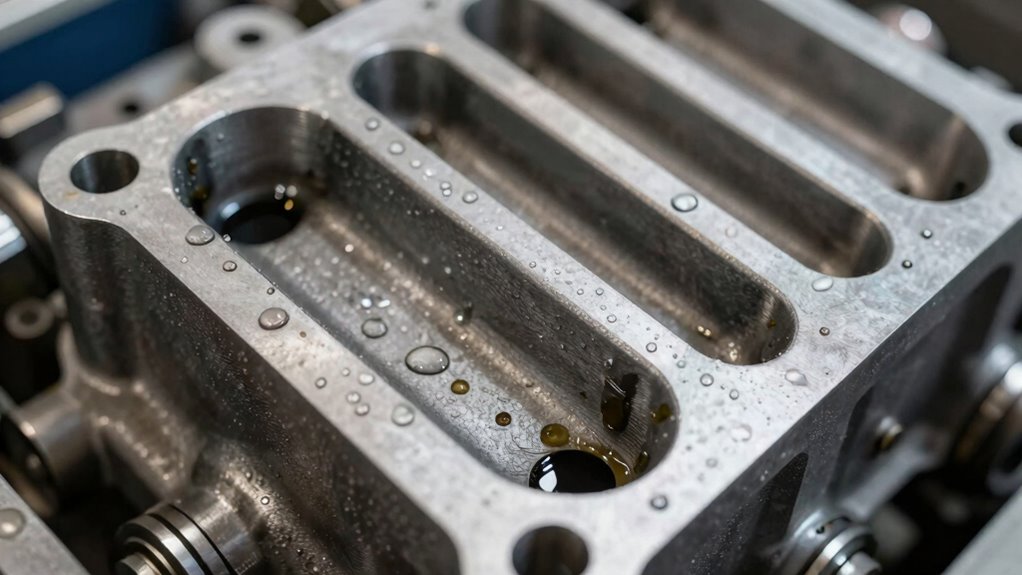
In splash lubrication, a splash of oil is flicked off the rotating crankshaft or other moving components, dispersing oil into various zones within the engine. These lubrication zones include the bearings, piston pins, and camshaft areas. The oil must reach these zones quickly and efficiently to prevent metal-to-metal contact. However, the effectiveness of this process depends largely on the design of the engine and the speed at which it operates. If the engine runs at very high speeds or with complex geometries, splash lubrication may struggle to deliver an even, continuous oil film. This is because the oil particles may not be flung far enough or in the right direction to coat all essential surfaces uniformly.
Furthermore, splash lubrication can be limited in engines with tight clearances or those that operate under high loads. When oil is simply thrown around, it might not penetrate small gaps or reach parts that are more distant from the splash point. This leaves some areas vulnerable to insufficient lubrication, increasing the risk of premature wear or failure. For example, parts like the valve lifters or certain bearings may not receive enough oil if the splash isn’t adequately reaching them. As a result, the oil film formation in these zones becomes compromised, leading to increased friction and potential damage over time.
Another challenge is that splash lubrication isn’t always dependable in maintaining a steady film thickness. Variations in oil level, viscosity, and engine orientation can all influence how well the oil spreads. When these factors aren’t ideal, some lubrication zones might be starved for oil, diminishing the protective film that keeps engine components safe. That’s why, in high-performance or heavily loaded engines, designers often supplement splash lubrication with pressurized oil systems to guarantee every critical area receives adequate lubrication. Additionally, the effectiveness of oil film formation can be affected by external conditions, further emphasizing the need for supplemental lubrication methods in demanding applications. Ultimately, while splash lubrication is simple and effective for many applications, its limits become clear when the oil can’t reach all the right places consistently.

Melling-10295 Oil Pump, Wet Sump, Internal, Standard Volume, High Pressure, GM LS-Series, Each
High Pressure
As an affiliate, we earn on qualifying purchases.
As an affiliate, we earn on qualifying purchases.
Frequently Asked Questions
How Can Splash Lubrication Be Improved for Better Coverage?
To improve splash lubrication for better coverage, you should guarantee the oil film reaches all lubrication zones effectively. Adjust the oil level and splash points to optimize oil dispersion, and consider adding baffles or shields to direct the splash towards critical areas. Regular maintenance helps prevent oil buildup and ensures consistent coverage, reducing wear and tear. These steps enhance the oil film’s reach, ensuring all parts stay properly lubricated.
What Are Signs of Insufficient Splash Lubrication in Machinery?
Your machinery’s suffering from insufficient splash lubrication if you notice increased friction, unusual noises, or overheating—these are signs that the oil film isn’t covering all parts. You might also see lubrication gaps or uneven wear on components. When oil fails to reach critical areas, it’s like trying to keep a boat afloat with a tiny cup—ineffective and risky. Address these signs promptly to prevent costly damage.
Are There Alternative Lubrication Methods for Hard-To-Reach Areas?
You can use alternative lubrication methods like oil pumps, grease fittings, or oil sprays for hard-to-reach areas. These lubrication techniques guarantee proper lubrication when splash methods fall short. By applying pressurized oil or grease directly where needed, you prevent wear and damage. Regular maintenance and choosing the right method for your machinery are key to ensuring all components stay properly lubricated, even in tricky spots.
How Does Oil Viscosity Affect Splash Lubrication Efficiency?
Think of oil viscosity as the thickness of honey; it greatly influences splash lubrication efficiency. Higher viscosity oils flow more slowly, making it harder for oil to reach all moving parts, especially in hard-to-reach areas. Viscosity effects mean you get better lubrication with thinner oils that flow easily but may not protect under heavy loads. Striking the right balance guarantees oil flow reaches every essential spot for ideal lubrication.
What Maintenance Practices Optimize Splash Lubrication Performance?
You should regularly check and maintain proper oil levels to guarantee an adequate oil film across all lubrication zones. Clean the oil reservoirs and remove debris that can block oil flow. Use the correct oil viscosity for your system, and replace oil when it becomes contaminated or degraded. Consistent inspections and timely oil changes help maintain ideal splash lubrication, ensuring the oil reaches all lubrication zones effectively.

Lincoln 1210B Professional Fluid Drain System Kit, 3601 Pneumatic 18 Gallon Pressurized Drain Tank, 3610 24.5 Inch Large Capacity Funnel, Adjustable Height, Steel, Automotive and Industrial Service
COMPLETE FLUID DRAIN SYSTEM: Includes Lincoln 3601 18 gallon pneumatic tank and 3610 24.5 inch funnel for high…
As an affiliate, we earn on qualifying purchases.
As an affiliate, we earn on qualifying purchases.
Conclusion
So, next time you think about splash lubrication, remember it’s like trying to water a garden with a sprinkler that only hits certain spots. Sometimes, the oil just can’t reach where it’s needed most, leaving parts dry and vulnerable. Recognize these limits before they cause trouble. After all, wouldn’t you want your engine to run smoothly, like a well-oiled machine, rather than sputtering in the shadows of missed lubrication? Stay aware, stay ahead.

MOLUCKFU Engine Oil Comparator Tool and Transmission Oil Viscosity Tester Acrylic Stand for Accurate Car Maintenance and Quality Testing
Versatile functionality: not only compares engine oil but also tests the viscosity of transmission oil, providing comprehensive oil…
As an affiliate, we earn on qualifying purchases.
As an affiliate, we earn on qualifying purchases.

3HP Air Compressor Pump Replacement Set, Twin-cylinder 7.5CFM Air Compressor Head Piston Style Splash Lubrication Pump Kit, Air Compressor Motor for Automotive Repair, Decoration, Construction
👍【Outstanding Performance】The 3HP motor fits with ≥2.2kW strong power machine, which can generate a maximum speed of 850r/min….
As an affiliate, we earn on qualifying purchases.
As an affiliate, we earn on qualifying purchases.