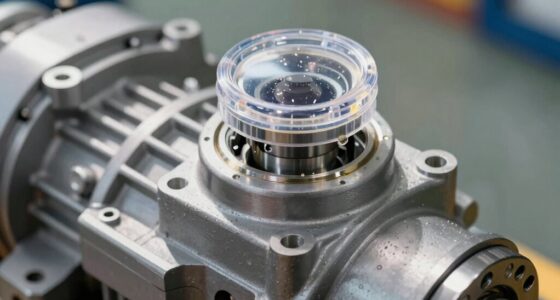
Vibration signals show you immediate issues like imbalance, misalignment, and bearing faults, giving real-time insights into mechanical health. Lubrication data reveals internal wear, contamination, and oil degradation that can lead to future failures. Both methods are essential—vibration detects faults early, while lubrication indicates ongoing internal conditions. Combining these signals provides a holistic view of machinery health, helping you optimize maintenance efforts. Keep exploring to understand how to leverage both for better equipment reliability.
Key Takeaways
- Vibration signals reveal immediate mechanical issues like imbalance, misalignment, and bearing faults, enabling real-time fault detection.
- Lubrication signals indicate internal conditions such as wear particles, contamination, and oil degradation, supporting predictive maintenance.
- Vibration analysis detects early mechanical faults, while lubrication monitoring identifies ongoing wear and contamination over time.
- Combining both signals provides a comprehensive view of machinery health, reducing false alarms and improving diagnostic accuracy.
- Proper data integration enhances predictive maintenance, enabling timely interventions and extending equipment lifespan.

Industrial Vibration Analyzer – VM-428 with External Sensor & PC Software, Acceleration 0.1–300 m/s², Velocity 1–850 mm/s, Displacement 1–3300 µm, 30Hz–14kHz, ISO Machine Rating
PROFESSIONAL VIBRATION ANALYZER – VM-428 WITH EXTERNAL SENSOR – Designed for advanced vibration diagnostics on motors, turbines, pumps,…
As an affiliate, we earn on qualifying purchases.
As an affiliate, we earn on qualifying purchases.
What Does Vibration Analysis Reveal About Machinery?
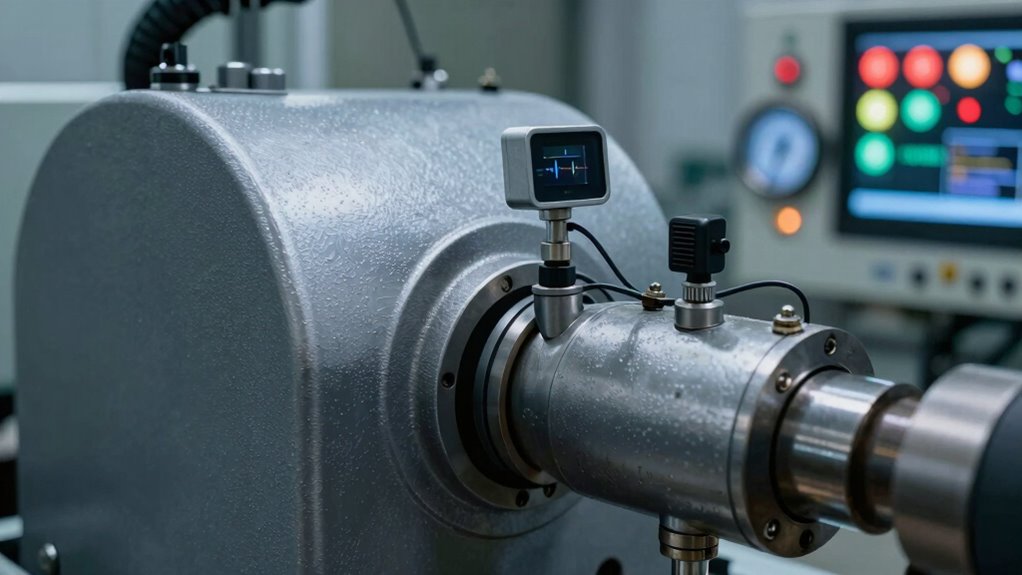
Have you ever wondered what vibration analysis can tell you about machinery? It’s a powerful tool for diagnosing issues like bearing faults and rotor imbalance. When you monitor vibrations, you can detect early signs of bearing deterioration before they lead to failure. Abnormal vibrations often point directly to bearing diagnostics, revealing lubrication problems or wear. Rotor imbalance, another common issue, causes specific vibration patterns that indicate uneven mass distribution. By analyzing these signals, you gain insight into the machine’s health, enabling timely maintenance. Understanding vibration signatures helps you prevent unexpected breakdowns and optimize equipment performance. Digital data processing techniques play a crucial role in interpreting complex vibration data for accurate diagnostics. Incorporating preventative maintenance based on vibration analysis can significantly extend the lifespan of machinery. Vibration analysis doesn’t just identify problems; it prevents costly downtime.

Oil Analysis Premier Kit by Under My Hood with return postage included
NOT FOR USE ON AIRCRAFT!
As an affiliate, we earn on qualifying purchases.
As an affiliate, we earn on qualifying purchases.
How Lubrication Monitoring Indicates Wear and Contamination

Lubrication monitoring provides critical insights into the condition of machinery by revealing signs of wear and contamination early on. By analyzing oil samples, you can detect wear particles shed from gears, bearings, or other components, indicating material degradation. The presence of these particles signals that parts are wearing faster than normal, allowing you to plan maintenance before failure occurs. Additionally, oil contamination from dirt, water, or other external substances can be identified through contamination levels in the oil. Elevated contamination can impair lubrication effectiveness, increase friction, and accelerate wear. Regular oil analysis helps you track these indicators over time, enabling timely interventions. Proper oil sampling techniques ensure accurate detection of wear and contamination, preventing false alarms or overlooked issues. Implementing contamination control measures further helps maintain oil purity and extend equipment lifespan. Understanding lubrication regimes can optimize your maintenance schedules and improve machinery reliability. Adopting a predictive maintenance approach based on oil analysis minimizes downtime, extends equipment lifespan, and guarantees *best* performance by catching issues related to wear particles and oil contamination early. Additionally, understanding the specific properties of essential oils can aid in developing maintenance solutions for machinery, especially in specialized environments.
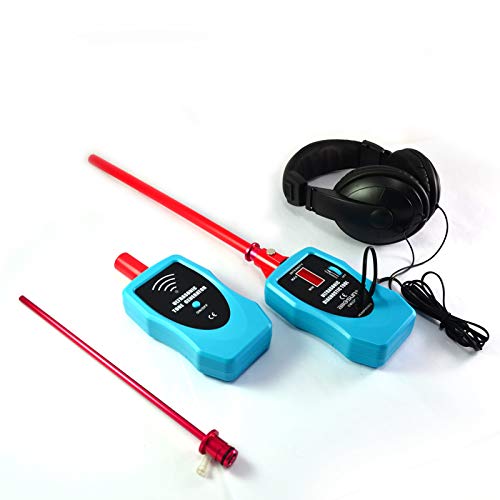
allsun Ultrasonic Leak Detector Diagnostic Stethoscope 36-44kHz Air/Contact Probe,Kit w/Rotary Volume,Tone Generator,Find Vacuum Gas Seal Faults,Auto& Industrial Leak Detection Tool
【DETECT LEAKS IN SECONDS】Locate even faint air leaks, electrical coronas, and internal mechanical issues (like failing bearings, valve…
As an affiliate, we earn on qualifying purchases.
As an affiliate, we earn on qualifying purchases.
Vibration vs. Lubrication: Which Diagnostic Method Is Better?

Vibration vs. Lubrication: Which Diagnostic Method Is Better?
When evaluating machinery health, vibration analysis and lubrication monitoring each offer distinct advantages, but determining which method is more effective depends on your specific needs. Vibration analysis excels at detecting issues like rotor imbalance and bearing faults early, allowing you to pinpoint problems quickly. It provides real-time data on dynamic changes, making it ideal for identifying misalignments and mechanical faults. Lubrication monitoring, on the other hand, focuses on fluid quality, contamination, and wear particle analysis, offering insight into the internal condition of components. While vibration methods are better for immediate fault detection, lubrication monitoring helps predict potential failures through oil analysis. For extensive diagnostics, combining both approaches gives you the most accurate picture of machinery health. Choose based on whether you prioritize early fault detection or ongoing condition assessment. Additionally, understanding the regional cultural activities associated with different areas can help in planning maintenance or inspections during downtime or special events. Recognizing measurement technologies and their specific applications is crucial for effective machinery maintenance. Incorporating complementary diagnostic tools enhances overall reliability and reduces unexpected downtime. Employing a comprehensive diagnostic strategy that includes both vibration and lubrication analysis ensures a more holistic view of equipment condition. Furthermore, staying informed about latest technological advancements can optimize your diagnostic capabilities and maintenance planning.

Friction and Lubrication in Mechanical Design (Mechanical Engineering)
As an affiliate, we earn on qualifying purchases.
As an affiliate, we earn on qualifying purchases.
Spotting Imbalances and Misalignments With Vibration Data

Vibration data provides a powerful tool for identifying imbalances and misalignments that can compromise machinery performance. Rotor imbalance often produces consistent, high-amplitude vibrations at the rotor’s rotational frequency, alerting you to uneven mass distribution. Bearing misalignment causes specific vibration patterns, such as increased amplitudes in certain directions and harmonic frequencies. By analyzing these signals, you can pinpoint whether a rotor imbalance is causing excessive vibration or if misaligned bearings are the culprit. Early detection allows you to schedule corrective actions before serious damage occurs. Precise vibration analysis helps you distinguish between rotor imbalance and bearing misalignment, ensuring targeted maintenance. Using vibration data effectively keeps your machinery running smoothly, reduces downtime, and prevents costly repairs. Additionally, understanding the role of battery inverter generators in your equipment setup can help optimize power stability during diagnostics and maintenance procedures. Being aware of the performance capabilities of electric dirt bikes, such as their horsepower and speed, can also aid in selecting the right equipment for your operational needs. Recognizing the importance of piercing aftercare can prevent complications and ensure proper healing during maintenance routines. Moreover, understanding vibration signatures enhances your ability to interpret the data accurately, leading to more effective maintenance decisions. Being familiar with support breakfast options can also be beneficial for keeping maintenance teams energized during long service days.
Using Lubrication Data to Detect Oil Degradation and Failures
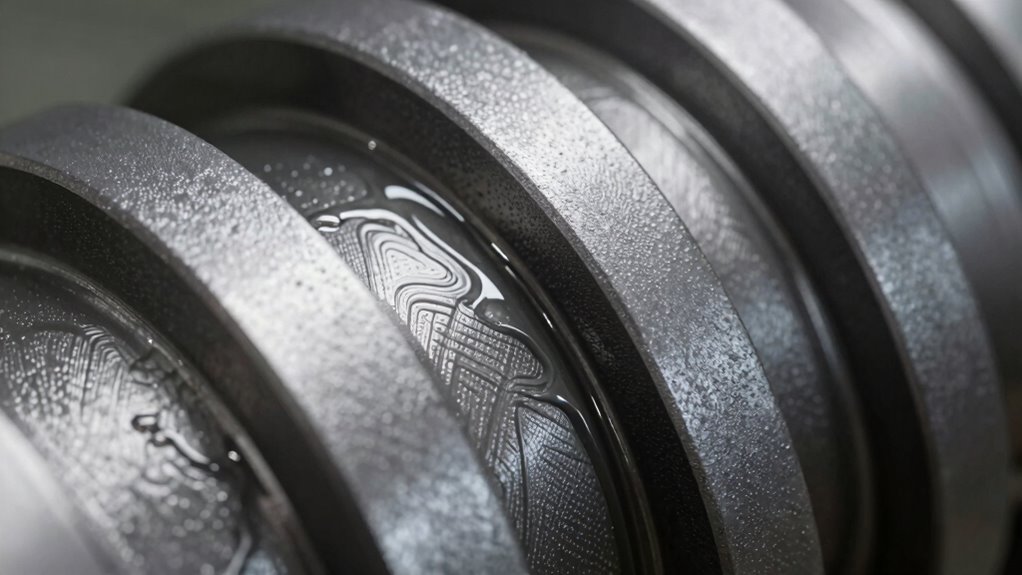
You can use lubrication data to identify when oil is degrading or contaminated. Monitoring oil condition indicators helps you spot early signs of wear and failure. By paying close attention, you’ll catch issues before they cause costly damage. Understanding unit conversions can assist in interpreting measurement data more accurately. Additionally, recognizing vibration signatures can provide early warnings of mechanical issues that affect oil quality. Regular analysis of oil samples can also reveal contamination levels, further aiding in preventive maintenance strategies. Incorporating measurement techniques can improve the precision of oil condition assessments and lead to better maintenance decisions. Being familiar with oil degradation processes can enhance your ability to interpret data effectively and implement timely interventions.
Oil Condition Indicators
Oil condition indicators help you do just that by analyzing lubrication data to detect oil degradation and failures. These indicators monitor parameters like viscosity, particle content, and additive levels, providing early warnings of issues. Proper oil filtration guarantees contaminants are removed, maintaining oil quality and extending service life. Regular sensor calibration is essential for accurate readings, preventing false alarms or missed problems. By tracking these factors, you can make informed maintenance decisions, reduce downtime, and optimize performance. Oil condition indicators serve as a reliable, real-time tool to gauge oil health, allowing you to catch problems before they escalate and ensuring your machinery operates smoothly. Additionally, understanding the filter change frequency is vital to maintain optimal oil purity and performance.
Detecting Wear and Contamination
Monitoring lubrication data is essential for detecting wear and contamination before they cause major failures. By analyzing oil condition, you can identify signs of gear wear, such as increased particles or changes in viscosity. Contamination detection is also critical; it reveals the presence of dirt, water, or other impurities that can accelerate wear and damage components. Regular oil sampling and analysis help you track degradation levels and spot early indicators of trouble. Detecting gear wear through lubrication data allows timely maintenance, preventing costly breakdowns. Additionally, oil analysis techniques can provide detailed insights into the specific types of wear occurring within your machinery. Similarly, identifying contamination ensures you can address filtration issues promptly. Overall, lubrication analysis provides a clear picture of equipment health, enabling you to intervene early and extend the lifespan of machinery. Store return policies and hours can also be useful when planning maintenance or replacement schedules to minimize downtime.
Choosing Between Vibration and Lubrication Checks: Real-World Scenarios

When deciding between vibration and lubrication checks, you need to contemplate what issues you’re targeting, like detecting mechanical failures or monitoring lubricant quality. Vibration analysis quickly reveals mechanical problems, while lubrication checks help prioritize maintenance based on oil condition. Choosing the right approach depends on your specific scenario and maintenance goals.
Detecting Mechanical Failures
Choosing the right method to detect mechanical failures often depends on the specific issues you’re trying to identify. Vibration analysis excels at fault detection because it reveals early signs of imbalances, misalignments, or bearing defects through signal analysis. You’ll notice changes in vibration patterns before major damage occurs, allowing for proactive maintenance. Lubrication checks, on the other hand, are more suited for identifying issues like contamination or insufficient lubrication, which can lead to failures over time. While vibration signals provide immediate insight into dynamic problems, lubrication analysis offers a broader view of the machine’s health related to its internal environment. By understanding these differences, you can select the most effective method for diagnosing mechanical failures in your equipment.
Monitoring Lubricant Quality
In real-world scenarios, evaluating lubricant quality often provides critical insights into a machine’s health, especially when issues develop gradually. Regular testing helps you detect changes in lubricant composition, such as diminishing lubricant additives or alterations in oil viscosity. These shifts can signal contamination, wear, or breakdown of additive packages, leading to potential equipment failure if unnoticed.
Key indicators include:
- Decrease in lubricant additives, reducing protective qualities
- Variations in oil viscosity, affecting lubrication performance
- Presence of debris or metal particles
- Elevated oxidation or contamination levels
- Changes in color or consistency
Monitoring these factors allows you to address issues proactively, ensuring ideal lubrication and preventing costly downtime. Lubricant analysis acts as a crucial complement to vibration checks, offering an all-encompassing view of machine health.
Prioritizing Maintenance Tasks
Deciding whether to prioritize vibration analysis or lubrication checks depends on the specific symptoms and operating conditions of your equipment. If you notice unusual noise, high vibration levels, or signs of mechanical wear, vibration analysis provides rapid insights through predictive analytics, helping you identify potential failures early. Conversely, if equipment shows signs of overheating, lubricant contamination, or inconsistent viscosity, lubrication checks become essential. Proper sensor calibration ensures accurate data collection for both methods. Prioritizing tasks involves evaluating which signals indicate imminent failure or performance degradation. In real-world scenarios, combining both approaches often yields the best results. Regularly updating your maintenance plan based on sensor data and predictive analytics enables you to allocate resources efficiently, preventing costly downtime and extending equipment life.
Combining Vibration and Lubrication Data for Better Diagnostics

Combining vibration and lubrication data enhances diagnostic accuracy by providing a more thorough view of machine health. When you integrate these signals, you gain a comprehensive understanding of potential issues, reducing false alarms and missed faults. To optimize this process, focus on proper sensor calibration to ensure data accuracy. Data integration allows you to correlate vibration patterns with lubricant analysis, revealing root causes more effectively. Consider these key points:
- Synchronize data collection times for accurate correlation
- Use advanced algorithms to interpret combined signals
- Regularly calibrate sensors to maintain data integrity
- Identify subtle trends that appear across both datasets
- Apply machine learning for predictive maintenance insights
This approach empowers you to make more informed decisions, preventing costly downtime and extending equipment life.
Common Mistakes When Interpreting Machinery Signals

Misinterpreting machinery signals is a common pitfall that can lead to costly maintenance decisions. One key mistake is neglecting proper sensor calibration, which skews data accuracy and misguides your analysis. If sensors aren’t calibrated regularly, the signals you interpret may not reflect the true condition of the equipment. Additionally, poor data interpretation can cause you to overlook critical warning signs or raise false alarms. Rushing through analysis without understanding the context or ignoring baseline measurements increases the risk of misjudging the machinery’s health. To avoid these mistakes, verify sensors are calibrated correctly and take the time to interpret signals carefully, considering all influencing factors. Accurate interpretation and calibrated sensors are essential for reliable condition monitoring and effective maintenance planning.
How to Use Both Vibration and Lubrication Monitoring for Optimal Maintenance

Using both vibration and lubrication monitoring together provides a thorough approach to machine health assessment, enabling you to detect potential issues early and prevent costly failures. To maximize benefits, integrate data into predictive analytics systems that identify patterns and forecast failures. Combine real-time condition-based monitoring with periodic analysis to refine maintenance schedules. Focus on correlating vibration anomalies with lubricant condition indicators for a holistic view. Regularly review trends in vibration amplitudes alongside lubricant cleanliness and viscosity. Leverage advanced sensors and data analytics to automate alerts, ensuring timely interventions. This dual approach enhances your ability to prioritize maintenance tasks, reduce downtime, and extend equipment lifespan. By effectively combining these signals, you create a proactive maintenance strategy that optimizes operational reliability.
Frequently Asked Questions
Can Vibration and Lubrication Data Predict Exact Failure Times?
Vibration and lubrication data can improve your predictive accuracy, but they can’t predict exact failure times. You need to analyze data correlation carefully, as these signals show signs of potential issues rather than precise failure points. Regular monitoring helps you spot trends early, giving you a better chance to schedule maintenance before failures occur. Still, keep in mind that predictions are estimates, not guarantees.
How Do Environmental Factors Affect Vibration and Lubrication Signals?
Imagine your machinery’s signals as delicate whispers fighting through a storm. Environmental factors, like humidity interference and temperature effects, can distort vibration and lubrication signals, making them harder to interpret. Humidity can create false alarms, while temperature swings can mask real issues or mimic failures. You must account for these variables, adjusting your sensors and analysis to see clearly through the environmental chaos, ensuring you catch problems before they escalate.
Are There Industry-Specific Best Practices for Signal Analysis?
Yes, industry standards guide your signal analysis, ensuring consistency and accuracy. You should regularly calibrate your sensors, aligning with these standards to maintain reliable data. Tailor your analysis techniques to your specific industry, whether manufacturing, energy, or transportation. By following established best practices and performing consistent calibration, you’ll better interpret vibration and lubrication signals, leading to more effective maintenance decisions and equipment longevity.
What Training Is Necessary to Interpret Vibration and Lubrication Data Effectively?
Uncover the secrets of vibration and lubrication data by gaining targeted training. You’ll learn essential skills like sensor calibration and data interpretation, helping you spot subtle signs of equipment health. Focus on hands-on courses or workshops that emphasize real-world analysis techniques. This approach guarantees you develop the confidence and expertise needed to make informed maintenance decisions, ultimately preventing costly failures and optimizing operational efficiency.
How Cost-Effective Is Integrating Both Monitoring Methods in Maintenance?
Integrating both vibration and lubrication monitoring is highly cost-effective when you perform a thorough cost analysis. It helps you catch issues early, reducing downtime and repair costs, which saves money in the long run. While initial investment impacts your budget considerations, the combined approach maximizes equipment lifespan and reliability. Over time, these benefits outweigh the upfront costs, making it a smart and economical choice for proactive maintenance.
Conclusion
By blending vibration and lubrication insights, you paint a complete picture of your machinery’s health. Think of it as tuning a finely crafted instrument—listening closely to its hum and checking its oil for signs of wear. When you harness both signals, you catch issues early, preventing costly breakdowns. Keep your equipment running smoothly like a well-oiled engine, and you’ll steer confidently through maintenance challenges, ensuring longevity and peak performance every time.