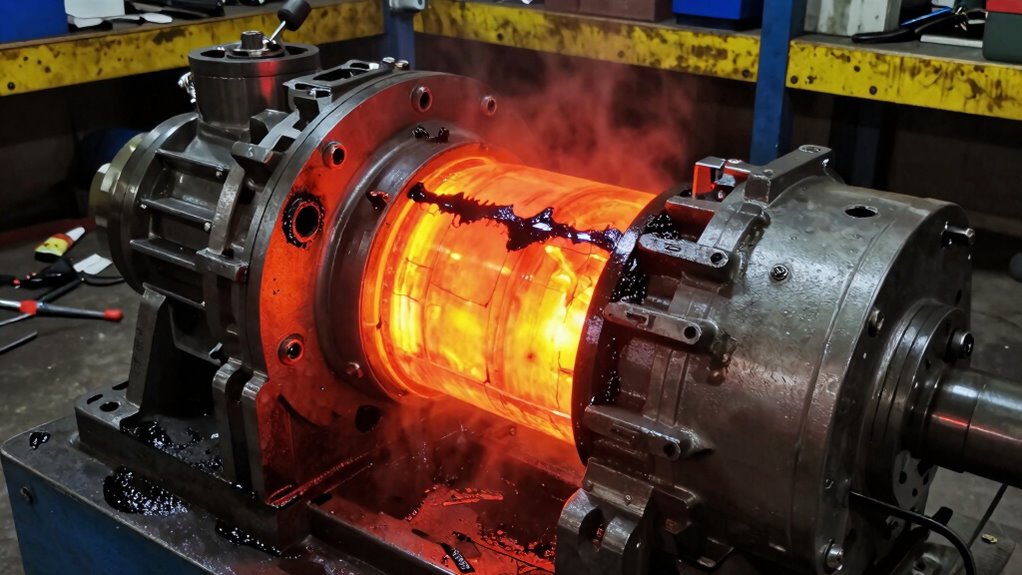

Gearbox overheating often happens because maintenance teams miss hidden issues like misalignment, poor lubrication, and cooling system faults. Even small installation errors or degraded oil can cause excessive heat. Internal damage, worn bearings, or overloading also contribute without obvious signs. If these hidden factors are overlooked, overheating persists and worsens. Keeping an eye on these causes can help, and understanding how to identify them could save your equipment in the long run.
Listen free for 30 days with Audible
Thousands of audiobooks and originals — cancel anytime.
As an affiliate, we earn on qualifying purchases.
Key Takeaways
- Hidden issues like lubricant degradation and internal component fatigue often go unnoticed but cause significant overheating.
- Misalignment and installation errors can lead to uneven load distribution, increasing friction and heat buildup.
- Cooling system problems such as clogged radiators or air pockets are frequently overlooked, impairing heat dissipation.
- Lubrication problems, including improper viscosity or contaminated oil, undermine effective heat transfer and protection.
- Operating beyond capacity or harsh conditions accelerate internal wear and friction, contributing to unnoticed overheating.
gearbox vibration analysis tools
As an affiliate, we earn on qualifying purchases.
As an affiliate, we earn on qualifying purchases.
What Causes Gearbox Overheating? Key Hidden Factors
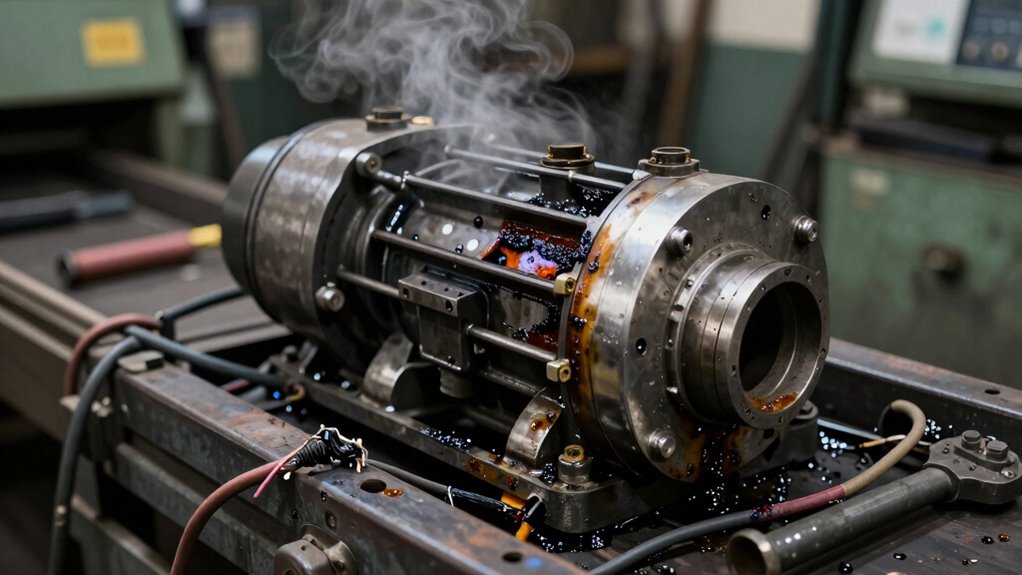
Many people overlook the hidden factors that can cause gearbox overheating, but understanding them is vital for proper maintenance. Vibration analysis helps identify early signs of imbalance or bearing wear, which generate excess heat and strain on the gearbox. Regular temperature monitoring allows you to detect abnormal heat build-up before it leads to failure. Elevated temperatures can result from issues like lubrication problems or internal component fatigue, often unnoticed without proper checks. Proper lubrication is essential in maintaining optimal temperature levels, as it reduces friction and wear within the gearbox components. Combining vibration analysis with temperature monitoring provides an in-depth picture of gearbox health. These hidden factors may not be immediately obvious but play an essential role in overheating. Utilizing precise measurement tools ensures more accurate diagnostics and early detection of potential issues. Addressing them proactively ensures your gearbox runs efficiently, reducing downtime and costly repairs. Staying vigilant with these diagnostic tools keeps your equipment operating smoothly.
industrial temperature monitoring sensors
As an affiliate, we earn on qualifying purchases.
As an affiliate, we earn on qualifying purchases.
How Misalignment and Installation Errors Lead to Excess Heat
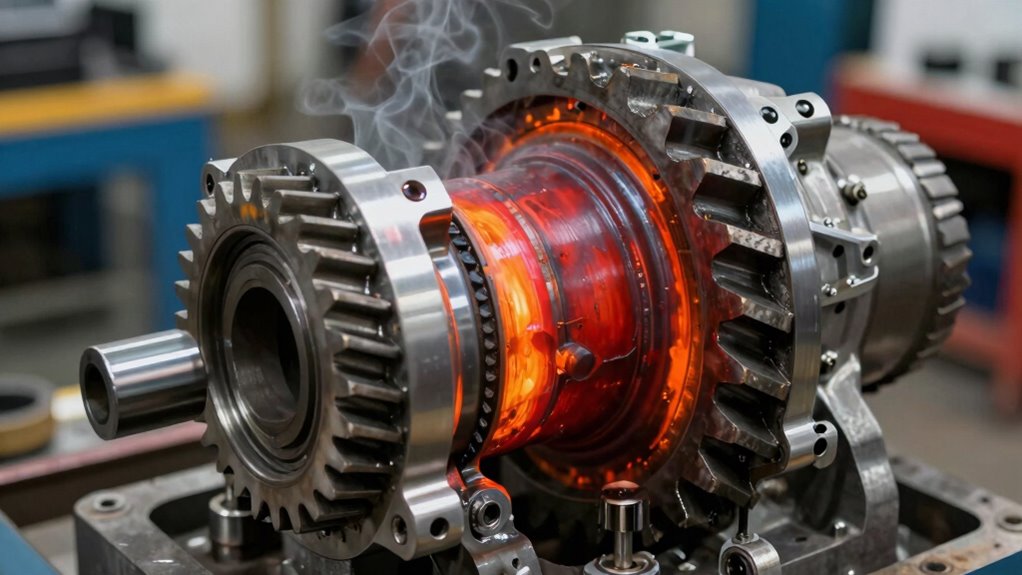
Misalignment between gears or shafts causes uneven load distribution, which quickly generates excess heat. Installation errors, like improper mounting or misfitted components, also raise operating temperatures. Addressing these issues promptly can prevent overheating and extend your gearbox’s lifespan. Regular inspection and maintenance help identify subtle misalignments early, reducing the risk of heat buildup. Proper alignment procedures are essential to ensure components are correctly positioned from the start, avoiding unnecessary stress on parts. Ensuring correct installation procedures are followed is crucial to prevent initial misfits that contribute to heat issues. Additionally, thermal management strategies can further help in controlling heat and maintaining optimal operation conditions.
Misalignment Causes Excess Heat
When gears and shafts are not properly aligned during installation, it causes uneven load distribution that generates excessive heat. Misalignment leads to increased friction, which raises temperatures and stresses components. To catch these issues early, you should regularly perform vibration analysis—any unusual vibrations can signal misalignment—and temperature monitoring to detect hotspots before failures occur.
Be proactive by:
- Checking alignment during routine inspections
- Using vibration data to identify early signs of misalignment
- Monitoring temperature fluctuations for abnormal increases
Addressing misalignment promptly reduces heat buildup, prolongs equipment life, and prevents costly breakdowns. Proper installation and real-time diagnostics are essential to keeping your gearbox running cool and efficient.
Installation Errors Increase Temperatures
Improper installation techniques can substantially raise gearbox temperatures by introducing errors that lead to misalignment and mechanical stress. When installation errors occur, components may not fit correctly, causing uneven load distribution. This misalignment increases friction and strain on gears and bearings, resulting in temperature spikes. If you neglect proper alignment during installation, heat builds up faster, reducing equipment lifespan and risking failure. Ensuring precise setup and following manufacturer guidelines helps prevent these issues. Regularly check for signs of misalignment after installation, as even small errors can critically impact heat levels. Addressing installation errors early can save you from costly repairs and unscheduled downtime caused by overheating. Proper installation practices are essential to maintaining ideal operating temperatures and ensuring gearbox reliability. Additionally, understanding nail biology and hygiene can provide insights into maintaining overall equipment cleanliness, preventing debris buildup that could exacerbate overheating issues.
gearbox misalignment laser alignment tool
As an affiliate, we earn on qualifying purchases.
As an affiliate, we earn on qualifying purchases.
Why Poor Lubrication and Oil Quality Make Gearboxes Overheat
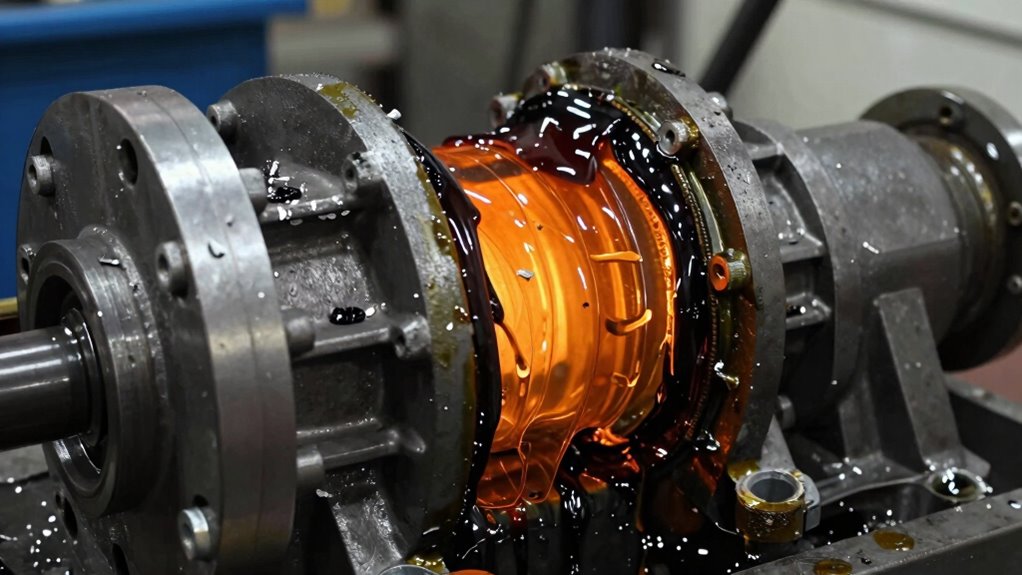
When lubrication isn’t applied properly or the oil quality drops, your gearbox can quickly overheat. Contaminated or degraded oil reduces its ability to cool and protect moving parts, causing excess heat. Issues like insufficient coverage or improper viscosity only make the problem worse. Additionally, using high-quality projectors with proper specifications helps prevent overheating by maintaining consistent performance under heavy use. Regularly monitoring oil conditions and adhering to maintenance schedules can help identify potential issues before overheating occurs.
Insufficient Lubricant Coverage
Insufficient lubricant coverage is a primary cause of gearbox overheating, as inadequate or uneven oil distribution leaves critical components vulnerable to friction and heat buildup. Poor lubricant distribution compromises oil film integrity, reducing its ability to protect moving parts. This can be further exacerbated by contaminated oil which diminishes lubrication efficiency. This deficiency can happen due to clogged filters, improper application, or worn seals. When lubrication isn’t evenly spread, some areas lack proper cooling and protection, causing localized heating. Regularly monitoring lubricant flow and checking for signs of inconsistency can help identify issues early. To prevent this, you should regularly check for:
- Blocked or faulty lubrication channels
- Inconsistent oil flow during operation
- Worn seals that allow oil to leak or bypass
Addressing these issues ensures better lubricant coverage, maintains oil film integrity, and keeps the gearbox running cool under load. Proper lubrication practices are essential for avoiding overheating caused by insufficient oil distribution. Additionally, implementing preventive maintenance routines can help identify early signs of lubrication issues before they lead to overheating.
Contaminated Oil Effects
Contaminated oil can substantially contribute to gearbox overheating by disrupting proper lubrication and reducing oil’s ability to absorb and transfer heat. When oil becomes contaminated, particles, dirt, or metal shards mix in, accelerating oil degradation. This deterioration weakens the oil’s lubricating properties, causing increased friction and heat buildup within the gearbox. As oil quality declines, it can’t effectively carry away heat, leading to higher operating temperatures. Additionally, contaminated oil can clog filters and passages, impairing coolant flow and further elevating the risk of overheating. Regularly checking oil cleanliness and replacing degraded oil is essential. Oil contamination can accelerate the breakdown of lubricant properties. Failing to address contaminated oil allows oil degradation to accelerate, which compromises lubrication, increases friction, and ultimately causes gearboxes to overheat, risking costly downtime and damage.
Oil Viscosity Issues
Poor oil viscosity can particularly contribute to gearbox overheating because it affects how well the lubricant forms a protective film between moving parts. When oil is too thin or thick, it can’t properly reduce friction, leading to increased heat. Over time, this causes lubricant breakdown, diminishing its effectiveness and accelerating wear. You might notice that the oil’s viscosity isn’t within the recommended range, especially after prolonged use or exposure to high temperatures.
- Low viscosity oils can’t maintain a protective layer, causing metal-to-metal contact.
- Excessively viscous oil increases resistance, generating more heat.
- Degraded lubricant loses its ability to dissipate heat efficiently.
Addressing oil viscosity issues ensures proper lubrication, prevents lubricant breakdown, and keeps your gearbox cool under operation. Proper oil selection and regular checks are key to avoiding overheating caused by viscosity problems.
gear oil tester and lubricant analysis kit
As an affiliate, we earn on qualifying purchases.
As an affiliate, we earn on qualifying purchases.
Common Cooling System Failures Maintenance Teams Overlook

One common cooling system failure that maintenance teams often overlook is a clogged or dirty radiator. Over time, debris, dirt, and sludge build up, reducing heat transfer efficiency. Neglecting regular cooling system maintenance allows this buildup to go unnoticed, causing the gearbox to overheat. Thermal monitoring can help detect temperature spikes early, but many teams rely solely on visual inspections. Failing to clean radiators or replace damaged hoses hampers coolant flow, leading to inadequate cooling. Additionally, overlooked issues like air pockets or leaks in the cooling system can diminish performance. Addressing these failures requires proactive maintenance routines, including routine cleaning and thermal monitoring, to ensure the cooling system functions effectively and prevents overheating. Regular inspection of coolant flow and system pressure can also identify potential issues before they lead to failure. Ignoring these small issues can result in major gearbox failures.
How Worn Bearings and Internal Damage Increase Gearbox Temperatures
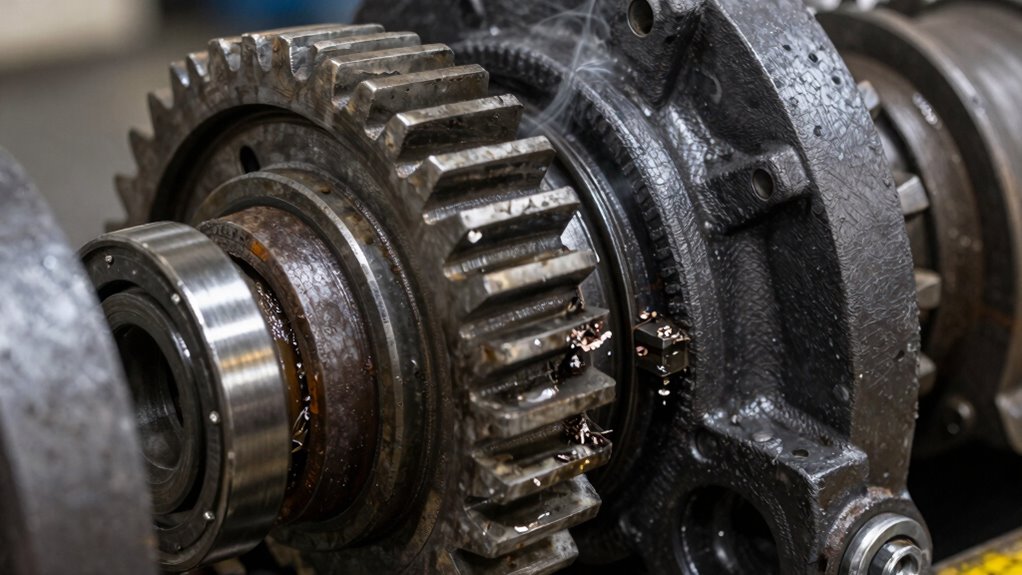
Worn bearings and internal damage directly contribute to rising gearbox temperatures by increasing friction and reducing efficiency. When bearing wear occurs, it creates metal-to-metal contact, generating more heat. Internal damage, like chipped gears or misaligned shafts, also disrupts smooth operation, causing additional strain. This disruption can lead to inefficient heat dissipation, further elevating temperatures. Increased friction leads to higher operating temperatures that can accelerate component failure. You might notice:
- Elevated heat levels due to increased contact and resistance
- Vibration and noise from uneven wear
- Reduced lubrication effectiveness, further raising temperatures
Additionally, proper lubrication techniques are essential to mitigate heat buildup and prolong component life. These issues form a cycle where internal damage and bearing wear drive temperatures higher, risking overheating. Addressing early signs of wear and damage is vital to prevent costly breakdowns and maintain ideal gearbox performance. Understanding the role of maintenance can help prevent these issues from escalating. Additionally, implementing regular inspections allows for early detection of wear, minimizing the risk of unexpected failures. Regular maintenance also helps identify hidden damages before they cause critical problems.
How Overloading and Operating Conditions Cause Overheating
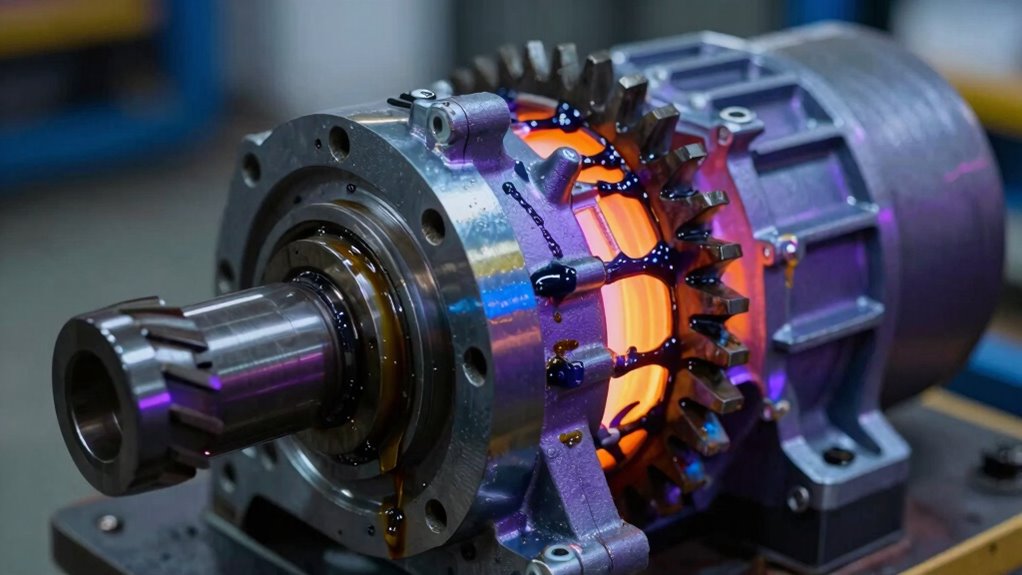
Internal damage and bearing wear raise gearbox temperatures, but overloading and harsh operating conditions can substantially worsen the problem. When you operate a gearbox beyond its designed capacity, it generates excessive heat due to increased friction and stress. Poor lubrication practices can exacerbate overheating, leading to inadequate cooling and increased wear. Harsh conditions like high loads, dirt, or moisture also impact performance. Regular vibration analysis helps detect early signs of overload or misalignment, preventing heat buildup. To visualize, consider the following:
| Cause | Effect |
|---|---|
| Overloading | Increased friction, heat, wear |
| Harsh operating conditions | Elevated temperatures, component stress |
| Poor lubrication practices | Reduced cooling, increased friction |
| Excessive vibration | Misalignment, overheating |
| High load cycles | Accelerated damage, heat generation |
Maintaining ideal lubrication and monitoring vibration are key to preventing overheating caused by operational stresses. Proper maintenance practices are essential for early detection and mitigation of overheating issues. Understanding the importance of operational monitoring can help identify issues before they lead to costly failures. Additionally, implementing thermal management strategies can further reduce the risk of overheating and extend equipment lifespan.

When troubleshooting gearbox overheating, it is vital to look beyond obvious causes like overloads or dirty environments. Hidden issues often lie beneath the surface. Start with examining lubricant selection; using the wrong lubricant or degraded oil can cause excessive heat. Next, perform vibration analysis to identify unusual patterns indicating misalignment, imbalance, or bearing wear that contribute to overheating. Also, check for subtle mechanical faults, such as loose bolts or worn gears, which may not be immediately visible but impact temperature.
Hidden issues like lubricant problems and mechanical faults often cause gearbox overheating.
Consider these next steps:
- Review lubricant type and condition regularly
- Conduct vibration analysis periodically
- Inspect for mechanical faults and misalignments
Addressing these hidden causes can prevent overheating and extend your gearbox’s lifespan.
Frequently Asked Questions
How Can Vibration Analysis Help Detect Early Gearbox Overheating Issues?
Vibration analysis helps you detect early overheating issues by monitoring vibration patterns for anomalies. When a gearbox starts to overheat, its vibration signature changes, showing increased amplitudes or unusual frequencies. By regularly analyzing these patterns, you can identify potential problems before they escalate, enabling early detection and preventive maintenance. This proactive approach reduces downtime and prolongs your gearbox’s lifespan, saving you time and money in the long run.
What Role Does Ambient Temperature Play in Gearbox Overheating?
You sense the increasing heat, but ambient temperature plays a pivotal role in gearbox overheating. When ambient heat rises, it amplifies thermal expansion within gearbox components, reducing lubrication efficiency and increasing friction. This subtle shift can silently push temperatures beyond safe limits. Monitoring ambient conditions becomes essential, as even small temperature changes can escalate risks, catching you off guard if overlooked. Stay vigilant—ambient heat can be a stealthy culprit behind overheating issues.
Are There Specific Maintenance Intervals to Prevent Overheating?
You should schedule regular maintenance intervals focused on lubrication protocols and seal integrity to prevent overheating. Check and replenish lubricants according to manufacturer guidelines, ensuring proper viscosity and cleanliness. Inspect seals for wear or leaks, as compromised seals can cause overheating by allowing contaminants or moisture in. Consistent inspections and timely maintenance help keep the gearbox operating efficiently, reducing the risk of overheating and extending its lifespan.
How Does Gearbox Design Influence Its Susceptibility to Overheating?
You might think a sturdy gearbox resists overheating, but its design deeply influences heat buildup. Using high-quality materials like cast iron or aluminum helps dissipate heat efficiently. Precise design tolerances ensure proper lubrication and airflow, preventing hot spots. If these elements are overlooked, heat accumulates, causing overheating. So, paying attention to gearbox materials and tight design tolerances isn’t just about longevity—it’s crucial to preventing thermal issues in operation.
Can Software Diagnostics Identify Hidden Overheating Causes?
Yes, software diagnostics can sometimes identify hidden overheating causes, but they have limitations. You might notice software glitches that obscure true issues, and diagnostic tools can miss subtle signs of overheating caused by mechanical or lubrication problems. While helpful, these tools shouldn’t replace thorough inspections, as their diagnostic limitations mean you could overlook root causes. Combining software insights with physical checks ensures a more exhaustive approach.
Conclusion
To prevent gearbox overheating, stay vigilant, conduct regular inspections, and address issues promptly. Recognize misalignment, lubrication problems, cooling failures, bearing wear, and overloading early. Maintain proper installation, ensure quality oil, and monitor operating conditions consistently. By identifying and fixing hidden causes, you’ll extend your gearbox’s lifespan, improve performance, and avoid costly downtime. Stay proactive, stay attentive, and keep your equipment running cool and efficiently.
Fall Picks
fall essentials
As an affiliate, we earn on qualifying purchases.