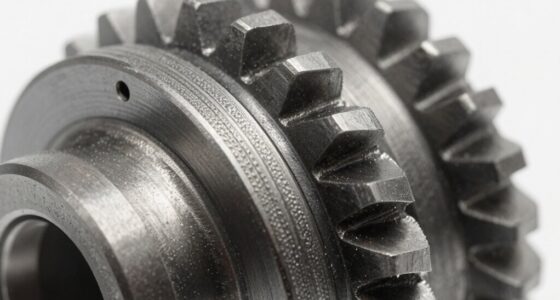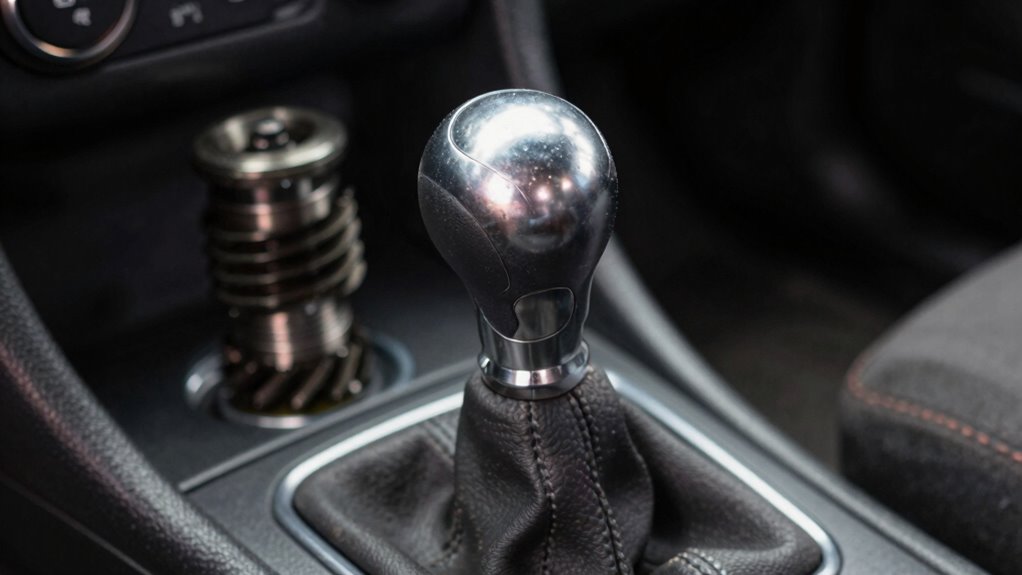

If your manual transmission makes a rattle at idle or during gear shifts, it’s likely a loose or worn clutch component or internal transmission part. Gear whine, on the other hand, sounds like high-pitched noise during acceleration or steady cruising and increases with RPMs. Rattles tend to be irregular, while whine is steady and smooth. To tell them apart and keep your transmission in top shape, continue exploring these clues and solutions.
Key Takeaways
- Rattles are irregular, intermittent sounds often caused by loose components, while gear whine is a steady, high-pitched noise during acceleration.
- Rattles usually occur at idle or during gear shifts, whereas gear whine occurs during steady speed or acceleration.
- Rattles may diminish or stop when clutch pedal is engaged, unlike gear whine which persists with RPM changes.
- Rattles often stem from clutch or transmission component wear, while gear whine indicates worn gears or bearings inside the transmission.
- Listening for the noise’s pitch, timing, and response to clutch engagement helps differentiate between rattle and gear whine.
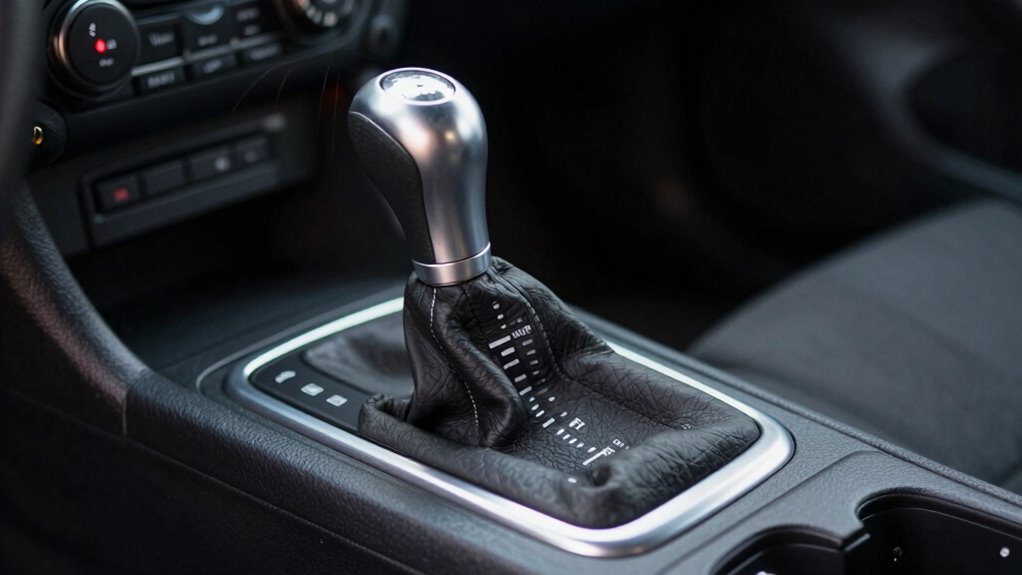
When diagnosing noise issues in your manual transmission, it’s important to understand the difference between a rattle and a gear whine, as each indicates different mechanical concerns. A rattle often suggests loose components or worn parts, while a gear whine usually points to issues within the gears or bearings. To start, pay attention to when the noise occurs—does it happen at idle, during acceleration, or only when you shift gears? This detail can help narrow down the cause.
If you notice a rattling sound, one of the first things to check is your clutch adjustment. An improperly adjusted clutch can cause excessive movement in the release bearing or clutch fork, leading to a rattling noise, especially when the clutch pedal is engaged or disengaged. Ensuring your clutch is properly adjusted can often eliminate the rattle. Additionally, inspect the transmission fluid. Old, low, or contaminated transmission fluid can cause internal parts to wear prematurely or operate noisily. Changing the transmission fluid regularly and maintaining the correct level can help reduce or eliminate rattles caused by internal wear or lubrication issues.
On the other hand, a gear whine is more typical of issues with the gears or bearings inside your transmission. You’ll often hear this noise during acceleration or while maintaining a steady speed, and it tends to get louder as RPMs increase. Gear whine can be caused by worn or damaged gears, improper gear engagement, or insufficient transmission fluid. Using the correct type of transmission fluid, as specified by your vehicle’s manufacturer, is critical. If the fluid is degraded or not at the right level, it can lead to increased friction and noise. Replacing or topping off the transmission fluid might quiet the whine temporarily, but if the sound persists, it could indicate worn gears or bearings that need professional inspection. Regular transmission maintenance like fluid changes can help prevent these issues from developing.
Gear whine during acceleration suggests worn gears or low transmission fluid. Check and replace fluid if needed.
Understanding these differences is key to diagnosing your transmission noise. Regular maintenance, like clutch adjustments and transmission fluid changes, can prevent many issues from escalating. If you’re unsure about performing these checks yourself, it’s wise to visit a mechanic who can accurately identify whether you’re dealing with a rattle or gear whine and recommend the appropriate repair. Recognizing the nature of the noise early allows you to address potential problems before they cause more significant damage or costly repairs.

OHOBEST Truck Clutch Adjustment Gauge Set 5035, Tool for Accurately Measuring and Adjusting Heavy-Duty, Pull-Type Clutches
【Extended Equipment Lifespan】: This clutch adjustment gauge set enables you to check the adjustment of pull-type, heavy duty…
As an affiliate, we earn on qualifying purchases.
As an affiliate, we earn on qualifying purchases.
Frequently Asked Questions
Can Manual Transmission Noises Indicate Imminent Failure?
Yes, manual transmission noises can signal imminent failure. If you notice rattling or whining, it might be due to low transmission fluid or a worn clutch needing adjustment. These sounds often worsen with driving, indicating internal issues. You should check your transmission fluid level first and consider a clutch adjustment or professional inspection to prevent further damage. Addressing these noises early can save you costly repairs later.
How Often Should I Inspect My Manual Transmission?
Think of inspecting your manual transmission like tuning a musical instrument—regular checks keep it in harmony. You should inspect it every 30,000 to 60,000 miles, focusing on transmission fluid levels and quality, and clutch adjustment if you notice slipping or difficulty shifting. Regular inspections help catch issues early, preventing costly repairs and ensuring smooth performance. Don’t wait till it squeals—you’re the conductor of your car’s symphony.
Are There Driving Habits That Cause More Transmission Noise?
Your driving habits and maintenance routines can definitely influence transmission noise. For example, rough shifting, riding the clutch, or frequently engaging in aggressive driving can increase wear and cause more noise. Skipping regular maintenance, like fluid changes and inspections, also worsens noise over time. To minimize this, drive smoothly, avoid harsh gear changes, and stick to a routine maintenance schedule. Proper care helps keep your transmission quiet and prolongs its lifespan.
What Tools Are Needed to Diagnose Transmission Sounds?
You’ll need basic diagnostic tools like a mechanic’s stethoscope and a flashlight for noise analysis. These tools are like your detective kit, helping you pinpoint the source of transmission sounds. A stethoscope allows you to listen closely to different parts, while a flashlight helps spot obvious issues. With these, you can differentiate between rattles and whines, making troubleshooting less intimidating—almost like wielding a superpower against mysterious transmission noises!
Can Transmission Noises Be Fixed Without Professional Help?
You can often fix transmission noises yourself if you’re comfortable with noise diagnosis and have the right tools. Start by checking your transmission fluid level and quality—low or dirty fluid can cause rattles or whining. If the fluid looks fine, identify the noise type, then consider replacing or topping off the fluid, inspecting for loose parts, or tightening connections. However, for complex issues, professional help guarantees proper repair and safety.

Auto Transmission Fluid Change Service Kit 6L ATF for Volkswagen Atlas (18-23) & for Arteon (19-21)
Auto Transmission Service Kit
As an affiliate, we earn on qualifying purchases.
As an affiliate, we earn on qualifying purchases.
Conclusion
Understanding the difference between a manual transmission rattle and gear whine helps you diagnose issues accurately. For instance, if you notice a rattling sound during acceleration that stops when you press the clutch, it’s likely a rattle. Conversely, a consistent high-pitched whine while cruising suggests gear whine. By paying attention to these cues, you can better communicate with mechanics or even attempt simple fixes yourself, preventing minor problems from becoming costly repairs later on.

GEARWRENCH Professional Bi-Directional Diagnostic Scan Tool | GWSMARTBT
OE-Level diagnostics on your smart device
As an affiliate, we earn on qualifying purchases.
As an affiliate, we earn on qualifying purchases.

Transmission Fluid Tester Kit Gasoline & Diesel Gearbox Oil Diagnostic Tool High-Precision Diagnostic Analysis Tool with 31.5in Probe Transmittance/Temperature Testing, 2.8in Display (4 Batteries)
【WHY NEED IT】Our transmission fluid tester features an advanced optical probe that measures light transmittance within the transmission…
As an affiliate, we earn on qualifying purchases.
As an affiliate, we earn on qualifying purchases.