Using the wrong adhesive—thread sealant or threadlocker—can cause leaks, make maintenance difficult, or lead to component failure. Thread sealants like tapes and pastes are designed to prevent leaks on pipe threads, while threadlockers are meant to stop fasteners from loosening due to vibration. Choosing the right one depends on your system’s needs; using the wrong type can be costly. Keep going to discover more about how to select and apply these adhesives correctly.
Key Takeaways
- Use thread sealants to prevent leaks in pipe threads and fittings, not to lock fasteners in place.
- Apply threadlockers to fasteners to prevent loosening from vibration; they are not designed for sealing leaks.
- Choose PTFE tape or paste for plumbing leaks, and anaerobic sealants for metal fittings requiring a tight seal.
- Select removable or medium-strength threadlockers for maintenance ease, not for permanent sealing.
- Properly identify your application needs to avoid using the wrong adhesive, ensuring leak-proof and secure connections.
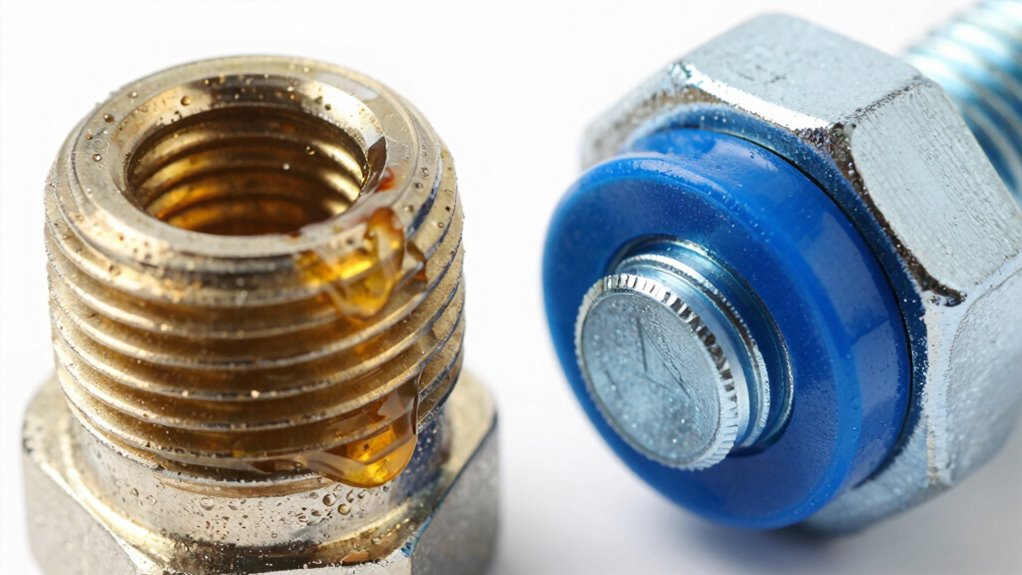
When it comes to securing threaded connections, understanding the difference between thread sealant and threadlocker is essential. These two types of adhesives serve distinct purposes, and choosing the wrong one can lead to leaks, loosening, or even component failure. To make an informed decision, you need to understand the different types of adhesives available and how to apply them correctly.
Thread sealants are designed primarily to prevent leaks in fluid or gas systems. They are often used on pipe threads, hydraulic fittings, and plumbing connections. These adhesives are flexible and can fill small gaps between threads, creating a tight, pressure-resistant seal. When selecting a thread sealant, look for products that specify their compatibility with liquids or gases you’re working with. There are various types of adhesives within this category, including paste, liquid, and tape forms, each suited for specific applications. For instance, pipe thread tape (PTFE tape) is common for plumbing, while anaerobic sealants are more suitable for metal fittings that require a strong, permanent seal.
Thread sealants prevent leaks in fluid and gas systems by filling small gaps between threads.
On the other hand, threadlockers are formulated to prevent threaded fasteners from loosening due to vibration or dynamic loads. They typically cure in the absence of air, locking the threads in place. These adhesives are ideal for bolts, screws, and other fasteners that need to stay tight over time. The application techniques for threadlockers involve applying a small amount directly onto the threads before assembly. Be cautious with the amount you use—too much can make disassembly difficult later, while too little might not provide sufficient holding power. Different types of threadlockers exist, such as removable, medium-strength, and high-strength variants, allowing you to choose based on whether you might need to disassemble the connection later.
In terms of application techniques, applying the right adhesive correctly is key to ensuring a secure connection. For thread sealants, you usually apply them to the male threads, ensuring they are coated evenly before screwing the parts together. For tape, wrap it clockwise around the threads to avoid unwrapping during assembly. When using threadlockers, clean the threads thoroughly to remove any dirt or oil, then apply a small bead to the threaded area. Tighten the components as specified, and allow the adhesive to cure fully before subjecting the connection to pressure or stress. Additionally, selecting the correct adhesive type based on your specific needs is crucial for optimal performance.
Understanding the proper types of adhesives and their application techniques will help you avoid costly mistakes, ensuring your threaded connections stay secure, leak-free, and reliable. Always follow the manufacturer’s instructions for best results, and choose the right product for your specific needs.
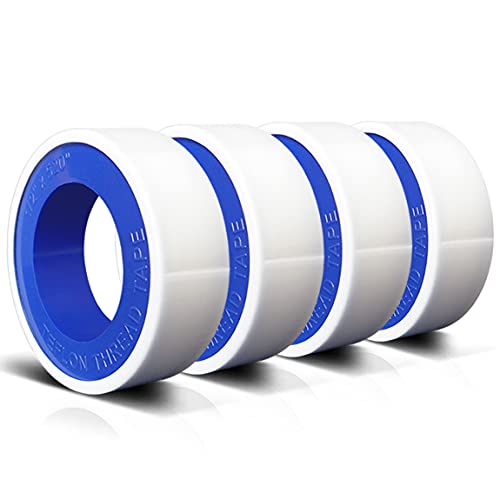
VOTMELL 4 Rolls 1/2 Inch(W) X 520 Inches(L) Teflon Plumbers Tape,Pipe Sealing & Plumbing Thread Tape,PTFE Water Sealant Seal for Shower Head,White
Teflon tape has a sealing function to prevent the leakage of water or gas.
As an affiliate, we earn on qualifying purchases.
As an affiliate, we earn on qualifying purchases.
Frequently Asked Questions
Can Thread Sealant Be Used as a Substitute for Threadlocker?
No, you shouldn’t use thread sealant as a substitute for threadlocker because they serve different purposes. Thread sealant is designed for sealing threaded connections against leaks, while threadlocker prevents loosening due to vibration. Consider chemical compatibility with your materials and the application methods needed. Using the wrong product can compromise your assembly’s integrity, so choose the right one for your specific needs to guarantee a secure, leak-proof connection.
Which Product Is Better for High-Temperature Applications?
When it comes to high-temperature applications, threadlockers are your best bet, especially those with superior heat resistance. They’re designed to withstand high temperature performance without losing their grip. Using the right product keeps your fittings secure, even when things heat up. Don’t cut corners—select a high-temperature threadlocker that’s proven to perform under extreme heat, because in this game, heat resistance is everything, and you don’t want to be left in the dust.
Are Both Products Suitable for Plastic Threads?
Both products can be suitable for plastic threads, but you need to take into account plastic compatibility. Thread sealants are often better for plastics because they won’t damage delicate materials and maintain product longevity. Threadlockers may sometimes cause stress or damage to certain plastics, especially if not designed for plastic use. Always check the manufacturer’s instructions to verify compatibility and choose the right product for your plastic threads to ensure durability.
How Long Does It Take for Each Product to Cure?
Time is of the essence—both products cure at different rates due to their chemical compositions. Thread sealants typically take 24 hours to fully cure with moderate application strength, forming a flexible, waterproof seal. Threadlockers cure faster, often in 10-30 minutes with high application strength, creating a strong, permanent bond. Your choice depends on how quickly you need the joint to set and the desired strength, so plan accordingly.
Can These Products Be Removed Easily After Application?
You can remove these products, but the ease of removal depends on the application process. For thread sealant, a simple mechanical effort usually suffices, especially if it hasn’t fully cured. Threadlockers, once cured, require applying heat or using solvents like acetone for removal. Be mindful that a proper removal process guarantees you don’t damage the threads or surrounding components, making the task easier and safer.
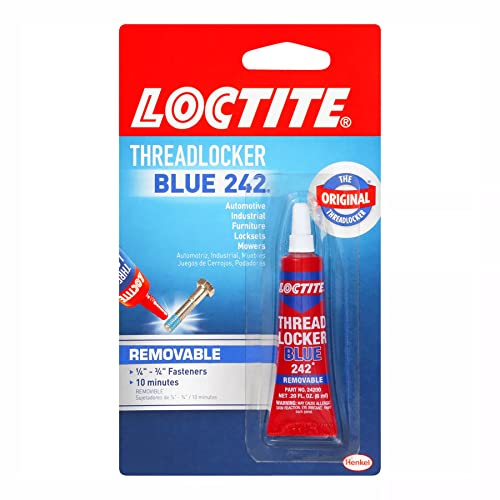
Loctite Threadlocker Blue 242 – Removable Thread Lock Glue for Nuts, Bolts, & Fasteners, Medium Strength Screw Glue to Prevent Loosening & Corrosion – 6 ml, 1 Pack
Lock and Seal Fasteners: Prevents loosening of metal fasteners caused by vibration on small motors, mowers, and power…
As an affiliate, we earn on qualifying purchases.
As an affiliate, we earn on qualifying purchases.
Conclusion
Now that you know the difference between thread sealant and threadlocker, you’re armed with the right tool for the job. Using the wrong one is like trying to fit a square peg in a round hole — it just won’t work smoothly. So, pick wisely, and your projects will hold tight without a hitch. Think of it as giving your connections a secret handshake that keeps everything secure and running smoothly.
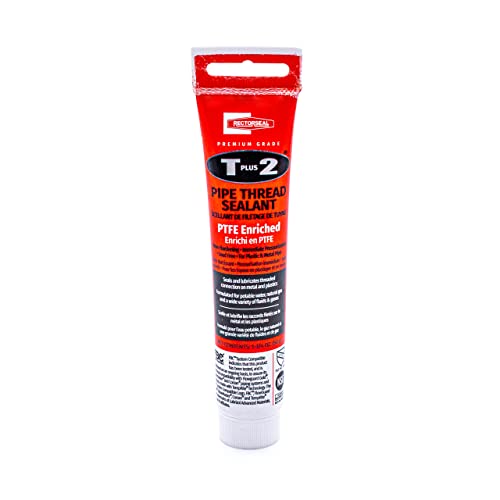
RectorSeal T Plus 2 23710 Pipe Thread Sealant, Non-Hardening, Synthetic Fibers, Contains No Other Metals, PTFE Enriched, Plumbing, 1 3/4 oz.
Adhesives & Sealants
As an affiliate, we earn on qualifying purchases.
As an affiliate, we earn on qualifying purchases.

Pipe Thread Sealant – Anaerobic Sealant for Metal Pipe Threads, Fittings, Gaskets & Joints – Medium Viscosity, High-Pressure & Oil Resistant, Removable (1.7 fl oz / 50ml)
RELIABLE SEALING – Seals metal pipes, threaded joints, and cylindrical fittings to prevent leaks, maintain pressure, and ensure…
As an affiliate, we earn on qualifying purchases.
As an affiliate, we earn on qualifying purchases.