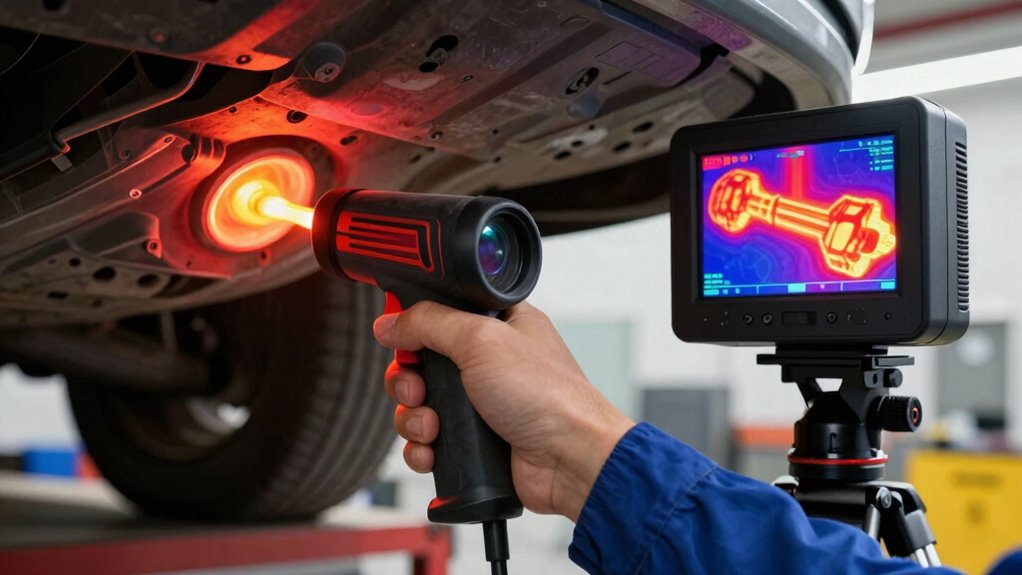
If you want to find driveline heat problems faster, a thermal camera is your best choice. It provides real-time, broad-area heat maps, making hotspots instantly visible without multiple spot checks. An IR gun is more suited for quick, targeted measurements of specific spots, but it takes longer to scan large surfaces. If you want a quicker, more detailed heat assessment, stick with a thermal camera—more details lie ahead if you continue.

Get business pricing on garage and car supplies
- Business-only prices and quantity discounts
- Tax-exempt purchasing
- Multiple users, one account, clear invoices
Key Takeaways
- Thermal cameras scan broad drivelines quickly, providing instant heat pattern visualization for faster hotspot identification.
- IR guns offer rapid, precise temperature readings at specific points, but are slower for large-area assessments.
- Thermal cameras reduce inspection time by covering extensive surfaces in a single scan, ideal for early, comprehensive problem detection.
- IR guns excel in quick targeted checks but require multiple measurements, which can slow overall detection speed.
- Overall, thermal cameras enable faster detection of driveline heat issues across large areas, while IR guns suit focused, quick spot checks.
thermal camera for vehicle heat detection
As an affiliate, we earn on qualifying purchases.
As an affiliate, we earn on qualifying purchases.
How Do Thermal Cameras and IR Guns Detect Heat Differently?
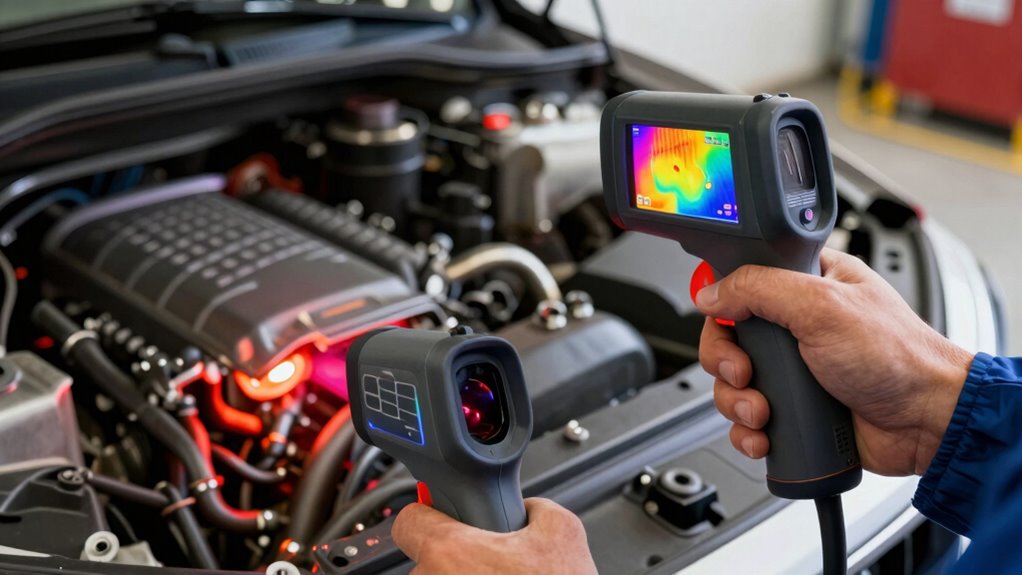
While both thermal cameras and IR guns detect heat, they do so in fundamentally different ways. Thermal cameras use thermal imaging technology to capture the infrared radiation emitted by objects, creating detailed heat maps that display temperature variations across surfaces. This allows you to scan large areas quickly and see a visual representation of heat patterns. In contrast, IR guns are point-measuring devices that focus on a specific spot, providing an instantaneous temperature reading. They don’t generate heat maps but give precise temperature data at one location. Thermal imaging technology is central to understanding how these devices differ in their applications. Additionally, understanding the technology behind infrared detection helps in choosing the right tool for specific diagnostic tasks. thermal cameras utilize sensors that can detect temperature differences across a broad area, making them invaluable for comprehensive heat analysis. IR guns are better suited for targeted spot checks when you need quick, accurate temperature measurements.
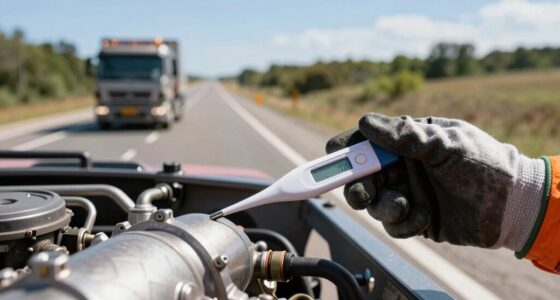
IR gun for driveline temperature measurement
As an affiliate, we earn on qualifying purchases.
As an affiliate, we earn on qualifying purchases.
Why Use Thermal Cameras for Visualizing Driveline Heat Patterns?
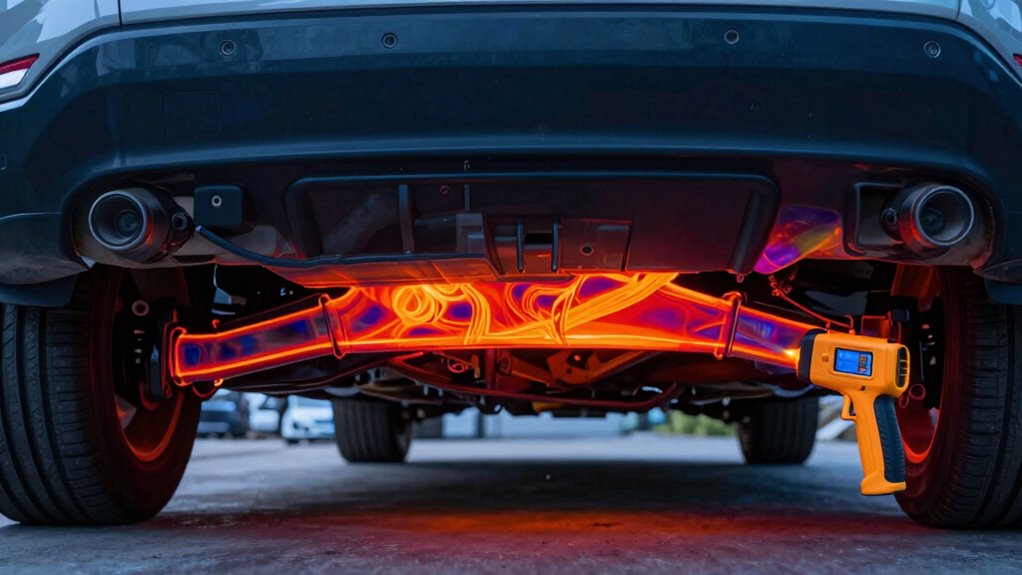
Thermal cameras offer enhanced visual detection of heat patterns across the entire driveline, making issues easier to spot. You can inspect without making contact, reducing safety risks and equipment interference. This non-contact approach helps you get thorough, real-time insights into driveline performance. Additionally, thermal imaging can be integrated into modern bathroom systems to monitor environmental conditions and ensure optimal operation. Incorporating cycling safety awareness into your diagnostics can further improve preventative maintenance and reduce downtime. Recognizing preventative maintenance strategies can help extend the lifespan of driveline components and improve overall vehicle safety. Ensuring proper routine checkups can also assist in early detection of potential heat-related issues before they escalate, especially when combined with indoor air quality monitoring techniques that can detect microplastics and other airborne contaminants that may affect equipment.
Enhanced Visual Detection
Because thermal cameras can detect heat patterns that are invisible to the naked eye, they are essential for visualizing driveline heat distributions with precision. This capability allows you to perform detailed visual analysis of heat flow, identifying hotspots and irregular heat patterns quickly. Thermal imaging provides a clear, real-time visual representation of temperature variations across driveline components, making it easier to pinpoint problems early. You don’t need to interpret complex data or rely solely on numerical readings; instead, you see the heat distribution directly. This enhanced visual detection helps you make faster, more accurate diagnoses, reducing downtime and preventing potential failures. Overall, thermal cameras give you a powerful tool for intuitive, all-encompassing visualization of driveline heat issues.
Non-Contact Inspection
Non-contact inspection with thermal cameras allows you to observe heat patterns without physically touching components, reducing the risk of damage or disturbance. This method provides a safe, efficient way to identify driveline heat issues quickly. Proper sensor calibration guarantees accurate temperature readings, which is vital for reliable diagnostics. The high image resolution of modern thermal cameras helps you detect even subtle heat variations, making problem areas easier to pinpoint. With non-contact inspection, you can scan multiple components rapidly, saving time during maintenance. Plus, you avoid interfering with delicate parts or moving machinery, maintaining safety and integrity. This approach empowers you to make informed decisions based on precise heat maps, leading to faster troubleshooting and more effective repairs. Enhanced accuracy in temperature measurement further improves diagnostic confidence, ensuring issues are correctly identified and addressed promptly. Additionally, thermal imaging techniques enable comprehensive assessments that can reveal hidden problems not visible to the naked eye. Recognizing the importance of proper calibration ensures that the readings you rely on are consistently accurate, which is crucial for critical diagnostics. Incorporating advanced thermal analysis can also help monitor equipment over time, identifying gradual issues before they become critical. Furthermore, utilizing real-time data allows for immediate decision-making during inspections, increasing efficiency.
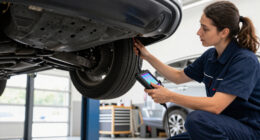
automotive thermal imaging camera
As an affiliate, we earn on qualifying purchases.
As an affiliate, we earn on qualifying purchases.
How IR Guns Help Quickly Spot Heat Sources in Driveline Components?
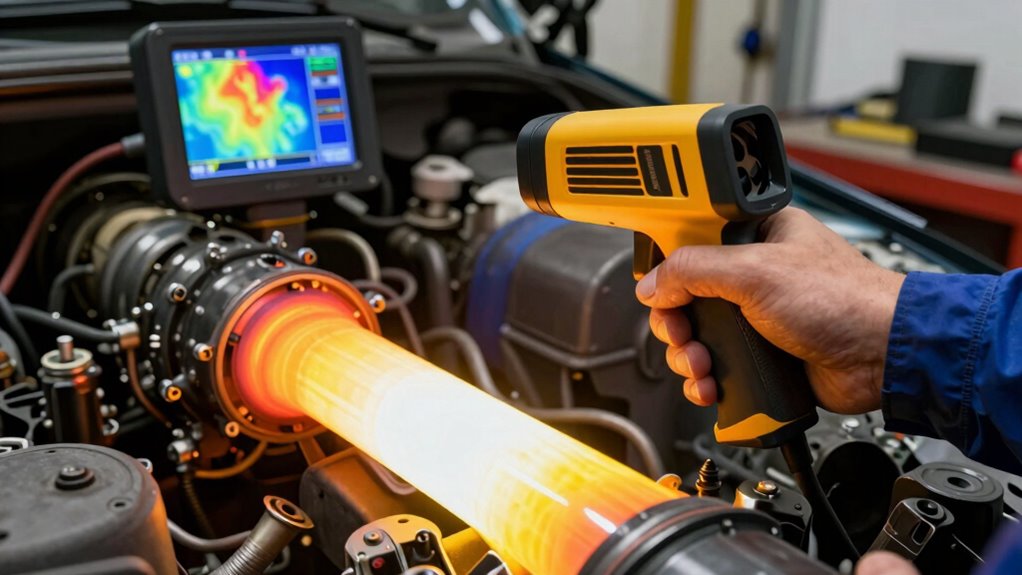
IR guns allow you to quickly identify heat sources in driveline components without the need for direct contact. They detect heat transfer effectively by measuring thermal radiation, revealing hotspots caused by friction or faulty lubrication. Because of their fast response time, you can pinpoint areas with high thermal conductivity where heat moves quickly through metal parts. This capability is especially useful in Victorian Steampunk Roleplay contexts, where detailed attention to intricate components is essential. The tool’s precision makes it easy to scan complex assemblies swiftly. Use the table below to understand key features:
| Feature | Benefit | Application | |
|---|---|---|---|
| Instant readings | Rapid detection of heat sources | Spotting hotspots quickly | |
| Non-contact method | No disruption or damage to components | Safe inspections | |
| Accurate temperature | Precise identification of problem areas | Diagnosing driveline issues | |
| Thermal transfer | Reveals how heat moves through parts | Assessing component health | Additionally, understanding thermal transfer enhances your ability to evaluate overall system performance. |
infrared temperature gun for cars
As an affiliate, we earn on qualifying purchases.
As an affiliate, we earn on qualifying purchases.
Which Tool Detects Heat Faster: Thermal Cameras or IR Guns?
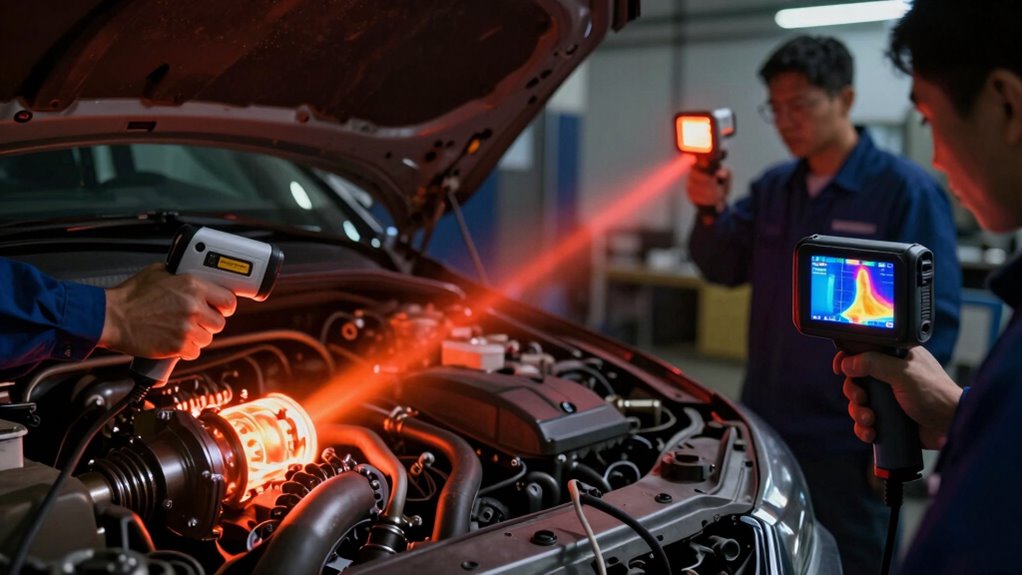
When it comes to detecting heat quickly, thermal cameras generally outperform IR guns due to their ability to scan large areas rapidly. With thermal imaging, you can instantly see heat patterns across extensive surfaces, speeding up diagnostics. IR guns focus on pinpointing specific spots, which takes longer if you’re scanning multiple components. Thermal cameras provide a real-time heat map, allowing for faster identification of hot spots. Here’s what makes thermal imaging faster:
- Quick area-wide heat detection
- Instant visualization of temperature differences
- Immediate identification of problem areas
- Reduced need for multiple readings
- Coverage of large surfaces enhances efficiency during diagnostics
Additionally, thermal cameras often come equipped with advanced imaging technology that further accelerates the diagnostic process. While IR guns are precise for targeted checks, thermal cameras are your best choice for rapid, all-encompassing heat detection. They’re designed to save you time during driveline diagnostics.
How Easy Are Thermal Cameras and IR Guns to Use During Diagnostics?
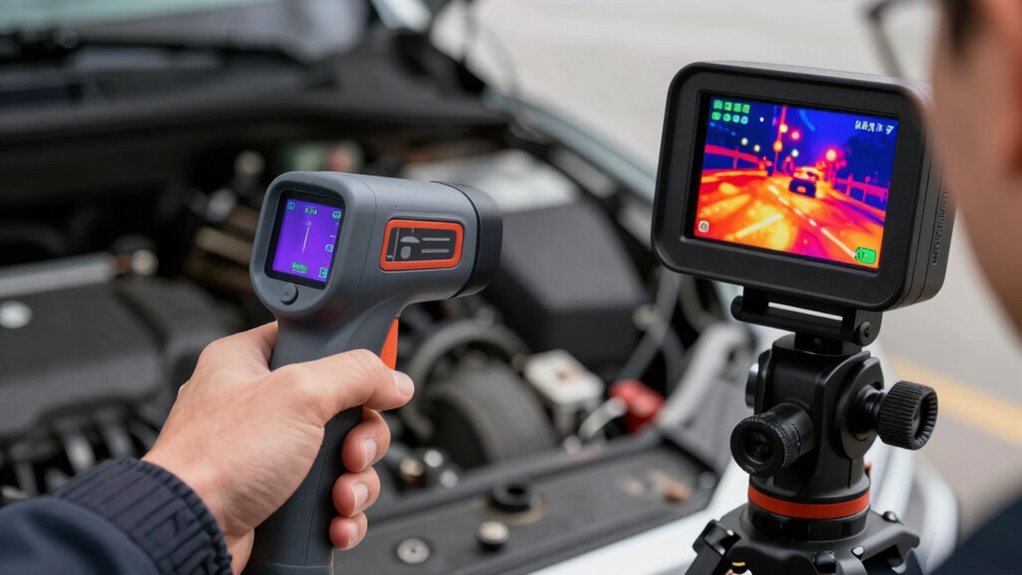
Thermal cameras and IR guns are both designed to help you quickly identify heat-related issues, but their ease of use varies depending on the situation. Thermal imaging allows you to perform all-encompassing heat mapping, giving you a broad view of temperature variations across surfaces. This comprehensive overview makes it easier to spot patterns or anomalies without moving the device constantly. With practice, you’ll find thermal cameras intuitive for scanning large areas, while IR guns excel for quick checks on specific components. Additionally, proper technique can significantly improve diagnostic accuracy with either tool. Mastering device calibration can further enhance your results, ensuring accurate and reliable readings. For optimal results, understanding ergonomic design and how it impacts handling can make a big difference in your diagnostic efficiency. Moreover, familiarity with user interface can streamline the diagnostic process, saving time and reducing errors. Overall, both tools are user-friendly, but thermal imaging offers a more visual approach for detailed diagnostics.
Which Device Provides More Precise Heat Readings and Detail?
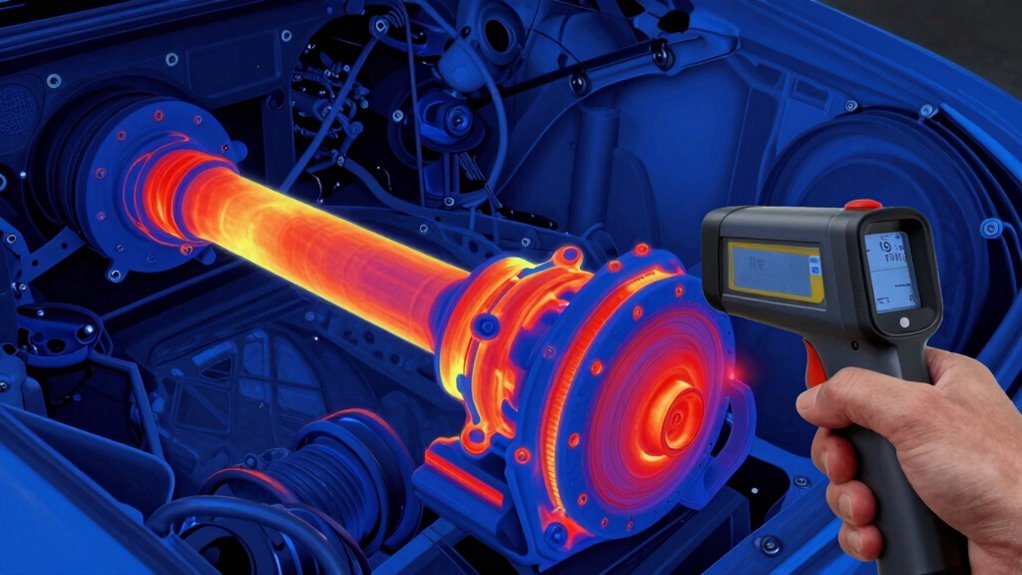
While both thermal cameras and IR guns can measure heat, thermal cameras generally provide more precise and detailed readings. This is due to their superior sensor accuracy and higher image resolution, which allow you to see temperature variations across a broader area with clarity. With a thermal camera, you can spot tiny hot spots or cold spots that an IR gun might miss, giving you a more all-encompassing view of driveline heat issues. The detailed images enable better diagnosis and better understanding of heat distribution. You get to see the bigger picture, not just single points. This makes thermal cameras especially useful for identifying subtle problems before they become serious. Overall, they deliver more precise heat readings and richer detail than IR guns. Additionally, thermal imaging technology offers real-time visualization, making troubleshooting more efficient and effective.
Is a Thermal Camera or IR Gun More Budget-Friendly?
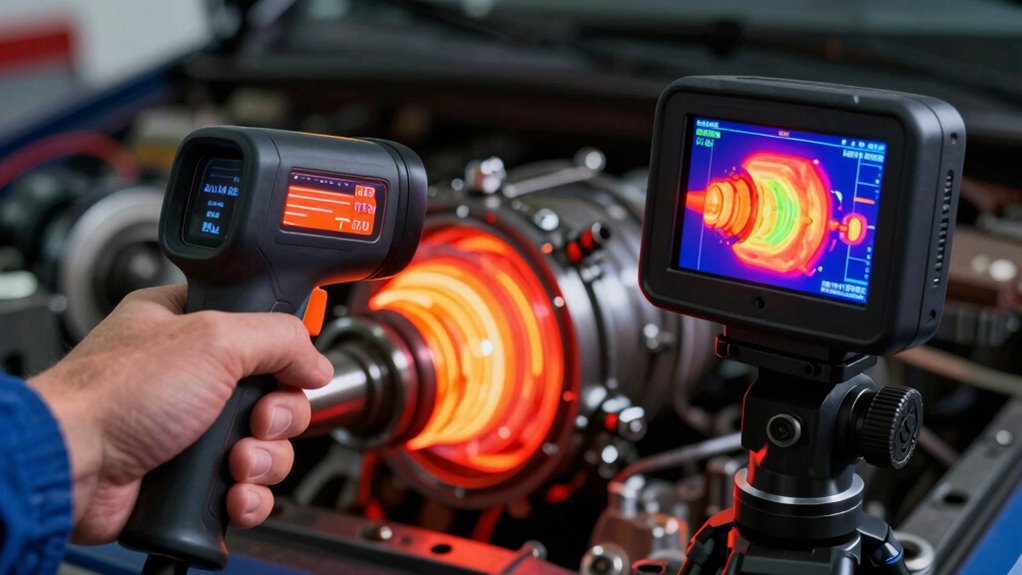
Generally, IR guns are more budget-friendly than thermal cameras, making them a popular choice for those who need basic heat measurements without breaking the bank. When considering the cost comparison, IR guns usually have a lower initial price and are easier to afford upfront. They also require minimal maintenance, often just battery replacements and occasional calibration, which keeps ongoing costs low. In addition, understanding media literacy can help consumers make more informed decisions about the features and limitations of each device. In contrast, thermal cameras tend to be more expensive initially and may have higher maintenance requirements due to their complex components and software needs. If your budget is tight and your needs are straightforward, an IR gun offers a practical, cost-effective option. However, if detailed imaging and advanced features are essential, investing in a thermal camera might be justified despite the higher costs.
When Does a Thermal Camera Outperform an IR Gun?
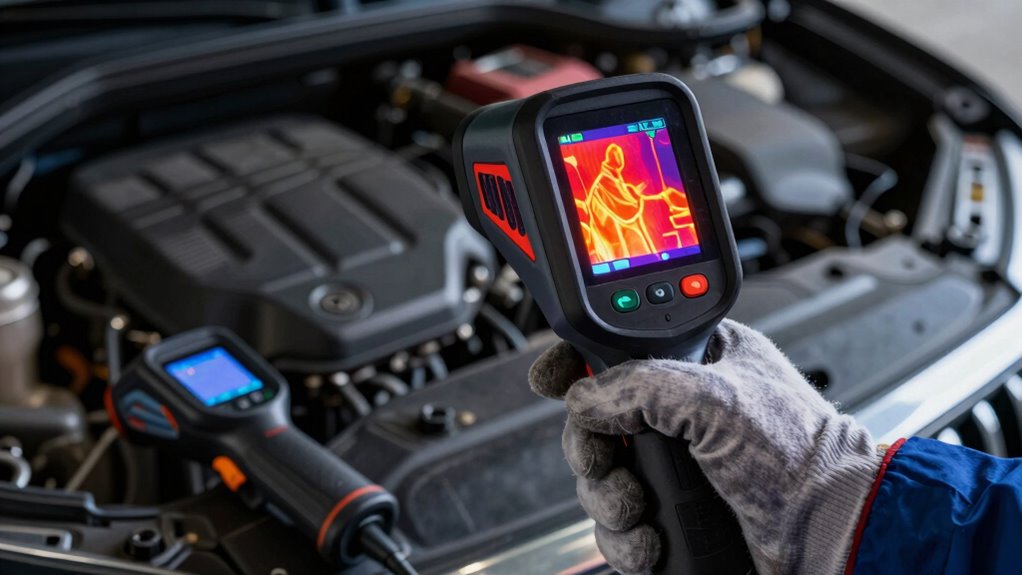
A thermal camera outperforms an IR gun when you need to scan large areas quickly and efficiently. It provides wide area coverage, saving you time compared to handheld devices. Plus, thermal cameras enable faster temperature assessments across multiple points simultaneously.
Wide Area Coverage
Have you ever wondered which device is better for scanning large areas quickly? Thermal cameras excel in wide area coverage because of their ability to capture thermal imaging over extensive zones in a single shot. This makes heat detection more efficient when evaluating large driveline regions or engine compartments. Unlike IR guns, which require point-by-point measurements, thermal cameras provide a thorough view instantly.
Consider these advantages:
- Rapid scanning of large surfaces
- Instant identification of hot spots
- Reduced need for multiple readings
- Better visualization of heat patterns
This broad perspective helps you spot issues faster and more accurately. If you’re dealing with extensive driveline components, a thermal camera saves time and improves your diagnostic efficiency, making it the go-to choice for large-scale heat detection.
Faster Temperature Assessments
When quick temperature assessments are critical, thermal cameras outperform IR guns by providing immediate, all-encompassing readings across surfaces. They analyze heat transfer over large areas simultaneously, saving you time. Unlike IR guns, which require point-by-point measurements, thermal cameras capture the entire scene in the infrared spectrum at once. This rapid data collection allows you to identify hotspots and heat anomalies instantly, speeding up diagnostics. When dealing with complex driveline components, the ability to see temperature variations across surfaces helps pinpoint issues faster. The infrared spectrum enables thermal cameras to visualize heat transfer patterns effectively, giving you a thorough view in seconds. This makes thermal cameras ideal for quick, accurate assessments where time is of the essence.
When Is an IR Gun the Better Choice for Driveline Heat Checks?
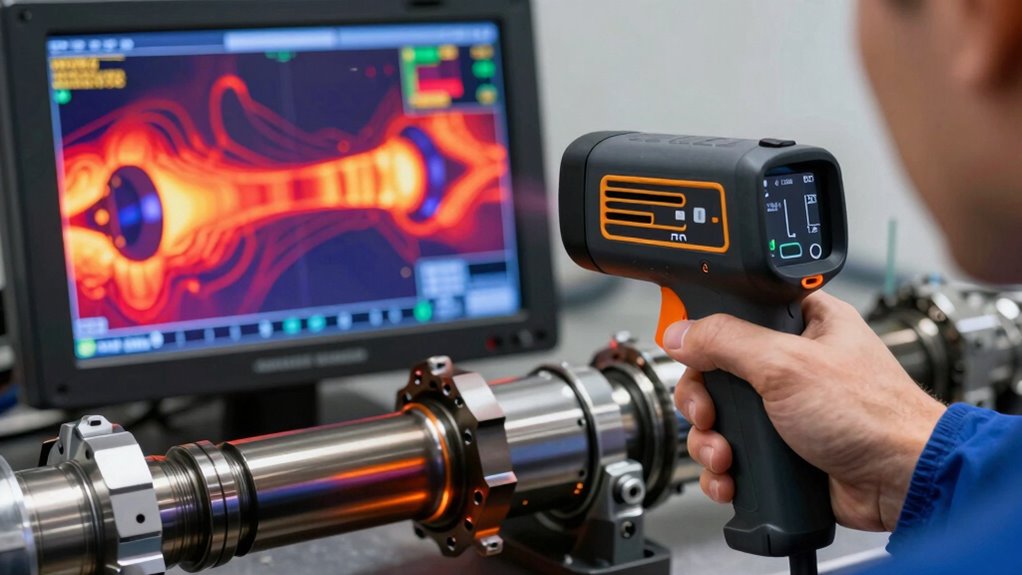
IR guns are often the preferred choice for driveline heat checks when quick, point-and-shoot measurements are needed in dynamic or hard-to-reach environments. They excel at providing instant temperature readings without the need for extensive setup or thermal imaging. Use an IR gun when you need rapid, targeted heat visualization of specific components, especially in moving or tight spaces. They’re ideal for quick diagnostics and pinpointing hot spots on driveline parts. Additionally, IR guns are more portable and easier to operate on the fly. Here are some scenarios where they shine:
IR guns provide instant, targeted heat readings in tight, dynamic environments for quick diagnostics and pinpointed hot spot detection.
- Rapid spot measurement in tight or hard-to-reach areas
- Checking individual components during dynamic inspections
- Situations requiring immediate temperature confirmation
- When you need a simple, direct heat visualization tool without detailed imaging
Final Tips for Choosing the Best Tool to Detect Heat Quickly
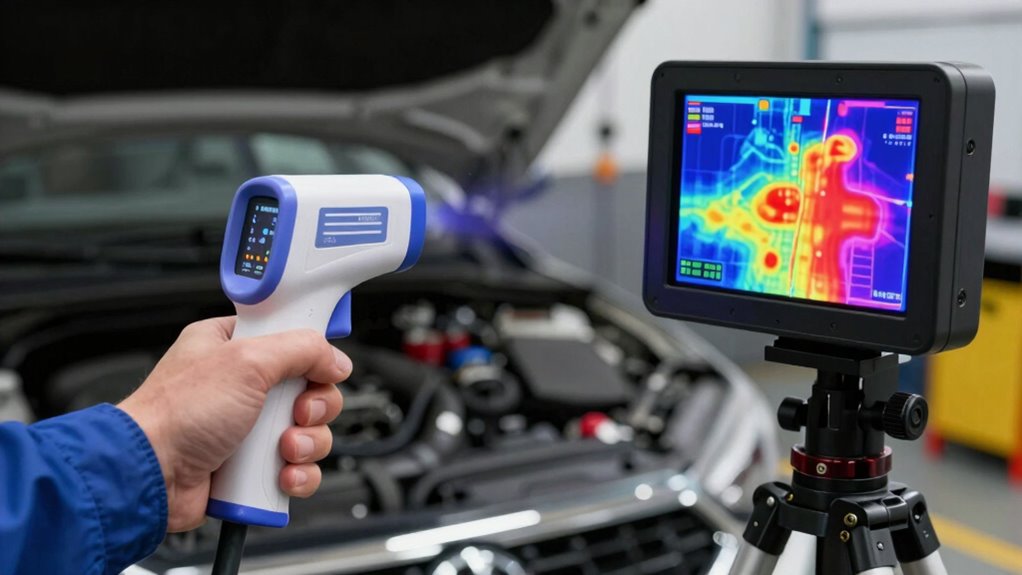
Choosing the right tool for quick heat detection hinges on understanding your specific inspection needs. Verify the device you select has reliable sensor calibration to provide accurate readings, especially when diagnosing driveline issues. Proper calibration reduces errors and saves time during inspections. Consider user safety by choosing tools with non-contact features, minimizing risk around hot components. Look for a device that offers clear, real-time thermal images or readings, making it easier to identify trouble spots quickly. If portability matters, select a lightweight, easy-to-handle option. Also, check if the tool has adjustable emissivity settings to improve accuracy across different surfaces. By balancing sensor calibration, safety features, and usability, you’ll select the most effective instrument for fast, reliable heat detection in your diagnostic process.
Frequently Asked Questions
Can Thermal Cameras Detect Hidden or Obscured Heat Sources?
Yes, thermal cameras can detect hidden or obscured heat sources through infrared detection. They reveal heat signatures that might be concealed or blocked from plain sight, making them great for uncovering heat concealment. You can see through some barriers, like smoke or light foliage, which helps you identify issues that infrared detection might uncover. This makes thermal cameras invaluable for finding hidden heat sources quickly and accurately.
How Do Environmental Conditions Affect IR Gun Accuracy?
Environmental interference, calibration challenges, and changing weather conditions directly impact your IR gun’s accuracy. When you face bright sunlight, wind, rain, or fog, your readings become less reliable, making it harder to pinpoint heat problems quickly. You need to account for these factors, regularly calibrate your device, and understand how environmental conditions can distort thermal readings, so you can detect driveline heat issues efficiently and confidently.
What Safety Precautions Are Needed When Using These Devices?
When using thermal cameras or IR guns, you need to prioritize safety by wearing protective gear like gloves and safety glasses to shield yourself from potential heat or debris. Handle the device carefully, following manufacturer instructions to prevent accidents. Always make certain your hands are dry and the device is in good condition. Keep a safe distance from hot components, and avoid pointing the device at your face or others to reduce injury risk.
Are There Specific Training Requirements for Operating These Tools?
You need specific training to operate these tools effectively. While sensor calibration guarantees accurate readings, operator certification ensures you understand proper usage and safety protocols. Without proper training, you risk misinterpreting heat patterns or damaging equipment. So, invest in certified courses that cover calibration, safety, and operation techniques. This preparation helps you identify driveline heat problems faster and more reliably, giving you confidence and precision in your inspections.
How Do Maintenance and Calibration Impact Measurement Reliability?
You need to maintain measurement consistency by regularly calibrating your thermal camera or IR gun. Calibration frequency directly impacts reliability; infrequent calibration can cause inaccurate readings, leading you to miss heat issues. By sticking to a consistent calibration schedule, you ensure your measurements stay accurate over time. Proper maintenance also prevents sensor drift and ensures your tools give you dependable data, making your diagnostics faster and more precise.
Conclusion
Choosing between a thermal camera and an IR gun depends on your needs. If you want quick, pinpoint heat checks, an IR gun might be your best bet. But for a detailed view of driveline heat patterns, a thermal camera can give you the full picture. Remember, sometimes you need to see the forest for the trees, so pick the tool that helps you spot problems before they become costly.
Fall Picks
fall essentials
As an affiliate, we earn on qualifying purchases.