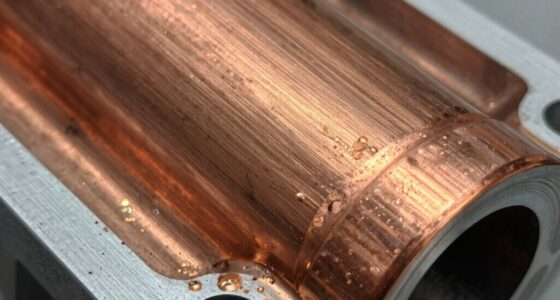
The biggest mistake hurting your UOA is improper gear oil sampling. If you don’t follow proper steps—like using clean, sealed containers, sampling from the right spots, and avoiding contamination—you’ll get inaccurate results that hide wear issues or false alarms. Proper sampling guarantees your analysis reflects real engine conditions. Stay with us to discover proven techniques that will help you get reliable, insightful gear oil test results every time.

Get garage and car supplies delivered free — and shop member deals
- Fast, free delivery on millions of items
- Access to Prime Big Deal Days deals on October 6–7
- Prime Video, Amazon Music and more included
Key Takeaways
- Always use clean, sealed containers and inspect them for cleanliness before sampling.
- Collect samples from the correct, representative points in the gear system, avoiding contaminated areas.
- Avoid touching the inside of containers or lids to prevent introducing dirt or debris.
- Fill samples completely to minimize air exposure and prevent contamination during transport.
- Store and transport samples promptly at stable temperatures, sealing tightly to maintain sample integrity.
Why Proper Gear Oil Sampling Is Key to Accurate UOA Results
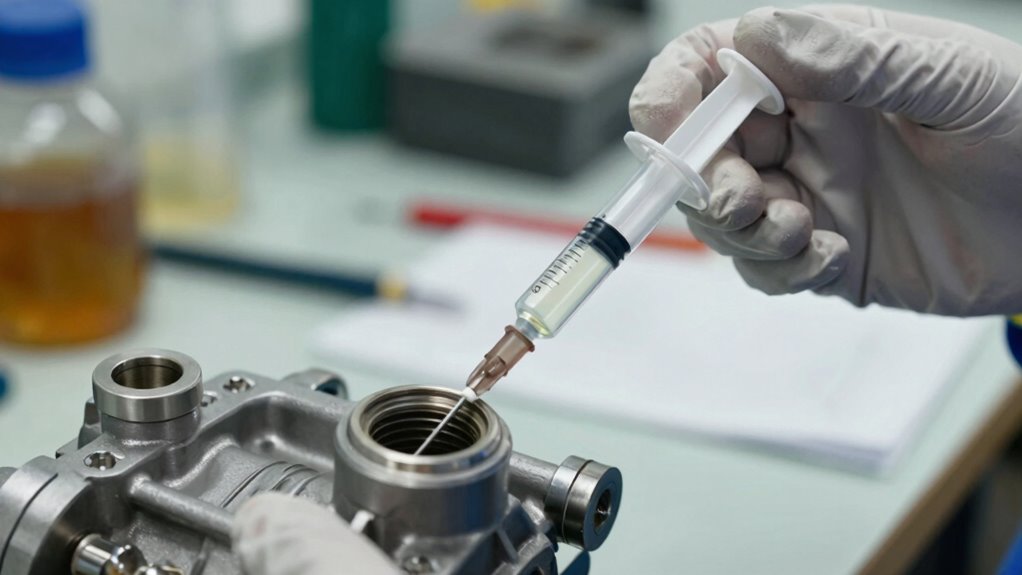
Proper gear oil sampling is essential because it directly affects the accuracy of used oil analysis (UOA) results. Sampling frequency plays a vital role; collecting samples too often or too infrequently can lead to misleading data. Regular sampling ensures you catch wear trends and lubricant degradation early, preventing costly equipment failures. Additionally, understanding gear oil additives is crucial because they influence the oil’s chemistry and wear protection. If you don’t sample correctly, you might misinterpret the additive levels or contamination, leading to wrong maintenance decisions. Accurate sampling methods help you obtain representative samples, revealing true wear rates and additive depletion. Furthermore, considering contaminant introduction from dust and microplastics can impact the analysis results and should be accounted for during sampling. Proper techniques also involve minimizing sample contamination, which is essential for obtaining reliable data. Implementing proper sampling procedures ensures consistency and accuracy over time. Consistently applying sampling best practices helps you obtain reliable data that reflects the true condition of the gear oil. Additionally, using appropriate sampling equipment can significantly improve the quality of your samples. By following proper procedures, you guarantee your UOA provides reliable insights, ultimately extending gear life and optimizing maintenance schedules.
Common Gear Oil Sampling Mistakes You Should Avoid
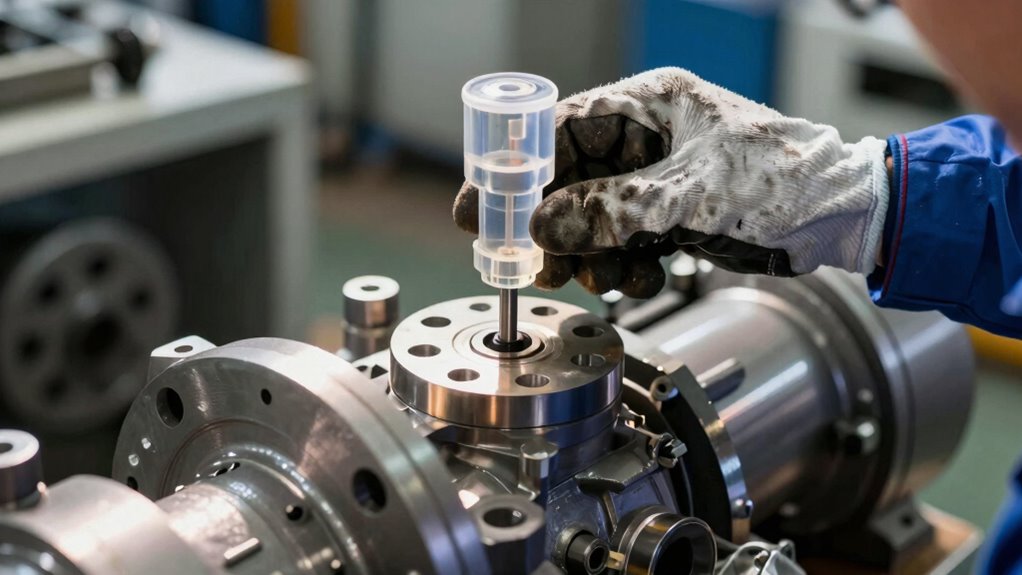
One common mistake in gear oil sampling is collecting samples from the wrong location. This can lead to sampling errors, which skew your analysis and misrepresent the gear’s condition. If you pull oil from a spot that isn’t representative of the entire system, your results won’t reflect the true wear and contamination levels. Additionally, sampling from contaminated areas or using dirty containers increases contamination risks, further compromising the sample’s integrity. Always choose a proper sampling point that accurately reflects the gear’s operating environment. Cleanliness is critical—make sure containers are spotless and free of debris. Avoid shortcuts like using old or unclean equipment, as these simple mistakes can considerably impact your UOA’s accuracy and lead to misguided maintenance decisions. Remember, understanding the dream symbolism of clocks and time can remind you of the importance of precise, timely sampling to maintain optimal gear health. Proper sampling procedures ensure the most accurate results and reliable assessments of your gear’s condition. Moreover, adhering to established sampling protocols can help prevent common pitfalls and improve the consistency of your testing process. Being mindful of contamination control can further enhance the reliability of your oil analysis results. Implementing best practices for sampling can significantly reduce the risk of errors and improve your overall maintenance strategy.
How Your Sampling Method Affects Your Gear Oil Results
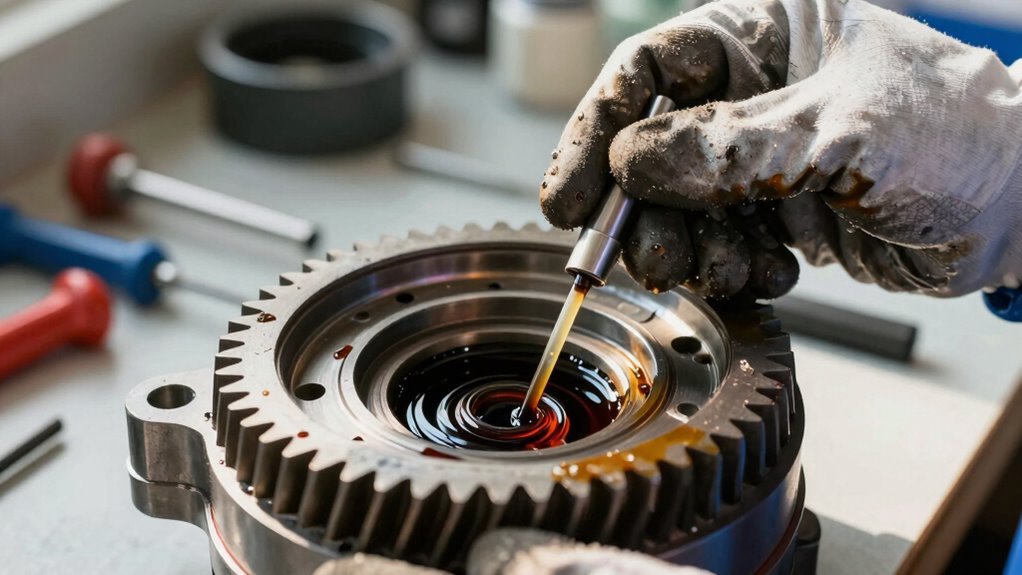
Your sampling method directly impacts the accuracy of your gear oil analysis. Using proper sampling containers ensures contaminants or air bubbles don’t skew results. Choose clean, sealed containers designed for oil sampling to prevent contamination. How you handle and fill these containers matters; filling them slowly and avoiding contact with dirt or debris is vital. Proper sample labeling is equally important—accurately record the date, vehicle info, and sample location to prevent mix-ups or misinterpretation later. Incorrect labeling can lead to false conclusions about your gear’s condition. Even small mistakes in your sampling method can cause significant deviations in test results, leading you to make misguided decisions about maintenance or repairs. Paying attention to sampling techniques and documentation practices is essential to ensure your gear oil analysis is reliable and useful. Additionally, understanding sample handling procedures can help prevent problems that compromise your results. Incorporating proper sample storage practices can further safeguard the integrity of your samples during transportation and analysis. Being aware of contamination risks and how to mitigate them helps maintain sample integrity from collection to testing.
Step-by-Step: How to Collect a Gear Oil Sample Correctly
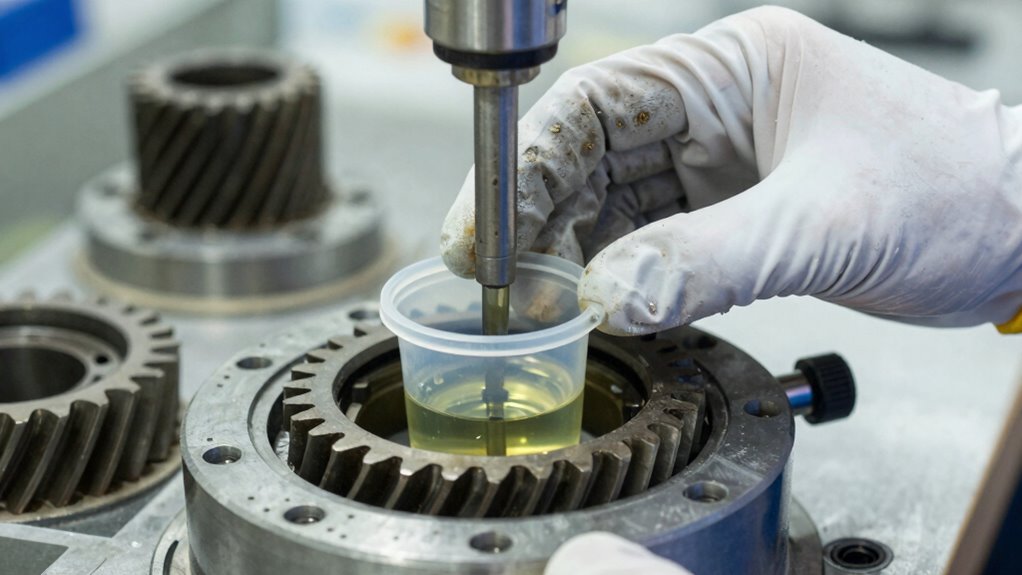
To collect a gear oil sample correctly, start by preparing your sampling tools and workspace. Proper preparation helps avoid sampling pitfalls that can skew your results. Confirm your equipment is calibrated to prevent inaccuracies. Use a clean container designed for sampling and wear gloves to prevent contamination. Follow these steps:
- Turn off the equipment and let it cool down.
- Clean the fill plug area to avoid dirt entry.
- Use a calibrated pump or syringe for extraction.
- Avoid touching the inside of the container.
- Record the sample date and location immediately.
Prevent Contamination During Gear Oil Sampling
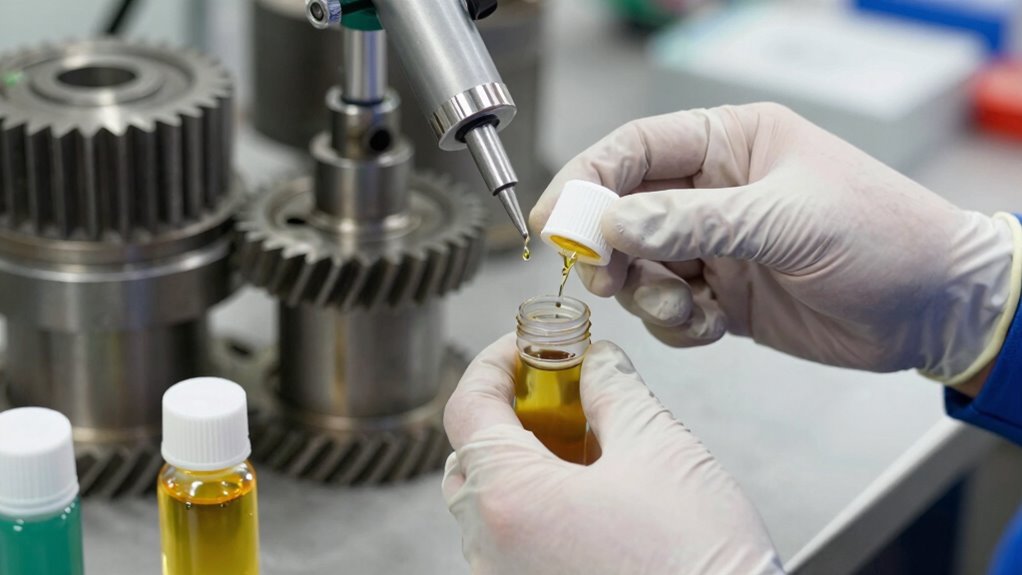
To prevent contamination during gear oil sampling, you need to use proper sampling equipment that’s clean and suitable for the job. Always follow strict contamination protocols, like wearing gloves and sterilizing tools, to keep the sample pure. Doing so guarantees your analysis reflects the gear’s true condition, avoiding false readings. Incorporating essential oil cleaning methods can enhance the sterilization process and ensure sample integrity. Additionally, understanding the manipulation techniques that can compromise sample quality helps you better defend against potential contamination sources. Awareness of contamination prevention strategies further minimizes the risk of introducing foreign substances during sampling. Being aware of ethical considerations in sampling practices can also help maintain integrity and trust in your results. Remember, understanding the Floating on Water principles can aid in recognizing and controlling environmental factors that may influence sample quality.
Use Proper Sampling Equipment
Using the right sampling equipment is essential to prevent contamination of gear oil samples. Proper sampling containers and techniques ensure your results are accurate and reliable. Always choose clean, dedicated containers designed for gear oil, avoiding any that could introduce dirt or residues. Use sampling valves or suction devices to draw oil directly without exposure to the environment. Follow established sampling procedures, such as filling containers without air bubbles and sealing them immediately. Proper handling minimizes contamination risks and preserves sample integrity. Remember, contaminated samples can lead to misleading UOA results and costly misdiagnoses. Incorporating proper sampling techniques into your routine further reduces the chance of introducing contaminants during collection. Additionally, understanding gear oil contamination sources can help you identify potential risks before sampling. Being aware of sample storage best practices also ensures that the samples remain uncontaminated until analysis. Implementing clean handling practices can significantly improve the accuracy of your test results and extend the reliability of your assessments.
Follow Strict Contamination Protocols
Proper handling of gear oil samples requires strict contamination protocols to maintain sample integrity. Always use clean, sealed sampling containers specifically designed for gear oil. Before sampling, thoroughly inspect and sterilize containers to prevent dirt or debris from contaminating the sample. Make sure personnel are well-trained on contamination prevention techniques, such as wearing gloves and avoiding contact with the inside of the container or lid. Keep sampling equipment and containers covered when not in use. Avoid touching the inside of the container or lid, and never reuse contaminated sampling tools. Clear communication and proper procedures ensure everyone understands the importance of contamination control. Following these protocols consistently helps ensure your oil analysis results accurately reflect the gear’s condition, leading to better maintenance decisions.
Signs That Your Gear Oil Sample Was Contaminated
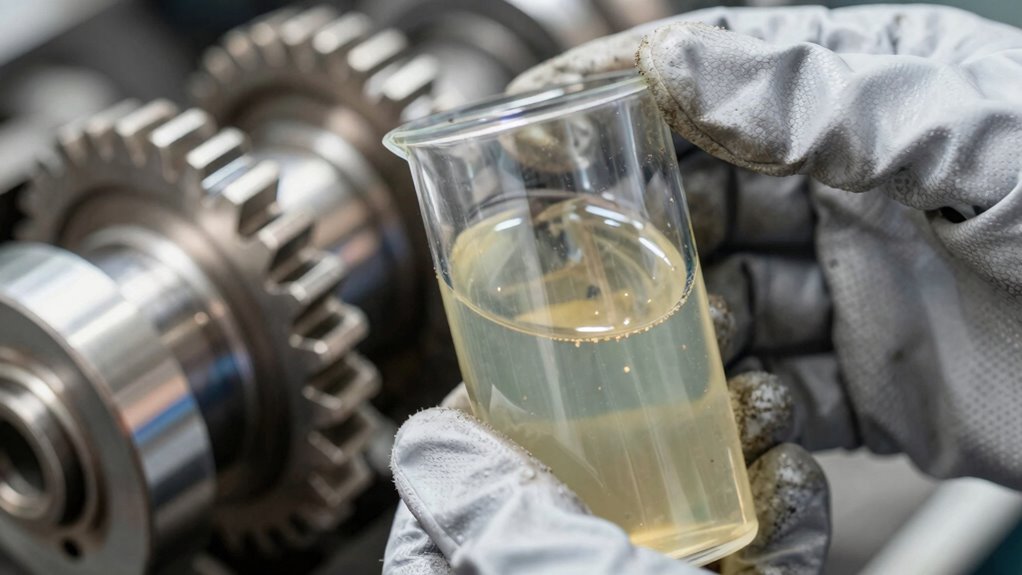
Contamination in your gear oil sample can be subtle but easily detectable if you’re paying attention. Poor sampling environment or handling procedures often introduce contaminants that skew UOA results. Look for these signs:
- Unusual cloudiness or debris in the sample
- Strange odors indicating dirt or chemical intrusion
- Excessive foaming or bubbles during sampling
- Particles settling at the bottom of the container
- Inconsistent sample color compared to previous tests
These signs suggest your sample may have been compromised during collection or handling. Contaminants can come from dirty tools, unclean containers, or environmental dust. If you notice any of these, it’s a clear indicator that your sample isn’t representative of the true gear oil condition. Always ensure a clean sampling environment and proper handling procedures to avoid these pitfalls.
Best Practices for Reliable Gear Oil UOA Results
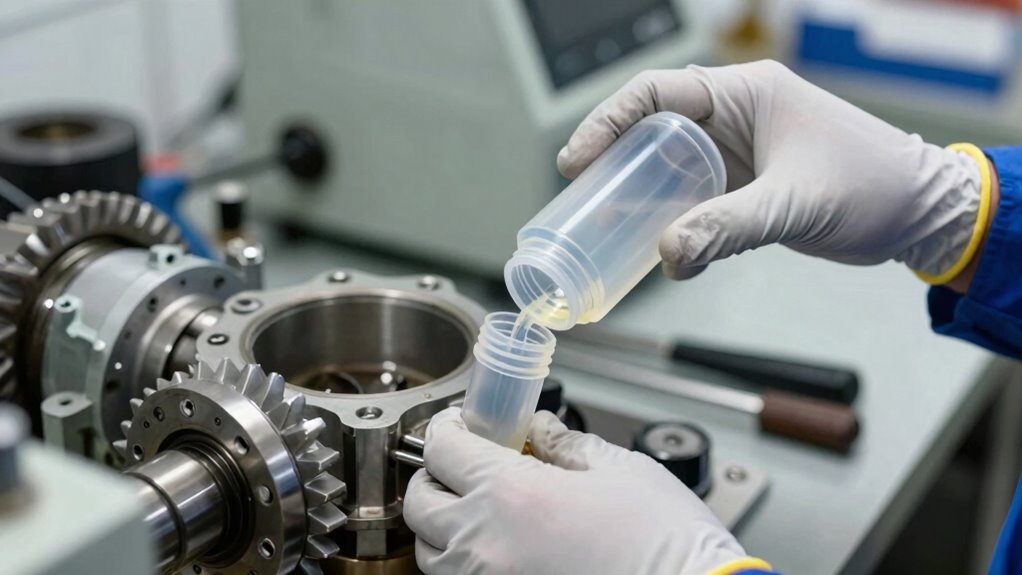
To guarantee your gear oil analysis accurately reflects the true condition of your equipment, maintaining strict sampling procedures is vital. Use clean, appropriate sampling containers to avoid introducing contaminants. Ensure the container is filled completely to prevent air exposure, which can alter results. Proper sample labeling is essential—include date, equipment ID, and oil type to ensure traceability and avoid mix-ups. Handle samples carefully, sealing containers tightly to prevent leaks or contamination during transport. Keep samples at a stable temperature, ideally cool, until they’re analyzed. Consistent procedures help produce reliable UOA results, giving you an accurate picture of gear health. Remember, sloppy sampling practices undermine the entire process, so stay disciplined and methodical for the most trustworthy results.
How Proper Sampling Helps Detect Gear Wear Early
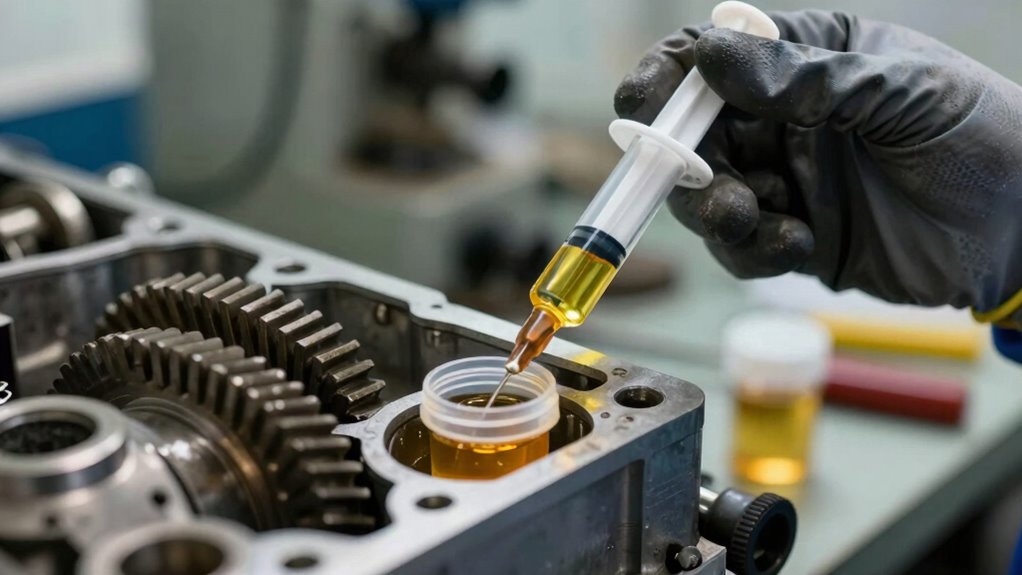
Accurate gear oil sampling is key to catching early signs of gear wear before problems escalate. Proper sampling reveals subtle indicators of oil degradation and gear wear that might otherwise go unnoticed. When you sample correctly, you get a true snapshot of the gear’s condition, allowing you to spot issues early. This helps prevent costly repairs and extends equipment life.
To ensure effective sampling:
- Use the recommended sampling port for consistency
- Avoid contamination during collection
- Collect samples at the right temperature
- Follow proper cleaning procedures before sampling
- Regularly monitor oil analysis results for trends
Frequently Asked Questions
How Often Should I Sample My Gear Oil for Optimal Results?
You should sample your gear oil every 3,000 to 5,000 miles for ideal timing. Studies show that regular sampling helps catch issues early, saving you money and downtime. Typically, sampling frequency depends on your equipment’s usage and environment. By sticking to this schedule, you guarantee accurate results, preventing wear and tear. Consistent testing is key to maintaining gear health and extending its lifespan effectively.
Can Improper Sampling Affect the Lifespan of My Gear Components?
Improper sampling can definitely affect the lifespan of your gear components. If you don’t use the correct sampling technique, you risk introducing contamination, which can skew analysis results and hide early signs of wear. Contamination prevention is vital; always guarantee the sample is taken from a clean, sealed point and handled carefully. Doing so helps maintain accurate UOA results, allowing you to spot issues early and extend your gear’s operational life.
What Tools Are Best for Collecting Gear Oil Samples?
You should use clean sampling containers specifically designed for gear oil testing to guarantee accurate results. High-quality extraction tools like syringes or pumps make collecting samples easier and more precise. Avoid using old or contaminated containers, as they can skew your analysis. Proper tools and containers help you gather representative samples, preventing contamination and ensuring your oil analysis accurately reflects your gear’s condition, ultimately prolonging its lifespan.
How Do Temperature Variations Impact Gear Oil Sampling Accuracy?
Temperature variations can substantially impact gear oil sampling accuracy by affecting temperature stability and sample consistency. When temperatures fluctuate, oil viscosity changes, leading to inconsistent samples that don’t truly reflect the gear’s condition. To ensure accurate results, take samples in a controlled environment or after allowing the oil to reach a stable temperature. This helps maintain sample consistency and provides reliable data for your analysis.
Is There a Specific Time of Day Best for Gear Oil Sampling?
You should schedule gear oil sampling during consistent times of day, ideally when the equipment has been running steadily for a while. This helps minimize temperature variations that can affect sample accuracy. Sampling after the equipment reaches operating temperature makes certain you’re capturing a true representation of the gear oil’s condition. Avoid early mornings or after lengthy shutdowns, as temperature considerations can lead to skewed results.
Conclusion
Think of your gear oil as the heartbeat of your machine. When you skip proper sampling, it’s like reading that heartbeat through a foggy window—missed signs and hidden trouble. But when you follow the right steps, you clear the view, revealing the true rhythm beneath. By avoiding mistakes, you catch problems early, keeping your equipment healthy and your operation running smoothly. Don’t let a simple error cloud your vision—see clearly, and act wisely.
Halloween Picks
halloween
As an affiliate, we earn on qualifying purchases.