
Among these portable jump starters, I’d choose the NOCO Boost GB70 as the best overall for drivers who want a focused, established jump-starting tool without an air compressor to manage. The WOLFBOX MV24A and GOOLOO A3 stand out for combining jump-starting with tire inflation, while the NOCO GB40 is a simpler fit for many everyday cars. The main tradeoff is between a compact unit that handles one job and a larger, multifunction model that adds bulk in exchange for an inflator or other roadside tools. Engine size, battery condition, and how often you expect to use the device matter more than a headline peak-amp figure alone. Read on for the full comparison and guidance on matching a starter to your vehicle.

Get business pricing on garage and car supplies
- Business-only prices and quantity discounts
- Tax-exempt purchasing
- Multiple users, one account, clear invoices
Complete the kit


Key Takeaways
- The NOCO GB70 is my best overall pick for drivers who prioritize a dedicated jump starter, while compressor-equipped models suit people who want tire inflation in the same kit.
- WOLFBOX MV24A and GOOLOO A3 trade simplicity for versatility: their built-in compressors add roadside utility, but also mean more functions and equipment to manage.
- NOCO’s lineup spans distinct vehicle needs. The GB20 is the compact, lower-capacity choice; the GB40 and GBX45 step up for broader everyday use; the GB70 is the more substantial option.
- Peak-amp claims do not tell the whole story. Match the manufacturer’s stated engine support and the unit’s operating instructions to your vehicle instead of choosing by the largest number.
- Large-format models and simpler lithium packs serve different priorities. The Clore JNC660 and DEWALT units emphasize a different form factor or added equipment than compact lithium-only starters, which affects storage and carrying convenience.
| WOLFBOX MV24A 4000A Jump Starter with 160 PSI Air Compressor |  | Best All-in-One | Battery capacity: 88.8 Wh; 24,000 mAh | Peak current: 4000 A | Engine compatibility: Up to 10L gas or 6L diesel | VIEW LATEST PRICE | See Our Full Breakdown |
| NOCO Boost GB70 2000A 12V UltraSafe Lithium Jump Starter |  | Best for Safety-Focused Buyers | Voltage: 12 V | Peak output: 2000 A | Battery capacity: 5000 mAh | VIEW LATEST PRICE | See Our Full Breakdown |
| DEWALT DXAEJ14 1600 Peak Amp Jump Starter with 120 PSI Air Inflator |  | Best for Routine Tire Top-Ups | Peak amps: 1600 | Battery compatibility: 12V WET, GEL, and AGM lead-acid | Supported vehicles: Most 4-, 6-, and 8-cylinder cars and trucks | VIEW LATEST PRICE | See Our Full Breakdown |
| Clore Automotive Jump-N-Carry JNC660 12V Jump Starter, 1700 Peak Amps |  | Best for Long-Reach Clamps | Battery type: AGM lead-acid | Voltage: 12 V | Battery capacity: 22 Ah | VIEW LATEST PRICE | See Our Full Breakdown |
| GOOLOO A3 12V 3000A Jump Starter with Air Compressor |  | Best for Flexible Inflation | Battery capacity: 12,000 mAh | Peak output current: 3000 A | Engine compatibility: Up to 9.0L gas; up to 6.5L diesel | VIEW LATEST PRICE | See Our Full Breakdown |
| NOCO Boost GBX45 1250A UltraSafe 12V Lithium Jump Starter |  | Best for Fast Recharging | Voltage: 12V | Peak current: 1,250A | Engine compatibility: Up to 6.5L gas; up to 4.0L diesel | VIEW LATEST PRICE | See Our Full Breakdown |
| Povasee A6 5000A Jump Starter with 150 PSI Air Compressor |  | Best for Roadside Versatility | Battery type: Lithium Polymer | Battery capacity: 22,800 mAh | Voltage: 12V | VIEW LATEST PRICE | See Our Full Breakdown |
| AstroAI S8 1500A 12V Lithium Car Battery Jump Starter |  | Best Compact Pick | Battery type: Lithium-ion | Voltage: 12V DC | Battery capacity: 8000 mAh | VIEW LATEST PRICE | See Our Full Breakdown |
| OXILAM 6000A Portable Car Jump Starter for Gas and 12L Diesel Engines | 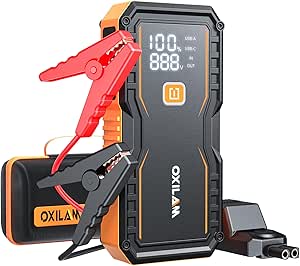 | Best for Large Diesel Engines | Battery type: Lithium-ion | Voltage: 12V | Peak output current: 6000A | VIEW LATEST PRICE | See Our Full Breakdown |
| NOCO Boost GB40 12V 1000A UltraSafe Portable Lithium Jump Starter |  | Best for Multiple Starts per Charge | Battery type: Lithium | Voltage: 12V | Peak output current: 1000A | VIEW LATEST PRICE | See Our Full Breakdown |
| Povasee A30 5000A 12V Portable Car Jump Starter |  | Best for Broad Engine Compatibility | Peak output: 5,000 A | Voltage: 12 V | Battery capacity: 20,000 mAh | VIEW LATEST PRICE | See Our Full Breakdown |
| 12V 4500A Car Jump Starter with 150 PSI Air Compressor |  | Best for Tire Emergencies | Peak output: 4,500 A | Voltage: 12 V | Battery capacity: 7,200 mAh | VIEW LATEST PRICE | See Our Full Breakdown |
| NOCO Boost GB20 500A 12V Lithium Jump Starter |  | Best Compact Pick for Small Gas Engines | Peak amperage: 500 A | Voltage: 12 V | Battery capacity: 2,150 mAh | VIEW LATEST PRICE | See Our Full Breakdown |
| 8000A Portable Car Jump Starter with 27,000mAh Power Bank and LED Light |  | Best for Depleted Batteries and Device Charging | Peak output: 8,000 A | Voltage: 12 V | Battery capacity: 27,000 mAh | VIEW LATEST PRICE | See Our Full Breakdown |
| DEWALT DXAEPS14 2000-Amp Jump Starter with 120 PSI Air Inflator |  | Best Portable Power Station for the Garage | Peak output: 2,000 A | Battery type and capacity: Sealed lead acid; 21 Ah | Voltage: 12 V | VIEW LATEST PRICE | See Our Full Breakdown |
| portable jump starter | Voltage | Battery capacity | Weight | Engine compatibility |
|---|---|---|---|---|
| WOLFBOX MV24A 4000A Jump Start | — | 88.8 Wh; 24,000 mAh | Approximately 3.42 lb main unit | Up to 10L gas or 6L diesel |
| NOCO Boost GB70 2000A 12V Ultr | 12 V | 5000 mAh | 5 lb | — |
| DEWALT DXAEJ14 1600 Peak Amp J | — | — | — | — |
| Clore Automotive Jump-N-Carry | 12 V | 22 Ah | 18 lb | — |
| GOOLOO A3 12V 3000A Jump Start | — | 12,000 mAh | — | Up to 9.0L gas; up to 6.5L diesel |
| NOCO Boost GBX45 1250A UltraSa | 12V | — | — | Up to 6.5L gas; up to 4.0L diesel |
| Povasee A6 5000A Jump Starter | 12V | 22,800 mAh | 1.5 lbs | Up to 10L gas or 8L diesel |
| AstroAI S8 1500A 12V Lithium C | 12V DC | 8000 mAh | 430 g (0.95 lb) | — |
| OXILAM 6000A Portable Car Jump | 12V | — | — | All gas engines; diesel engines up to 12L |
| NOCO Boost GB40 12V 1000A Ultr | 12V | 2150 mAh | 2.4 lbs | Up to 6.0L gas and 3.0L diesel |
| Povasee A30 5000A 12V Portable | 12 V | 20,000 mAh | — | Up to 10L gas or 8L diesel |
| 12V 4500A Car Jump Starter wit | 12 V | 7,200 mAh | 1,200 g | — |
| NOCO Boost GB20 500A 12V Lithi | 12 V | 2,150 mAh | — | Up to 4.0L gasoline |
| 8000A Portable Car Jump Starte | 12 V | 27,000 mAh | 1.8 lb | — |
| DEWALT DXAEPS14 2000-Amp Jump | 12 V | — | 17.3 lb | — |
More Details on Our Top Picks
WOLFBOX MV24A 4000A Jump Starter with 160 PSI Air Compressor
The WOLFBOX MV24A suits drivers who want one roadside unit to handle both a weak battery and a low tire. Its 4000A peak output and listed compatibility with engines up to 10L gas or 6L diesel give it more stated starting headroom than the NOCO Boost GB70, while the built-in 160 PSI inflator adds a job the NOCO does not cover. The 24,000 mAh power bank, 65W USB-C output, and 160W DC output also make it useful for charging larger devices away from an outlet. That breadth comes with a tradeoff: at about 3.42 pounds for the unit, it is heavier than a jump-starter-only choice, and the charging adapter is not included. I’d pick it for capability in one package, not for the lightest glove-box kit.
Pros:- 4000A peak output with stated support for up to 10L gas or 6L diesel engines
- 160 PSI inflator adds tire support without carrying a separate compressor
- 65W USB-C and 160W continuous DC outputs broaden its usefulness as a power source
- 400-lumen emergency light and included storage bag
Cons:- Charging adapter is not included
- The main unit weighs about 3.42 pounds, making it less convenient than a compact jump-starter-only option
- Its several functions add complexity for buyers who only need battery starting
Best for: Drivers who want a single roadside kit for larger compatible engines, tire inflation, and charging devices
Not ideal for: Drivers prioritizing a light, simple jump starter or who need the charging adapter included
- Battery capacity:88.8 Wh; 24,000 mAh
- Peak current:4000 A
- Engine compatibility:Up to 10L gas or 6L diesel
- Inflator:160 PSI; 45 L/min
- USB-C output:65 W
- DC output:160 W continuous
- LED light:400 lumens
- Weight:Approximately 3.42 lb main unit
Our verdict“Choose the WOLFBOX if you want high stated starting capacity plus an inflator and versatile device charging in one roadside unit.”
NOCO Boost GB70 2000A 12V UltraSafe Lithium Jump Starter
The NOCO Boost GB70 is a dedicated jump starter for drivers who value connection safeguards and a rugged enclosure more than extra roadside tools. Its spark-proof and reverse-polarity protection can help reduce the risk of mistakes when attaching the clamps, and the IP65-rated housing is suited to a kit that may see dust, splashes, or rough storage. It is rated for up to 8.0L gasoline and 6.0L diesel engines, a narrower gas rating than the WOLFBOX MV24A, which also includes a tire inflator. The GB70 counters with a focused design, heavy-duty clamps, and up to 40 starts per charge for compatible engines. Its 5-pound weight is substantial for a jump starter, and a roughly six-hour recharge calls for some planning. I’d choose it for protected, repeat-use starting rather than all-in-one utility.
Pros:- Spark-proof and reverse-polarity protection support safer clamp connections
- IP65-rated housing helps guard against dust and water exposure
- Rated for up to 40 starts per charge on compatible engines
- 400-lumen flashlight includes SOS and strobe modes
Cons:- At 5 pounds, it is heavy for a portable lithium jump starter
- Recharge takes about six hours
- Gas engine rating is lower than the WOLFBOX MV24A’s stated 10L limit
Best for: Drivers who want a rugged jump starter with connection safeguards for repeated use across compatible vehicles
Not ideal for: Drivers who need an integrated tire inflator, a lighter carry, or stated compatibility beyond 8.0L gas engines
- Voltage:12 V
- Peak output:2000 A
- Battery capacity:5000 mAh
- Compatible engines:Up to 8.0L gasoline and 6.0L diesel
- Starts per charge:Up to 40
- Flashlight:400 lumens; 7 modes
- Housing:IP65-rated
- Weight:5 lb
Our verdict“Pick the GB70 if rugged construction and connection protections matter more to you than an inflator or lighter weight.”
DEWALT DXAEJ14 1600 Peak Amp Jump Starter with 120 PSI Air Inflator
For drivers whose roadside kit needs a tire pump as much as a jump starter, the DEWALT DXAEJ14 pairs 1600 peak amps with a digital inflator that shuts off at the selected pressure. That automatic stop makes routine top-ups easier to manage than estimating pressure by eye. Compared with the GOOLOO A3, it offers a lower stated peak current and maximum inflation pressure, but its 10-minute inflator shutoff gives buyers a clear limit for each pumping session. It supports compatible 12V WET, GEL, and AGM lead-acid batteries and most 4-, 6-, and 8-cylinder vehicles, so the fit is specific rather than universal. The extension cord for recharging is not included, and the supplied data does not state engine displacement limits. I’d favor it for common-car upkeep over demanding starting needs.
Pros:- Digital inflator automatically shuts off at the selected pressure
- 120 PSI inflator and jump starter combine two roadside functions
- 25W USB-C and 15W USB-A ports can charge compatible devices
- Reverse-polarity protection and an integrated LED area light are included
Cons:- Recharge extension cord is not included
- Limited to compatible 12V WET, GEL, and AGM lead-acid batteries
- Peak current is lower than the GOOLOO A3 and WOLFBOX MV24A
Best for: Drivers with compatible 12V lead-acid vehicles who want an inflator for regular tire-pressure maintenance
Not ideal for: Owners of lithium-battery vehicles or buyers who need a stated high-displacement engine rating and included recharge cord
- Peak amps:1600
- Battery compatibility:12V WET, GEL, and AGM lead-acid
- Supported vehicles:Most 4-, 6-, and 8-cylinder cars and trucks
- Inflator pressure:120 PSI
- Inflator safety feature:10-minute automatic shutoff
- USB-C output:25 W
- USB-A output:15 W
- Recharge method:Standard extension cord; cord not included
Our verdict“Choose the DEWALT DXAEJ14 for routine tire inflation and jump-starting compatible lead-acid vehicles, provided you can supply a recharge cord.”
Clore Automotive Jump-N-Carry JNC660 12V Jump Starter, 1700 Peak Amps
The JNC660 is a traditional 12V jump starter built around 46-inch #2 AWG cables and a 22Ah AGM battery. That cable reach can make it easier to position the unit near a vehicle battery when a smaller lithium pack’s shorter leads would be awkward. It also gives you a voltmeter for checking the starter’s charge status and a 12V outlet for accessories. Compared with the NOCO Boost GB70, the Clore uses an AGM lead-acid battery and offers fewer modern extras, while its 1700 peak amps fall below the NOCO’s 2000A rating. Its biggest portability compromise is plain: 18 pounds is a lot to carry between vehicles, and the supplied data lists a 12V system fit. I’d keep it in a garage or work vehicle where cable length matters more than easy carrying.
Pros:- 46-inch #2 AWG cables provide useful reach around a vehicle
- 22Ah AGM battery provides substantial onboard capacity
- Voltmeter shows the jump starter’s battery charge status
- 12V DC outlet can power compatible accessories
Cons:- At 18 pounds, it is far heavier to carry than the NOCO GB70
- Lead-acid battery makes it a less compact choice than lithium jump starters
- Designed for 12V systems
Best for: Garage owners, fleet drivers, and roadside helpers who value long cables and a charge-status display
Not ideal for: Drivers seeking a lightweight lithium unit for a small trunk or frequent carrying
- Battery type:AGM lead-acid
- Voltage:12 V
- Battery capacity:22 Ah
- Peak output:1700 A
- Cable length:46 in
- Cable gauge:#2 AWG
- Accessory outlet:12V DC
- Weight:18 lb
Our verdict“Choose the JNC660 for a garage or work vehicle where long cables and a charge display matter more than low weight.”
GOOLOO A3 12V 3000A Jump Starter with Air Compressor
The GOOLOO A3 combines a 3000A jump starter with an inflator designed for different kinds of tires and gear. Its preset SUV, car, bike, and ball modes, plus a customizable setting and five nozzles, make it more adaptable than the DEWALT DXAEJ14 for households that inflate more than car tires. At 150 PSI and 35 L/min, the pump is capable on paper, while the stated engine limits of 9.0L gas and 6.5L diesel put it between the DEWALT’s general vehicle description and the higher gas rating of the WOLFBOX MV24A. A digital gauge, automatic shutoff, and protection features add control; the tradeoff is upkeep: during long storage it should be recharged at least every three months, and charging is limited to 14°F–113°F. I’d pick it for mixed inflation needs, with periodic charging in mind.
Pros:- 3000A peak output with stated support for up to 9.0L gas or 6.5L diesel engines
- Inflation modes and five nozzles suit more than car tires
- 150 PSI pump includes a digital gauge and automatic shutoff
- Protection features include reverse-connection, overcurrent, and overheating safeguards
Cons:- Should be recharged at least every three months during long-term storage
- Charging temperature range is limited to 14°F–113°F
- Lower stated gas engine limit and peak output than the WOLFBOX MV24A
Best for: Drivers and households who need one kit for compatible vehicles, bikes, balls, and other inflatables
Not ideal for: Owners who store emergency gear for long periods without checking it or need to charge it outside 14°F–113°F
- Battery capacity:12,000 mAh
- Peak output current:3000 A
- Engine compatibility:Up to 9.0L gas; up to 6.5L diesel
- Maximum inflation pressure:150 PSI
- Airflow:35 L/min
- Inflation modes:SUV, car, bike, ball, and customizable
- Charging temperature:14°F to 113°F
- Warranty:18 months
Our verdict“Pick the GOOLOO A3 if you want a jump starter that can also handle varied inflation tasks and you can keep up with periodic charging.”
NOCO Boost GBX45 1250A UltraSafe 12V Lithium Jump Starter
The GBX45 pairs a useful middle ground in starting capacity with unusually quick recharging: its 60W USB-C Power Delivery can refill the unit in 48 minutes, and a five-minute charge can provide enough power for a jump start. That makes it a better fit for drivers who may need to replenish it between trips than the NOCO Boost GB40, which is rated for more starts per charge but takes longer to recharge. The tradeoff is up to six starts per charge, so it offers less reserve for repeated boosts than the GB40. Spark-proof and reverse-polarity protection help reduce connection mistakes, while the flashlight and device-charging output add roadside utility. I’d choose it for quick recovery between uses, rather than maximum starts from one charge.
Pros:- 60W USB-C Power Delivery supports 48-minute recharging.
- A five-minute charge can provide enough power for one jump start.
- Rated for gas engines up to 6.5L and diesel engines up to 4.0L.
- Spark-proof and reverse-polarity protection help guard against connection errors.
Cons:- Rated for up to six starts per charge, fewer than the GB40’s stated 20.
- The jump-start timer runs for 60 seconds, which can limit how long a starting attempt is available.
Best for: Drivers with compatible larger cars or light trucks who want a jump starter they can recharge quickly between trips.
Not ideal for: People who may need repeated jump starts before they can recharge; the GB40 is rated for more starts per charge.
- Voltage:12V
- Peak current:1,250A
- Engine compatibility:Up to 6.5L gas; up to 4.0L diesel
- Recharge time:48 minutes via USB-C Power Delivery
- Jump-start charge time:5 minutes for enough power for a jump start
- Starts per charge:Up to 6
- USB-C Power Delivery:60W
- Flashlight:100 lumens; 7 modes, including SOS and strobe
- Safety:Spark-proof and reverse-polarity protection
Our verdict“Choose the GBX45 if fast USB-C recharging matters more to you than getting the most jump starts from one charge.”
Povasee A6 5000A Jump Starter with 150 PSI Air Compressor
The Povasee A6 is for drivers who want one portable unit to handle a dead battery and a low tire. Its 150 PSI compressor has four inflation modes, four nozzles, an LCD display, and auto-stop, while the jump starter is rated for engines up to 10L gas or 8L diesel. That breadth makes it more of a roadside kit than the simpler NOCO Boost GB40, which focuses on jump-starting and device charging. The added compressor brings a real tradeoff: it should not run continuously and needs time to cool if it gets hot. At 1.5 pounds, the A6 is listed as lightweight for a combined inflator and booster, but buyers still need to keep it charged every two to three months. I’d pick it for drivers who value tire inflation as much as emergency starting.
Pros:- Combines a 5000A peak-current jump starter with a 150 PSI tire inflator.
- Four inflation modes, four nozzles, LCD display, and auto-stop support varied tire and accessory needs.
- Rated for engines up to 10L gas or 8L diesel.
- Includes protections for reverse polarity, short circuits, overcurrent, and overheating.
Cons:- The compressor needs cooling breaks and should not run continuously.
- The manufacturer recommends recharging every two to three months during storage.
Best for: Drivers who want a single portable device for jump-starting and topping up tires, with an LCD and automatic shutoff.
Not ideal for: Drivers seeking a simple jump starter for frequent repeated boosts; compressor heat limits continuous operation and adds another feature to maintain.
- Battery type:Lithium Polymer
- Battery capacity:22,800 mAh
- Voltage:12V
- Peak current:5000A
- Engine compatibility:Up to 10L gas or 8L diesel
- Compressor:150 PSI; 35 L/min airflow
- Inflation controls:4 modes; 4 nozzles; LCD; auto-stop
- Dimensions:1.9 × 4.2 × 7.7 in
- Weight:1.5 lbs
Our verdict“Pick the A6 if you want jump-starting and tire inflation in one unit and can accommodate compressor cooldowns.”
AstroAI S8 1500A 12V Lithium Car Battery Jump Starter
At 0.95 lb, the AstroAI S8 is the lineup’s light carry for drivers who want a basic emergency booster without an air compressor or a larger accessory bundle. Its 1500A peak output is rated for vehicles with up to 6.0L gas or 3.0L diesel engines, and the voltage-sensing smart cables help identify when a boost is needed. Compared with the NOCO Boost GB40, it is lighter and offers slightly more peak current on paper, while the GB40 is rated for up to 20 starts per charge and has an IP65-rated housing. The S8’s 8000 mAh battery also limits its usefulness as a phone power source compared with larger-capacity options. It suits drivers who prioritize compact storage and straightforward jump-starting over extra roadside tools or extended device charging.
Pros:- Lightweight at 430 g (0.95 lb).
- 1500A peak output for up to 6.0L gas and 3.0L diesel engines.
- Voltage-sensing smart cables help identify when a boost is needed.
- Three flashlight modes include SOS.
Cons:- Limited to 12V vehicles and the stated engine sizes.
- The 8000 mAh capacity may provide limited power for charging devices.
Best for: Drivers of compatible cars who want a lightweight booster with smart cables for a glove box or small roadside kit.
Not ideal for: Owners of larger engines or anyone who needs a jump starter for repeated boosts and substantial device charging; its compatibility and 8000 mAh capacity are limited.
- Battery type:Lithium-ion
- Voltage:12V DC
- Battery capacity:8000 mAh
- Peak output current:1500A
- Vehicle compatibility:Up to 6.0L gas and 3.0L diesel; 12V vehicles
- Dimensions:7.9 × 4.5 × 3.7 in
- Weight:430 g (0.95 lb)
- Flashlight:Steady, strobe, and SOS modes
- Warranty:2 years
Our verdict“Choose the S8 if low weight and compact storage matter more than a large device-charging reserve or broader engine coverage.”
OXILAM 6000A Portable Car Jump Starter for Gas and 12L Diesel Engines
The OXILAM’s main distinction is its stated 6000A peak current and compatibility with diesel engines up to 12L, a broader diesel rating than the NOCO Boost GBX45’s 4.0L limit. That makes it the more relevant option here for owners of large diesel vehicles, provided their vehicle uses a 12V system. It also works as a USB power bank and has an 800-lumen light with flashlight, strobe, and SOS modes. The product data lists its battery capacity as 6000 amp-hours; because that figure is unusual for a portable jump starter, I would not use it to estimate device-charging runtime. The storage routine is another tradeoff: it should be above 50% before use and recharged every three months if left unused. Compared with the GBX45’s fast USB-C recharge, this model’s listed input is more modest.
Pros:- 6000A peak output and stated compatibility with diesel engines up to 12L.
- 800-lumen LED offers flashlight, strobe, and SOS modes.
- Two USB outputs support device charging.
- Includes 10 intelligent safety protections and a battery-status display.
Cons:- The stated 6000 amp-hour capacity is unusual, making device runtime hard to judge from the supplied data.
- The manufacturer recommends charging above 50% before use and every three months during long storage.
Best for: Owners of 12V vehicles with large diesel engines who want a high stated peak current and a built-in emergency light.
Not ideal for: Drivers who want clearly specified battery capacity or fast USB-C recharging; the listed capacity is unusual and its USB-C input is rated up to 18W.
- Battery type:Lithium-ion
- Voltage:12V
- Peak output current:6000A
- Listed battery capacity:6000 amp-hours
- Engine compatibility:All gas engines; diesel engines up to 12L
- USB outputs:2 ports; 5V/3A, 9V/2A, 12V/1.5A
- USB-C input:5V/3A, 9V/2A, 12V/1.5A
- LED light:800 lumens; flashlight, strobe, and SOS modes
- Dimensions:8.7 × 4.7 × 3.5 in
Our verdict“Consider the OXILAM for a compatible 12V large diesel vehicle if its broad engine rating matters more than clearly stated capacity and rapid recharging.”
NOCO Boost GB40 12V 1000A UltraSafe Portable Lithium Jump Starter
The GB40 makes a case for itself through up to 20 starts per charge, more than the GBX45’s stated maximum of six. Its 1000A output is rated for gas engines up to 6.0L and diesel engines up to 3.0L, so that extra reserve comes with narrower engine coverage than the GBX45. For drivers whose vehicles fit those limits, the GB40’s IP65-rated housing and rubberized over-molding add protection against dust, water, and impact in a portable roadside kit. It also serves as a USB-C power bank and has a seven-mode flashlight. The drawback is recharge time: the supplied data says the built-in power bank takes three hours to recharge, while the GBX45 can recharge in 48 minutes via USB-C Power Delivery. I’d favor the GB40 when repeat-start capacity and a protected housing outweigh faster replenishment.
Pros:- Rated for up to 20 starts per charge.
- IP65-rated housing with rubberized over-molding helps protect against water, dust, and impact.
- Spark-proof and reverse-polarity protection support safer connections.
- Seven-mode, 100-lumen flashlight includes SOS and strobe.
Cons:- Engine compatibility is limited to 6.0L gas and 3.0L diesel.
- The built-in power bank takes three hours to recharge.
Best for: Drivers of compatible cars, trucks, or recreational vehicles who want several jump starts available between recharges.
Not ideal for: Owners of engines above 6.0L gas or 3.0L diesel, or drivers who need a quick recharge; the GBX45 covers larger engines and recharges faster.
- Battery type:Lithium
- Voltage:12V
- Peak output current:1000A
- Battery capacity:2150 mAh
- Engine compatibility:Up to 6.0L gas and 3.0L diesel
- Starts per charge:Up to 20
- Flashlight:100 lumens; 7 modes, including SOS and strobe
- Dimensions:4.61 × 8.19 × 4.21 in
- Weight:2.4 lbs
Our verdict“Choose the GB40 if your engine fits its limits and you value more starts per charge and a protected case over faster recharging.”
Povasee A30 5000A 12V Portable Car Jump Starter
Broad engine coverage sets the Povasee A30 apart from compact starters such as the NOCO Boost GB20, which is limited to smaller gasoline engines. The A30 is listed for 12V vehicles with engines up to 10L gas or 8L diesel, and its reset function is intended for batteries below 9V. That makes it a better fit for drivers who want a higher-capacity emergency booster for varied vehicles, while the GB20 is easier to choose for a small car and a simpler kit. The A30 also adds dual USB ports and a 400-lumen light with flashlight, strobe, and SOS modes. Its safety-equipped cables and carrying case round out the package. The tradeoffs are a missing AC adapter and conflicting listed weights: 1.1 lb in the specifications and 2.2 lb in the description.
Pros:- Listed for 12V gas engines up to 10L and diesel engines up to 8L.
- Reset function is designed for batteries below 9V.
- Two USB outputs, including QC3.0, and a 400-lumen three-mode LED light.
- Includes smart safety cables and a carrying case.
Cons:- The listed weight differs between the specifications and description.
- An AC adapter is not included.
Best for: Drivers with a 12V vehicle and a larger gas or diesel engine who want a jump starter that can also charge devices and provide emergency lighting.
Not ideal for: Drivers who need verified lightweight gear or a complete wall-charging setup, since the listed weight conflicts and no AC adapter is included.
- Peak output:5,000 A
- Voltage:12 V
- Battery capacity:20,000 mAh
- Engine compatibility:Up to 10L gas or 8L diesel
- USB outputs:Two; one supports QC3.0
- LED light:400 lumens; flashlight, strobe, and SOS
- Dimensions:6.61 x 3.37 x 1.7 in
- Operating temperature:-22°F to 140°F
Our verdict“Choose the A30 if broad stated engine compatibility and extra roadside features matter more than a confirmed carry weight or included AC adapter.”
12V 4500A Car Jump Starter with 150 PSI Air Compressor
For a driver who wants to handle a low tire as well as a dead battery, this 4500A jump starter with a 150 PSI inflator combines more roadside tasks in one unit than the NOCO Boost GB20, which focuses on jump starting and device charging. The compressor’s automatic shutoff, five inflation modes, and multiple nozzles can make topping up tires or inflatables more straightforward; the smart display also gives this kit a useful status readout. Its 500-lumen light adds flashlight and signaling modes. The tradeoff is that the combination asks for attention to battery charge: starting is recommended only above 50%, and the unit needs recharging every two to three months during extended storage. It also has stated limits on prolonged use or storage in high temperatures, so it suits routine preparedness better than neglect-and-forget storage.
Pros:- Combines a 4500A jump starter, 150 PSI compressor, power bank, and emergency light.
- Compressor offers automatic shutoff, five modes, and multiple nozzles.
- Smart display and 10 built-in safety protections.
- 500-lumen light includes flashlight and signaling modes.
Cons:- Starting is recommended only when the unit has more than 50% charge.
- Requires recharging every two to three months during extended storage.
- Should not be used or stored for extended periods in high temperatures.
Best for: Drivers who want one roadside unit for jump starting, tire inflation, device charging, and emergency signaling.
Not ideal for: Drivers seeking a simple starter for long-term storage or frequent use in high heat, given its charge-maintenance guidance and temperature caution.
- Peak output:4,500 A
- Voltage:12 V
- Battery capacity:7,200 mAh
- Air compressor:150 PSI; automatic shutoff
- Inflation settings:Five modes; PSI, BAR, and KPA
- Lighting:500 lumens; flashlight, SOS, white strobe, and red strobe
- Weight:1,200 g
- Operating temperature:-4°F to 140°F
Our verdict“Pick this if tire inflation is as important as jump starting and you can keep up with its battery maintenance.”
NOCO Boost GB20 500A 12V Lithium Jump Starter
The NOCO Boost GB20 is the focused choice for smaller vehicles: it is rated for 12V gasoline engines up to 4.0L and up to 20 starts per charge. That narrower range makes it less versatile than the Povasee A30, which lists support for much larger gas and diesel engines, but it suits a compact-car owner who wants a starter with clear limits and few extra functions to manage. Spark-proof and reverse-polarity protection help reduce connection mistakes, while the USB-C power bank and seven-mode 100-lumen flashlight cover basic roadside needs. The IP65-rated rubberized housing is built to resist water, dust, and impact. The compromises are its lower 500A output, short 7-inch cable, and another spec inconsistency: weight is listed as both 2.4 lb and 16 ounces.
Pros:- Rated for gasoline engines up to 4.0L and up to 20 starts per charge.
- Spark-proof and reverse-polarity protection.
- IP65-rated rubberized housing resists water, dust, and impact.
- USB-C power bank and seven-mode 100-lumen flashlight.
Cons:- 500A output and 4.0L gasoline limit make it less suited to larger engines.
- The 7-inch cable may limit reach around some battery layouts.
- Weight is listed inconsistently as 2.4 lb and 16 ounces.
Best for: Owners of smaller gasoline cars, motorcycles, or similar 12V vehicles who want a compact, safety-focused booster.
Not ideal for: Drivers with larger engines or diesel vehicles, or anyone who needs longer clamp reach or a reliable published weight.
- Peak amperage:500 A
- Voltage:12 V
- Battery capacity:2,150 mAh
- Engine compatibility:Up to 4.0L gasoline
- Starts per charge:Up to 20
- Protection:Spark-proof and reverse-polarity
- Cable length:7 in
Our verdict“Choose the GB20 for a smaller gasoline vehicle and a compact, protected design; choose the Povasee A30 when engine coverage is the priority.”
8000A Portable Car Jump Starter with 27,000mAh Power Bank and LED Light
The standout here is the combination of force-start technology for depleted batteries and a large 27,000mAh power bank. That gives it a different role from the NOCO Boost GB20, whose lower output and smaller capacity better suit compact gasoline vehicles and basic emergency use. This model also supplies dual USB ports with 18W fast charging, a 3.3-inch color status screen, and an 800-lumen light with several signaling modes. Its 1.8 lb listed weight is notable alongside those features, though the unit’s 9.68-inch length is less pocketable than a small dedicated starter. The casing is described as waterproof, dustproof, and shockproof, with 10-layer protection. Buyers should plan to fully charge it before first use and recharge it every three months; a charging adapter is not included.
Pros:- Force-start technology is designed for vehicles with depleted batteries.
- 27,000mAh capacity and dual 18W fast-charging USB ports.
- 800-lumen light includes flashlight, strobe, orange warning, and SOS modes.
- Color display and 10-layer safety protection.
Cons:- Charging adapter is not included.
- Requires a full charge before first use and recharging every three months.
- Nearly 10 inches long, making it less compact than a dedicated small starter.
Best for: Drivers who want a high-output 12V booster with force-start support, substantial device charging capacity, and a bright roadside light.
Not ideal for: Drivers who prioritize a very small form factor or expect a wall adapter and minimal charging upkeep in the box.
- Peak output:8,000 A
- Voltage:12 V
- Battery capacity:27,000 mAh
- Charging output:18 W fast charging
- USB ports:Two
- Emergency light:800 lumens; flashlight, strobe, orange warning, and SOS
- Display:3.3-inch smart color screen
- Weight:1.8 lb
Our verdict“Choose this for force-start support and a high-capacity power bank in one unit, provided its size and recharge schedule suit your kit.”
DEWALT DXAEPS14 2000-Amp Jump Starter with 120 PSI Air Inflator
The DEWALT DXAEPS14 is the most capable multi-tool here, pairing a 2000-peak-amp starter with a 120 PSI inflator, 500W AC inverter, USB charging, and an LED work light. Compared with the 12V 4500A model with a 150 PSI compressor, the DEWALT offers an AC outlet and a 25W USB-C output, while its inflator is rated to a lower pressure. The LCD shows battery status, voltage, air pressure, and connection warnings, and the inflator can stop at a set target pressure. That breadth can make it useful in a garage or work vehicle, but its 17.3 lb weight and 10.8 x 5.6 x 12.3-inch body are a real burden for a roadside carry kit. The inflator timer also shuts off after 10 minutes, which may mean restarting it for longer jobs.
Pros:- Combines jump starting, a 120 PSI inflator, 500W AC inverter, USB charging, and LED work light.
- Digital inflator shuts off at the selected pressure.
- LCD reports battery status, voltage, pressure, and connection warnings.
- Reverse-polarity protection warns of incorrect clamp connections.
Cons:- At 17.3 lb, it is substantially heavier than compact lithium starters.
- The inflator timer shuts off after 10 minutes and may need restarting.
- Lead-acid battery design is bulkier than compact lithium options.
Best for: Drivers or garage owners who want an AC inverter and digital inflator alongside jump starting, and can store a heavier unit in a vehicle or workshop.
Not ideal for: Drivers who need a lightweight roadside booster or expect to inflate tires continuously without restarting the 10-minute timer.
- Peak output:2,000 A
- Battery type and capacity:Sealed lead acid; 21 Ah
- Voltage:12 V
- Vehicle compatibility:Most 4-, 6-, and 8-cylinder passenger cars and trucks
- Air inflator:120 PSI; automatic shutoff
- AC inverter:500 W
- USB outputs:USB-C 25 W; USB-A 15 W
- Weight:17.3 lb
Our verdict“Pick the DXAEPS14 if you want a garage-style bundle with an AC inverter and inflator, and its weight is acceptable.”
How We Picked
I compared the 15 listed models on the factors that change roadside usefulness: stated starting capacity and vehicle compatibility, clamp and safety features, portability, ease of operation, and whether added equipment such as an air compressor or power bank earns its space. I also considered how much a buyer must carry and maintain, since an all-in-one device can be handy but may be bulkier and more involved than a dedicated starter.
The ranking favors a clear fit for common buyers over the biggest advertised amp figure. I put the NOCO GB70 first as a dedicated jump-starting choice, then give multifunction models and more compact alternatives their own place based on what they add or give up. Models with specialized formats, smaller stated capacity, or less focused feature sets rank lower for general use, though they may suit a particular vehicle or storage need better. I treat listed specifications as manufacturer claims and recommend checking the exact model guidance against the vehicle before buying.
Factors to Consider When Choosing Portable Jump Starters
Choosing a portable starter starts with your vehicle and the situation you want it to handle. These broader checks can help you avoid paying for capacity or extras that do not solve your actual roadside problem.
Match the starter to your engine and battery condition
Start with the vehicle maker’s engine size and fuel type, then compare those details with the jump starter’s stated compatibility. A diesel engine or a larger displacement may call for a different capacity than a small gasoline car. Cold weather, an aging battery, and repeated failed starts can also make a marginally sized unit less useful. Do not treat peak amps as a universal measure because brands may describe and test output differently. Check the manual for limits on consecutive starts and any required pause between attempts. If your vehicle has a recurring battery problem, a jump pack is a temporary aid rather than a repair.
Decide whether a compressor belongs in the same device
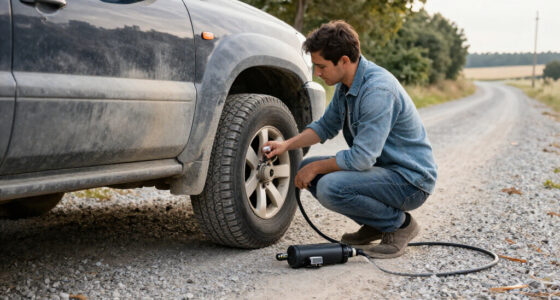
A built-in inflator can save space compared with carrying a separate compressor, especially if you often travel beyond easy access to roadside help. It can also add operating steps, weight, and power draw when you need to use both functions. Think about whether your usual need is a dead battery, a low tire, or both; a feature you rarely use still takes up room. Check the inflator’s pressure range and intended duty cycle against your tires, and follow its cooling instructions. Keep a separate tire pressure gauge if accurate pressure matters, since a display or hose setup may be awkward to use at the roadside. Drivers who want a simple emergency starter may prefer a dedicated unit.
Plan for storage, temperature, and recharging
A starter only helps if it has charge when you need it, so check how the maker recommends storing and recharging it. Heat in a parked car, deep cold, and long periods without use can affect battery performance. Rather than relying on a vague promise of long standby, set a reminder to inspect charge before a long trip and at intervals stated in the manual. Consider the space available in your trunk and whether the unit will stay secured instead of sliding around. A larger pack may be easier to handle with gloves, but harder to tuck into a small vehicle. If you choose a model with extra electronics, check whether those features change its charging routine.
Treat safety features and clamp design as daily usability
Protection against reversed polarity, short circuits, and incorrect connections can reduce the chance of a user mistake, but it does not replace reading the vehicle and jump starter instructions. Look for clear clamp indicators and a connection process you can follow under stress or in poor light. Cable reach matters too: a technically capable pack is frustrating if its leads cannot reach the battery terminals comfortably. Confirm whether your vehicle’s battery is easy to access and whether it uses remote jump points. Some cars have sensitive electronics or special procedures, so check the owner’s manual before connecting any external starter. Do a practice read-through at home so the sequence is familiar when the battery is dead.
Choose extras based on real roadside use
USB outputs, work lights, and power-bank functions can help during a delay, but each extra adds another feature to keep charged and understand. A light is useful when checking clamps after dark; a power bank matters more on trips where a phone could run low. Neither feature makes a starter more compatible with your engine. Compare the device’s actual ports and charging inputs with the cables you carry, since connector standards and included accessories vary. Avoid assuming that a large capacity figure means every output can run at full strength at once. Select extras that replace something you already carry or solve a regular problem.
Frequently Asked Questions
How much jump-starting capacity do I need for my car or truck?
Use the vehicle manufacturer’s engine and fuel-type guidance as your starting point, then check the jump starter’s stated compatibility. Larger engines and many diesel applications can demand more from a starter than a small gasoline car. Cold conditions and a deeply discharged or failing battery may also make starting harder. A higher peak-amp number by itself does not guarantee a better match, since ratings are not always directly comparable across brands. If your vehicle falls near a model’s stated limit, choosing a unit with a clearer compatibility margin is a sensible way to reduce uncertainty.
Can I leave a portable jump starter in my car all year?
That depends on the model’s storage guidance and the temperatures your parked car reaches. Heat and cold can affect the battery and its available output, so check the manual for storage limits rather than assuming any pack is suited to year-round trunk storage. Inspect its charge on the schedule the maker recommends and top it up before long drives. Keep the pack secured and away from items that could damage its clamps or ports. If your climate regularly goes beyond the stated limits, store it somewhere more temperature controlled and bring it along when needed.
Should I buy a jump starter with a built-in air compressor?
Choose one if tire inflation is a problem you want to handle with the same roadside kit and you are comfortable carrying a larger, more complex device. A compressor does not improve the jump-starting match for your engine, so judge those functions separately. Check its pressure range, duty cycle, hose reach, and the time it needs to cool between uses. If you already carry a compressor or mainly need help with a dead battery, a dedicated starter can be simpler to store and operate. For road trips with limited cargo space, an all-in-one may still replace separate equipment.
Will a portable jump starter work if my battery is completely dead?
It may, but the result depends on the battery’s condition, the starter’s design, and the vehicle’s required procedure. Some models include a special override or boost mode for very low battery voltage; that mode can change the normal protection behavior, so follow the instructions closely. A battery with internal damage may not accept a jump at all and may need replacement. Check the vehicle manual for approved jump points and any restrictions before connecting the pack. If the battery repeatedly fails to hold charge, diagnose the battery and charging system instead of relying on a jump starter.
Is a compact jump starter enough for a diesel or a larger vehicle?
Compact size alone does not determine capability, but many small packs are designed around more modest engine requirements. Compare the exact model’s stated diesel and engine-size limits with your vehicle rather than extrapolating from its physical dimensions or amp label. Also consider how often you need to start the vehicle and whether it must work in cold conditions. The NOCO GB20, for example, occupies a different place in this lineup from the larger GB70, so a small-car buyer and a larger-vehicle owner should not treat them as interchangeable. When the vehicle is near a model’s limit, choose a unit with explicit support for that application.
Conclusion
For a best overall dedicated starter, I’d pick the NOCO Boost GB70; it takes the lead for buyers who want a more substantial jump-starting option without an inflator built into the package. The best value in function goes to the GOOLOO A3 for drivers who want both starting and tire inflation, while the WOLFBOX MV24A is another strong all-in-one choice. For a premium-style dedicated option, the GB70 is the lineup’s clearest fit; for beginners who want a compact, straightforward unit for a compatible everyday car, I’d look at the NOCO GB40 and keep the GB20 for smaller needs. Choose the DEWALT or Clore models if their format and equipment better suit how you store and use roadside gear, and select a higher-capacity compressor model only after confirming vehicle fit. The right pick is the one whose compatibility, carrying size, and extra tools match the emergencies you actually want to handle.