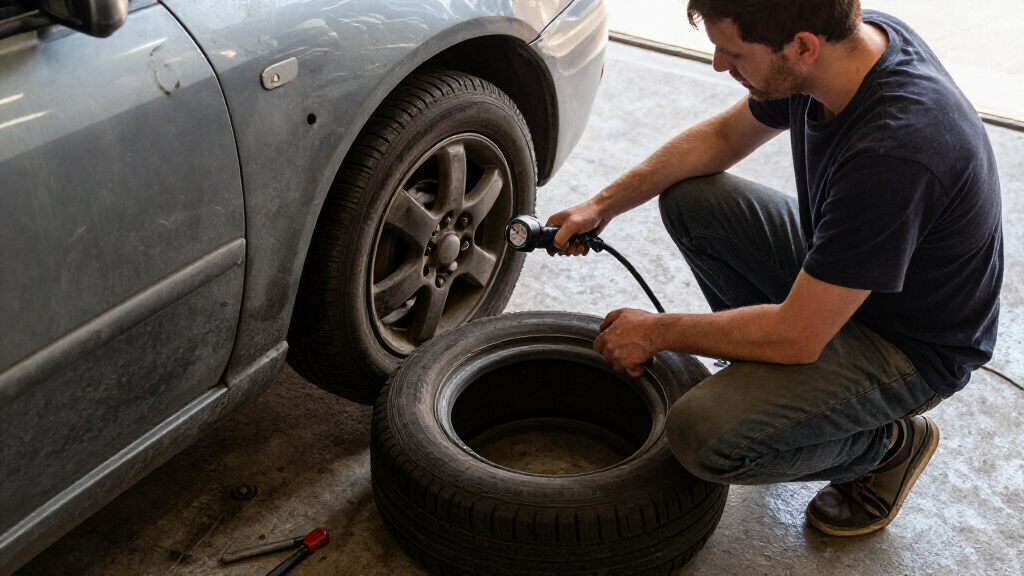

Portable tire inflators range from simple 12V units to battery-powered models that work without a nearby car outlet. My best overall pick is the DEWALT 20V MAX Corded/Cordless Air Inflator, which stands out for offering both power-source flexibility and a tool-platform option. The AstroAI AIRUN H is a straightforward corded choice, while the OlarHike Portable Tire Inflator with Rechargeable Battery and 12V DC Power appeals to drivers who want cordless use with a backup supply. The main tradeoffs are convenience versus charging upkeep, and compact size versus the demands of repeated inflation. Read on for the full comparison and guidance on choosing the right inflator for your car and routine.

Get business pricing on garage and car supplies
- Business-only prices and quantity discounts
- Tax-exempt purchasing
- Multiple users, one account, clear invoices
Complete the kit


Key Takeaways
- Power-source choice drives the biggest difference: the lineup includes 12V-only models, rechargeable cordless units, and the DEWALT DCC020IB, which supports corded and cordless operation.
- The DEWALT DCC020IB is the most flexible pick: its dual-power design suits drivers who want more than a battery-dependent emergency tool, though it is sold as a tool only.
- Simple corded models remain useful: the AstroAI AIRUN H and AstroAI 12V model with integrated storage avoid battery-charge planning, but require access to a vehicle power outlet.
- Several cordless options share a 150 PSI maximum-pressure label: that figure alone does not show how quickly a unit fills a tire or how well it handles repeated use.
- Gauge and shut-off features affect ease of use: DEWALT and CRAFTSMAN list digital pressure gauges and auto shut-off, a helpful combination for drivers who want less monitoring during inflation.
| AstroAI AIRUN H 12V Portable Tire Inflator with Digital Pressure Gauge and LED Light |  | Best Corded Value | Power source: 12V DC car outlet | Motor power: 120 W | Airflow: 35 L/min | VIEW LATEST PRICE | See Our Full Breakdown |
| AstroAI Cordless Tire Inflator, 160 PSI Portable Air Compressor |  | Best for Cordless Convenience | Power sources: 20V rechargeable battery and 12V DC vehicle adapter | Maximum pressure: 160 PSI | Continuous operation: Up to 20 minutes | VIEW LATEST PRICE | See Our Full Breakdown |
| KeenPower 21V Portable Tire Inflator, 160 PSI |  | Best Ready-to-Use Dual-Power Pick | Voltage: 21 volts | Maximum pressure: 160 PSI | Power source: Rechargeable battery or 12V DC car adapter | VIEW LATEST PRICE | See Our Full Breakdown |
| AstroAI Portable 12V DC Tire Inflator with Integrated Storage |  | Best for Tidy In-Car Storage | Power source: 12V DC vehicle outlet | Airflow: 25 L/min | Maximum pressure: 100 PSI | VIEW LATEST PRICE | See Our Full Breakdown |
| DEWALT Portable Tire Inflator with Digital Pressure Gauge and Auto Shut-Off |  | Best for Preset-Based Inflation | Model: DXIF1201 | Maximum pressure: 150 PSI | Power source: Built-in battery or 12V DC car plug | VIEW LATEST PRICE | See Our Full Breakdown |
| CRAFTSMAN Portable 12V Tire Inflator with Digital Gauge and Auto Shut-Off |  | Best for Simple Car-Tire Top-Ups | Model: CMXPTXA1202 | Power: 12V DC corded | Maximum pressure: 150 PSI | VIEW LATEST PRICE | See Our Full Breakdown |
| DEWALT 20V MAX Corded/Cordless Air Inflator, Tool Only (DCC020IB) |  | Best for Flexible Power Options | Model: DCC020IB | Power sources: 20V MAX battery, 12V DC, or 110V AC | Maximum pressure: 80 PSI | VIEW LATEST PRICE | See Our Full Breakdown |
| Airmoto Portable Tire Inflator with Digital Pressure Gauge |  | Best Compact Cordless Pick | Power source: Rechargeable battery | Battery capacity: 2000 mAh | Maximum pressure: 120 PSI | VIEW LATEST PRICE | See Our Full Breakdown |
| OlarHike Portable Tire Inflator with Rechargeable Battery and 12V DC Power |  | Best for Battery Backup | Power sources: Rechargeable battery or 12V DC | Battery capacity: Three 2000 mAh batteries | Maximum tire pressure: 51 PSI | VIEW LATEST PRICE | See Our Full Breakdown |
| SERVOMASTER Cordless Portable Tire Inflator with LED Light, 150 PSI |  | Best Lightweight 150 PSI Option | Model: SM02 | Power source: Battery powered | Maximum pressure: 150 PSI | VIEW LATEST PRICE | See Our Full Breakdown |
| AIRSURE Portable Tire Inflator, 150 PSI Cordless Air Compressor |  | Best for Multi-Use Emergency Kits | Maximum pressure: 150 PSI | Power source: Battery powered | Pressure tolerance: ±1 PSI | VIEW LATEST PRICE | See Our Full Breakdown |
| Lamicall Portable Cordless Tire Inflator, 150 PSI |  | Best for Lightweight Portability | Maximum pressure: 150 PSI | Airflow: 35 L/min (1.25 CFM) | Power: 120 watts | VIEW LATEST PRICE | See Our Full Breakdown |
| AstroAI L7 Portable Cordless Tire Inflator, 150 PSI |  | Best for Published Battery Capacity | Maximum pressure: 150 PSI | Battery capacity: 4,000 mAh | Inflation estimate: Up to 8 tires sized 195/65R15 from 30 to 36 PSI per charge | VIEW LATEST PRICE | See Our Full Breakdown |
| ST10 Portable Tire Inflator with 150 PSI Maximum Pressure, USB-C Charging and 12V Car Adapter |  | Best for Backup Power Options | Maximum pressure: 150 PSI | Power supply: Rechargeable lithium-ion battery and 12V car adapter | Charging port: USB-C | VIEW LATEST PRICE | See Our Full Breakdown |
| OlarHike Cordless Portable Tire Inflator and Air Compressor |  | Best for Flexible Hose Reach | Model: L3V2 | Power source: Battery powered | Battery capacity: 2500 mAh × 2 | VIEW LATEST PRICE | See Our Full Breakdown |
| portable tire inflator | Maximum pressure | Weight | Power source |
|---|---|---|---|
| AstroAI AIRUN H 12V Portable T | 100 psi | — | 12V DC car outlet |
| AstroAI Cordless Tire Inflator | 160 PSI | 1.15 kg | — |
| KeenPower 21V Portable Tire In | 160 PSI | — | Rechargeable battery or 12V DC car adapter |
| AstroAI Portable 12V DC Tire I | 100 PSI | — | 12V DC vehicle outlet |
| DEWALT Portable Tire Inflator | 150 PSI | 0.63 kg | Built-in battery or 12V DC car plug |
| CRAFTSMAN Portable 12V Tire In | 150 PSI | 1.9 lb (listed; another supplied figure is 1.13 kg) | — |
| DEWALT 20V MAX Corded/Cordless | 80 PSI | 2.9 lb | — |
| Airmoto Portable Tire Inflator | 120 PSI | 1.2 lb | Rechargeable battery |
| OlarHike Portable Tire Inflato | — | 1.2 lb | — |
| SERVOMASTER Cordless Portable | 150 PSI | 0.92 lb | Battery powered |
| AIRSURE Portable Tire Inflator | 150 PSI | — | Battery powered |
| Lamicall Portable Cordless Tir | 150 PSI | 450 g | — |
| AstroAI L7 Portable Cordless T | 150 PSI | 15.36 ounces | — |
| ST10 Portable Tire Inflator wi | 150 PSI | 16 ounces | — |
| OlarHike Cordless Portable Tir | — | 15.52 ounces | Battery powered |
More Details on Our Top Picks
AstroAI AIRUN H 12V Portable Tire Inflator with Digital Pressure Gauge and LED Light
The AstroAI AIRUN H is a practical pick for drivers who want a simple roadside top-up tool and do not need cordless operation. It plugs into a 12V outlet, and its long cord and hose give more reach around a parked car than the compact AstroAI 12V Integrated Storage model. The preset gauge and automatic shut-off reduce the need to watch pressure while it runs, while the backlit display and LED help when checking a tire after dark.
Its main tradeoff is dependence on the vehicle outlet; the cordless KeenPower 21V offers more freedom away from the car. The AIRUN H also needs a cool-down after extended use and is not suited to filling large, high-volume inflatables. I’d choose it for routine car and bicycle tire maintenance, not as an all-purpose air source.
Pros:- Automatic shut-off at the selected pressure limits guesswork during top-ups.
- Long cord and hose provide useful reach around a vehicle.
- Backlit gauge and LED light support roadside use in low light.
- Included adapters cover common tire valves and sports balls.
Cons:- Requires a working 12V vehicle outlet.
- Needs a 10-minute cool-down after 15 minutes of continuous operation.
- Not designed for high-volume inflatables.
Best for: Drivers who want an affordable-feeling, corded emergency inflator with enough reach for car tires, bikes, and sports balls.
Not ideal for: Buyers who need cordless use away from a vehicle or plan to inflate air mattresses and other high-volume items.
- Power source:12V DC car outlet
- Motor power:120 W
- Airflow:35 L/min
- Maximum pressure:100 psi
- Cord length:9.84 ft
- Hose length:3 m
- Pressure units:PSI, kPa, Bar, kg/cm²
- Safety features:15A fuse protection, overheat protection, automatic shut-off after 15 minutes of continuous use
Our verdict“Choose the AIRUN H for dependable corded tire top-ups; pick the KeenPower 21V if cordless reach matters more.”
AstroAI Cordless Tire Inflator, 160 PSI Portable Air Compressor
The AstroAI Cordless Tire Inflator suits drivers who want to reach all four tires without running a cable from the car. Its rechargeable 20V battery can handle up to four standard tires per charge, and the 12V vehicle adapter provides a backup when the battery is depleted. That dual-power setup makes it more flexible than the cord-only AstroAI AIRUN H, particularly for driveway checks or roadside stops where outlet access is awkward.
The digital gauge, automatic shut-off, and LED light cover the essentials, while the stated 50 dB noise level is lower than the other listed models. The tradeoff is ownership readiness: a charger is not included, despite the included USB-C cable. Continuous operation is limited to 20 minutes, so I’d favor it for occasional tire maintenance rather than repeated, extended inflation jobs.
Pros:- Cordless 20V operation plus a 12V vehicle-power backup.
- Rated for up to four standard vehicle tires per full charge.
- Automatic shut-off and digital pressure display simplify accurate top-ups.
- Lower listed noise level than the other inflators in this batch.
Cons:- Charger is not included, so buyers need a compatible charging solution.
- Continuous operation is limited to 20 minutes.
- Its 19.7-inch hose is shorter than the AIRUN H’s listed hose.
Best for: Drivers who want a battery-powered inflator for routine car tire checks, with a 12V backup for longer trips.
Not ideal for: Buyers who expect a complete charging setup in the box or need to run an inflator continuously for extended jobs.
- Power sources:20V rechargeable battery and 12V DC vehicle adapter
- Maximum pressure:160 PSI
- Continuous operation:Up to 20 minutes
- Inflation capacity:Up to 4 standard vehicle tires per full charge
- Hose length:19.7 inches
- Weight:1.15 kg
- Display units:PSI, BAR, KPA
- Charger:Not included
Our verdict“Pick this AstroAI for flexible cordless tire care if you already have a way to charge its battery.”
KeenPower 21V Portable Tire Inflator, 160 PSI
The KeenPower 21V stands out for buyers who want cordless use without giving up a wired fallback. It includes both a rechargeable battery and a 12V car adapter, plus a charger that is not supplied with the AstroAI Cordless Tire Inflator. Its one-hour stated charging time also makes battery turnaround easier to plan. Automatic shut-off and a digital gauge handle pressure control, while the three-mode flashlight adds a useful roadside function.
This is a better fit for cars, motorcycles, and e-bikes than large truck tires, which the product is not designed to handle. Its 78 dB listed noise level is also far above the quieter AstroAI cordless model, and its ABS construction is less oriented toward heavy-duty use. I’d choose it when the included power options and accessories matter more than quiet operation or large-tire capacity.
Pros:- Includes a rechargeable 21V battery, charger, and 12V car adapter.
- One-hour stated battery charging time helps reduce downtime.
- Automatic shut-off and digital pressure gauge support controlled inflation.
- Three-mode flashlight and QC3.0 USB output add roadside utility.
Cons:- Not suitable for large truck tires.
- Listed noise level is 78 dB.
- ABS construction is less suited to rough, heavy-duty work.
Best for: Drivers and riders who want a cordless inflator with a supplied charger, 12V backup, and accessories for small vehicle tires.
Not ideal for: Owners of large truck tires or buyers who prioritize quiet operation.
- Voltage:21 volts
- Maximum pressure:160 PSI
- Power source:Rechargeable battery or 12V DC car adapter
- Noise level:78 dB
- Hose length:50 cm
- Battery charging time:1 hour
- Features:Automatic shut-off, digital pressure gauge, three-mode flashlight, QC3.0 USB output
- Included components:21V lithium-ion battery, battery charger, car power adapter cable, storage bag, nozzles
Our verdict“Choose the KeenPower for a well-equipped dual-power kit for passenger vehicles and smaller tires, but not truck tires.”
AstroAI Portable 12V DC Tire Inflator with Integrated Storage
The AstroAI 12V Integrated Storage is aimed at drivers who want a compact corded inflator that keeps its small accessories together. Its built-in storage gives the nozzles and adapters a designated place, a useful distinction from the AstroAI AIRUN H, which relies on loose included accessories. The digital display, preset shut-off, and LED light cover the main needs for checking and topping up tires, and the product description says it can raise a standard tire from 29 to 36 PSI in about a minute.
That convenience comes with a shorter listed hose than the AIRUN H and lower airflow, so I’d keep expectations to occasional passenger-car tire maintenance. It also needs a 12V outlet and carries an 80 dB noise rating. The integrated storage makes it easier to keep ready in a trunk, but it does not solve the power-cord limitation or make it suitable for large inflatables.
Pros:- Integrated accessory storage helps keep adapters together in the vehicle.
- Automatic shut-off helps prevent overshooting the selected pressure.
- Digital display and LED light support low-light tire checks.
- Includes adapters for tires, sports balls, and other small inflatables.
Cons:- Requires a 12V vehicle outlet.
- Listed noise level is 80 dB.
- Its 25 L/min airflow is lower than the AIRUN H’s listed 35 L/min.
Best for: Car owners who want a compact, corded inflator with built-in places for adapters and accessories.
Not ideal for: Drivers who need cordless operation, quieter inflation, or an inflator for high-volume items.
- Power source:12V DC vehicle outlet
- Airflow:25 L/min
- Maximum pressure:100 PSI
- Maximum current:8.33 A
- Noise level:80 dB
- Hose length:11.9 ft
- Dimensions:6.3 x 3.07 x 7.87 in
- Features:Automatic shut-off, digital display, LED light, integrated storage
Our verdict“Choose this model over the AIRUN H if built-in accessory storage matters more than higher listed airflow and hose reach.”
DEWALT Portable Tire Inflator with Digital Pressure Gauge and Auto Shut-Off
The DEWALT DXIF1201 is the most preset-oriented choice here: its modes cover car, motorcycle, bike, ball, and custom inflation, giving buyers a quick starting point for different jobs. It can run from its built-in battery or a 12V car plug, much like the KeenPower 21V, but its five presets and power-bank function emphasize convenience across several small inflation tasks. The digital gauge, automatic shut-off, and LED light also make it usable for routine roadside top-ups.
The tradeoffs are a six-hour battery charge time and an 85 dB listed noise level, making it a less appealing pick for frequent use than the KeenPower with its stated one-hour charge. Its 150 PSI maximum is below the 160 PSI listed for the AstroAI cordless and KeenPower models, though that distinction matters less for standard car tires. I’d select it for preset variety, not for fast battery turnaround or quiet operation.
Pros:- Five presets cover car, motorcycle, bike, ball, and custom inflation.
- Built-in battery and 12V car power provide two operating options.
- Automatic shut-off, digital gauge, and LED light support roadside use.
- Power-bank function and included adapters add utility beyond car tires.
Cons:- Battery charge time is six hours, much longer than the KeenPower’s stated one-hour charge.
- Listed noise level is 85 dB.
- Maximum pressure is 150 PSI, below the 160 PSI rating of the two cordless alternatives.
Best for: Drivers who inflate different types of tires and balls and want dedicated presets plus battery or 12V operation.
Not ideal for: Frequent users who need quick battery recharging or buyers sensitive to operating noise.
- Model:DXIF1201
- Maximum pressure:150 PSI
- Power source:Built-in battery or 12V DC car plug
- Battery capacity:2600 mAh
- Battery charge time:6 hours
- Pressure units:PSI, KPA, BAR, KG/CM²
- Presets:Car, Motorcycle, Bike, Ball, Custom
- Weight:0.63 kg
Our verdict“Choose the DEWALT if its five presets and power-bank feature suit your mix of small inflation jobs, and skip it if fast charging is a priority.”
CRAFTSMAN Portable 12V Tire Inflator with Digital Gauge and Auto Shut-Off
The CRAFTSMAN CMXPTXA1202 suits drivers who want a compact inflator that plugs straight into the car and keeps the setup uncomplicated. Its preset pressure and automatic shut-off reduce the need to watch the gauge throughout a top-up, while the display shows both current and target pressure. The supplied carry bag and adapters add flexibility for bike valves and sports balls.
Unlike the cordless Airmoto, this model does not depend on a rechargeable battery that may lose capacity in cold weather; the tradeoff is that you need access to a 12V outlet. Its 10-foot power cord offers some reach, but the 2.17-foot hose can limit where you position it. At 78 dB, it is also a fairly noisy choice for a quiet setting.
Pros:- Automatic shut-off helps limit over-inflation after setting a target.
- LCD shows current and selected pressure in several units.
- Carry bag and included adapters support compact storage and non-car uses.
- Three-mode LED light can help when checking tires in low visibility.
Cons:- Requires a 12V car accessory outlet, so it cannot operate independently.
- Listed 78 dB noise level may be intrusive in a quiet area.
- Short 2.17-foot hose can restrict placement around the tire.
Best for: Drivers who keep an inflator in the car for routine passenger-tire top-ups and prefer 12V power over battery charging.
Not ideal for: Anyone who needs cordless operation away from a vehicle or wants a quieter inflator for frequent use.
- Model:CMXPTXA1202
- Power:12V DC corded
- Maximum pressure:150 PSI
- Display:LCD digital gauge
- Pressure units:PSI, BAR, kg/cm²
- Power cord length:10 ft
- Hose length:2.17 ft
- Weight:1.9 lb (listed; another supplied figure is 1.13 kg)
- Included accessories:Carry bag, Presta adapter, inflatable adapter, ball needle, extra fuse
Our verdict“Choose the CRAFTSMAN if you want a straightforward, car-powered inflator for routine tire top-ups and do not need cordless use.”
DEWALT 20V MAX Corded/Cordless Air Inflator, Tool Only (DCC020IB)
The DEWALT DCC020IB is the most adaptable choice here when access to power changes from trip to trip: it runs from a 20V MAX battery, 12V DC, or 110V AC. That makes it more useful across a garage, vehicle, or campsite than the 12V-only CRAFTSMAN, and its high-volume modes can handle inflatables that a tire-focused unit such as the Airmoto is not designed for. For tire work, the digital gauge and automatic shutoff help make pressure setting less hands-on.
The flexibility comes with a catch: this is a tool-only purchase, and the battery, charger, and AC adapter are sold separately. Its 80 PSI maximum is also lower than the 150 PSI CRAFTSMAN and SERVOMASTER, although that figure does not by itself determine how quickly an everyday car tire inflates. Buyers should choose it for its power choices and broader modes, not for the highest pressure rating.
Pros:- Three power options suit use in a vehicle, garage, or away from outlets.
- Automatic shutoff and digital gauge support controlled tire inflation.
- High-volume inflation and deflation modes extend use to larger inflatables.
- Onboard accessory storage helps keep small attachments together.
Cons:- Battery and charger are not included.
- 110V AC adapter is sold separately.
- 80 PSI maximum is below the listed limits of the CRAFTSMAN and SERVOMASTER.
Best for: Drivers who already own DEWALT 20V MAX batteries and want one inflator for tires plus high-volume inflatables.
Not ideal for: Buyers seeking a complete, ready-to-use cordless kit or a unit with a higher listed maximum pressure than 80 PSI.
- Model:DCC020IB
- Power sources:20V MAX battery, 12V DC, or 110V AC
- Maximum pressure:80 PSI
- Weight:2.9 lb
- Dimensions:12.97 × 10.22 × 5.59 in
- Inflation modes:High-pressure and high-volume inflation; high-volume deflation
- Display and control:Digital pressure gauge with automatic shutoff
- Included components:12V DC cord, tapered nozzle, inflator needle, Presta adapter
- Warranty:3 years on material and workmanship
Our verdict“Pick the DEWALT if you value multiple power sources and high-volume modes, especially if you already own its 20V MAX battery system.”
Airmoto Portable Tire Inflator with Digital Pressure Gauge
The Airmoto favors easy storage and quick access over sustained, heavy-duty inflation. At 1.2 pounds and about 6.1 inches long, it is a small cordless option to keep in a car or bike bag, with a digital gauge and automatic shut-off for setting a target without constant monitoring. Its adapters cover Schrader and Presta valves as well as sports equipment, giving it more everyday flexibility than a tire-only emergency tool.
Compared with the OlarHike, the Airmoto offers a higher listed maximum pressure, but it lacks OlarHike’s 12V backup power. Its 20 L/min airflow and 2,000 mAh battery suit smaller top-ups better than repeated work on large tires. The product data also warns against large-volume items such as air mattresses and paddle boards, so I would not treat it as a general-purpose compressor.
Pros:- Compact 1.2-pound body is easy to store in a vehicle or bike kit.
- Automatic shut-off and LCD gauge help set a target pressure.
- Adapters support Schrader, Presta, and sports equipment.
- Built-in LED light adds visibility during roadside use.
Cons:- Not designed for large-volume items such as air mattresses or paddle boards.
- Battery performance may decline in cold weather and with larger tires.
- No 12V power option is listed as a backup.
Best for: Cyclists and drivers who want a small, cordless inflator for occasional car or bike tire top-ups and sports balls.
Not ideal for: Owners of large-volume inflatables, heavy-load tires, or drivers who want a 12V backup when the battery is depleted.
- Power source:Rechargeable battery
- Battery capacity:2000 mAh
- Maximum pressure:120 PSI
- Airflow:20 liters per minute
- Weight:1.2 lb
- Dimensions:6.1 × 2.4 × 1.59 in
- Hose length:6.1 in
- Display and control:LCD pressure gauge with automatic shut-off
- Included adapters:General nozzle, needle adapter, Presta adapter
Our verdict“Choose the Airmoto for compact cordless top-ups on cars, bikes, and sports gear, but skip it for large-volume inflation or sustained heavy use.”
OlarHike Portable Tire Inflator with Rechargeable Battery and 12V DC Power
The OlarHike stands apart from the battery-only Airmoto by offering rechargeable and 12V DC power. That second option is useful when a top-up runs longer than expected or the battery is not ready, while the compact 1.2-pound body stays easy to pack. Its listed timings—55 seconds for a 195/65 R15 tire from 30 to 35 PSI and 2.2 minutes for a 235/65 R17 tire over the same pressure increase—give buyers a practical sense of its intended passenger-car and light-SUV use.
The limit is clear: its 51 PSI maximum rules it out for heavy-duty truck or RV tires, and its battery needs a suitable 5V 2A or 5V 3A charging adapter. Compared with the 150 PSI CRAFTSMAN, it has a lower pressure ceiling, but it offers cordless convenience plus a vehicle-power fallback rather than relying on a cord alone.
Pros:- Runs from either its rechargeable battery or a 12V car outlet.
- Listed inflation timings cover both a passenger tire and an SUV tire.
- Auto shut-off, preset modes, and dual LED display support controlled inflation.
- USB output, flashlight, and storage bag add useful travel features.
Cons:- 51 PSI maximum excludes many heavy-duty truck and RV applications.
- Charging requires a 5V 2A or 5V 3A adapter.
- The product data does not state a runtime per charge.
Best for: Car and light-pickup owners who want a compact inflator with cordless convenience and a 12V backup option.
Not ideal for: RV or heavy-duty truck owners whose tire needs exceed the listed 51 PSI maximum.
- Power sources:Rechargeable battery or 12V DC
- Battery capacity:Three 2000 mAh batteries
- Maximum tire pressure:51 PSI
- Weight:1.2 lb
- Dimensions:6.5 × 2.76 × 2.17 in
- Passenger-tire inflation timing:195/65 R15, 30 to 35 PSI in 55 seconds
- SUV-tire inflation timing:235/65 R17, 30 to 35 PSI in 2.2 minutes
- Pressure units:PSI, BAR, kPa, kg/cm²
- Included accessories:Air hose, USB-C cable, nozzles, French valve adapter, storage bag, 12V DC cord
Our verdict“Choose OlarHike for passenger-car and light-pickup tires when you want both cordless operation and a 12V fallback, not for high-pressure heavy vehicles.”
SERVOMASTER Cordless Portable Tire Inflator with LED Light, 150 PSI
At a listed 0.92 pounds, the battery-powered SERVOMASTER SM02 is the lightest-feeling choice on this list by its supplied weight figure, making it appealing for a glove box, bike kit, or travel bag. It offers a 150 PSI maximum, preset-pressure automatic shut-off, and a digital display, so it has the core controls found on the corded CRAFTSMAN without needing a car outlet during use. Three LED modes add illumination and signaling options for roadside situations.
The main tradeoff is speed and limited battery information: the stated time for a 195/55/R15 tire from 0 to 35 PSI is about five minutes, while OlarHike supplies faster timings for smaller pressure increases and can also fall back to 12V power. SERVOMASTER does not list battery capacity or runtime, and its dimensions conflict across the product information. I would choose it for low weight, not for predictable repeated inflation sessions.
Pros:- Listed weight of 0.92 pounds supports easy storage and portability.
- Automatic shut-off and digital pressure display simplify target setting.
- Three LED modes provide illumination, strobe, and SOS functions.
- Included adapters cover tires, balls, and other inflatables.
Cons:- No battery capacity or runtime is provided.
- Product data gives conflicting dimensions.
- The stated 0-to-35 PSI inflation time is about five minutes, and no 12V backup is listed.
Best for: Drivers and cyclists who prioritize a very light cordless inflator for occasional top-ups and value a 150 PSI listed maximum.
Not ideal for: People who need a clearly documented battery runtime, consistent size information, or a 12V power backup for repeated inflation.
- Model:SM02
- Power source:Battery powered
- Maximum pressure:150 PSI
- Weight:0.92 lb
- Listed dimensions:5.51 × 2.95 × 8.07 in; another product description lists 6.9 × 3 × 2.2 in
- Inflation timing:195/55/R15 tire from 0 to 35 PSI in about 5 minutes
- Display and control:Digital pressure display with automatic shut-off
- LED modes:Illumination, strobe, and SOS
- Included components:Air hose with clip, nozzle cone, needle adapter, USB-C cable
Our verdict“Choose SERVOMASTER if low weight and cordless use matter more than documented runtime, faster inflation, or a vehicle-power fallback.”
AIRSURE Portable Tire Inflator, 150 PSI Cordless Air Compressor
The AIRSURE is a flexible pick for drivers who want one cordless inflator for car tires and smaller gear. Its preset memory and automatic shut-off make repeat pressure checks simpler, while the display supports four pressure units and has a stated ±1 PSI tolerance. Compared with the Lamicall, it adds USB output and a storage bag, making it a more rounded emergency-kit choice; the Lamicall, by contrast, specifies airflow and weighs less. AIRSURE’s 150 PSI ceiling covers a broad mix of inflatables, but that rating does not make it a heavy-duty compressor. The manufacturer advises using short bursts on small items, and its compact battery-powered format is better suited to topping up than prolonged inflation. The included adapters help with varied valves, though buyers seeking published runtime figures may prefer a model with more battery detail.
Pros:- Automatic shut-off and preset memory simplify repeat pressure settings
- Digital display supports PSI, BAR, KPA, and KG/CM²
- USB output and LED light add emergency-kit utility
- Four nozzles and a storage bag are included
Cons:- Manufacturer recommends short inflation bursts for small items
- Pressure readings have a stated tolerance of ±1 PSI
- Battery runtime and airflow are not specified
Best for: Drivers who want a cordless top-up tool for car tires, bikes, balls, and camping inflatables in one stored kit
Not ideal for: Drivers who need documented battery runtime or expect to inflate large tires continuously; the product data provides no runtime figure and advises short bursts for small items
- Maximum pressure:150 PSI
- Power source:Battery powered
- Pressure tolerance:±1 PSI
- Display units:PSI, BAR, KPA, KG/CM²
- Supported uses:Cars, motorcycles, bicycles, sports balls, camping gear
- Additional features:Preset memory, automatic shut-off, USB output, LED light
- Dimensions:2.83 × 1.69 × 5.11 inches
- Included components:Air hose, charging cable, storage bag, four nozzles
Our verdict“Choose the AIRSURE for a versatile cordless emergency-kit inflator with useful accessories, but not for sustained heavy-duty work.”
Lamicall Portable Cordless Tire Inflator, 150 PSI
At 450 g, the Lamicall is the clearest choice here for buyers who want a lightweight cordless inflator that is easy to carry between a car and a bike bag. Its stated 35 L/min airflow gives buyers a useful performance reference that the AIRSURE and OlarHike listings do not provide. Five vehicle and equipment presets plus manual mode make setup approachable, and the three-mode emergency light adds flashlight, SOS, and strobe settings. Compared with the AstroAI L7, Lamicall lists a higher stated airflow, while the AstroAI supplies a battery capacity and an inflation estimate for several car tires—more helpful for planning use away from a charger. The Lamicall’s battery takes about 2–3 hours to recharge, and its auto-stop has a stated ±2 PSI error, so careful users should verify pressure with a separate gauge when precision matters.
Pros:- Light 450 g body is easy to store and carry
- Stated airflow of 35 L/min provides a useful output benchmark
- Five presets, manual mode, and automatic shut-off simplify operation
- Emergency light includes flashlight, SOS, and strobe modes
Cons:- Recharge takes approximately 2–3 hours
- Automatic shut-off has a stated ±2 PSI error
- Battery capacity and per-charge inflation count are not specified
Best for: Cyclists and drivers who prioritize low carry weight, preset controls, and a rechargeable inflator for occasional top-ups
Not ideal for: Buyers who need a published per-charge tire count or tighter stated shut-off accuracy; its error is ±2 PSI and the battery capacity is not listed
- Maximum pressure:150 PSI
- Airflow:35 L/min (1.25 CFM)
- Power:120 watts
- Weight:450 g
- Inflation modes:Five preset modes and manual mode
- Automatic shut-off error:±2 PSI
- Charging time:Approximately 2–3 hours
- Emergency light modes:Flashlight, SOS, strobe
Our verdict“Pick the Lamicall if low weight and a stated airflow figure matter more than battery-runtime detail or tighter pressure tolerance.”
AstroAI L7 Portable Cordless Tire Inflator, 150 PSI
The AstroAI L7 stands out for buyers who want a clearer idea of what a cordless inflator can do between charges. Its 4,000 mAh battery is paired with a stated capacity of up to eight 195/65R15 tires topped from 30 to 36 PSI per charge—a more useful planning detail than the unspecified runtime on the ST10 or OlarHike. Five presets, a custom mode, and automatic shut-off suit routine checks across cars, bikes, and balls. The Lamicall lists airflow at 35 L/min, which the AstroAI data does not, so buyers focused on a published speed measure may favor that alternative. The L7 is also limited to tires under 25 inches and must rest for 10 minutes after 15 minutes of continuous use. Its compact format makes sense for roadside top-ups, not truck tires or sustained workshop duty.
Pros:- 4,000 mAh battery capacity is stated
- Published estimate covers up to eight specified passenger tires per charge
- Preset and custom modes pair with digital display and automatic shut-off
- Three-mode light and USB input/output ports add roadside utility
Cons:- Not suitable for tires larger than 25 inches, including heavy-duty truck tires
- Requires a 10-minute rest after 15 minutes of continuous use
- The supplied data does not state airflow
Best for: Drivers who want a cordless inflator with a stated battery capacity and per-charge estimate for ordinary passenger-car tire top-ups
Not ideal for: Owners of heavy-duty trucks or anyone needing extended continuous inflation; it is not suited to tires over 25 inches and has a timed rest requirement
- Maximum pressure:150 PSI
- Battery capacity:4,000 mAh
- Inflation estimate:Up to 8 tires sized 195/65R15 from 30 to 36 PSI per charge
- Inflation range:3–150 PSI
- Preset modes:Car, motorcycle, bicycle, ball, custom
- Weight:15.36 ounces
- Continuous-use limit:15 minutes, followed by a 10-minute rest
- Light modes:Flashlight, SOS, strobe
Our verdict“Choose the AstroAI L7 when battery-use estimates matter for passenger-car top-ups, and skip it for large tires or long inflation sessions.”
ST10 Portable Tire Inflator with 150 PSI Maximum Pressure, USB-C Charging and 12V Car Adapter
The ST10 is the strongest fit for drivers who do not want a cordless battery to be their only power plan. Alongside its rechargeable battery, it includes a 12V car adapter, giving it a fallback when the battery is low—an advantage over the battery-only Lamicall and AstroAI L7. Five presets cover common vehicle and ball uses, while ±1 PSI stated accuracy and automatic shut-off help make target pressure easier to set. USB-C charging and USB output add flexibility, though the listing does not give a battery runtime or charging duration, which makes trip planning less certain than with the AstroAI L7’s published tire-count estimate. Inflation speed is also unspecified and may vary with tire size and starting pressure. I’d favor this model for a car-based kit, but not for buyers who need detailed performance expectations before relying on it.
Pros:- Rechargeable battery and included 12V car adapter offer two power options
- Five presets cover bicycle, motorcycle, car, ball, and custom use
- Automatic shut-off and stated ±1 PSI accuracy help manage target pressure
- USB-C charging, USB output, and LED light support roadside use
Cons:- Battery runtime is not specified
- Inflation speed is not stated and may vary by tire size and starting pressure
- Weight is 16 ounces, slightly above the Lamicall’s listed 450 g
Best for: Drivers who want a portable inflator with both a rechargeable battery and a 12V vehicle-power fallback
Not ideal for: Buyers who need known battery runtime, charging time, or inflation speed before choosing; those performance figures are not provided
- Maximum pressure:150 PSI
- Power supply:Rechargeable lithium-ion battery and 12V car adapter
- Charging port:USB-C
- Pressure accuracy:±1 PSI
- Preset modes:Bicycle, motorcycle, car, ball, custom
- Pressure units:BAR, kPa, PSI, kg/cm²
- USB output:5V/2A
- Weight:16 ounces
Our verdict“Choose the ST10 if the option to run from a 12V car adapter matters more than having published runtime and inflation-speed figures.”
OlarHike Cordless Portable Tire Inflator and Air Compressor
The OlarHike’s distinctive feature is its dual-hose setup: a long air hose plus a built-in short hose can make valve access more adaptable than on compact inflators with a single hose. Its 15.52-ounce weight and small listed dimensions suit a trunk kit, while preset shut-off, a digital pressure display, and a USB output cover everyday convenience. Compared with the AIRSURE, OlarHike lists a dual-hose system and a one-year manufacturer warranty, but AIRSURE provides a 150 PSI maximum and ±1 PSI tolerance that are absent from OlarHike’s supplied specifications. That omission matters: buyers cannot compare its pressure ceiling or judge suitability across different inflation tasks from the product data alone. Battery capacity is listed as 2500 mAh × 2, but no per-charge tire count or inflation speed is given.
Pros:- Dual-hose system provides a long hose and built-in short hose
- Compact dimensions and 15.52-ounce weight suit portable storage
- Preset auto shut-off and digital pressure display support routine top-ups
- USB output, LED light, valve adapters, and storage bag add practical utility
Cons:- Maximum pressure is not specified
- Inflation speed and per-charge tire capacity are not provided
- Battery performance may vary with tire size and conditions
Best for: Drivers and cyclists who value flexible hose options, compact storage, and adapters for different valve types
Not ideal for: Buyers who need a confirmed maximum pressure, airflow, or per-charge tire estimate; these performance details are not supplied
- Model:L3V2
- Power source:Battery powered
- Battery capacity:2500 mAh × 2
- Weight:15.52 ounces
- Dimensions:5.91 × 2.76 × 1.97 inches
- Pressure units:PSI, BAR, KPA, kg/cm²
- Features:Digital pressure display, preset auto shut-off, USB output, LED light, dual hose system
- Included components:Long and built-in short air hoses, Type-C cable, long nozzle, needle adapter, Presta valve adapter, storage bag
- Manufacturer warranty:1 year
Our verdict“Pick the OlarHike for its flexible hose arrangement and compact kit, but choose a model with a stated pressure ceiling if performance certainty is a priority.”

How We Picked
I compared the 15 models around the decisions that matter for a portable tire inflator: power source, operating convenience, pressure controls, and versatility. I gave extra weight to options with a useful choice of power sources or features that reduce the chance of overinflating, while treating maximum-pressure claims as one detail rather than a measure of real-world speed. Product descriptions do not provide comparable inflation-time or durability test data across this group, so I do not rank models on unsupported performance claims.
The order prioritizes everyday usefulness and flexibility first, then separates straightforward corded models, cordless alternatives, and compact or feature-focused options by their likely fit. A model with a clear use case can rank well without being the right choice for every driver. Battery charging, access to a 12V outlet, included power equipment, and the need for repeated inflation all affect the final decision; the reviews should be read with those tradeoffs in mind.
Factors to Consider When Choosing Portable Tire Inflators
Choosing a portable inflator is less about chasing the largest PSI number and more about matching the tool to how and where you will use it. I would start with your vehicle’s power access and tire-maintenance routine, then compare controls, storage, and the equipment included.
Choose a Power Source That Fits Your Routine
A 12V inflator draws power from a vehicle outlet, so it does not depend on a separately charged battery, but it does tie use to the car and a reachable socket. Cordless models offer more freedom around the vehicle and can be handy when access to an outlet is awkward. That freedom comes with a new task: keeping the battery charged and ready, including after long periods in storage. Dual-power designs can reduce the risk of having no usable power source, but check exactly what is included and what must be purchased separately. A common mistake is choosing cordless solely for convenience without considering how often the unit will sit unused. Match the power setup to your likely roadside or home use rather than assuming one format is always better.
Look Beyond the Maximum PSI
A maximum-pressure figure describes the upper pressure limit, not how quickly the inflator will bring a car tire to its target. Tire size, starting pressure, duty limits, and the unit’s output all shape the time and effort involved. Most car owners need an inflator for topping up or handling a pressure loss, not for reaching the highest pressure printed on the package. If you expect to inflate several tires in a row, check for clear guidance on continuous operation and cooling intervals. Do not assume that two models with the same PSI rating will perform alike. For frequent or larger-tire use, prioritize manufacturer performance details and operating limits over a headline number.
Decide How Much Control You Want
A readable digital gauge can make it easier to set and check a target pressure, particularly in low light or when you do not use an inflator often. Auto shut-off can reduce the need to watch the display constantly, but it still depends on setting the desired pressure correctly and connecting the hose securely. Manual monitoring gives the driver direct control, though it asks for more attention during inflation. Check whether the display is easy to read and the controls are simple to operate with cold hands or in a roadside situation. Beginners may benefit more from clear presets and a simple interface than from extra modes they rarely need. Whichever format you choose, verify pressure with a reliable gauge if accuracy matters for a particular vehicle or tire.
Check Storage, Hose Reach, and Included Accessories
Portability means more than a small housing: the hose, power cable, adapters, and storage method determine how easy the inflator is to keep in a car and use at each wheel. Integrated storage can reduce loose parts, while a separate case may make accessories easier to organize. Before buying, check whether the cable and hose can reach all tires from a practical power connection point. Also confirm which valve adapters are supplied if you plan to inflate sports equipment or other items; the word versatile does not guarantee every fitting is in the box. Compact models save trunk space, but small controls and short leads may be less convenient during use. Pick a design that is easy to retrieve and connect, not just easy to stow.
Factor in Battery Upkeep and Replacement
Rechargeable inflators need occasional attention even when they are used rarely. A battery left discharged for a long stretch may not be ready when a tire needs air, so think about whether you will remember to check its charge as part of vehicle maintenance. Check how the unit charges, whether charging accessories are included, and whether the battery is built in or replaceable. A built-in battery keeps the package compact but can limit options if it wears out; a removable pack may be easier to manage if compatible batteries are already part of your tool collection. Corded models avoid this specific upkeep, though they depend on a working vehicle outlet. Your choice should account for ownership over time, not only the first use.
Match the Inflator to the Job, Not Every Possible Job
For occasional passenger-car top-ups, a compact inflator with clear pressure controls may be a better fit than a larger unit with several power options. Drivers who maintain multiple vehicles or need flexibility away from an outlet may have more reason to choose a dual-power model. Frequent inflation, larger tires, and demanding use call for closer attention to duty-cycle and performance information, which is not interchangeable across product listings. Avoid treating an emergency inflator as a substitute for a shop compressor when the task involves repeated, heavy use. It is also wise to keep a separate tire-pressure gauge and understand the vehicle maker’s recommended pressure. Defining the main job first helps prevent paying for features that add bulk without solving your actual need.
Frequently Asked Questions
Is a cordless tire inflator a better emergency choice than a 12V model?
It depends on whether you value freedom from the car outlet more than avoiding battery upkeep. A cordless unit can be easier to position and use when the vehicle socket is inconvenient or unavailable. A 12V model avoids relying on a charged internal battery, but the vehicle must supply power and the cable must reach the tire. For emergency use, check the battery charge periodically or choose a model with another usable power option. If you already own compatible tool batteries, a tool-platform inflator may also fit your routine.
Can a portable tire inflator handle a fully flat car tire?
A portable inflator may add air to a tire that has lost pressure, but it is not a repair tool and cannot fix a puncture, damaged sidewall, or leaking valve. A tire that will not hold pressure needs inspection rather than repeated inflation. Check the product’s operating guidance before asking it to fill a tire from zero, since small inflators may have limits on continuous use. If the tire is badly damaged or the vehicle cannot be driven safely, use roadside assistance instead. Treat these units primarily as pressure-maintenance and emergency top-up tools.
Is a 150 PSI rating enough for ordinary passenger-car tires?
The maximum-pressure rating is generally not the pressure you should use for a car tire. Follow the vehicle manufacturer’s recommended cold tire pressure, usually listed on the driver-door label or in the owner’s manual. A high maximum-pressure figure does not tell you how fast the inflator works, how long it can run, or how accurately it reads pressure. Compare operating limits and control features along with the rating. For ordinary car use, the ability to set and check the correct target matters more than reaching a headline maximum.
Should I pay more for auto shut-off and a digital gauge?
Those features can be worthwhile if you want to set a target and spend less time watching the inflation process. They may be especially useful for someone who rarely checks tire pressure or wants a simpler roadside routine. They do not remove the need to set the correct pressure, attach the hose properly, and confirm the tire’s reading. If you are comfortable checking pressure manually, a simpler model may meet your needs. Prioritize the features you will use regularly rather than treating a longer feature list as proof of better performance.
What should I check before keeping an inflator in my car for months?
Check how the model should be stored and whether its battery needs periodic charging; cordless units should not be assumed ready after months untouched. Keep the hose, adapters, charging lead, and any vehicle power cable together so a missing accessory does not block use. Test the controls and power connection at home before relying on the device roadside. Avoid leaving equipment in conditions outside its stated storage limits, especially where heat or cold can affect batteries. A short check alongside routine tire-pressure maintenance can reveal a flat battery or damaged cable before an emergency.
Conclusion
For a single all-purpose recommendation, I would choose the DEWALT 20V MAX Corded/Cordless Air Inflator for its power-source flexibility, while remembering that it is sold as a tool only. The best value in practical simplicity is the AstroAI AIRUN H for drivers who are comfortable using a 12V outlet and want a direct corded setup. For beginners, the DEWALT Portable Tire Inflator with Digital Pressure Gauge and Auto Shut-Off or the CRAFTSMAN 12V Tire Inflator makes sense if preset pressure control is the priority. For a cordless choice with an alternative power source, consider the OlarHike Rechargeable Battery and 12V DC model; for compact cordless use, compare the Airmoto and AstroAI L7 against your needs for reach, upkeep, and accessories. My final choice would come down to whether you want outlet-free convenience, a simpler corded tool, or broader power flexibility.