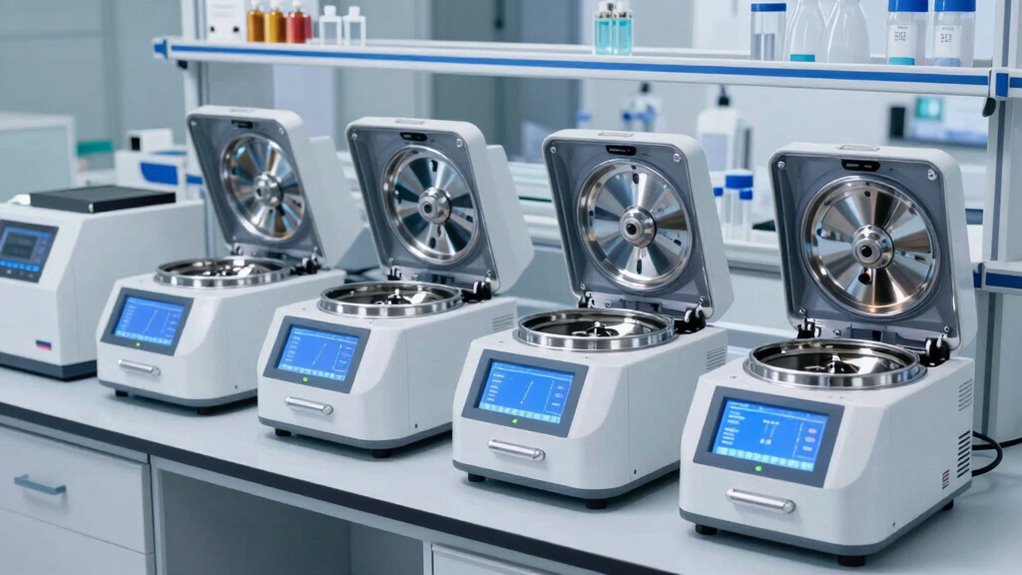
Choosing the right centrifuge for oil and coolant samples depends on your lab’s specific needs—whether you prioritize portability, speed, or capacity. For small-scale, quick testing, the Mini Centrifuge Machine offers a compact design with adjustable speed, though it’s limited in sample volume. For versatility and automation, the Lab Fish LC-400PRO provides a range of speeds and safety features suitable for more routine separation tasks. Meanwhile, the Lab Fish LC-8S delivers higher speeds and larger tube capacity, ideal for more demanding applications. I’ll break down how each option fits different user scenarios, along with tradeoffs to consider before making a decision.

Get business pricing on garage and car supplies
- Business-only prices and quantity discounts
- Tax-exempt purchasing
- Multiple users, one account, clear invoices
Complete the kit


Key Takeaways
- The Mini Centrifuge offers portability but is limited to small volumes and basic features.
- The Lab Fish LC-400PRO balances speed control with safety features, suitable for routine lab work.
- The Lab Fish LC-8S excels in high-speed applications but is heavier and less versatile with tube sizes.
- The ONiLAB benchtop provides user-friendly controls and safety, best for stable, low-speed separation.
- The Desktop Electric Centrifuge is a compact, budget-friendly option with limited high-speed capabilities.
| Mini Centrifuge Machine, Electric Lab Desktop Benchtop Centrifuge |  | Best for portability and basic testing | Speed range: 300-4000 rpm | Timing range: 0-60 minutes | Vibration coefficient: ≤0.6mm/s | VIEW ON AMAZON | See Our Full Breakdown |
| Lab Fish LC-400PRO Centrifuge, 8×2/5/10ml & 4x15ml Tubes |  | Best for versatile, routine laboratory separation | Speed Range: 500-5000 rpm | Maximum Relative Centrifugal Force: 2683 xg | Timer Range: 30 seconds to 59 minutes | VIEW ON AMAZON | See Our Full Breakdown |
| Lab Fish LC-8S Centrifuge, 8×2/5/10/15ml Tubes | 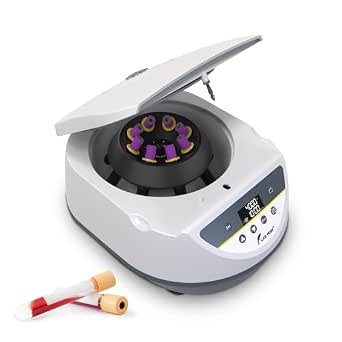 | Best for high-speed, versatile applications | Maximum Speed: 5000 RPM | Maximum RCF: 3074 xg | Tube Capacity: 8×2/5/10/15ml | VIEW ON AMAZON | See Our Full Breakdown |
| ONiLAB Benchtop Centrifuge, 6x50mL, 300-4000RPM, Max 1800×g |  | Best for stable, easy operation with safety features | Maximum Speed: 4000 RPM | Maximum G-force: 1800×g | Rotor Capacity: 6x50mL | VIEW ON AMAZON | See Our Full Breakdown |
| Desktop Electric Laboratory Centrifuge Machine with Timer and Speed Control – 4000 RPM, 20ML Capacity x 6 | 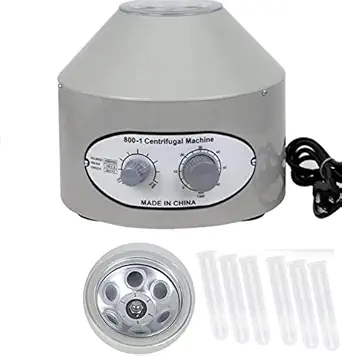 | Best budget-friendly, compact option | Time Range: 0-60 min or continuous | Maximum Relative Centrifugal Force: 1790×g | Capacity: 20ml x 6 | VIEW ON AMAZON | See Our Full Breakdown |
| lab centrifuge for oil and coolant sample | Maximum Speed |
|---|---|
| Mini Centrifuge Machine | — |
| Lab Fish LC-400PRO Centrifuge | — |
| Lab Fish LC-8S Centrifuge | 5000 RPM |
| ONiLAB Benchtop Centrifuge | 4000 RPM |
| Desktop Electric Laboratory Ce | 4000 RPM |
More Details on Our Top Picks
Mini Centrifuge Machine, Electric Lab Desktop Benchtop Centrifuge
This compact mini centrifuge stands out for its adjustable speed range from 300 to 4000 rpm and its lightweight, portable design. It’s ideal for quick, small-volume sample separations, especially in field or limited-space environments. Its durable ABS shell ensures longevity, and the quiet operation makes it suitable for routine use. Compared with larger models, it lacks capacity for high-volume or high-speed applications, but it excels in convenience and ease of use for basic tasks.
While not suitable for processing larger oil or coolant samples, this device’s simplicity benefits labs that need quick, on-the-go testing or preliminary analyses. Its basic features could limit advanced separation needs, but for straightforward, small-batch testing, it remains a practical choice.
Pros:- Adjustable speed and timer for versatile use
- Compact and portable design
- Durable ABS shell for long-lasting use
Cons:- Limited to small sample volumes
- Basic features may not meet advanced lab needs
Best for: Small labs or fieldwork requiring portable, simple centrifugation
Not ideal for: Processing large volumes or high-speed demanding applications
- Speed range:300-4000 rpm
- Timing range:0-60 minutes
- Vibration coefficient:≤0.6mm/s
- Support centrifuge tube range:10ml, 5ml
- Centrifuge disc specification:10ml x 6
- Motor power:50W
Our verdict“A solid choice for basic, portable centrifugation where space and simplicity are priorities.”
Lab Fish LC-400PRO Centrifuge, 8×2/5/10ml & 4x15ml Tubes
The Lab Fish LC-400PRO offers a balanced approach with electronic speed control from 500 to 5000 rpm and a digital LCD display. It is designed for routine lab separation tasks, accommodating various tube sizes with safety features like automatic shutoff and electronic locks. Compared to the mini centrifuge, it provides a wider speed range and improved safety, making it suitable for diverse sample types including oil and coolant residues.
However, its low maximum speed limits its suitability for high-speed separation of viscous or dense samples. It also may generate some vibration, requiring stabilization. This model fits well in labs needing reliable medium-speed centrifugation with straightforward operation but not for high-speed or large-volume applications.
Pros:- Adjustable speed and timer
- Safety features including automatic shutoff
- Digital LCD display for easy operation
Cons:- Limited to low-speed centrifugation
- Potential vibration during operation
Best for: Routine lab applications needing safety and versatility
Not ideal for: High-speed, high-volume, or high-viscosity sample processing
- Speed Range:500-5000 rpm
- Maximum Relative Centrifugal Force:2683 xg
- Timer Range:30 seconds to 59 minutes
- Rotor Capacity:8×2/5/10ml & 4x15ml tubes
- Voltage:Wide voltage technology
Our verdict“A practical, safe choice for general lab use with moderate speeds and multiple tube sizes.”
Lab Fish LC-8S Centrifuge, 8×2/5/10/15ml Tubes
The Lab Fish LC-8S stands out for its powerful brushless motor capable of reaching 5000 RPM with a maximum RCF of 3074 xg. It includes an easy-to-read LCD display and a built-in aluminum alloy rotor compatible with multiple tube sizes, making it suitable for demanding separation tasks involving oil and coolant samples. Compared with the LC-400PRO, its higher maximum speed and RCF make it better suited for viscous or dense samples that require more forceful centrifugation.
Its heavier weight and limited tube size compatibility might restrict its use in small, space-constrained labs. While ideal for high-speed applications, it might be overkill for routine or low-speed tasks, and its bulkiness could be a drawback if portability is needed.
Pros:- Maximum speed up to 5000 RPM
- High RCF of 3074 xg
- Built-in safety features including electronic lock
Cons:- Limited to specific tube sizes
- Heavy and bulky for small labs
Best for: High-speed, high-force sample separation in larger or well-equipped labs
Not ideal for: Small-scale or portable testing environments
- Maximum Speed:5000 RPM
- Maximum RCF:3074 xg
- Tube Capacity:8×2/5/10/15ml
- Display:LCD digital
- Operation Time Range:10 sec to 99 min 59 sec
Our verdict“An excellent solution for high-speed, demanding centrifugation needs in larger laboratories.”
ONiLAB Benchtop Centrifuge, 6x50mL, 300-4000RPM, Max 1800×g
The ONiLAB benchtop centrifuge combines ease of use with safety, featuring a clear digital display, adjustable speed up to 4000 RPM, and a maximum G-force of 1800×g. Its design with a fixed-angle rotor supports various tube sizes, making it suitable for routine separation of oil and coolant samples. Compared with smaller models, it offers a larger capacity and more stability, though its weight and limited maximum speed may restrict high-speed applications.
Its safety features like lid lock and overspeed detection increase confidence during operation, but it lacks advanced features for high-speed or high-volume processing. It’s best suited for labs seeking a balance of simplicity, safety, and reliable performance at moderate speeds.
Pros:- Digital interface with clear display
- Safety features including lid lock
- Compatible with multiple tube sizes
Cons:- Limited to low-speed applications
- Heavy for portable or space-limited labs
Best for: Routine lab work needing stability and safety features
Not ideal for: High-speed or large-volume, high-throughput applications
- Maximum Speed:4000 RPM
- Maximum G-force:1800×g
- Rotor Capacity:6x50mL
- Timer Range:30 sec to 99 min
- Dimensions:13.93 x 11.97 x 8.46 inches
Our verdict“A dependable, safety-focused centrifuge for routine separation tasks in stable lab environments.”
Desktop Electric Laboratory Centrifuge Machine with Timer and Speed Control – 4000 RPM, 20ML Capacity x 6
This desktop centrifuge provides a maximum of 4000 RPM with six 20ml tubes, making it suitable for small-volume, routine separation tasks. Its simple controls and basic timer function make it accessible for users who need straightforward operation without advanced features. Compared with larger or more complex models, it offers a space-saving design ideal for limited laboratory bench space.
However, its limited maximum speed and lack of a digital display might restrict its usefulness for more demanding oil or coolant separation tasks. It’s best suited for labs on a budget or those needing a compact, easy-to-use device for standard sample processing.
Pros:- Adjustable speed and timer controls
- Compact table-top design
- Includes six tubes for efficiency
Cons:- Limited maximum speed
- No digital display or advanced features
Best for: Small labs or budget-conscious settings needing basic centrifugation
Not ideal for: High-speed or high-volume processing
- Time Range:0-60 min or continuous
- Maximum Relative Centrifugal Force:1790×g
- Capacity:20ml x 6
- Maximum Speed:4000 RPM
Our verdict“An affordable, space-efficient choice for basic centrifugation needs in small labs.”

How We Picked
To select the best lab centrifuges for oil and coolant samples, I focused on features that impact sample separation quality, safety, ease of use, and capacity. I prioritized models with adjustable speeds, clear digital controls, and safety features relevant for handling potentially hazardous or viscous fluids. Size and portability were key for labs needing space-efficient solutions, while speed and tube compatibility mattered for those processing larger volumes or requiring more precise separation. I also considered user feedback on stability, noise, and build quality to ensure each model offers reliable performance within its intended role.
Factors to Consider When Choosing Lab Centrifuge For Oil And Coolant Samples
When choosing a centrifuge for oil and coolant samples, key factors include speed range, capacity, safety features, and size. Understanding your specific sample volume, viscosity, and throughput needs helps narrow options. High-speed models provide more force for viscous fluids, but may be heavier and more expensive. Compact models excel in portability but often sacrifice capacity and advanced features. Balancing these considerations ensures you select a centrifuge that fits your workflow and safety standards.
Sample Volume and Capacity
Assess how much sample you typically process per run. Small-volume centrifuges are sufficient for testing or small batches but lack throughput for larger samples. Larger capacity models support higher volumes but tend to be bulkier and more expensive. Matching your sample volume needs with the centrifuge’s capacity is critical to avoid underperformance or unnecessary expense.
Speed and RCF (Relative Centrifugal Force)
The viscosity of oil and coolant samples often requires higher speeds to achieve proper separation. A centrifuge with adjustable speed up to at least 4000 RPM and a high RCF provides better separation of dense particles. However, high-speed centrifuges are also heavier and may generate more noise, so consider your laboratory’s space and noise constraints.
Safety and Ease of Use
Features like automatic shutoff, lid lock, and vibration control provide safety during operation, especially with viscous or potentially hazardous fluids. Digital controls and displays simplify operation and improve accuracy, reducing user error. For routine testing, straightforward models with safety features are usually sufficient, while advanced labs may require more sophisticated safety protocols.
Portability and Size
If space is limited or mobility is required, compact and lightweight models are preferable. However, smaller centrifuges often trade off capacity and speed, so balance portability against your sample processing needs. Larger, benchtop units tend to be more stable and capable but require more space.
Frequently Asked Questions
What speed range should I look for in a centrifuge for oil and coolant samples?
For effectively separating oil and coolant, a centrifuge with a speed range of at least 300 to 5000 rpm is ideal. Higher speeds enable better separation of dense particles, which is often necessary with viscous fluids. Keep in mind that higher RPMs also mean increased weight and noise, so select a model that balances performance with your lab’s space and noise constraints.
Is digital control necessary for centrifuges used in oil and coolant analysis?
Digital controls enhance precision and ease of operation, especially when adjusting speed and timing for sensitive samples. They also often include safety features and clear readouts, reducing user error. While basic models with manual controls can suffice for simple tasks, digital control is generally recommended for more consistent and reliable results in oil and coolant testing.
How important is safety in choosing a centrifuge for viscous or hazardous samples?
Safety features such as lid locks, automatic shutoff, and vibration control are vital when handling viscous or potentially hazardous fluids. These features prevent accidents and protect samples from contamination or spillage. Ensuring your centrifuge has appropriate safety mechanisms is essential for maintaining a safe laboratory environment, particularly when processing challenging or hazardous samples.
Can I use a small portable centrifuge for high-volume or high-speed applications?
Generally, small portable centrifuges are not designed for high-volume or high-speed tasks. They typically have limited capacity and maximum RPMs, making them unsuitable for demanding applications involving large samples or viscous fluids. For such needs, larger, more powerful models are better suited to ensure reliable separation and safety.
What maintenance considerations should I keep in mind?
Regular cleaning and inspection of rotor and chamber components are essential to ensure consistent performance. Check for wear on rotor parts and lubricate moving parts if applicable. Proper maintenance extends the lifespan of your centrifuge and maintains the accuracy of your separation results, especially when dealing with viscous or contaminated samples like oil and coolant residues.
Conclusion
For small labs or quick testing, the Mini Centrifuge Machine offers portability and ease, though it’s limited in volume and advanced features. Medium-sized laboratories aiming for routine, safe, and versatile separation should consider the Lab Fish LC-400PRO for its safety features and adjustable speeds. Larger or more demanding applications requiring high-force separation will find the Lab Fish LC-8S best suited, despite its weight and size. Budget-conscious labs or those with space constraints might opt for the Desktop Electric Centrifuge, which balances cost and capacity for basic needs. Tailor your choice based on your sample volume, speed requirements, safety standards, and workspace limitations.
Fall Picks
fall essentials
As an affiliate, we earn on qualifying purchases.