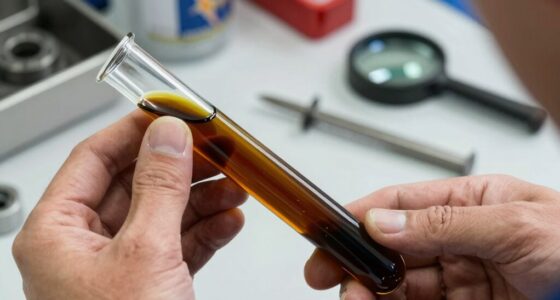

Relying on a single UOA as a verdict is risky because it only provides a snapshot that can be misleading due to contamination or sampling errors. It doesn’t reflect the longer-term trend of wear metals or contamination, which are crucial for accurate diagnoses. Acting solely on one result can lead to unnecessary repairs or missed issues. To make better decisions, you need ongoing trend analysis—if you want to learn how to do that effectively, keep exploring this topic.

Get garage and car supplies delivered free — and shop member deals
- Fast, free delivery on millions of items
- Access to Prime Big Deal Days deals on October 6–7
- Prime Video, Amazon Music and more included
Key Takeaways
- A single UOA provides only a snapshot, which may be misleading due to contamination or sampling errors.
- Relying solely on one sample risks misdiagnosing engine health without understanding trends.
- External factors like water, dirt, or improper storage can distort initial results, leading to false conclusions.
- Trend analysis over multiple samples offers a more accurate assessment of wear patterns and equipment condition.
- Expert interpretation is essential; one sample alone cannot reliably determine the true state of machinery.
As an affiliate, we earn on qualifying purchases.
Why Relying on a Single UOA Can Lead to Costly Mistakes
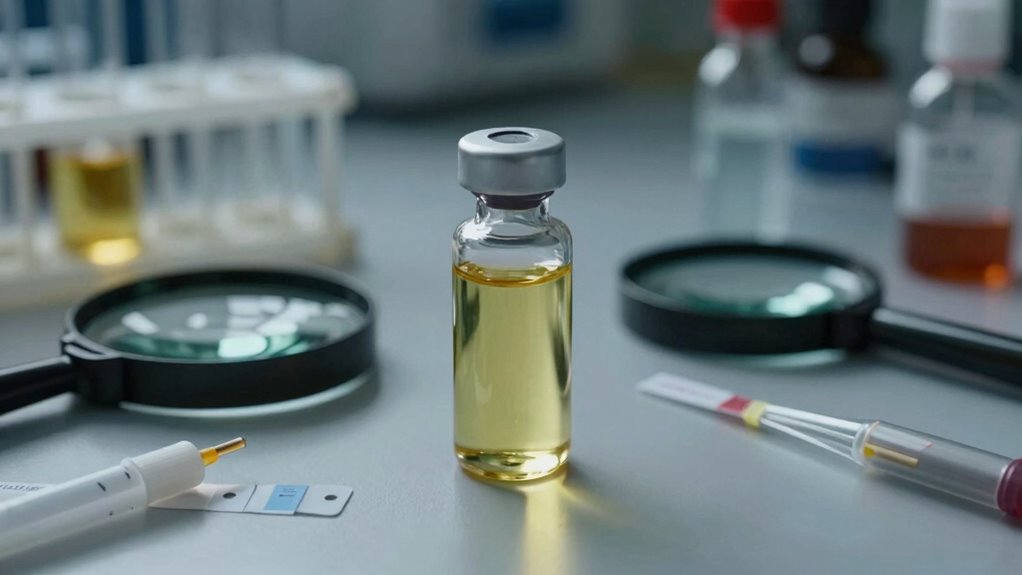
Relying on a single used oil analysis (UOA) can be risky because it offers only a snapshot of your equipment’s condition at one moment in time. If the sample was affected by oil contamination or poor sample storage, the results might not reflect the true state of your machinery. Contaminants can skew wear metal readings or hide underlying issues, leading to false conclusions. Additionally, improper sample storage—exposing samples to extreme temperatures or contamination—can compromise accuracy. This underscores the importance of consistent sampling practices to ensure meaningful comparisons over time. This means you might act on misleading data, either ignoring developing problems or replacing parts unnecessarily. To make informed decisions, it’s essential to analyze multiple samples over time, ensuring consistent and reliable insights into your equipment’s health.
As an affiliate, we earn on qualifying purchases.
Understanding the Purpose of Used Oil Analysis (UOA)
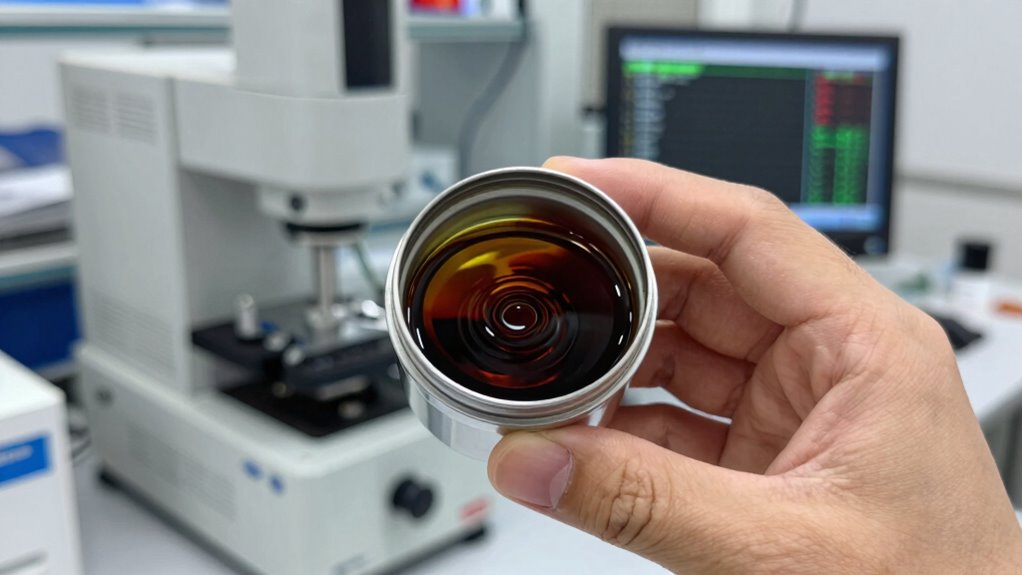
Used Oil Analysis (UOA) serves as a critical tool for monitoring the health of your equipment. It provides insights into oil chemistry, revealing wear metals, contaminants, and additive levels that indicate whether your machinery is operating efficiently. The primary purpose isn’t to deliver a final verdict but to identify trends and potential issues early. Understanding the role of sample contamination is essential, as external factors can skew results and lead to misinterpretation. Proper analysis helps you make informed decisions about maintenance, oil changes, or repairs, ultimately saving costs and preventing unexpected failures. Remember, a single UOA offers a snapshot; it’s the trend over time that truly reflects your equipment’s condition. This understanding ensures you use UOA effectively, avoiding premature conclusions. Additionally, recognizing the importance of a growth mindset can help in interpreting results objectively and fostering continuous improvement in maintenance practices. Incorporating proper sampling techniques is vital to obtaining accurate and reliable data, as improper collection methods can compromise the results. A comprehensive approach to data interpretation considers multiple analyses and contextual factors to ensure accurate assessments. Being aware of external influences can further improve your ability to interpret results accurately. Moreover, understanding Rhythm Failure can help in diagnosing specific issues related to equipment vibrations or operational patterns, enhancing your maintenance strategy.
As an affiliate, we earn on qualifying purchases.
How to Take Consistent, Reliable Oil Samples
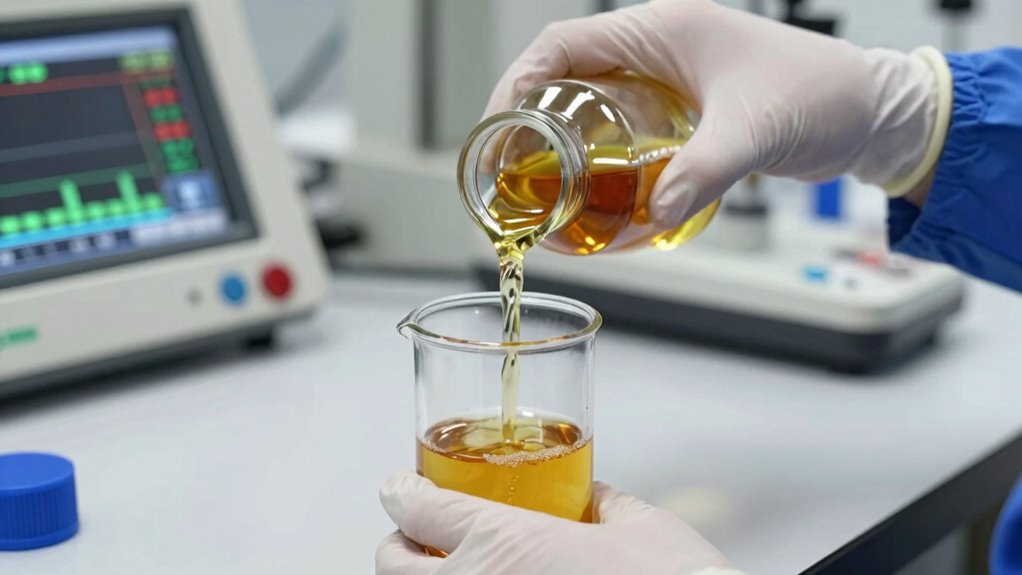
Taking consistent and reliable oil samples is key to getting meaningful insights from your analysis. Proper sampling techniques ensure your results accurately reflect your engine’s health. To achieve this, consider these steps:
Consistent, reliable oil sampling is essential for accurate engine health insights.
- Use the same sampling method each time, such as extracting oil from the drain or a designated sampling port.
- Follow manufacturer guidelines and avoid contamination to maintain sample integrity.
- Choose a reputable lab that specializes in oil analysis, ensuring they understand your equipment and sampling procedures.
- Incorporating consistent water management techniques can help prevent moisture contamination, which may affect your oil analysis results.
- Understanding cable wiring safety best practices can prevent heat buildup and potential hazards during engine operation, ensuring a safer environment for maintenance and sampling procedures.
- Regularly inspecting and maintaining your sampling equipment can also help prevent contamination risks and ensure sample accuracy.
- Implementing standardized sampling procedures across all maintenance activities can further improve the reliability of your results.
- Paying attention to oil sample storage conditions can prevent degradation or contamination before analysis, leading to more accurate readings.
Consistent sampling techniques help track trends accurately, while careful lab selection guarantees trustworthy results. Avoid shortcuts or inconsistent procedures, as they can lead to misleading conclusions. Proper sampling is foundational for effective oil analysis and long-term engine health.
As an affiliate, we earn on qualifying purchases.
Why Trend Analysis Is Key to Good Oil Monitoring

Tracking how oil analysis results change over time is essential because it reveals patterns that indicate engine health before problems become critical. By observing trends, you can spot early signs of oil contamination, which may suggest dirt or water ingress, or additive depletion, signaling the oil’s diminishing ability to protect your engine. Relying on a single sample can mislead you, as it doesn’t show whether issues are developing or stabilizing. Trend analysis helps you understand if contamination levels are rising or if additive levels are dropping steadily, providing a clearer picture of ongoing engine conditions. Consistent monitoring allows you to detect subtle changes that can prevent costly repairs and extend your engine’s lifespan. This approach allows you to address potential problems proactively, rather than reacting to isolated data points that might be outliers or temporary anomalies.
Key Data Points in a UOA and What They Indicate
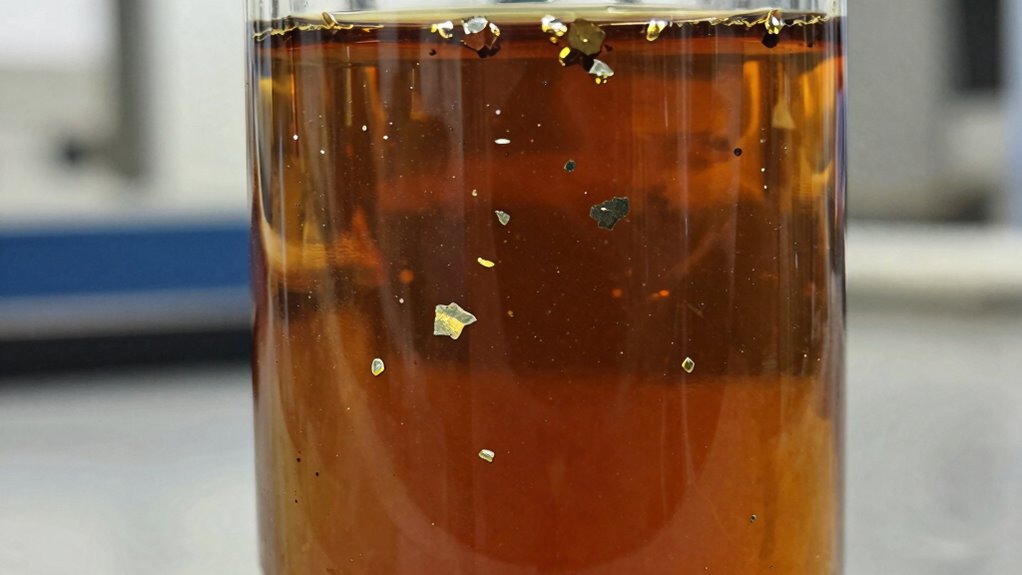
Understanding the key data points in a UOA is essential for accurately evaluating engine health. These data points reveal critical details about your engine’s condition when collected with proper oil sample integrity and reliable laboratory calibration. Proper sample collection methods help prevent contamination and ensure representative results. Additionally, accurate laboratory calibration** is vital to minimize measurement errors that could lead to misinterpretation. Inconsistent calibration can result in misleading data**, which may cause you to misjudge engine condition. By focusing on these, you avoid misinterpretation. Here are the main indicators:
- Wear Metals – Elevated levels suggest internal component wear, signaling potential issues.
- Contaminants – Presence of dirt, coolant, or fuel indicates contamination or leaks.
- Additive Levels – Changes in additive chemistry can reveal oil degradation or breakdown.
- Sample Handling – Proper sample handling techniques are vital to ensure the accuracy and reliability of UOA results. Always guarantee the sample’s integrity is maintained and that the lab calibrates its instruments correctly. These factors are crucial for trustworthy results, helping you make informed maintenance decisions rather than jumping to conclusions based on a single UOA.
How Multiple UOA Results Help Detect Engine Problems Early
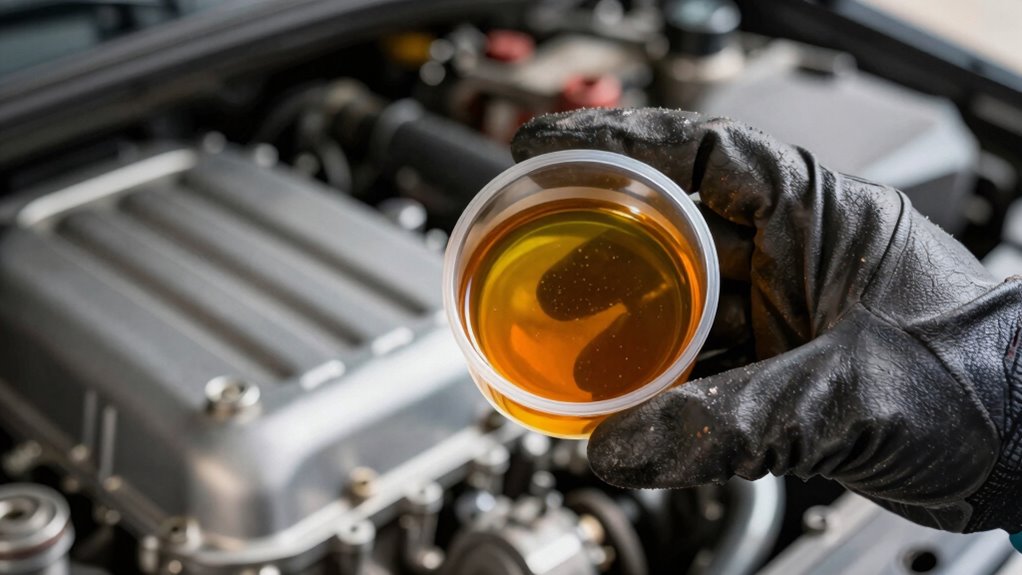
Have you ever wondered how analyzing multiple UOA results over time can reveal engine issues before they become serious? By tracking trends, you can spot early signs like oil contamination, which may indicate coolant leaks or dirt ingress, or additive depletion, signaling that the oil’s protective properties are weakening. These patterns help you catch problems before they cause significant engine damage. Instead of relying on a single sample, you get a clearer picture of the engine’s health, allowing for proactive maintenance. Regular UOA comparisons enable you to identify subtle changes, ensuring issues are addressed early. Additionally, understanding AI ethics can inform better decision-making around automated systems in maintenance tools, further enhancing early detection strategies. Incorporating data analysis techniques can also improve the accuracy of trend identification and diagnosis. Moreover, applying monitoring best practices ensures consistent and reliable data collection, which is crucial for effective trend analysis. Implementing preventive maintenance based on these insights can save you time and money in the long run. Recognizing the importance of data interpretation helps avoid false alarms and ensures accurate assessments.
Common Mistakes When Interpreting Your First UOA
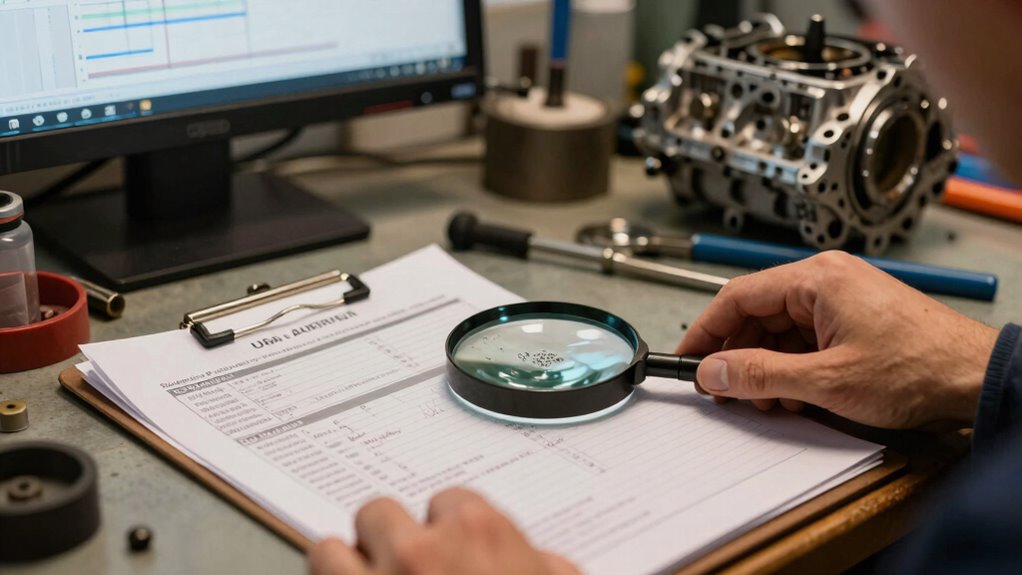
Interpreting your first UOA can be tricky because it’s easy to draw incorrect conclusions from a single sample. A common mistake is misreading oil analysis results without considering sample contamination, which can skew data. Another error is overlooking the importance of the oil filter status, as a clogged filter might falsely suggest engine issues. Finally, jumping to conclusions based solely on one test ignores the need for trends over multiple samples. Be cautious not to overinterpret high metal levels or abnormal readings without additional context. Remember, a single UOA offers clues but isn’t definitive. Proper interpretation requires understanding potential pitfalls and avoiding hasty judgments based on limited data. Additionally, understanding the top smart locks and office gear for secure spaces can be useful when considering safe storage of vehicle maintenance equipment or sensitive documents related to your vehicle’s history. Recognizing the significance of sample timing can further prevent misinterpretations, as the timing of collection impacts the reliability of results. It’s also important to stay updated on advancements in vaping technology since they influence the quality and safety of products you might use. This approach helps prevent unnecessary repairs or overlooking real problems.
When to Consult an Oil Analysis Expert
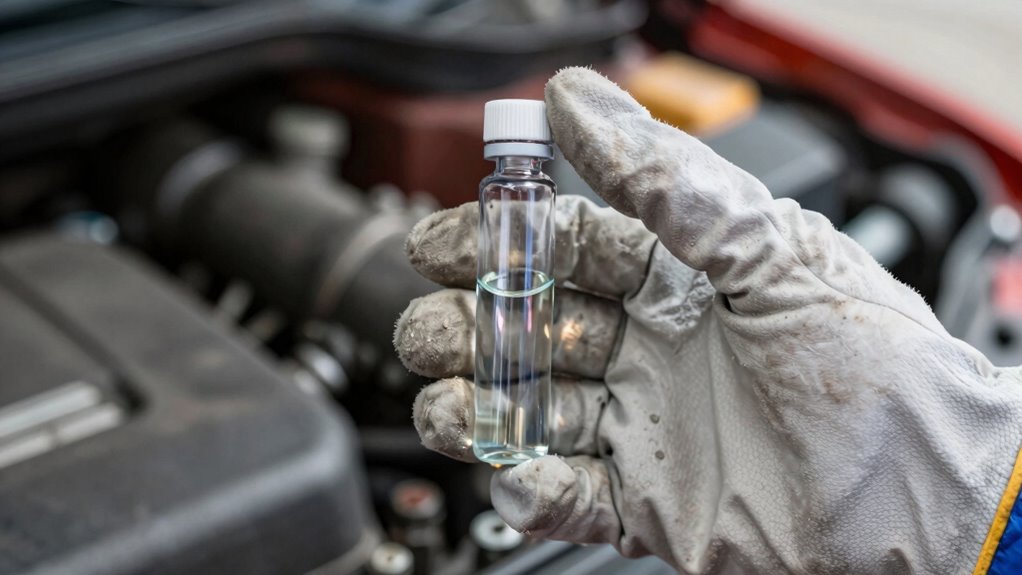
If your oil analysis results seem unclear or unexpected, it’s time to consult an expert. They can help you recognize the limitations of a single sample, understand the analysis in context, and interpret the data accurately. Don’t hesitate to seek professional guidance to make informed decisions about your equipment’s health.
Recognize Sample Limitations
Recognizing when to consult an oil analysis expert is essential, especially as sample limitations can obscure the true condition of your equipment. Sample accuracy can be compromised by factors like improper collection or contamination, leading to misleading results. Test variability may cause inconsistent readings, making it hard to trust a single analysis. To avoid misinterpretation, consider these signs:
- Results don’t match your equipment’s performance or history.
- The sample appears contaminated or insufficient.
- Repeated tests show inconsistent or fluctuating results.
In such cases, consulting an expert helps interpret data in context, accounting for sample limitations. Remember, understanding sample accuracy and test variability is critical to avoid jumping to conclusions based on incomplete or unreliable information.
Understand Analysis Context
When sample limitations or test variability raise doubts about your oil analysis, consulting an expert can provide clarity. Oil contamination from dirt, water, or debris can skew results, making it harder to interpret the true condition of your engine. Additionally, sample variability due to inconsistent collection methods or timing can lead to misleading conclusions. An oil analysis expert understands these nuances and can help you distinguish between genuine issues and anomalies caused by external factors. They can also advise on proper sampling procedures to reduce contamination risks and improve accuracy. Recognizing when to seek expert insight ensures you don’t jump to conclusions based on flawed data, saving you time and potential costly mistakes. Always consider the analysis context before making critical maintenance decisions.
Seek Expert Interpretation
Have you ever encountered confusing oil analysis results that leave you uncertain about your equipment’s condition? When this happens, it’s time to seek expert interpretation. Professionals can help you understand complex data, especially if your sample container shows unexpected metal levels or contaminants. Consider consulting an expert if:
- Your oil filter reveals unusual debris or wear particles.
- The sample container indicates inconsistent or ambiguous results.
- You’re unsure how to interpret the presence of specific metals or additives.
An oil analysis expert can distinguish between normal wear and potential issues, preventing false alarms. They can also advise on proper sampling techniques, ensuring accurate results. Remember, a single analysis isn’t enough to make a definitive judgment—expert insight helps you avoid costly mistakes.
Developing a Long-Term UOA Monitoring Strategy
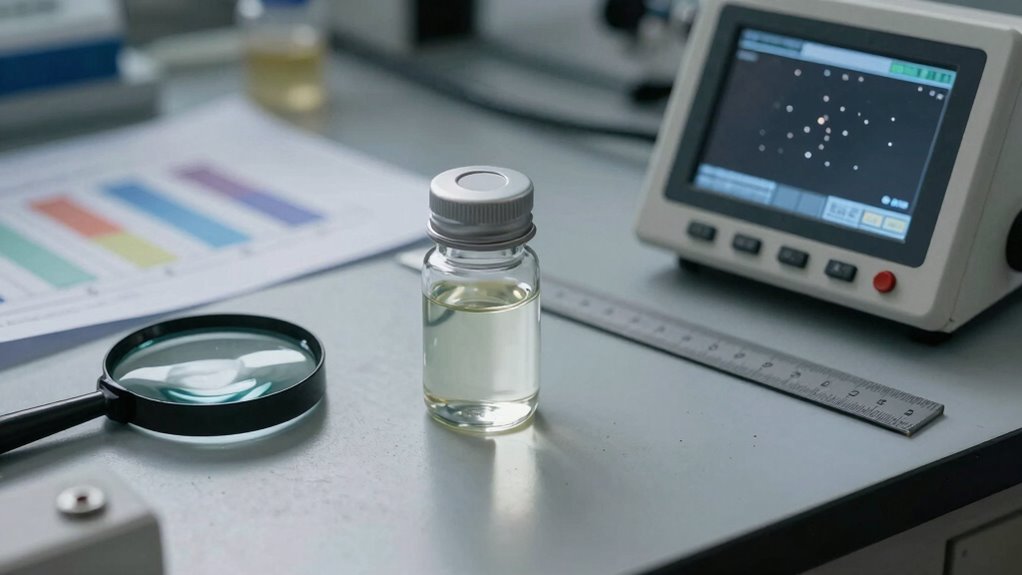
To construct an effective long-term UOA monitoring strategy, you need a consistent sampling schedule that captures reliable data over time. Tracking these results helps you identify trends early and avoid surprises, while setting clear thresholds and alerts keeps you proactive. This approach ensures you’re making informed decisions and maintaining equipment health effectively.
Consistent Sampling Schedule
Establishing a consistent sampling schedule is crucial for effective long-term UOA monitoring. Regular oil sampling ensures you gather reliable data, which is indispensable for accurate trend analysis. Without consistency, data quality suffers, making it harder to detect issues early. To maximize oil sampling effectiveness, consider these key points:
- Schedule sampling at fixed intervals to maintain data consistency.
- Use the same sampling procedures to reduce variability.
- Record all sampling details meticulously for comparison over time.
Track Trends Over Time
Tracking trends over time is the backbone of a successful long-term UOA monitoring strategy. By regularly analyzing your oil analysis data, you can identify patterns indicating oil contamination or additive depletion before problems escalate. For example, increasing levels of dirt, water, or metal particles suggest a decline in oil quality and potential contamination issues. Similarly, a steady decrease in additive levels signals that the oil’s protective properties are diminishing. Monitoring these trends helps you take proactive maintenance actions, extend oil life, and avoid costly repairs. Don’t rely on a single sample or isolated results; instead, compare data points over months and years to gain a clear picture of your engine’s health. Consistent trend analysis empowers you to make informed decisions and optimize your equipment’s performance.
Establish Thresholds and Alerts
Setting clear thresholds and alerts is essential for effective long-term UOA monitoring because they enable you to identify when oil conditions deviate from normal operating ranges. Proper thresholds help catch issues early, preventing costly damage. To develop these, consider:
- Establish baseline levels for oil contaminants and wear metals to set realistic thresholds.
- Incorporate sample preservation techniques to guarantee data accuracy over time.
- Use trend analysis to adjust thresholds dynamically as equipment ages or operating conditions change.
Using Your UOA Data to Improve Engine Maintenance
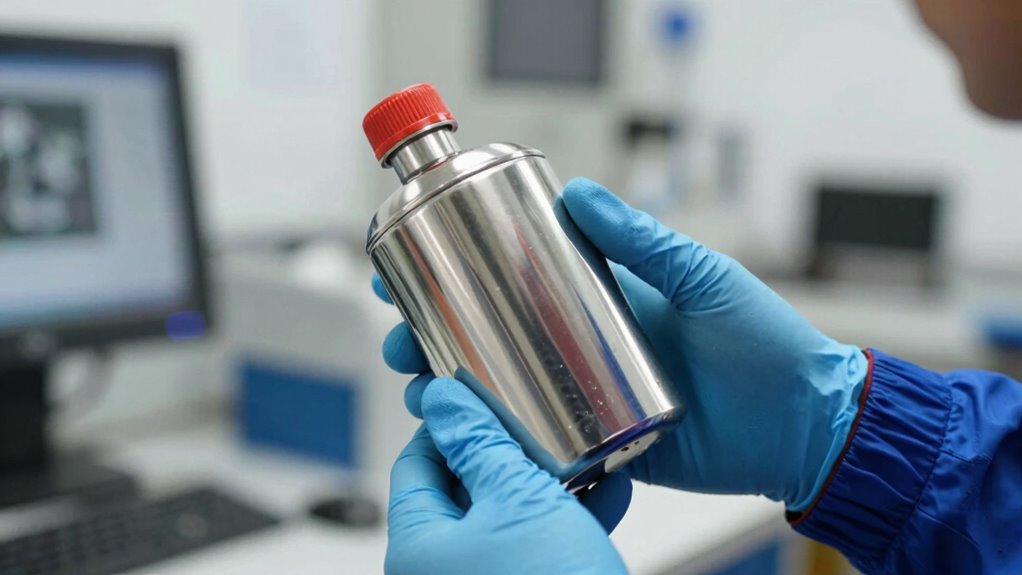
Using your UOA (Used Oil Analysis) data effectively can markedly enhance your engine maintenance routine. By monitoring trends, you identify contamination sources and determine when to replace the oil filter. Regular analysis reveals if particles or metals are increasing, indicating potential wear or dirt ingress. This proactive approach helps prevent costly damage and extends engine life. For example, elevated silicon levels may point to dirt entry through a faulty oil filter. Use your data to schedule timely oil changes and address issues early. Consider this table for quick insights:
| Contamination Source | Maintenance Action |
|---|---|
| Oil filter | Replace if contamination rises |
| Dirt ingress | Seal leaks, check seals |
| Metal particles | Inspect engine components |
| Water intrusion | Drain and replace oil |
Consistently reviewing UOA results sharpens your maintenance strategy.
Frequently Asked Questions
How Often Should I Perform UOA Testing on My Engine?
You should perform oil analysis regularly, ideally every 3,000 to 5,000 miles or as recommended by your vehicle manufacturer. Maintain consistent sample frequency to track your engine’s health accurately. Don’t rely on a single sample; instead, gather multiple oil analysis reports over time. This approach helps identify trends, prevent issues, and make informed maintenance decisions, ensuring your engine stays in ideal condition.
What Are the Common Signs of Engine Issues Detected by UOA?
You’ll notice engine issues through signs like increased oil contamination and additive depletion. Elevated metal levels or dirt in your oil suggest wear or debris, while reduced additive levels signal the oil’s protective qualities are weakening. These indicators help you catch problems early, preventing costly damage. Regular UOA testing guarantees you stay aware of these signs, so you can take action before minor issues turn into major engine failures.
Can UOA Replace Traditional Engine Inspections?
Oil analysis can profoundly enhance your engine diagnostics, but it shouldn’t replace traditional inspections. It provides valuable insights into wear patterns and potential issues, yet it’s just one part of an all-encompassing evaluation. You need visual inspections, mechanical tests, and other diagnostic tools to get an accurate picture. Relying solely on oil analysis risks missing problems, so combine it with thorough inspections for the best engine health assessment.
What Equipment Is Needed to Collect a Proper Oil Sample?
Think of collecting an oil sample as catching a fish—you need the right gear and technique. You’ll need a clean, approved sampling bottle, a pump or syringe, and gloves for hygiene. Make sure sampling equipment is calibrated and used correctly, following proper sampling techniques to avoid contamination or skewed results. This careful approach makes your sample a reliable snapshot of engine health, guiding accurate analysis and avoiding costly misjudgments.
How Do Environmental Factors Affect UOA Results?
Environmental factors like oil contamination and temperature fluctuations can substantially impact UOA results. When oil gets contaminated by dirt, water, or other debris, it skews wear metals and additive levels, leading to false conclusions. Temperature fluctuations affect viscosity and how contaminants settle, making it harder to interpret results accurately. You should always consider these factors, as they can mask or mimic engine issues, leading to misdiagnosis if overlooked.
Conclusion
Remember, your first UOA isn’t the final verdict—think of it like a single puzzle piece. Just like one piece doesn’t reveal the whole picture, one sample can’t tell you everything about your engine’s health. Stay consistent, track trends, and don’t jump to conclusions. When in doubt, consult an expert. With patience and careful monitoring, you’ll piece together a clear story of your engine’s wellbeing, avoiding costly mistakes down the road.
Halloween Picks
halloween
As an affiliate, we earn on qualifying purchases.