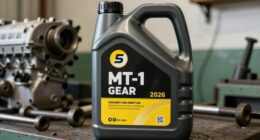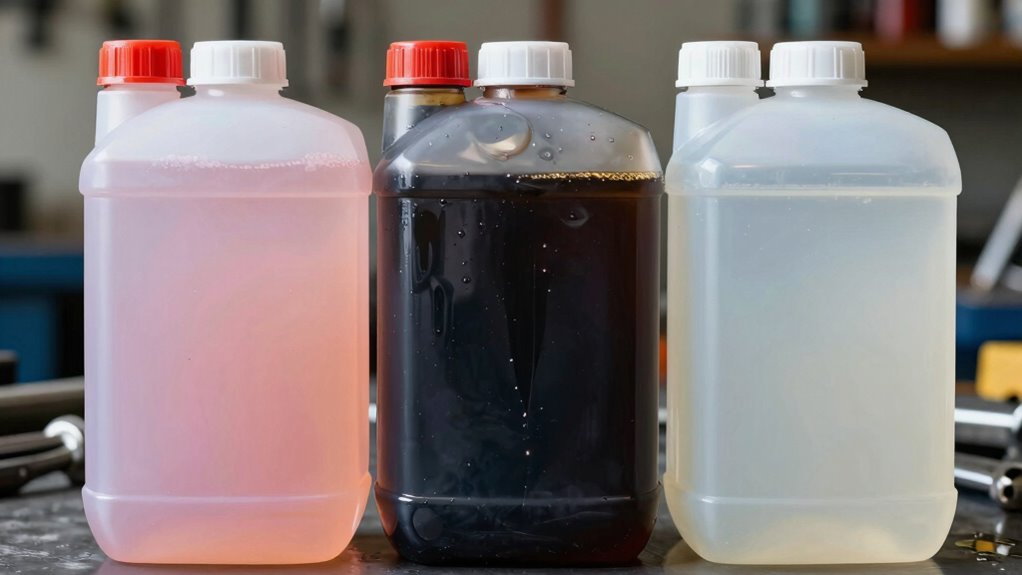

Many people confuse MTF, gear oil, and universal fluids, but they serve different purposes. MTF is designed for manual transmissions to guarantee smooth shifting and wear protection. Gear oil is thicker and made for differentials and heavy-duty gearboxes to handle high pressure. Universal fluids are adaptable but may not be ideal for specific systems. Knowing these differences helps keep your vehicle running smoothly—if you want to understand how to choose the right one, keep exploring more.

Get garage and car supplies delivered free — and shop member deals
- Fast, free delivery on millions of items
- Access to Prime Big Deal Days deals on October 6–7
- Prime Video, Amazon Music and more included
Key Takeaways
- MTF is formulated for manual transmissions, emphasizing smooth shifting and wear protection with synthetic blends.
- Gear oil is thicker, designed for high-pressure environments like differentials and gearboxes.
- Universal fluids are versatile, suitable for multiple systems but may not match specialized performance needs.
- Using the wrong fluid type can cause shifting issues, increased wear, or transmission damage.
- Always follow manufacturer recommendations to ensure proper fluid selection and transmission longevity.
manual transmission fluid synthetic blend
As an affiliate, we earn on qualifying purchases.
As an affiliate, we earn on qualifying purchases.
What Are MTF, Gear Oil, and Universal Fluids?
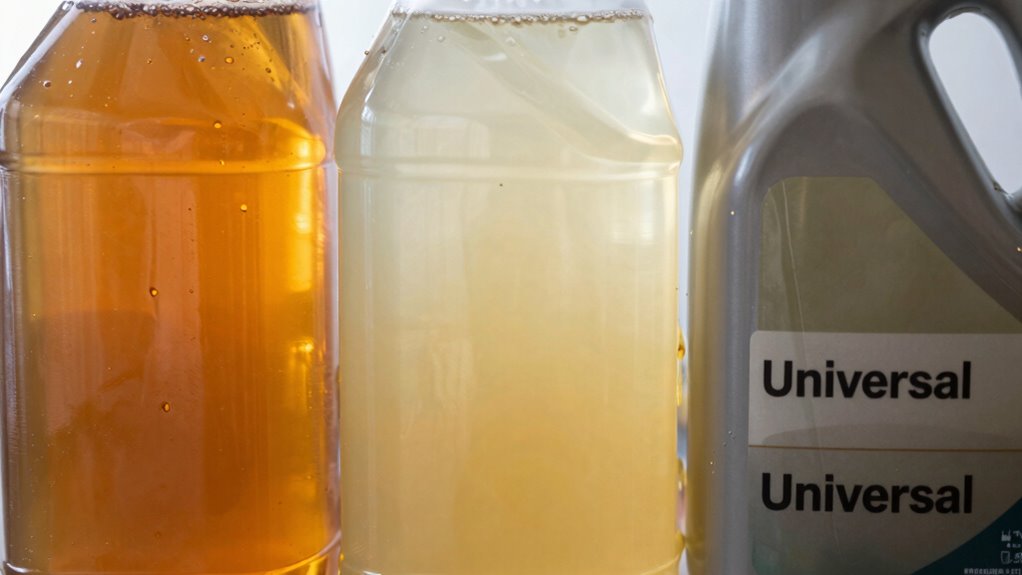
Many people confuse different types of automotive fluids, especially MTF, gear oil, and universal fluids, because they often look similar and serve related functions. MTF, or Manual Transmission Fluid, typically uses synthetic blends designed to provide smooth shifting and wear protection. Gear oil, on the other hand, is formulated with thicker additive packages that withstand high pressure and reduce friction in differentials and manual gearboxes. Universal fluids are versatile; they’re made to work in multiple systems but may not offer ideal performance for each. While all three can contain synthetic blends, their additive packages are tailored for specific applications. Understanding these differences helps you choose the right fluid for your vehicle’s transmission, ensuring proper lubrication and longevity. Additionally, fluid technology varies depending on the intended use, affecting how well each fluid performs under different operating conditions. Recognizing the additive packages in these fluids is essential, as they determine compatibility and efficiency in various transmission systems. Moreover, advancements in synthetic blends continue to improve transmission performance and protection across all fluid types.
As an affiliate, we earn on qualifying purchases.
How Do These Transmission Fluids Differ in Composition and Use?
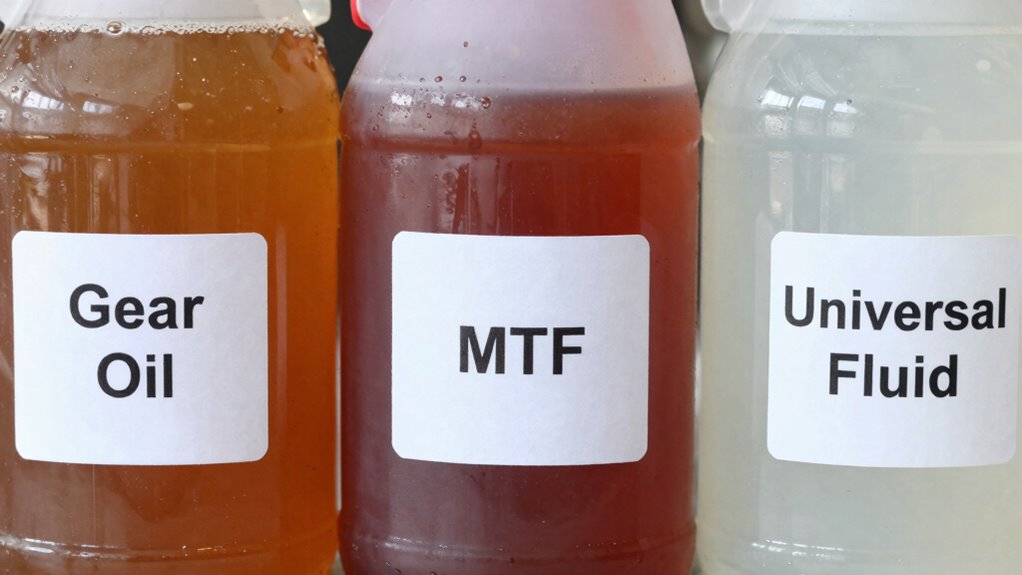
The composition of transmission fluids varies considerably based on their specific functions and the systems they’re designed for. You’ll find that different fluids contain unique additives and base oils tailored to their roles. For example:
- MTFs often use synthetic blends to provide smooth shifting in manual transmissions.
- Gear oils are typically thicker with high viscosity ratings, offering protection under heavy loads.
- Universal fluids balance compatibility across systems, often with moderate viscosity ratings.
- Synthetic blends enhance performance and longevity, especially in extreme conditions.
- The formulation of these fluids affects their performance characteristics and suitability for various applications.
Understanding the importance of compatibility ensures you select the right fluid for your vehicle’s transmission system. These differences ensure each fluid meets the specific demands of your vehicle’s transmission system. Understanding these distinctions helps you select the right fluid for ensure performance and protection.
As an affiliate, we earn on qualifying purchases.
How to Choose the Right Transmission Fluid for Your Vehicle
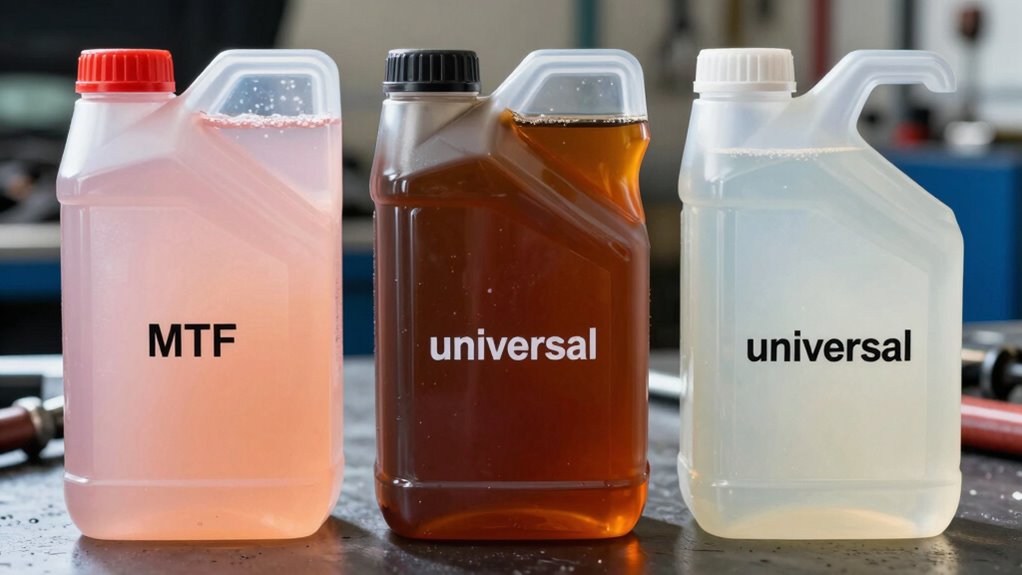
Choosing the right transmission fluid for your vehicle requires paying close attention to your owner’s manual and understanding your transmission type. Using incompatible fluids can cause compatibility issues, leading to poor shifting, increased wear, or damage. Always verify the recommended fluid type—whether it’s MTF, gear oil, or a universal fluid—before filling or topping off. Additionally, consider your vehicle’s maintenance schedule; some transmissions need more frequent fluid changes to prevent breakdowns or corrosion. Ignoring these schedules or utilizing the wrong fluid can void warranties and shorten transmission lifespan. If you’re unsure, consult your mechanic or the manufacturer’s guidelines. Proper fluid selection and timely maintenance ensure your transmission operates smoothly and prolongs its service life.
best gear oil for heavy-duty gearboxes
As an affiliate, we earn on qualifying purchases.
As an affiliate, we earn on qualifying purchases.
Frequently Asked Questions
Can I Mix Different Transmission Fluids Without Damaging My Vehicle?
You shouldn’t mix different transmission fluids because it can cause fluid contamination, reducing lubrication effectiveness and potentially damaging your vehicle. Always check fluid compatibility before adding or changing fluids; using incompatible fluids may lead to poor shifting, increased wear, or transmission failure. Stick to the manufacturer’s recommendations, and if you’re unsure, drain and replace the entire fluid instead of mixing, ensuring your transmission stays properly lubricated and protected.
How Often Should I Change My Transmission Fluid?
You should change your transmission fluid every 30,000 to 60,000 miles, depending on your vehicle’s manual. Over time, fluid degradation occurs, reducing lubrication and causing potential damage. Regular changes help prevent compatibility concerns and maintain smooth operation. If your vehicle uses specific fluids like MTF or gear oil, stick to the recommended type and schedule to avoid issues. Always follow manufacturer guidelines for peak performance.
Are There Specific Signs Indicating My Transmission Fluid Needs Replacing?
You’ll know your transmission fluid needs replacing if it becomes dark or brown, and if it has a burnt smell. Additionally, listen for slipping gears or delayed engagement, which can indicate fluid issues. Check the fluid’s color regularly—clear or pinkish is good, but if it’s murky or smells off, it’s time for a change. Addressing these signs promptly helps maintain smooth transmission performance and prevents costly repairs.
Is There a Universal Fluid Suitable for All Vehicle Types?
There isn’t a universal fluid suitable for all vehicle types because fluid compatibility varies across makes and models. Using a generic fluid may compromise fluid longevity and transmission performance. Always check your owner’s manual to find the recommended fluid type for your vehicle. Properly matched fluids guarantee ideal lubrication, protect your transmission, and extend fluid life, reducing the need for frequent replacements and potential costly repairs down the line.
What Are the Risks of Using the Wrong Transmission Fluid?
Using the wrong transmission fluid can cause serious issues like fluid incompatibility and contamination risks, which may lead to poor shifting, increased wear, or even transmission failure. Always check your vehicle’s specifications to verify fluid compatibility. If you ignore this, you risk damaging internal components, reducing transmission lifespan, and costly repairs. Stick to the recommended fluid type to keep your transmission running smoothly and avoid unnecessary risks.
Conclusion
Understanding the subtle differences between MTF, gear oil, and universal fluids helps you avoid potential pitfalls. Think of it as choosing the right dance partner—you want one that matches your vehicle’s rhythm. When you pick wisely, your transmission will glide smoothly through every turn. So, trust your instincts, do a little homework, and you’ll keep that engine singing its best tune for miles to come. Your car will thank you for the thoughtful choice.
Fall Picks
fall essentials
As an affiliate, we earn on qualifying purchases.