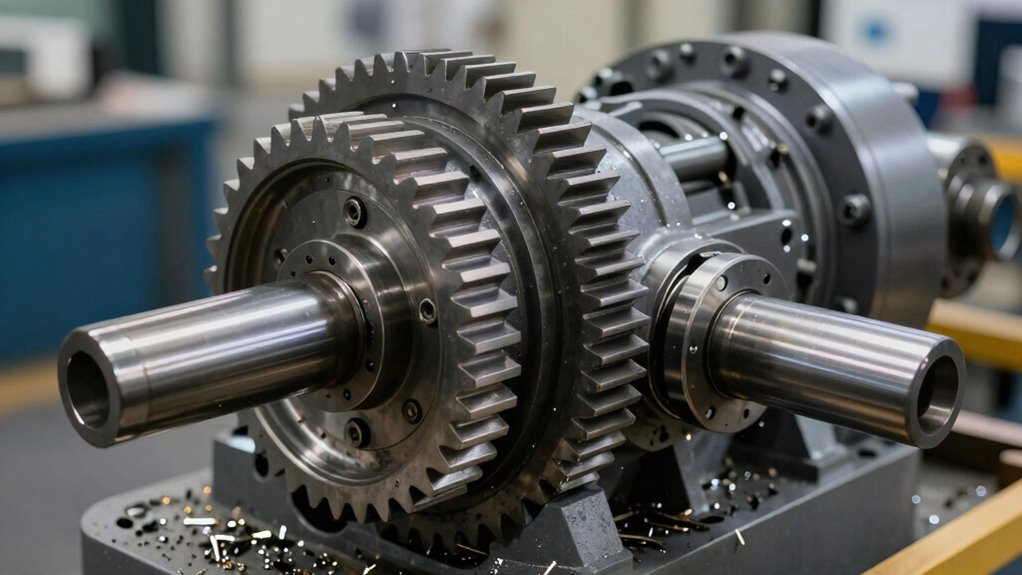

Tracking wear metals per hour gives you a clear, real-time view of your gearbox’s health. It allows you to spot early signs of wear, like increases in iron or copper, before failure becomes critical. This proactive approach helps prevent costly repairs and reduces downtime. By focusing on hourly wear rates, you gain more precise insights than just scheduled oil tests or total wear measures. Keep going to discover how mastering this metric can improve your maintenance strategy.

Get business pricing on garage and car supplies
- Business-only prices and quantity discounts
- Tax-exempt purchasing
- Multiple users, one account, clear invoices
Key Takeaways
- Monitoring wear metals per hour offers real-time insights into gear and bearing health, enabling early detection of deterioration.
- It quantifies the rate of wear, providing a more precise measure than cumulative metal levels alone.
- Wear metals per hour help identify specific failure modes like pitting or bearing fatigue through metal signature analysis.
- This metric supports predictive maintenance, reducing downtime and preventing costly unexpected failures.
- Regular tracking of wear metals per hour enhances decision-making and optimizes machinery performance over time.

Have you ever wondered how much metal wears off your machinery every hour? If you haven’t, it’s time to start paying attention, especially when it comes to industrial gearboxes. Monitoring wear metals per hour gives you a clear picture of your equipment’s health, making it a more precise metric than just tracking oil changes or total wear over time. When you perform lubrication analysis, measuring the rate of metal particles in the oil provides immediate insights into the rate of component deterioration. Instead of waiting for a failure or noticing abnormal noise, you can detect early signs of wear and plan maintenance proactively. This approach helps prevent unexpected breakdowns and costly repairs, saving both time and money.
Monitoring wear metals per hour offers real-time insights into equipment health and prevents costly failures.
By focusing on wear metals per hour, you’re effectively quantifying how fast your gears and bearings are wearing out. This metric reflects ongoing processes like surface fatigue, corrosion, or abrasive wear. When you analyze the trend of metal concentrations—such as iron, copper, or chrome—you get a real-time indicator of how your gear failure modes are developing. For example, a sudden spike in iron levels might point to gear tooth pitting or spalling, while an increase in copper could suggest bearing wear. Recognizing these patterns early allows you to intervene before a minor issue escalates into a major failure.
Understanding gear failure modes is essential here. Different failure modes produce distinct metal signatures in your oil. For instance, pitting and cracking generate specific wear particles that can be identified through lubrication analysis. Tracking wear metals per hour helps you narrow down the root cause of problems quickly, making maintenance more targeted and efficient. You can differentiate between normal wear and abnormal deterioration by monitoring the rate of metal release. If the rate suddenly accelerates, it indicates an urgent need to inspect and address potential issues like misalignment, lubrication failure, or overload conditions.
This real-time metric empowers you to make data-driven decisions. Instead of relying solely on scheduled maintenance, you can adapt your approach based on actual equipment condition. Wear metals per hour serve as an early warning system, providing continuous feedback about your gearboxes’ health. This proactive strategy minimizes downtime, enhances safety, and extends the lifespan of your machinery. Ultimately, integrating wear metals analysis into your routine maintenance plan turns a reactive process into a predictive one, giving you the control to prevent severe failures and optimize operational efficiency. Regular testing methods are crucial to accurately track these metal concentrations over time.
industrial gearbox oil analysis kit
As an affiliate, we earn on qualifying purchases.
As an affiliate, we earn on qualifying purchases.
Frequently Asked Questions
How Does Wear Metals per Hour Compare to Other Condition Monitoring Techniques?
Wear metals per hour offers a direct, quantitative measure of gear wear that oil analysis provides, identifying metal particles in the lubricant. Unlike vibration monitoring, which detects early issues through movement patterns, this metric tracks wear rate over time, making it more precise for ongoing condition assessment. Combining wear metals per hour with oil analysis and vibration monitoring gives you an all-encompassing view of your gearbox health and helps prevent failures.
What Are the Limitations of Using Wear Metals per Hour?
You should be aware that wear metals per hour has limitations due to material variability and sampling challenges. Variations in metal composition can skew results, making it hard to get consistent readings. Additionally, sampling frequency and technique can affect accuracy, risking missed early signs of wear. Because of these issues, relying solely on wear metals per hour might not give a complete picture of your gearbox’s condition.
How Can Wear Metals per Hour Data Predict Gearbox Failures?
You can use wear metals per hour data to predict gearbox failures by monitoring metal accumulation in the lubricant; increasing levels often signal abnormal wear or damage. This trend helps you identify potential issues early, enabling failure prediction before catastrophic breakdowns occur. Regular analysis of metal accumulation gives you a proactive approach, allowing timely maintenance and reducing downtime, ultimately improving your gearbox’s reliability and lifespan.
What Equipment Is Needed to Measure Wear Metals per Hour Accurately?
Imagine catching a potential failure before it happens—that’s why you need precise equipment. You’ll require a high-quality spectrometer, properly calibrated for accurate readings. Additionally, mastering sample collection techniques guarantees reliable data. This combination allows you to measure wear metals per hour accurately, giving you insight into gearbox health and preventing costly breakdowns. Proper equipment and techniques empower you to stay ahead in maintenance and ensure machinery runs smoothly.
How Frequently Should Wear Metals per Hour Be Monitored for Optimal Results?
You should monitor wear metals per hour through lubrication analysis at least monthly to guarantee ideal maintenance scheduling. Regular testing helps you detect early signs of gear wear, preventing costly failures. By tracking wear metals consistently, you can fine-tune your maintenance routines, extend equipment lifespan, and improve reliability. Remember, timely data collection is key to making informed decisions that keep your industrial gearboxes running smoothly and efficiently.
wear metals per hour monitoring device
As an affiliate, we earn on qualifying purchases.
As an affiliate, we earn on qualifying purchases.
Conclusion
By tracking wear metals per hour, you gain a clearer picture of your gearbox’s health and can catch issues early. Did you know that monitoring wear metals can reduce downtime by up to 30%? This metric offers real-time insights that traditional methods might miss, helping you make smarter maintenance decisions. Embracing wear metals per hour means fewer surprises and more efficient operation—keeping your equipment running smoothly and saving you money in the long run.
predictive maintenance sensors for gearboxes
As an affiliate, we earn on qualifying purchases.
As an affiliate, we earn on qualifying purchases.
oil particle counter for machinery
As an affiliate, we earn on qualifying purchases.
As an affiliate, we earn on qualifying purchases.
Fall Picks
fall essentials
As an affiliate, we earn on qualifying purchases.