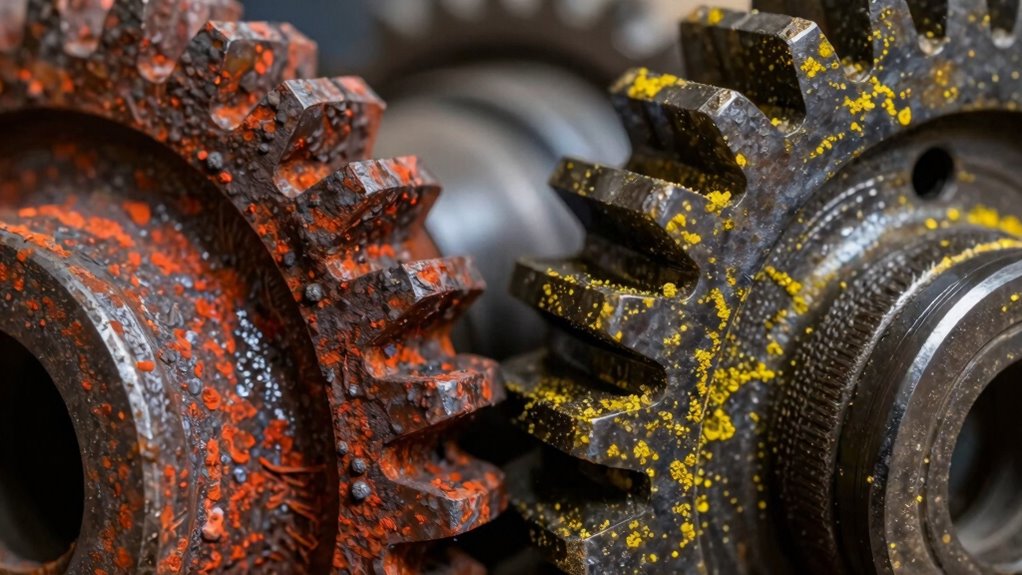
Both oxidation and nitration can harm your gear oil by breaking down additives, causing sludge buildup, and promoting corrosion. Oxidation reacts with oxygen, leading to varnish and thickening, which can impair lubrication and flow. Nitration involves nitrogen compounds that produce acids, accelerating corrosion of gear surfaces. Understanding these processes helps you select the right oils and maintain them properly. Keep going to discover how you can better protect your gear systems from these chemical reactions.
Key Takeaways
- Both oxidation and nitration are chemical reactions that degrade gear oils, affecting their protective properties.
- Oxidation produces sludge and varnish, while nitration leads to acid buildup and corrosion.
- Oxidation mainly impairs lubrication and increases wear; nitration accelerates metal corrosion.
- Preventive measures include using stable oils and additives resistant to both oxidation and nitration.
- Regular oil analysis helps detect early signs of these chemical processes, ensuring effective maintenance.
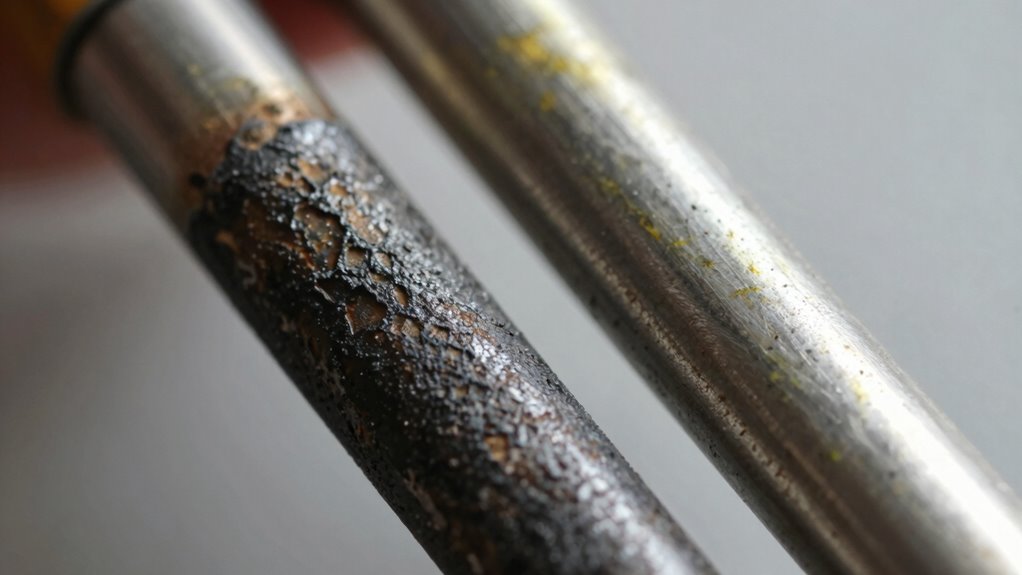
Have you ever wondered how oxidation and nitration differ in their chemical effects? Understanding these processes is essential when it comes to maintaining gear oils and ensuring their peak performance. Both oxidation and nitration are chemical reactions that occur when the oil is exposed to different environmental factors, but they impact the oil’s properties in distinct ways. Oxidation involves the reaction of oxygen with the oil’s hydrocarbons, leading to the formation of acids, sludge, and varnish. Nitration, on the other hand, results from the reaction with nitrogen oxides, producing acidic compounds that can accelerate corrosion. Recognizing these differences helps you better assess how each process affects the oil’s additive effects and wear prevention capabilities.
Oxidation and nitration differently impact gear oils, affecting additives, wear prevention, and corrosion in unique ways.
In terms of additive effects, oxidation tends to degrade key additives designed to protect the gear components. For example, antioxidants in the oil are meant to neutralize free radicals and slow down oxidation, but once oxidation sets in, these additives lose their effectiveness. Similarly, anti-wear additives, which form protective films on gear surfaces, become compromised as oxidation causes thickening and sludge buildup. This degradation diminishes the oil’s ability to prevent wear, increasing the risk of gear failure over time. Nitration also impacts additive effectiveness, but through a different mechanism. It tends to produce acidic byproducts that can neutralize or deplete additives meant to control acidity, further exacerbating wear and corrosion.
Wear prevention is an important aspect of choosing and maintaining gear oils. When oxidation occurs, the formation of sludge and varnish can clog oil passages and impair lubrication, leading to increased friction and wear. Over time, the protective film provided by anti-wear additives deteriorates, exposing gear surfaces to direct contact and accelerating damage. Nitration compounds, being more acidic, can corrode metal surfaces and weaken the protective layers, further reducing wear prevention. Both processes ultimately compromise the oil’s ability to safeguard gears, but oxidation tends to cause more mechanical issues like sludge buildup, while nitration primarily leads to corrosion-related problems. Additionally, understanding these reactions aids in selecting oils with suitable chemical stability, which is crucial for long-term gear protection.
Knowing how oxidation and nitration influence gear oils helps you implement better maintenance practices. Using additives that are resistant to oxidation and nitration can extend oil life, improve wear prevention, and reduce equipment downtime. Regular oil analysis can detect early signs of these chemical reactions, allowing you to take proactive steps before significant damage occurs. In essence, understanding these chemical effects empowers you to choose the right oils, add appropriate protective additives, and maintain gear health effectively. Both oxidation and nitration are chemical challenges, but with proper knowledge and preventive measures, you can minimize their impact and keep your gear systems running smoothly.

Valvoline FlexFill Advanced Full Synthetic 75W-90 Gear Oil 1 Quart Pouch
FlexFill squeezable pouch releases 2X more fluid with less effort for 3X faster filling vs. traditional bottle packaging
As an affiliate, we earn on qualifying purchases.
As an affiliate, we earn on qualifying purchases.
Frequently Asked Questions
How Do Oxidation and Nitration Specifically Affect Gear Oil Performance?
Oxidation and nitration reduce gear oil performance by compromising lubricant stability, making it break down faster under heat and stress. This deterioration leads to increased wear and potential equipment failure. Nitration, in particular, can cause acid formation, which decreases corrosion resistance. To maintain peak performance, you need to regularly monitor oil condition and choose formulations that resist these chemical changes, ensuring your gear’s longevity and reliable operation.
Can Oxidation or Nitration Be Reversed in Used Gear Oils?
Can you truly reverse oxidation or nitration in used gear oils? Usually, you can’t fully restore them, but chemical restoration and additive rejuvenation can help improve their performance. These processes involve adding specialized additives that counteract degradation effects, extending the oil’s life. While they can’t undo all damage, they can markedly enhance the oil’s properties, delaying the need for complete replacement and maintaining gear efficiency longer.
What Are the Early Signs of Oxidation or Nitration in Gear Oils?
You’ll notice early oxidation or nitration signs in gear oils as a color change, often turning darker or cloudy. Metallic debris may appear due to wear, indicating oil breakdown. Keep an eye on these signs, as they suggest the oil’s protective properties are compromised, potentially leading to equipment damage. Regular oil analysis helps detect these issues early, so you can schedule maintenance before serious problems develop.
Which Additive Packages Best Prevent Oxidation and Nitration?
You should choose additive packages with proven additive compatibility and excellent shelf stability to prevent oxidation and nitration in gear oils. Look for formulations that resist separation and degradation over time, ensuring long-lasting protection. Additives like antioxidants and corrosion inhibitors work best when compatible with the base oil. By selecting a high-quality additive package, you’ll extend gear oil life and maintain superior performance under demanding conditions.
How Do Operating Temperature Ranges Influence Oxidation Versus Nitration?
Do you realize how operating temperature ranges affect gear oils’ chemical stability? When temperatures stay within specific thresholds, oxidation is less likely, maintaining oil longevity. But if you push above those temperature thresholds, nitration can occur more readily, degrading the oil faster. Staying within ideal temperature ranges ensures your gear oils resist both oxidation and nitration, extending their service life and protecting your machinery effectively.

Valvoline Daily Protection 80W-90 Gear Oil 1 Quart
Extreme pressure additives deliver outstanding high pressure performance, load carrying capacity and durability for towing and hauling
As an affiliate, we earn on qualifying purchases.
As an affiliate, we earn on qualifying purchases.
Conclusion
Understanding the differences between oxidation and nitration helps you better protect your gear oils. Did you know that oxidation accounts for over 60% of lubricant failures? By monitoring and controlling these processes, you can extend your gear oil’s lifespan and prevent costly failures. Stay proactive, keep an eye on oil condition, and choose the right additives. Your gear’s performance and longevity depend on it—so don’t overlook these critical factors.

Oil Analysis Premier Kit by Under My Hood with return postage included
NOT FOR USE ON AIRCRAFT!
As an affiliate, we earn on qualifying purchases.
As an affiliate, we earn on qualifying purchases.

Quicksilver SAE 90 High Performance Gear Lube for Outboards and Sterndrives, 32 oz
Lower unit gear oil formulated to protect against corrosion and excessive wear
As an affiliate, we earn on qualifying purchases.
As an affiliate, we earn on qualifying purchases.