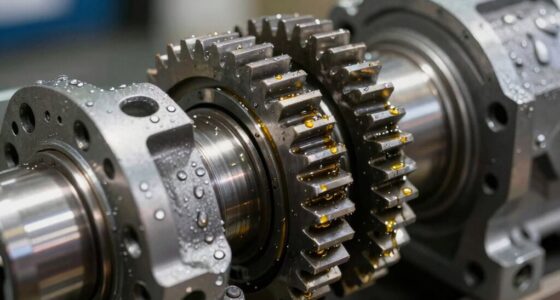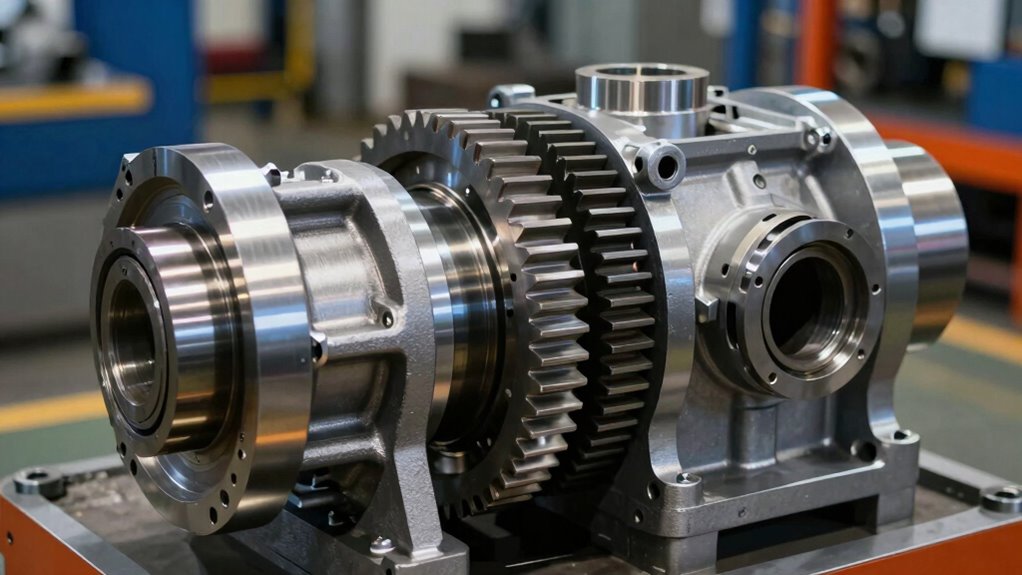

To guarantee industrial gearbox reliability, focus on six key metrics: vibration, temperature, oil condition, pressure, noise, and wear debris. Monitoring these metrics helps you spot issues early, prevent failures, and plan maintenance effectively. Regular data collection and analysis improve your ability to make informed decisions, extend equipment lifespan, and reduce downtime. Keep track of these essential indicators consistently, and you’ll discover more ways to optimise your gearbox performance and avoid costly repairs.
Key Takeaways
- Monitoring vibration, temperature, and noise provides early detection of gearbox issues.
- Oil analysis reveals contamination, additive depletion, and metal particles, indicating lubricant health.
- Tracking lubricant condition helps prevent wear and prolong gearbox lifespan.
- Failure analysis identifies root causes like misalignment or lubrication failures for targeted improvements.
- Implementing proactive maintenance based on key metrics minimizes downtime and enhances reliability.
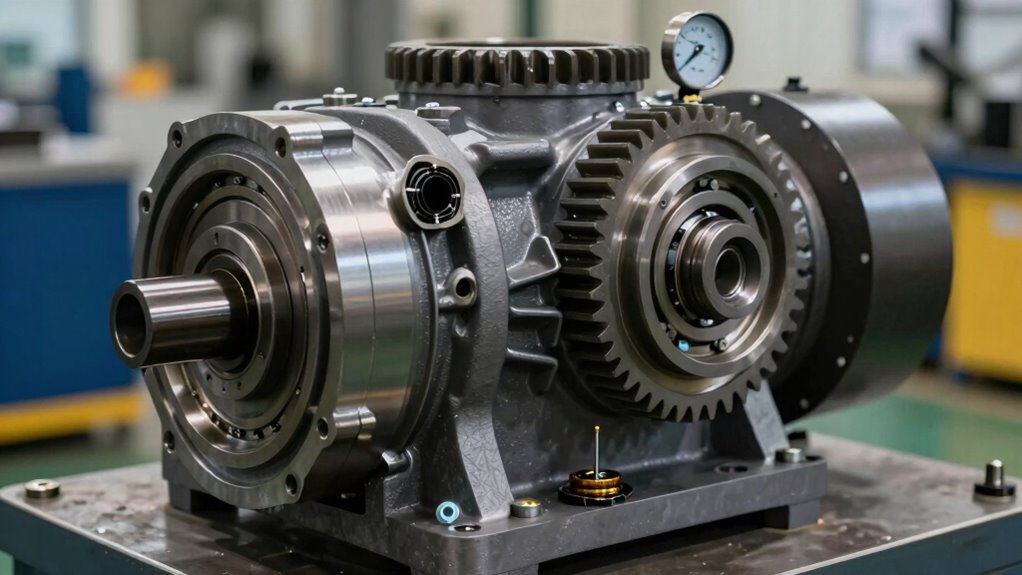
Industrial gearboxes are essential components that guarantee the smooth operation of machinery across various sectors. Their reliability directly impacts productivity, safety, and maintenance costs. To guarantee these gearboxes perform at their best, understanding the key metrics that measure their health is fundamental. One critical aspect is your lubrication strategies. Proper lubrication reduces friction, minimizes wear, and prevents overheating, which are all indispensable for extending the gearbox’s lifespan. Implementing the right lubrication schedule, selecting suitable lubricants, and monitoring their condition help prevent failures before they happen. Regular oil analysis provides insights into contamination levels, additive depletion, and metal particles, enabling you to adjust lubrication practices proactively. This approach not only enhances reliability but also reduces unexpected downtime and maintenance expenses. Lubrication management is a cornerstone of gearbox reliability, emphasizing the importance of systematic and consistent practices.
Failure analysis plays an equally important role in maintaining gearbox reliability. When a failure occurs, conducting thorough investigations allows you to identify the root causes—be it material fatigue, improper assembly, misalignment, or lubrication issues. Understanding why a failure happened informs your maintenance strategy, helping you prevent similar incidents in the future. For example, if failure analysis reveals excessive wear due to inadequate lubrication, you can refine your lubrication strategies, perhaps by upgrading to better lubricants or adjusting maintenance intervals. Conversely, if misalignment is the culprit, you might need to review installation procedures or realign machinery to avoid premature damage. Failure analysis isn’t just about fixing problems after they occur; it provides critical data to optimize operational procedures, improve design choices, and develop predictive maintenance plans.
Tracking these metrics over time gives you a thorough picture of your gearbox’s health. Regular monitoring of vibration levels, temperature, and noise can serve as early warning signs of developing issues. When combined with insights from failure analysis and lubrication condition reports, these indicators help you shift from reactive to proactive maintenance. This approach minimizes unplanned downtime, enhances safety, and prolongs the operational life of your gearboxes. Ultimately, the most dependable gearboxes are those that are closely monitored, well-maintained, and continuously analyzed for potential issues. By prioritizing effective lubrication strategies and detailed failure analysis, you empower yourself to make informed decisions that sustain machinery performance, reduce costs, and maximize overall productivity.

Piezoelectric Vibration Velocity Sensor Industrial Condition Monitoring Accelerometer 330500-01-00
- Sensor Type: Piezoelectric vibration velocity sensor
- Application: Industrial condition monitoring
- Signal Conversion: Mechanical vibration to electrical signal
As an affiliate, we earn on qualifying purchases.
As an affiliate, we earn on qualifying purchases.
Frequently Asked Questions
How Often Should Industrial Gearboxes Undergo Maintenance Checks?
You should perform maintenance checks on industrial gearboxes every 3 to 6 months, depending on usage and operating conditions. During these checks, focus on proper lubrication practices to prevent wear and tear. Incorporate vibration analysis to detect early signs of imbalance or misalignment. Regular inspections help catch issues early, reducing downtime and extending the gearbox’s life. Adjust the frequency based on equipment performance and environmental factors for ideal reliability.
What Are the Signs of Impending Gearbox Failure?
You notice unusual vibrations or noises? That’s a warning sign you shouldn’t ignore. Using predictive maintenance tools like vibration analysis, you can detect early signs of gearbox failure before catastrophic damage occurs. Increased vibration levels, overheating, or fluid leaks signal impending issues. Address these alerts promptly to prevent downtime and costly repairs, ensuring your gearbox operates smoothly and reliably. Stay vigilant—early detection saves your equipment and your bottom line.
How Does Operating Environment Affect Gearbox Longevity?
Your operating environment is vital impacts gearbox longevity. Corrosion resistance becomes essential if you’re in a humid or corrosive setting, preventing rust and extending lifespan. Proper thermal management is fundamental if temperatures fluctuate or run high, as excess heat can damage internal components. By controlling these factors—using corrosion-resistant materials and ensuring effective cooling—you can enhance your gearbox’s durability and prevent premature failures.
Are There Industry Standards for Gearbox Reliability Testing?
Imagine you’re evaluating a gearbox’s durability, and you want consistent results. Industry standards for gearbox reliability testing exist, like ISO 6336 or AGMA standards, which set industry benchmarks and testing protocols. These guarantee uniformity in assessments, helping you compare gearboxes accurately. Following these standards allows you to gauge performance reliably, identify weaknesses, and make informed decisions to enhance gearbox longevity and operational efficiency.
What Advancements Are Improving Gearbox Durability Today?
Advancements like improved lubrication techniques and material innovations substantially boost gearbox durability today. You’ll benefit from advanced lubrication methods that reduce wear and friction, extending lifespan. Meanwhile, new materials—such as high-strength composites and wear-resistant alloys—enhance robustness and resistance to harsh conditions. These innovations work together to guarantee your gearboxes operate more reliably, minimizing downtime and maintenance costs while improving overall performance and longevity.

Aviation Oil Analysis Test Kit – Prepaid Aircraft Engine Fluid Testing
- Compatibility: Designed for aircraft engine fluids
As an affiliate, we earn on qualifying purchases.
As an affiliate, we earn on qualifying purchases.
Conclusion
By focusing on these six key metrics, you can considerably boost your industrial gearbox reliability and minimize downtime. Did you know that gear failures account for nearly 30% of all industrial machinery breakdowns? Monitoring these metrics helps you catch issues early, saving you time and money. Stay proactive, keep a close eye on performance, and you’ll guarantee your gearboxes operate smoothly and last longer, ultimately boosting your overall efficiency and productivity.

BOSCH SP0F000045 Style Line 2" Mechanical Water/Oil Temperature Gauge (White Dial Face, Chrome Bezel)
- Dial Size: 2-inch white dial for openings
- Temperature Range: 100-250°F
- Design: Chrome bezel with removable panel
As an affiliate, we earn on qualifying purchases.
As an affiliate, we earn on qualifying purchases.

Electronic Paranormal Sensor Voice Controlled Sound Pickup Device RGB Light EVP Detection Equipment Vibration Noise Detector for Spirit Investigation Hunting Tool
- Compact and Portable: Small size for easy transport
- Reliable Performance: Consistent accurate readings
- High Sensitivity Microphone: Detects faint sounds and vibrations
As an affiliate, we earn on qualifying purchases.
As an affiliate, we earn on qualifying purchases.