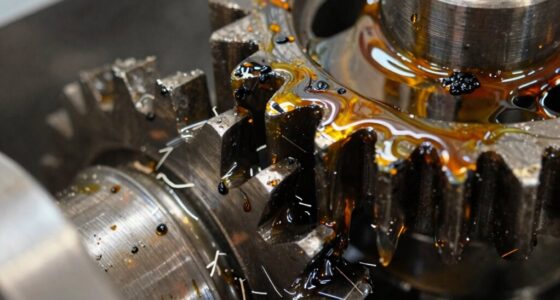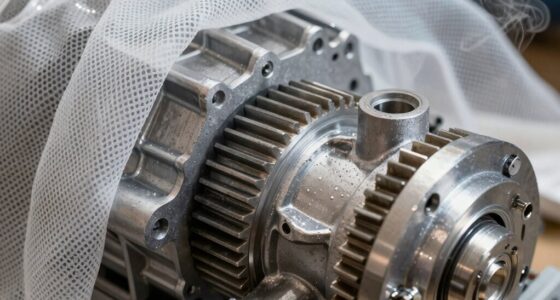
In severe-duty conditions, PAO synthetic oils offer superior engine protection, better thermal stability, and longer-lasting performance compared to mineral oils. They handle high temperatures and heavy loads more effectively, reducing wear and extending equipment lifespan. While they cost more upfront, their longer drain intervals can save you money over time. If you want to understand more about how these tradeoffs impact your equipment’s performance and costs, keep exploring the key differences.

Get business pricing on garage and car supplies
- Business-only prices and quantity discounts
- Tax-exempt purchasing
- Multiple users, one account, clear invoices
Key Takeaways
- Synthetic PAO oils provide superior thermal stability and oxidation resistance under severe-duty conditions compared to mineral oils.
- In harsh environments, synthetic oils maintain viscosity and engine protection longer, reducing wear and potential failures.
- Although more expensive upfront, synthetic oils lower long-term costs through extended drain intervals and reduced maintenance.
- Mineral oils degrade faster in severe conditions, increasing the risk of engine damage and more frequent oil changes.
- The choice depends on application severity, with synthetics offering better protection and longevity in demanding operational environments.
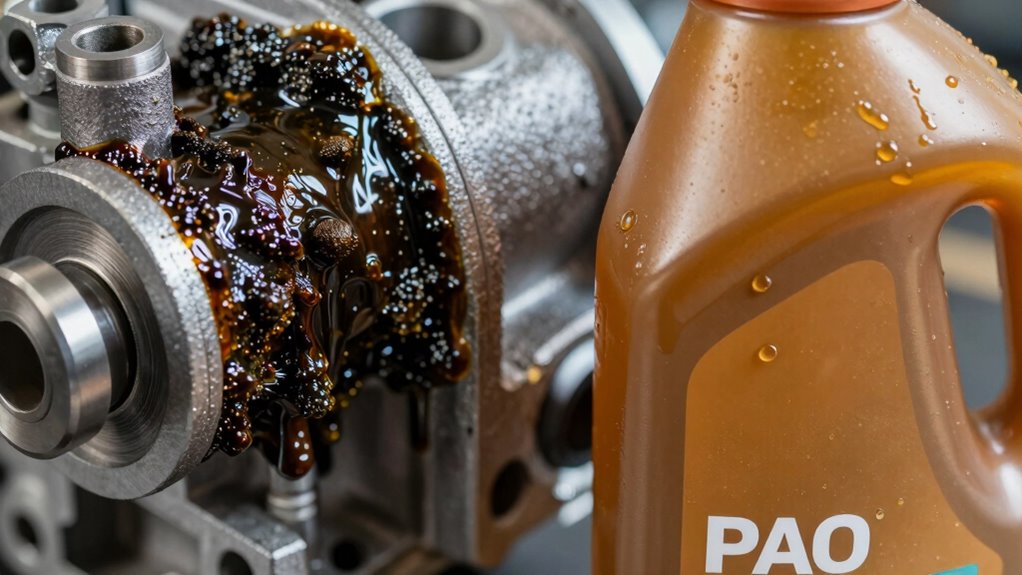
When it comes to severe-duty applications, choosing the right type of lubricant is crucial for peak engine performance and longevity. One of the key considerations is whether to use PAO (Polyalphaolefin) synthetic oils or mineral-based oils. Synthetic performance oils like PAO are engineered for demanding conditions, offering superior thermal stability, better oxidation resistance, and enhanced film strength. This means your engine can run cleaner and cooler, even under high stress or extreme temperatures. In contrast, mineral oils are derived from crude oil and tend to break down faster under harsh conditions, which can lead to increased wear and more frequent oil changes.
Opting for PAO synthetic oils usually translates into better protection for your engine components, especially in severe-duty scenarios like heavy-duty trucks or industrial machinery. The higher quality of synthetic performance ensures that the oil maintains its viscosity and protective properties longer, reducing the risk of engine damage over time. However, this performance comes with significant cost implications. PAO synthetics are generally more expensive upfront than mineral oils, which might make them seem less appealing from a short-term budget perspective. But, considering the extended drain intervals and reduced maintenance costs, many users find that the initial investment pays off over the long run.
PAO synthetic oils offer superior engine protection and longer-lasting performance despite higher initial costs.
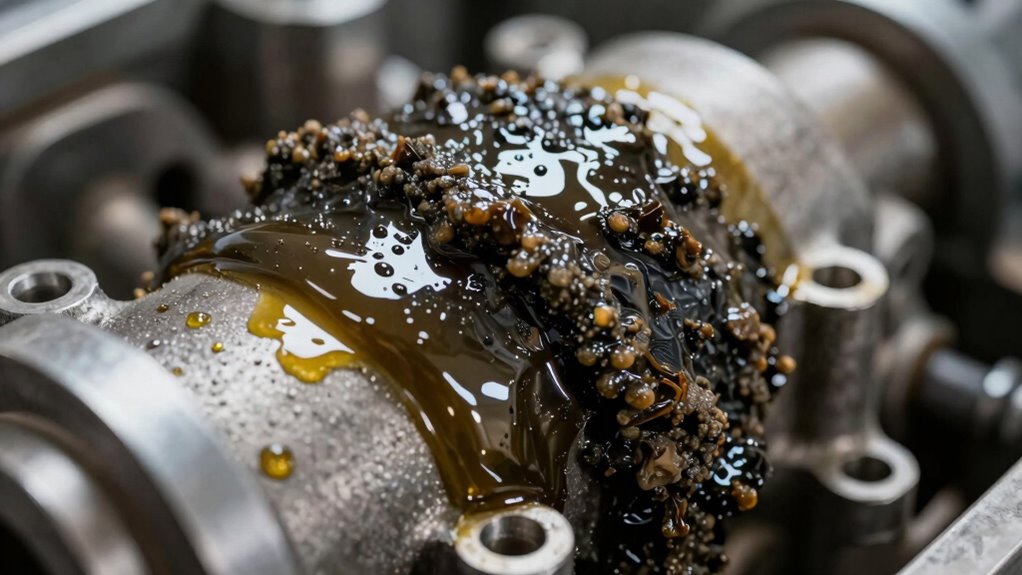
Mineral oils, on the other hand, are more budget-friendly and readily available. They work adequately in less demanding applications but tend to degrade faster when subjected to severe conditions. This means you might need to change mineral oil more frequently, increasing maintenance downtime and overall operating costs. If you’re running machinery in environments with high temperatures, heavy loads, or extended operational hours, the lower durability of mineral oils can lead to increased engine wear and, eventually, costly repairs. Additionally, synthetic oils like PAO often have lower volatility, meaning less oil consumption and evaporation over time, which is beneficial in severe-duty settings.
The decision isn’t solely about initial expenses; it’s about understanding the tradeoffs. Synthetic performance oils like PAO provide a significant advantage in terms of engine protection, efficiency, and lifespan in severe-duty conditions. Although they come with higher upfront costs, they often save you money in the long term through fewer oil changes and reduced engine maintenance. Conversely, mineral oils may seem appealing for their lower price but can lead to higher operational costs and potential engine issues when used in tough environments. Ultimately, your choice should factor in the severity of your application, the expected lifespan of the equipment, and your willingness to invest in long-term engine health.
PAO synthetic engine oil for severe duty
As an affiliate, we earn on qualifying purchases.
As an affiliate, we earn on qualifying purchases.
Frequently Asked Questions
How Do PAO and Mineral Oils Compare in Extreme Temperature Conditions?
You’ll find PAO oils generally offer better thermal stability, meaning they resist breakdown at high temperatures, while mineral oils tend to degrade faster under extreme heat. In low temperatures, PAO maintains more consistent viscosity behavior, ensuring reliable lubrication. Mineral oils may thicken or thin unpredictably in temperature swings. So, if you need oil that withstands extreme temps, PAO is your best bet for stable viscosity and thermal resilience.
What Are the Long-Term Maintenance Costs for PAO Versus Mineral Oils?
You’ll find that PAO oils often have higher initial costs, but their longer lifespan can reduce long-term maintenance expenses. Mineral oils generally cost less upfront but may require more frequent changes, increasing contamination risks and overall costs over time. A clear cost comparison shows PAO’s durability can offset higher prices, especially in severe duty situations where maintaining oil purity and performance minimizes costly repairs.
Can PAO Oils Be Used in Older Machinery Designed for Mineral Oils?
You can use PAO oils in older machinery designed for mineral oils, but you need to verify oil compatibility first. Some older equipment might require modifications, known as machinery retrofitting, because PAO oils have different properties. Always review the manufacturer’s guidelines to ensure safe operation. Proper compatibility checks help avoid potential issues, ensuring your machinery runs smoothly without risking damage from incompatible oil types.
How Do Additive Packages Differ Between PAO and Mineral Oils?
You’ll find that additive formulation differs markedly between PAO and mineral oils. PAO oils often include performance enhancements like antioxidants and anti-wear agents tailored for high-stress environments. Mineral oils typically have simpler additive packages focused on basic lubrication and oxidation stability. These differences mean PAO oils generally offer superior protection and longevity in severe-duty applications, but their additive packages are more complex and targeted for demanding conditions.
Are There Environmental Impacts Unique to PAO or Mineral Oils?
You might be surprised, but PAO oils generally have a smaller environmental footprint because they’re more biodegradable, reducing pollution risks. Mineral oils, however, can pose biodegradability concerns due to their petroleum origins, leading to potential environmental persistence. When choosing between them, consider these impacts, especially if you prioritize eco-friendly options. Your decision affects not just engine performance but also how your lubrication choices impact the planet’s health.
mineral engine oil for heavy-duty machinery
As an affiliate, we earn on qualifying purchases.
As an affiliate, we earn on qualifying purchases.
Conclusion
So, when choosing between PAO and mineral oils for severe duty, consider your specific needs and conditions. PAO offers excellent stability and performance, but at a higher cost. Mineral oils are more budget-friendly but may require more frequent changes. Ultimately, isn’t it about balancing performance with practicality? You have to ask yourself which tradeoff aligns best with your operational priorities and long-term goals. The right choice depends on what truly matters to you in demanding environments.
extended drain synthetic motor oil
As an affiliate, we earn on qualifying purchases.
As an affiliate, we earn on qualifying purchases.
industrial machinery synthetic lubricant
As an affiliate, we earn on qualifying purchases.
As an affiliate, we earn on qualifying purchases.
Halloween Picks
halloween
As an affiliate, we earn on qualifying purchases.