
To prevent repeat failures, use a maintenance note format that’s detailed, structured, and consistent. Record dates, specific issues, actions taken, parts used, and observations on wear or anomalies. Include insights on recurring problems and early signs of trouble. By tracking trends over time and documenting proactive inspections, you can identify patterns and adjust your maintenance strategies. Continue exploring effective note practices to help you build an all-encompassing approach that keeps equipment running smoothly.

Get business pricing on garage and car supplies
- Business-only prices and quantity discounts
- Tax-exempt purchasing
- Multiple users, one account, clear invoices
Key Takeaways
- Use structured, standardized fields for recording date, equipment ID, tasks, parts replaced, and observations.
- Document early signs of wear, vibrations, or anomalies to identify patterns before failures occur.
- Record detailed work descriptions, tools, parts, and locations to ensure clarity and traceability.
- Track recurring issues over time to analyze root causes and inform preventive maintenance strategies.
- Incorporate insights and questions about potential risks to refine schedules and enhance proactive care.
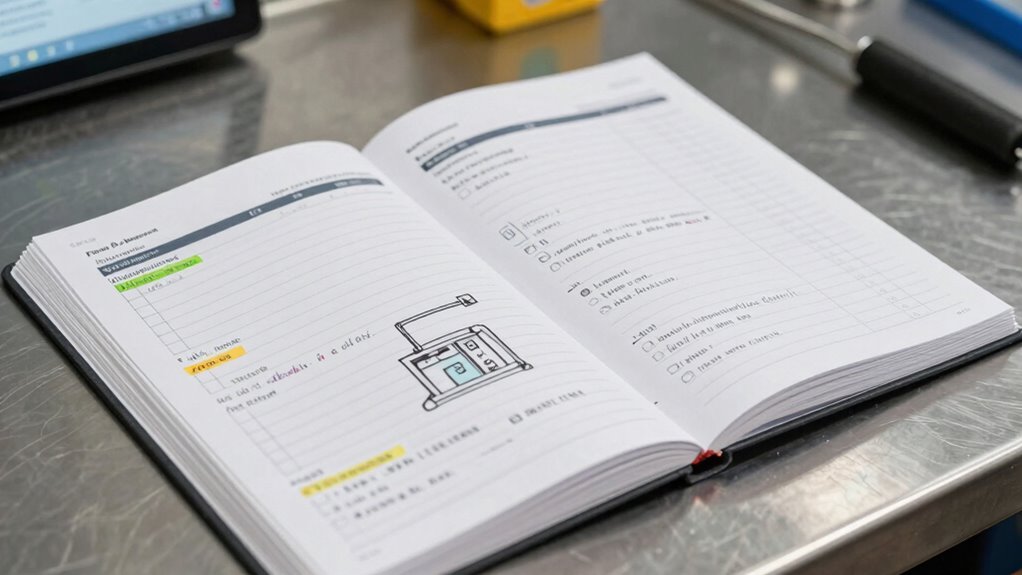
A well-structured maintenance note format is essential for clear communication and efficient record-keeping. When you adopt a consistent approach, you guarantee that everyone involved understands the history and status of equipment, which is crucial in preventing repeat failures. One of the key components of an effective maintenance note is integrating preventive strategies into your documentation. By systematically recording maintenance activities, inspections, and observed issues, you create an extensive history that highlights patterns and recurring problems. This proactive approach allows you to identify underlying causes early on, rather than merely addressing symptoms. Incorporating preventive strategies into your notes helps shift your focus from reactive fixes to proactive maintenance, reducing downtime and extending equipment lifespan.
Consistent maintenance notes prevent failures by highlighting patterns and guiding proactive, effective equipment care.
To achieve this, you need to adhere to strict documentation standards. These standards serve as a foundation for consistency, accuracy, and clarity across all records. When your notes follow a clear structure—such as including specific fields for date, equipment ID, maintenance performed, parts replaced, and observations—you make it easier to track trends over time. Precise documentation not only supports troubleshooting but also facilitates preventive planning. For example, regularly noting wear patterns or unusual vibrations can alert you to potential failures before they occur. This kind of detailed record-keeping aligns with best practices and ensures that information is extensive and easily accessible for future reference. Additionally, understanding the horsepower of electric dirt bikes can help you anticipate maintenance needs related to performance and motor health.
Your maintenance notes should also emphasize clarity and completeness. Use active voice to describe actions taken, such as “replaced the worn belt” rather than passive constructions like “the worn belt was replaced.” This improves readability and reduces ambiguity. Include specific details about the work performed, tools used, and any parts or materials involved. When you record findings or anomalies, be precise—note the exact location, measurements, and conditions. This level of detail helps prevent misinterpretation and provides a clear trail for future maintenance activities.
Furthermore, integrating preventive strategies into your maintenance notes encourages ongoing improvement. For each entry, consider asking yourself what could be done to prevent similar issues. Did the inspection reveal signs of early wear? Could a different maintenance schedule or additional inspections mitigate future failures? Document these insights alongside routine activities. Over time, this creates a valuable knowledge base that guides your preventive strategies, making your maintenance program more predictive rather than purely reactive.
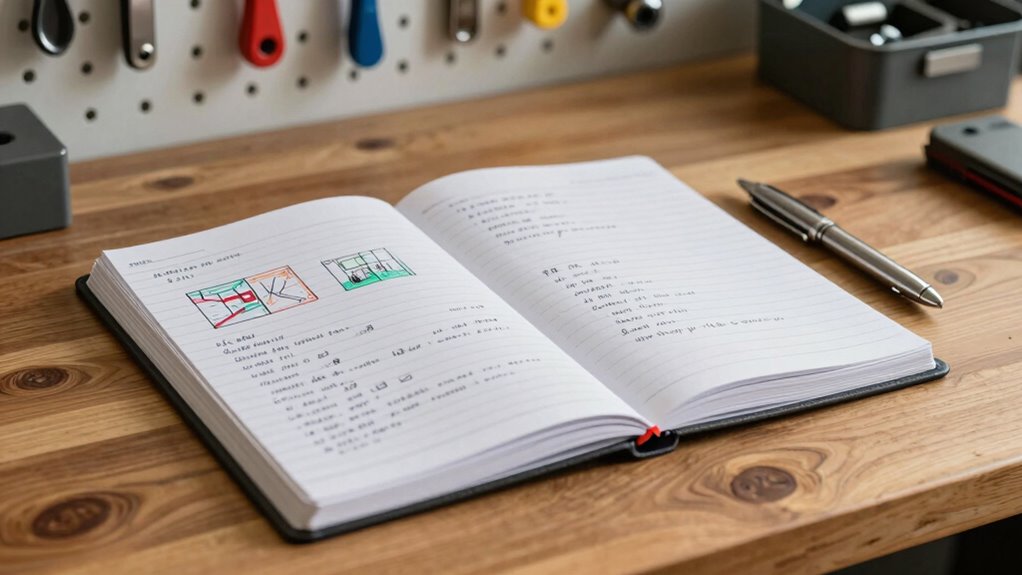
maintenance log book for equipment
As an affiliate, we earn on qualifying purchases.
As an affiliate, we earn on qualifying purchases.
Frequently Asked Questions
How Can I Customize the Note Format for Different Equipment Types?
You can customize the note format for different equipment types by using equipment categorization to group similar machines. Then, implement format customization within each category to include specific details relevant to that equipment. This way, your notes become tailored, making maintenance records clearer and more effective. Adjust templates or sections based on equipment needs, ensuring consistency while addressing unique maintenance requirements for each category.
What Training Is Needed to Implement This Maintenance Note System?
You need preventive training focused on the new maintenance note system to guarantee smooth implementation. This training should enhance your skills in documenting, customizing, and analyzing notes for different equipment types. By engaging in skill enhancement sessions, you’ll learn best practices and avoid repeat failures. Make sure to participate actively, ask questions, and practice using the system to build confidence and improve maintenance accuracy.
How Do I Integrate This Format With Existing Maintenance Management Software?
Think of your maintenance management software as a river and the new note format as a boat. To integrate smoothly, you’ll align the boat’s design with the river’s flow—this means customizing your software’s user interface for seamless compatibility. Use software integration tools or APIs to connect the format effortlessly, ensuring users navigate easily and data flows correctly. This way, your maintenance system moves forward without turbulence or delays.
Can This Note Format Be Adapted for Remote or Virtual Maintenance Teams?
Yes, you can adapt this note format for remote teams by leveraging digital documentation tools to guarantee clear communication. Incorporate remote collaboration features like shared notes and real-time updates to keep everyone aligned. This way, your virtual maintenance team can access consistent, structured information, preventing repeat failures. Emphasizing digital documentation helps streamline communication, making it easier for remote workers to follow procedures and maintain equipment effectively.
What Are the Common Challenges Faced During Adoption of This Format?
They say “change is the only constant,” and adopting this format can face challenges like staff resistance and change management hurdles. You might find that staff resist new procedures or struggle to adapt, slowing implementation. To succeed, you need to communicate clearly, involve your team early, and manage shifts smoothly. Addressing resistance head-on and providing training helps ensure a smoother adoption process and long-term success.
digital maintenance record software
As an affiliate, we earn on qualifying purchases.
As an affiliate, we earn on qualifying purchases.
Conclusion
By adopting this maintenance note format, you can effectively prevent repeat failures. Some believe that detailed, structured notes help identify root causes more accurately, boosting long-term reliability. While this theory holds weight, it’s also possible that consistent documentation simply encourages better communication among teams. Either way, using a clear and thorough format empowers you to catch issues early, reduce downtime, and keep your equipment running smoothly—proving that good records truly make a difference.
As an affiliate, we earn on qualifying purchases.
parts replacement tracking tools
As an affiliate, we earn on qualifying purchases.
As an affiliate, we earn on qualifying purchases.
Fall Picks
fall essentials
As an affiliate, we earn on qualifying purchases.