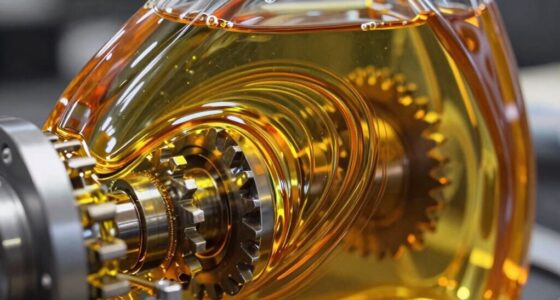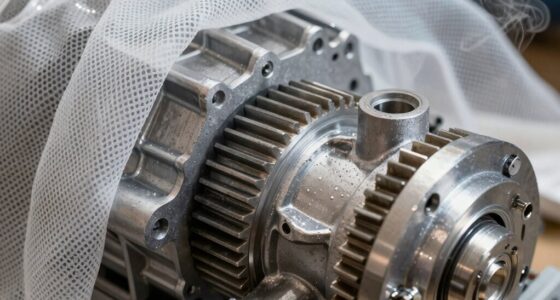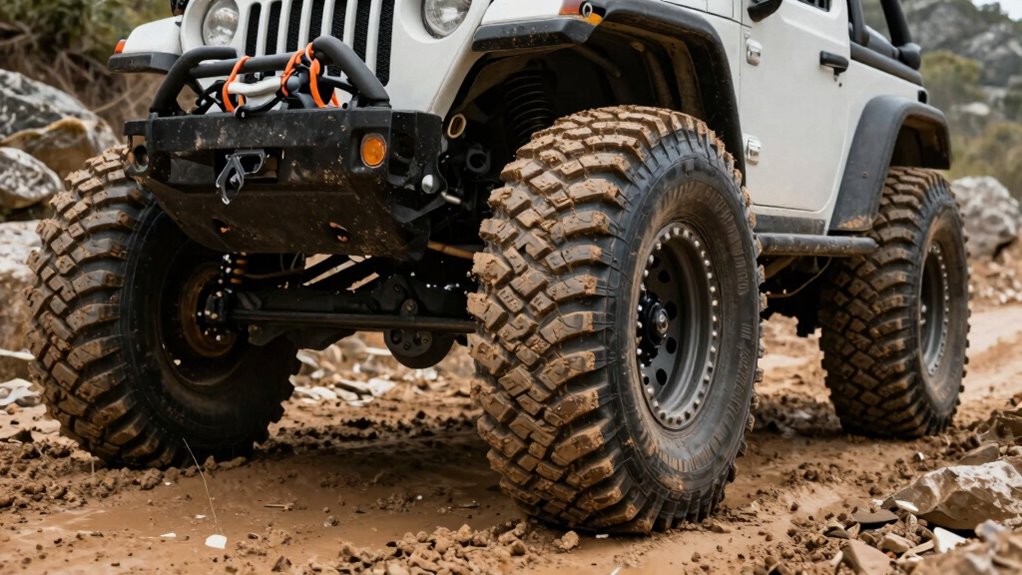
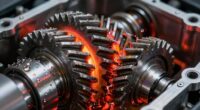
When you upgrade to bigger tires, your vehicle’s drivetrain works harder to turn them, increasing stress on the engine and lubrication system. The additional weight and rotational inertia raise engine RPMs and demand higher-quality oils to maintain proper viscosity. This means your lubrication system faces more heat, friction, and shear forces. Understanding these effects can help you choose the right oil and prevent wear and damage—if you keep exploring, you’ll discover how to keep your vehicle protected under increased load.

Get business pricing on garage and car supplies
- Business-only prices and quantity discounts
- Tax-exempt purchasing
- Multiple users, one account, clear invoices
Key Takeaways
- Larger tires increase rotational inertia, requiring the engine to work harder and demanding more effective lubrication to prevent wear.
- Bigger tires put extra strain on the drivetrain, elevating temperatures and necessitating proper lubricant viscosity for protection.
- Increased traction from larger tires elevates the workload on engine components, making stable lubrication critical for durability.
- Heavier tires cause higher engine RPMs at the same speeds, increasing the need for lubricants that maintain viscosity under stress.
- Altered vehicle dynamics and added stresses on axles and differentials require enhanced lubrication to prevent breakdowns.
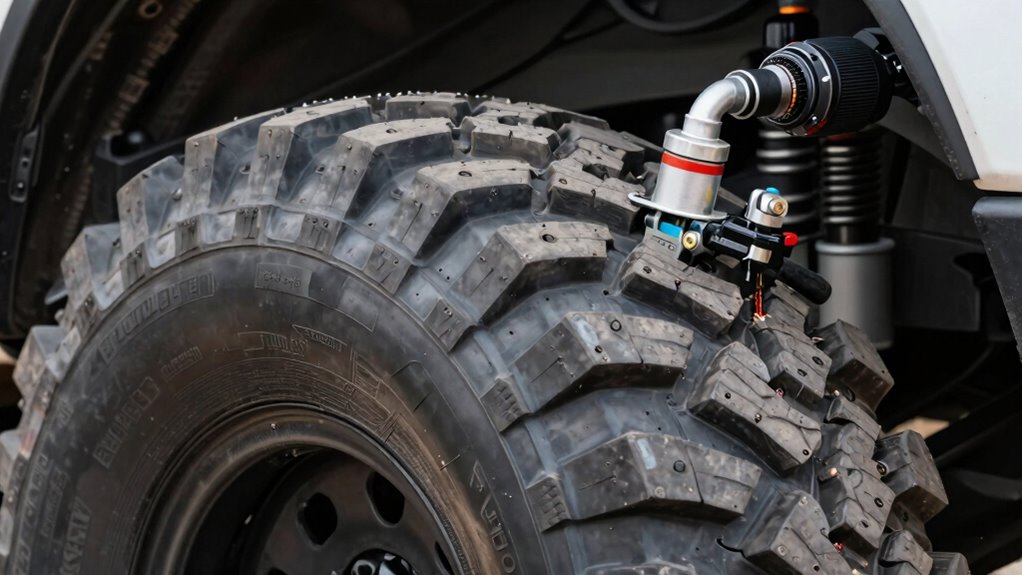
Increasing tire size can boost a vehicle’s off-road capabilities and improve its appearance, but it also introduces new challenges for your lubrication system. When you install bigger tires, you’re likely to notice improved tire traction, which helps your vehicle grip rough terrain better. However, this change doesn’t come without consequences. As the tires grow larger, the drivetrain has to work harder to turn them, which puts additional stress on the engine and transmission. This increased workload can influence how your lubrication system performs, especially concerning lubrication viscosity.
Bigger tires mean your engine has to work harder to maintain speed and acceleration, which causes the lubrication viscosity to become more critical. If the oil is too thin, it won’t provide adequate protection under the increased strain, leading to faster wear of engine components. Conversely, if the oil is too thick, it can hinder proper circulation, increasing friction and heat. Striking the right balance becomes essential because the larger tires alter the operational demands placed on your engine and lubrication system. You need an oil formulation that maintains suitable viscosity across a broader temperature range and workload, ensuring your engine remains protected even as it fights to turn those oversized tires.
Larger tires demand optimal oil viscosity to protect engine components under increased strain and workload.
The increased rotational inertia from larger tires also impacts how your lubrication system functions. Heavier tires mean more rotational mass, which can cause the engine to operate at higher RPMs for the same speed. This puts additional stress on the oil pump and circulating system, demanding higher-quality lubricants with stable viscosity. If the oil’s viscosity isn’t suited to handle these increased demands, your engine components may experience inadequate lubrication, leading to increased wear and potential overheating. Proper lubrication viscosity ensures that oil can reach all critical parts effectively, whether you’re crawling over rocks or cruising on a highway with bigger tires.
Additionally, larger tires can cause changes in vehicle dynamics, such as altered suspension and steering response, which indirectly affect lubrication needs. For example, increased stress on the axles and differentials requires more robust lubrication solutions. You’ll want to choose lubricants that can withstand the added shear forces and temperature fluctuations. As a result, maintaining proper lubrication viscosity becomes even more crucial to prevent breakdowns and ensure longevity. Proper lubrication viscosity is vital to accommodate the increased stresses and protect your vehicle’s vital components. Overall, bigger tires enhance your vehicle’s capabilities but demand a more attentive approach to lubrication. By understanding how tire traction and lubrication viscosity interact, you can better prepare your vehicle to handle the increased stresses, keeping it running smoothly and reliably on and off the road.
high viscosity engine oil for larger tires
As an affiliate, we earn on qualifying purchases.
As an affiliate, we earn on qualifying purchases.
Frequently Asked Questions
Do Bigger Tires Impact Engine Oil Viscosity Requirements?
Bigger tires can impact your engine oil viscosity requirements because they alter your vehicle’s overall load and stress levels. You should regularly check tire pressure adjustment and ensure proper wheel alignment considerations to prevent uneven wear and additional strain. When your tires are larger, it may be necessary to use a different oil viscosity to maintain engine performance and protect components from increased friction and heat generated by the altered ride dynamics.
How Do Larger Tires Affect Differential Lubrication?
Larger tires put extra strain on your differential, increasing lubrication stress. You might notice changes in tire pressure and tread wear, which can lead to uneven forces on the differential components. This added stress can cause the lubricant to break down faster, risking damage. To protect your vehicle, keep an eye on tire pressure and tread wear, and consider using higher quality or upgraded lubricants suited for bigger tires.
Are There Specific Lubricants Recommended for Oversized Tires?
You should choose lubricants compatible with your oversized tires to prevent accelerated tire wear and gear damage. Look for lubricants specifically formulated for high-stress conditions and larger wheels, guaranteeing they match your vehicle’s specifications. Using the correct lubricant minimizes stress on your differential and prolongs component life. Always check your manufacturer’s recommendations to ensure peak lubrication compatibility, especially when upgrading to bigger tires.
What Maintenance Changes Are Needed With Bigger Tires?
When you upgrade to bigger tires, you’ll need to regularly check and adjust your tire pressure to prevent uneven wear and maintain handling. Suspension modifications are also essential to support the increased weight and size, ensuring a smoother ride and better control. Keep an eye on your alignment and consider upgrading your shocks if necessary. These maintenance changes help your vehicle perform safely and efficiently with larger tires.
Do Bigger Tires Influence Transmission Fluid Performance?
Bigger tires can indeed impact your transmission fluid performance. They cause constant changes in tire pressure variations and wheel alignment issues, which put extra stress on your vehicle’s drivetrain. These shifts can lead to increased friction and heat, making your transmission work harder. As a result, you might see faster fluid degradation and a need for more frequent fluid checks or changes. Stay vigilant to keep your vehicle running smoothly.
heavy-duty differential lubricant
As an affiliate, we earn on qualifying purchases.
As an affiliate, we earn on qualifying purchases.
Conclusion
As you upgrade to bigger tires, remember they’re like a heavier load on your vehicle’s heart, demanding more from your lubrication system. This added stress is like a storm cloud on the horizon, threatening to shorten your engine’s lifespan if ignored. But with proper maintenance and awareness, you can navigate this change smoothly. Keep your tires in check, and you’ll keep your engine singing rather than crying—ensuring a journey as steady as a steady heartbeat.
As an affiliate, we earn on qualifying purchases.
As an affiliate, we earn on qualifying purchases.
Fall Picks
fall essentials
As an affiliate, we earn on qualifying purchases.