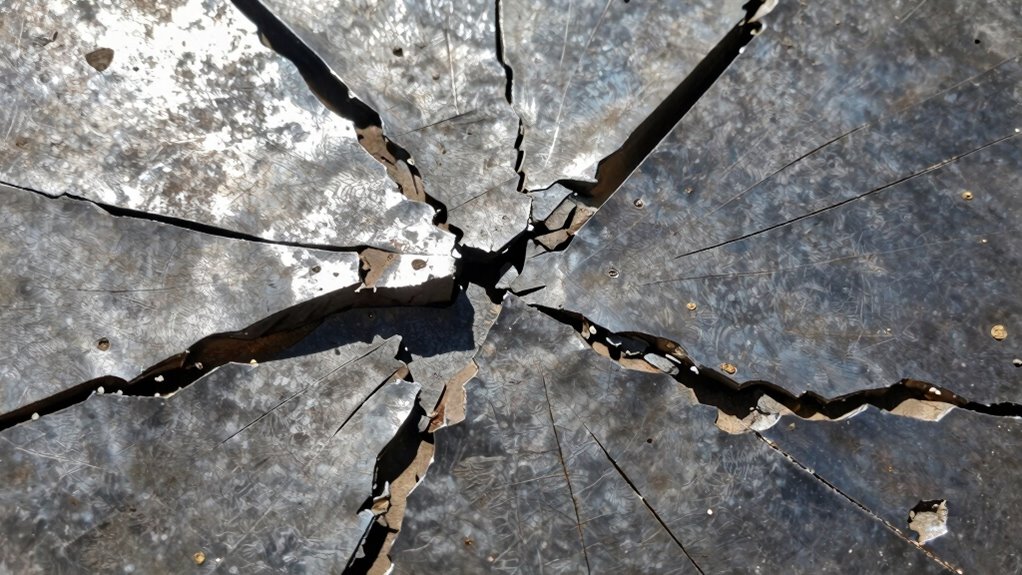

When a shock load hits a component, it causes immediate and severe damage that creates distinct wear signatures. These signatures often appear as localized cracks, pitting, or surface flaws, clearly marking where and how the impact occurred. The high-impact force exceeds the material’s tolerance, leading to rapid crack initiation and microstructural damage that’s visible upon inspection. To understand how this damage forms and how to prevent it, exploring impact analysis techniques can offer valuable insights.

Get business pricing on garage and car supplies
- Business-only prices and quantity discounts
- Tax-exempt purchasing
- Multiple users, one account, clear invoices
Key Takeaways
- Shock loads generate high-impact forces that cause immediate microstructural damage, visible as instant wear signatures.
- Sudden impacts induce crack initiation and propagation, leaving identifiable surface flaws or cracks.
- The magnitude and contact point of the shock load determine the severity and location of instant wear.
- Instant wear signatures result from localized damage like pitting, cracking, or delamination caused by impact forces.
- Analyzing these signatures helps identify the occurrence and source of shock loads in components.
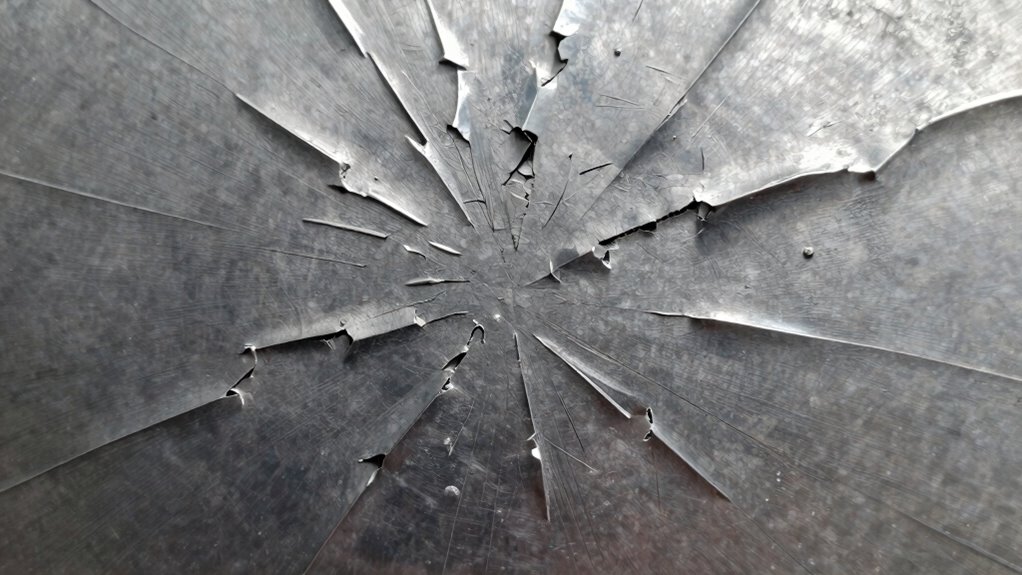
Shock loads can cause immediate and severe damage to mechanical components, often leaving behind telltale signs known as instant wear signatures. These signatures aren’t random; they result from the intense stress and high-impact forces that exceed the material’s capacity to absorb energy. When a sudden force strikes, it triggers rapid crack initiation and propagation within the material, leading to localized damage that’s visible upon inspection. To understand how these impacts cause such damage, you need to evaluate impact analysis—an essential process that examines how a component responds to sudden forces. Impact analysis helps identify weak points in your design, predict failure modes, and prevent catastrophic breakdowns by simulating shock scenarios before they happen. Recognizing the importance of impact analysis in damage prevention can significantly improve your maintenance strategies. Material fatigue plays a critical role in the development of instant wear signatures. While fatigue is typically associated with repeated loading over time, shock loads can accelerate this process dramatically. The high-stress impact causes microstructural damage at a microscopic level, creating flaws that grow quickly under repeated impacts or even after a single event. This damage manifests as pitting, cracking, or delamination, which are the physical evidence of the material’s compromised integrity. Recognizing these signs early is essential for maintenance and safety, especially in high-stakes environments such as aerospace or heavy machinery. When shock loads occur, your immediate focus should be on evaluating the damage through impact analysis. This involves examining the force magnitude, duration, and point of contact to understand how the impact translated into material deformation or failure. By analyzing the impact force and its distribution, you can determine whether the damage resulted from a single catastrophic event or an accumulation of micro-damage that eventually led to instant wear signatures. This process helps you develop more resilient materials and design modifications that can absorb or deflect shock more effectively, reducing the risk of future damage. The key to managing shock loads lies in early detection and understanding their effects on your components. Material fatigue caused by impact stresses can be insidious, often invisible until failure occurs. Using impact analysis tools, you can simulate various shock scenarios to see how your parts respond, identify vulnerabilities, and reinforce those areas. Recognizing instant wear signatures not only helps in timely maintenance but also guides you in choosing materials with better impact resistance. Ultimately, understanding how shock loads translate into material fatigue and wear signatures empowers you to improve durability, safety, and operational efficiency in your machinery or structures.
As an affiliate, we earn on qualifying purchases.
Frequently Asked Questions
How Can Shock Loads Be Detected Early?
You can detect shock loads early through vibration analysis, which reveals sudden spikes or irregular patterns indicating impact events. Incorporate this into your predictive maintenance routine to catch signs of shock loads before they cause significant damage. Regular monitoring allows you to identify “instant wear” signatures promptly, so you can take action and prevent costly repairs or downtime, keeping your equipment running smoothly and efficiently.
What Industries Are Most Affected by Shock Load Wear?
You’ll find that industries like mining, aerospace, and manufacturing are most affected by shock load wear. These sectors often experience intense industrial vibrations that accelerate equipment degradation. To prevent unexpected issues, adhering to diligent maintenance protocols becomes essential. By monitoring shock loads early, you can minimize instant wear signatures, extend equipment life, and maintain smooth operations, ensuring you stay ahead in managing the effects of sudden stresses on your machinery.
Can Shock Loads Be Prevented or Minimized?
You can prevent or minimize shock loads through effective shock load mitigation strategies and regular preventive maintenance. By inspecting equipment frequently, replacing worn parts, and installing shock absorbers or dampers, you diminish the risk of sudden impacts causing damage. Training staff to handle machinery correctly and avoiding sudden load changes also helps. These proactive steps ensure your systems withstand shock loads better, extending their lifespan and maintaining smooth operations.
How Do Material Types Influence Shock Load Damage?
Material types greatly influence shock load damage because their fatigue resistance and surface hardness determine how well they absorb impacts. For example, metals with high surface hardness resist surface fatigue, preventing cracks and wear. Conversely, softer materials may deform or crack under shock loads, leading to instant wear signatures. Choosing materials with appropriate hardness and fatigue strength helps minimize damage and extend equipment lifespan during sudden shock events.
Are There Specific Tools to Analyze Instant Wear Signatures?
You can use specialized tools like wear pattern analysis and vibration monitoring to analyze instant wear signatures. Wear pattern analysis visually reveals where damage occurs, while vibration monitoring detects abnormal signals caused by shock loads. These tools help you identify specific wear signatures instantly, enabling you to diagnose issues early. By combining both methods, you gain an all-encompassing understanding of shock load impacts, allowing you to prevent further damage and optimize maintenance strategies effectively.
shock load impact analysis equipment
As an affiliate, we earn on qualifying purchases.
As an affiliate, we earn on qualifying purchases.
Conclusion
Understanding shock loads is like knowing the secret language of your machinery’s heartbeat. When sudden impacts strike, they carve instant wear signatures—silent scars that whisper of impending trouble. By recognizing these fleeting imprints, you become the vigilant guardian of your equipment’s future. Stay alert, respond swiftly, and transform vulnerability into strength. After all, in the dance of durability, awareness is your fiercest shield against the relentless march of wear and tear.
material crack detection devices
As an affiliate, we earn on qualifying purchases.
As an affiliate, we earn on qualifying purchases.
microstructural damage inspection tools
As an affiliate, we earn on qualifying purchases.
As an affiliate, we earn on qualifying purchases.
Halloween Picks
halloween
As an affiliate, we earn on qualifying purchases.