
To prevent contamination during oil transfer, always inspect and clean your funnels and hoses thoroughly before use. Cover funnels when not in use and handle hoses carefully to avoid dirt and debris entering the system. Work in dust-free environments whenever possible, and keep open containers covered. Proper maintenance and environmental controls help stop impurities from contaminating the oil, extending equipment life. Continue exploring how these best practices can protect your machinery effectively.
Key Takeaways
- Proper cleaning and covering of funnels prevent dust and debris from contaminating oil during transfer.
- Regular inspection and cleaning of hoses reduce dirt buildup that can introduce impurities.
- Using dust-free, controlled environments minimizes airborne particles entering the oil transfer process.
- Ensuring tight, clean fittings during hose connections prevents dirt from entering the system.
- Implementing contamination prevention practices extends equipment lifespan and maintains oil purity.
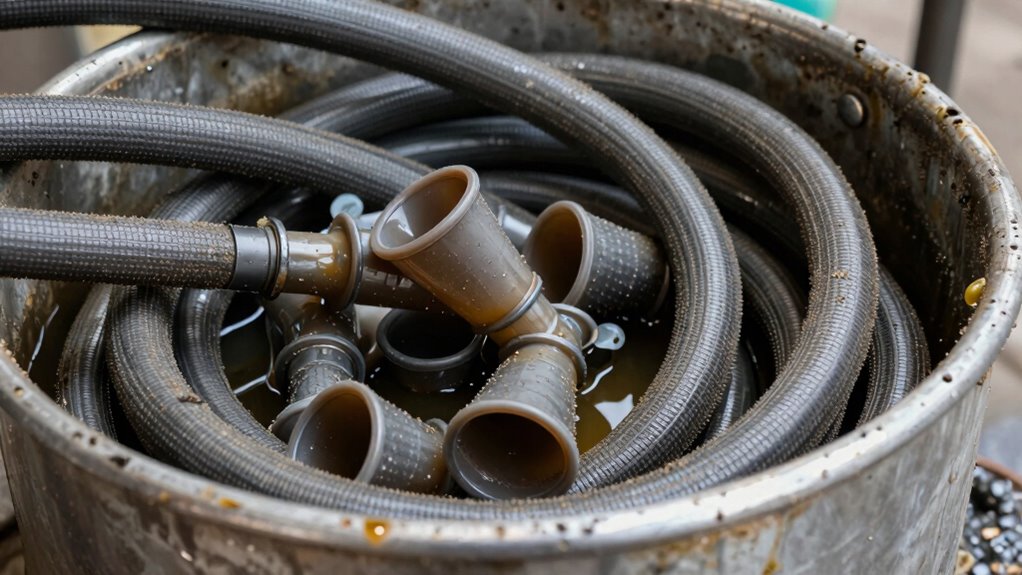
When transferring oil between containers or machinery, contamination can easily occur, leading to equipment damage and reduced efficiency. Small particles, dirt, or debris can sneak into the oil stream, causing clogs and wear on crucial components. That’s why using an oil filter is indispensable for contamination prevention during these processes. The oil filter acts as a barrier, catching impurities before they reach sensitive parts of your machinery. However, relying solely on the filter isn’t enough; you also need to pay attention to how you transfer oil. Proper tools like funnels and hoses play a critical role in maintaining oil purity, but they must be used carefully to prevent introducing contaminants.
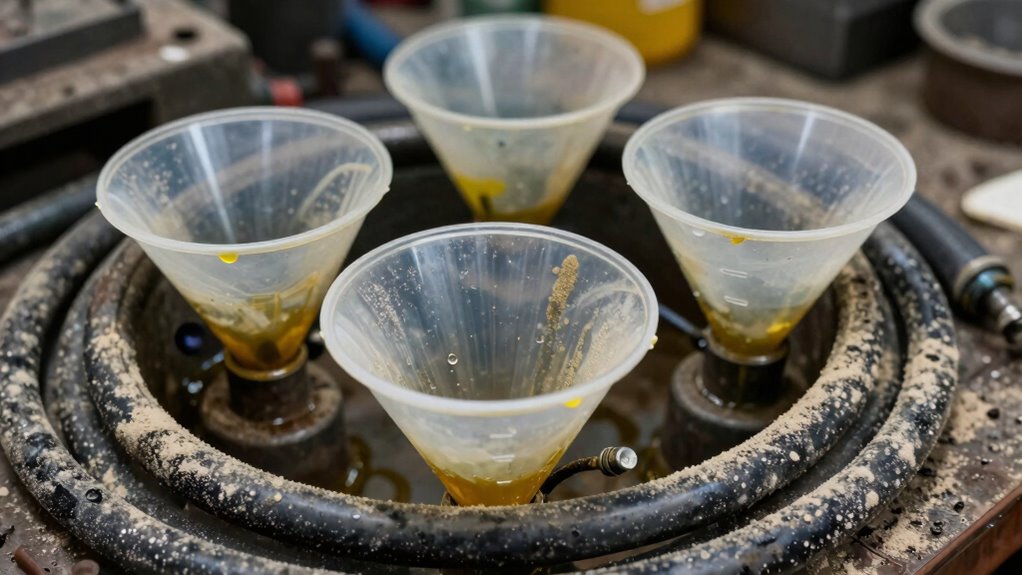
Funnels, for instance, are designed to direct oil into narrow openings, but if they aren’t clean or are used improperly, they can become a source of dirt and dust. Dust particles settle on surfaces, and when a dusty funnel touches the oil, those contaminants can easily transfer. To prevent this, always ensure your funnels are thoroughly cleaned and free of dust before use. Cover them when not in use, especially in dusty environments, to keep debris from settling on their surfaces. Similarly, hoses used for transferring oil should be inspected for cleanliness and integrity. Damaged or dirty hoses can harbor dirt and microorganisms, which may contaminate the oil once transferred. Additionally, understanding the importance of contamination prevention can significantly improve your maintenance routines and extend the lifespan of your equipment.
Contamination prevention doesn’t stop at tools—it’s also about your environment. Work in a clean, dust-free area whenever possible. Cover open containers and avoid transferring oil in windy or dusty conditions, as particles can quickly find their way into your system. When connecting hoses, make sure the fittings are tight and free of dirt. Loose or dirty connections can introduce debris into the oil stream, undermining the effectiveness of your oil filter. Also, when disconnecting hoses, do so carefully to prevent dirt from falling into the container.

Justrite 2.6 Gallon Drum Funnel for Flammables with Emergency-Fusing Self-Closing Cover, Flame Arrester, and 2" Bung Hole Adapter, Made in The USA, 08207
- Wide Diameter for Easy Use: 10.75-inch industrial funnel for mess-free transfer
- Hands-Free Operation: Hinged lid stays open during use
- Flame Arrester: 6-inch arrester dissipates heat and prevents sparks
As an affiliate, we earn on qualifying purchases.
As an affiliate, we earn on qualifying purchases.
Frequently Asked Questions
How Often Should the Contamination Trap Be Inspected and Replaced?
You should inspect the contamination trap regularly, ideally before each use or at least weekly, to guarantee it’s functioning properly. Follow the replacement guidelines provided by the manufacturer, typically replacing the trap when it shows signs of excessive dirt buildup, damage, or after a set period, such as every three to six months. Consistent inspections help prevent contamination, maintaining safe and efficient oil transfer operations.
What Materials Are Best for Making Oil Transfer Funnels?
You should choose oil transfer funnels made from durable materials like high-quality plastics or stainless steel, which meet strict manufacturing standards. Remarkably, stainless steel funnels can last up to 10 times longer than plastic ones, reducing waste and replacement costs. These materials ensure material durability, preventing cracks or leaks during transfers. By selecting high-standard, durable funnels, you enhance safety, efficiency, and contamination control in your oil transfer process.
Can Dust Affect the Efficiency of the Contamination Trap?
Dust accumulation can considerably diminish the efficiency of your contamination trap. When dust settles on the funnel or hoses, it can bypass the trap, introducing contaminants into the oil. This impairs contamination prevention efforts and risks damaging equipment. To keep your system functioning at its best, regularly clean and inspect the trap, and ensure dust is minimized during transfers. Proper maintenance helps maintain the trap’s effectiveness and extends the lifespan of your oil system.
Are There Safety Concerns With Using Specific Hoses During Transfer?
Using specific hoses during transfer is like choosing the right key for a lock—essential for safety. Different hose materials, such as rubber or silicone, have varying chemical resistances and flexibility. Always follow safety precautions, including inspecting for cracks or leaks, ensuring proper grounding, and avoiding incompatible materials. These steps help prevent spills, leaks, and potential hazards, keeping your transfer process safe and efficient.
How Does Temperature Impact Contamination in Oil Transfer Systems?
Temperature substantially impacts oil transfer systems by causing thermal expansion, which can lead to leaks or system stress. As temperatures rise, oil’s viscosity decreases, making it flow faster but potentially increasing contamination risks if the system isn’t designed to handle these changes. Conversely, colder temperatures increase viscosity, slowing flow and risking blockages. To maintain contamination control, you must monitor temperature variations and adjust transfer procedures accordingly.

FOUR UNCLES Fluid Transfer Syringe with Flexible Hose for Oil Service
- Reaches Hard-to-Access Service Points: Flexible hose for tight spaces
- Cleaner Fluid Transfers: Transparent barrel for monitoring
- Enhanced Control During Fluid Transfer: Smooth plunger for steady flow
As an affiliate, we earn on qualifying purchases.
As an affiliate, we earn on qualifying purchases.
Conclusion
By paying close attention to funnels, hoses, and dust, you can prevent oil transfer contamination and keep your equipment running smoothly. Are you taking the necessary steps to guarantee clean transfers every time? Remember, a little diligence now saves costly repairs later. Keeping your transfer process free of debris and contaminants isn’t just smart—it’s essential. So, why risk damage when simple precautions can make all the difference? Stay vigilant and protect your equipment today.
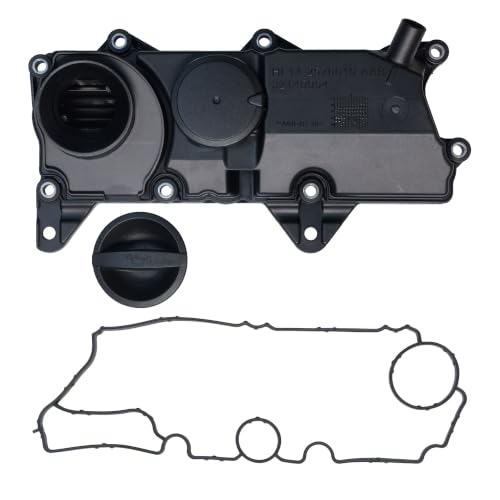
NOVAPARTS 32140004 PCV Valve Oil Trap 2.0L w/Gasket for Volvo XC90 XC60 S60 S80 S90 V60 V90 XC40 XC70 2014-2021 4 Cylinder 32242753 31430923 31670210 31316184
- Compatible Vehicle Models: Fits Volvo XC90, XC60, S60, S80, V60, V90, XC40, XC70
- Engine Type: Designed for 2.0L 4-cylinder engines
- Part Numbers: Includes 32140004, 31316184, 31430236, 31430923, 31670210, 32242753
As an affiliate, we earn on qualifying purchases.
As an affiliate, we earn on qualifying purchases.

Performance Tool W4046 5-Quart Oil Jug with Lid
- Durable Material: Made from high-quality chemical-resistant plastic
- Measurement Markings: Marked in quarts and liters for accuracy
- Large Capacity: Holds up to 5 quarts or 4730 ml
As an affiliate, we earn on qualifying purchases.
As an affiliate, we earn on qualifying purchases.