If you experience notchy shifts, you might be making filling mistakes. Using the wrong type or viscosity of gear oil can cause gritty or rough shifts. Overfilling or underfilling the transmission also leads to problems. Be sure to locate and use the proper fill plug, and avoid damaging seals or gaskets. Maintaining the correct fluid level at the right temperature is essential for smooth gear engagement. Keep these tips in mind to improve your shifts and learn more.

Get business pricing on garage and car supplies
- Business-only prices and quantity discounts
- Tax-exempt purchasing
- Multiple users, one account, clear invoices
Key Takeaways
- Using incorrect gear oil viscosity can cause gritty, notchy shifts and increased wear over time.
- Improper fill plug location may lead to underfilling or overfilling, affecting shift quality.
- Overfilling or underfilling transmission fluid results in poor lubrication and notchiness.
- Damaged seals or gaskets at the fill plug can cause leaks and fluid loss, impacting shift smoothness.
- Failing to check and maintain proper fluid level at the correct temperature causes shifting issues.
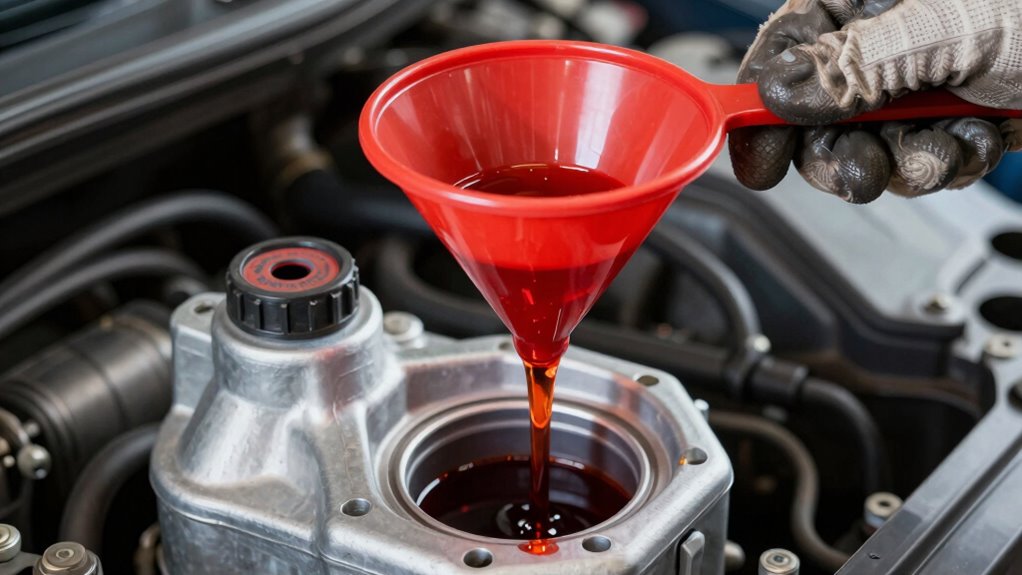
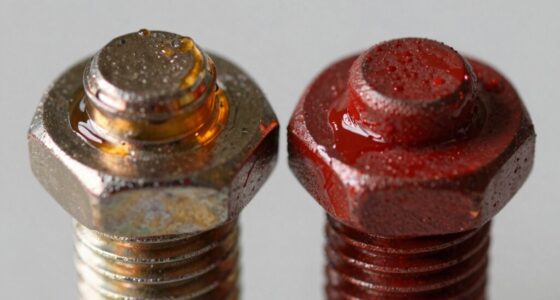
Filling a manual transmission might seem straightforward, but making mistakes can lead to costly repairs and reduced performance. One common error is using the wrong gear oil viscosity. If you don’t select the appropriate oil for your vehicle, you risk creating shifts that feel notchy or gritty. Thicker oils may struggle to flow at lower temperatures, causing inconsistent gear engagement, while oils that are too thin won’t provide the necessary lubrication, leading to increased wear over time. Always check your owner’s manual or manufacturer recommendations to determine the correct gear oil viscosity. Using the right oil ensures smooth shifts and prolongs the life of your transmission components.
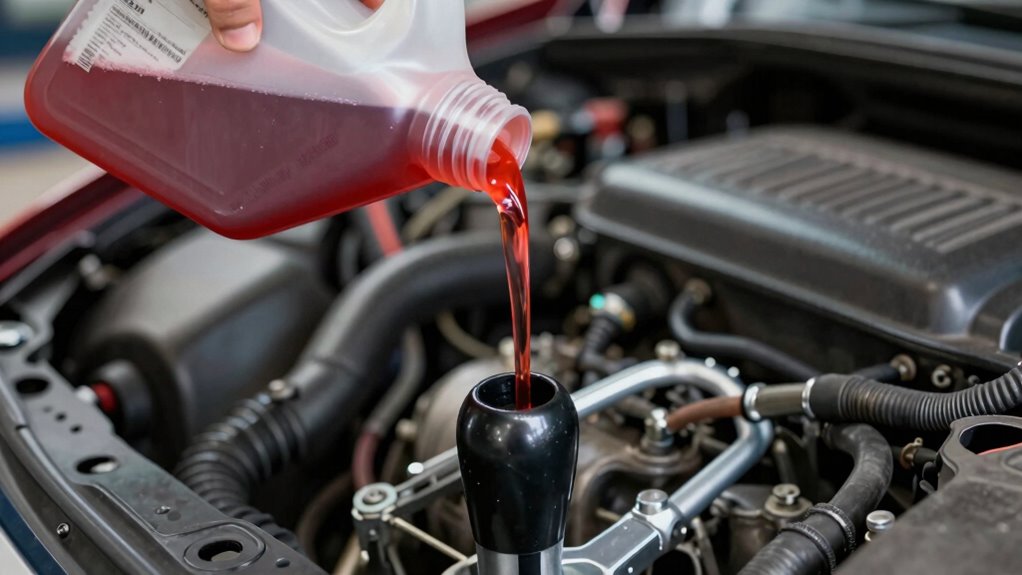
Another mistake that can cause notchy shifts is improper attention to the fill plug location. Many drivers overlook this small but vital detail, leading to underfilling or overfilling the transmission. The fill plug is typically located on the side of the transmission housing, and knowing its precise location is key to topping off the transmission properly. If you overfill, excess fluid can cause foaming, reducing lubrication efficiency and making gear engagement rough. Conversely, underfilling can lead to insufficient lubrication, which results in increased friction and difficulty shifting smoothly. Before you attempt to fill your transmission, consult your vehicle’s service manual to locate the fill plug accurately. Using the correct fill point and ensuring the transmission is filled to the proper level will help maintain consistent gear shifts.
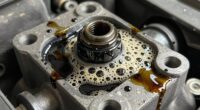
Many people also forget to check the fill plug’s sealing washer or gasket when refilling the transmission. A worn or damaged seal can lead to leaks, which decrease fluid levels and cause notchy shifting. Tightening the fill plug too much can damage the threads or the seal, so it’s important to tighten it to the manufacturer’s specifications. Additionally, verifying if the transmission needs to be topped off when warm or cold is essential since fluid expands with heat. Filling the transmission to the correct level at the right temperature prevents overfill or underfill issues. Proper fluid level management is crucial for optimal transmission performance and longevity.
As an affiliate, we earn on qualifying purchases.
Frequently Asked Questions
How Often Should I Check and Replace Manual Transmission Fluid?
You should check your manual transmission fluid at least every 30,000 to 60,000 miles as part of your maintenance schedule. Regular fluid inspection helps you catch potential issues early and guarantees smooth shifting. Replace the fluid when it appears dark or has a burnt smell, or if recommended by your vehicle’s manufacturer. Staying on top of fluid maintenance keeps your transmission functioning properly and prevents notchy shifts.
Can Using the Wrong Type of Fluid Cause Shifting Problems?
Using the wrong type of fluid can cause shifting issues that feel like trying to steer a wild stallion! When fluid compatibility isn’t right, or the fluid viscosity is off, your transmission struggles to shift smoothly. This can lead to notchy or stiff shifts. Always check your vehicle’s manual for the correct fluid type, and verify you use recommended fluids to keep your transmission running effortlessly.
What Are the Signs of Low or Contaminated Transmission Fluid?
If your transmission fluid is low or contaminated, you’ll notice signs like difficulty shifting gears, especially into first or reverse. You might feel a transmission warning light on your dashboard, indicating issues. Contaminated fluid can cause rough, notchy shifts, and you may hear grinding noises. Keep an eye out for these symptoms, as they signal your fluid requires attention to prevent further damage and ensure smooth, reliable gear changes.
Is It Necessary to Flush the Transmission During Fill Maintenance?
Did you know that about 60% of transmission issues stem from neglected fluid maintenance? You don’t always need a full transmission flush during every fill, but it’s wise to follow your vehicle’s fluid replacement schedule. Regularly flushing your transmission helps remove debris and old fluid, preventing notchy shifts. If you notice shifting problems, consider a flush sooner rather than later to keep your manual transmission running smoothly.
How Do Temperature Changes Affect Manual Transmission Fluid Performance?
Temperature changes directly impact your manual transmission fluid’s performance by affecting its viscosity. When it’s cold, the fluid becomes thicker, making shifts feel more notch-like and less smooth. Conversely, high temperatures lower fluid viscosity, reducing its ability to protect and lubricate components. To guarantee smooth shifts and ideal protection, you need fluid that offers temperature stability, maintaining consistent viscosity across varying conditions. Regular checks help prevent shifting issues caused by temperature fluctuations.
transmission fill plug seal gasket
As an affiliate, we earn on qualifying purchases.
As an affiliate, we earn on qualifying purchases.
Conclusion
Ignoring proper fill procedures might save a minute, but it can cost you smooth, trouble-free shifts in the long run. Just like neglecting a small leak can lead to bigger engine damage, a simple mistake when filling your manual transmission can turn seamless driving into frustrating grinding. Don’t overlook these minor steps—they’re the difference between effortless gear changes and costly repairs. Pay attention now, and enjoy the quiet confidence of a well-maintained transmission tomorrow.
manual transmission fluid level gauge
As an affiliate, we earn on qualifying purchases.
As an affiliate, we earn on qualifying purchases.
gear oil viscosity for manual transmission
As an affiliate, we earn on qualifying purchases.
As an affiliate, we earn on qualifying purchases.
Fall Picks
fall essentials
As an affiliate, we earn on qualifying purchases.