
A single session can’t reveal how your equipment performs over time because it doesn’t show gradual issues like capacity loss, overheating, or battery wear. Tracking multiple duty cycles allows you to see how components respond under different conditions and extended use. It helps identify long-term trends that a one-time test might miss. Keep exploring, and you’ll discover why ongoing cycle analysis is key to reliable, durable performance.
Key Takeaways
- Single sessions don’t reveal long-term performance trends like capacity loss or component wear.
- Multiple cycles expose gradual degradation that a one-time test may miss.
- Continuous testing over multiple cycles provides a comprehensive view of durability and reliability.
- Short-term tests can’t accurately predict machine behavior under extended operation conditions.
- Monitoring across many cycles allows for better maintenance planning and early failure detection.
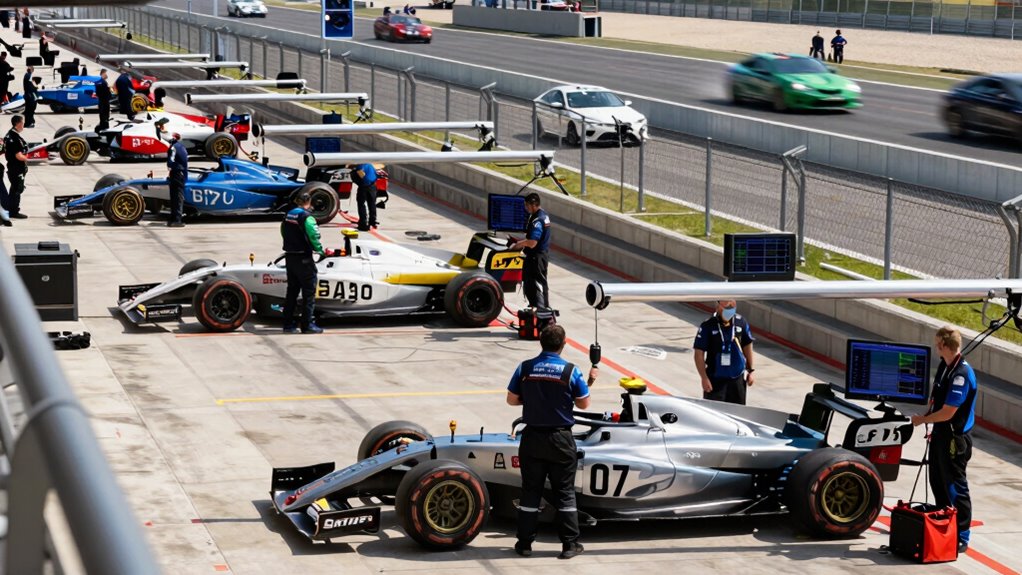
Have you ever wondered how machines maintain peak performance over time? It’s not just about the initial setup or a quick test run; it’s about understanding how various factors influence their operation during continuous use. When it comes to track duty cycles, the key isn’t just a single session or brief testing period—it’s about observing how equipment performs over extended periods and multiple cycles. This approach offers a more accurate picture of durability, reliability, and efficiency.
One critical aspect of maintaining machine health during these cycles involves effective battery management. Batteries aren’t just power sources; they’re crucial components that can substantially impact machine performance if not properly managed. During repeated operations, batteries undergo charge and discharge cycles that can degrade their capacity over time. Monitoring voltage levels, avoiding deep discharges, and ensuring timely recharging help prolong battery life and prevent unexpected failures. Proper battery management also involves balancing charge levels across cells and avoiding excessive heat buildup, which can accelerate wear and tear.
Effective battery management extends lifespan and prevents failures during continuous machine operation.
Thermal regulation plays an equally important role in sustaining performance across multiple duty cycles. Machines generate heat during operation, especially under continuous or heavy loads. Without effective thermal regulation, overheating can cause components to expand or contract, leading to mechanical stress and potential failure. Implementing cooling systems—such as fans, liquid cooling, or heat sinks—helps maintain appropriate operating temperatures. This not only prevents thermal damage but also ensures that the machine runs more efficiently, conserving energy and reducing wear on critical parts. Consistent thermal regulation during several duty cycles ensures that components stay within their safe temperature ranges, promoting longevity and reducing downtime.
It’s tempting to view a single test session as enough to evaluate a machine’s readiness, but that’s a mistake. Track duty cycles are about understanding how equipment performs over multiple cycles, often under varying conditions. This ongoing testing reveals issues that might not surface during a one-time assessment, such as gradual capacity loss, overheating, or battery degradation. Recognizing these patterns allows you to fine-tune maintenance routines and operational protocols. By focusing on long-term performance rather than short-term results, you gain a clearer picture of the machine’s true robustness.
In essence, effective management of battery health and thermal conditions during multiple duty cycles is crucial. These factors directly influence how well a machine can handle continuous operation and how long it will last. Additionally, monitoring performance metrics such as temperature and voltage helps identify early signs of potential failures. So, when you’re evaluating or operating equipment, remember that one session isn’t enough to gauge reliability. Instead, look at the bigger picture—monitor how machines perform across multiple cycles, adjust your maintenance strategies accordingly, and keep performance at its peak over time.

Proshopping DC 12V 24V 36V 48V 72V Battery Meter, Capacity Voltage Monitor
- 3-in-1 Functionality: Voltage, capacity, and alarm features
- Selectable Display Modes: Switch between capacity and voltage
- Low Battery Alarm: Flashing alert below 20% capacity
As an affiliate, we earn on qualifying purchases.
As an affiliate, we earn on qualifying purchases.
Frequently Asked Questions
How Do Duty Cycles Differ Across Various Types of Vehicles?
You’ll notice that duty cycles differ across vehicle types because each one has unique battery longevity and thermal management needs. For example, electric cars often require more frequent cooling due to high thermal loads, while hybrids may have less intense cycles. Understanding these differences helps you optimize battery life and thermal management strategies, ensuring efficient performance and longer-lasting batteries regardless of the vehicle’s specific duty cycle demands.
What Are the Safety Considerations During High Duty Cycle Testing?
During high duty cycle testing, you need to prioritize safety by closely monitoring battery safety and thermal management. Make sure your battery systems are equipped with proper cooling and temperature sensors to prevent overheating. Always stay alert for signs of thermal runaway or abnormal heat buildup. Use protective gear and follow strict procedures to minimize risks, ensuring both personnel safety and the integrity of the testing process.
How Is Data Collected and Analyzed During Duty Cycle Tests?
During duty cycle tests, you collect data using data logging systems that monitor key parameters like temperature, voltage, and cycle duration in real-time. You set specific test parameters beforehand, such as load levels and cycle frequency, to guarantee consistency. Analyzing this data involves reviewing logged information to identify patterns, stress points, or failures, helping you evaluate component performance under various duty cycle conditions.
Can Duty Cycles Be Customized for Specific Performance Metrics?
Yes, you can customize duty cycles to target specific performance metrics, turning testing protocols into a tailored compass for performance optimization. Like a master chef adjusting ingredients, you adapt duty cycles to suit your unique goals, whether it’s durability, efficiency, or power. This customization guarantees your testing reflects real-world conditions, guiding you toward precise improvements and more reliable results.
What Are the Environmental Impacts of Repeated Duty Cycle Testing?
Repeated duty cycle testing can accelerate battery degradation, reducing lifespan and increasing waste. Additionally, it may have an emissions impact if longer testing requires more energy, often from fossil fuels. You should consider these environmental effects, especially if you’re aiming for sustainability. Minimizing unnecessary testing helps protect the environment by reducing emissions and prolonging battery life, ultimately supporting greener, more efficient energy use.

Liquid Cooling of Electronic Devices by Single-Phase Convection (Thermal Management of Microelectronic and Electronic System Series)
As an affiliate, we earn on qualifying purchases.
As an affiliate, we earn on qualifying purchases.
Conclusion
Remember, a single session isn’t a true test of your track duty cycle. It’s a snapshot, not the full story. You need consistency, repetition, and variation to see the real picture. You need to observe, analyze, and adapt. Embrace the process, learn from each run, and build your understanding. Because only through ongoing effort, continuous monitoring, and persistent testing can you truly master your track duty cycle. It’s a journey, not a one-time event.

Crenova MS8233D Multimeter 6000 Counts Digital Multimeter DC AC Volt Meter Ohm Volt Amp Tester Measures Voltage Current Resistance Capacitance Continuity Diode Duty-Cycle Frequency NCV Live Wire Test
- Versatile Measurement Capabilities: Measures voltage, current, resistance, capacitance, frequency, duty cycle, continuity, diode, live wire, NCV
- Enhanced Safety Features: IEC61010-1 CAT III 600V, dual fuses, insulated holster
- Clear LCD Display: 6000-count backlit LCD for accurate readings
As an affiliate, we earn on qualifying purchases.
As an affiliate, we earn on qualifying purchases.

MSR175 Transportation Data Logger – Records Shock and Temperature
- Sensors Included: 2 Accelerometers and 1 Temperature Sensor
- Measurement Range: ±15g/±200g and -20°C to 65°C
- Data Storage Capacity: Over 2,000,000 measurements
As an affiliate, we earn on qualifying purchases.
As an affiliate, we earn on qualifying purchases.