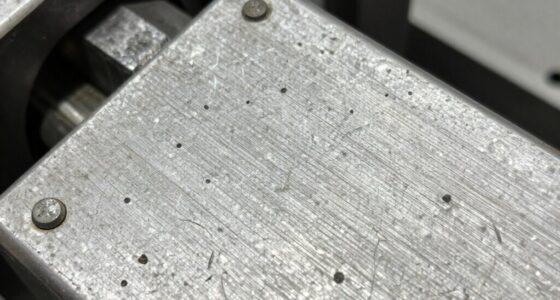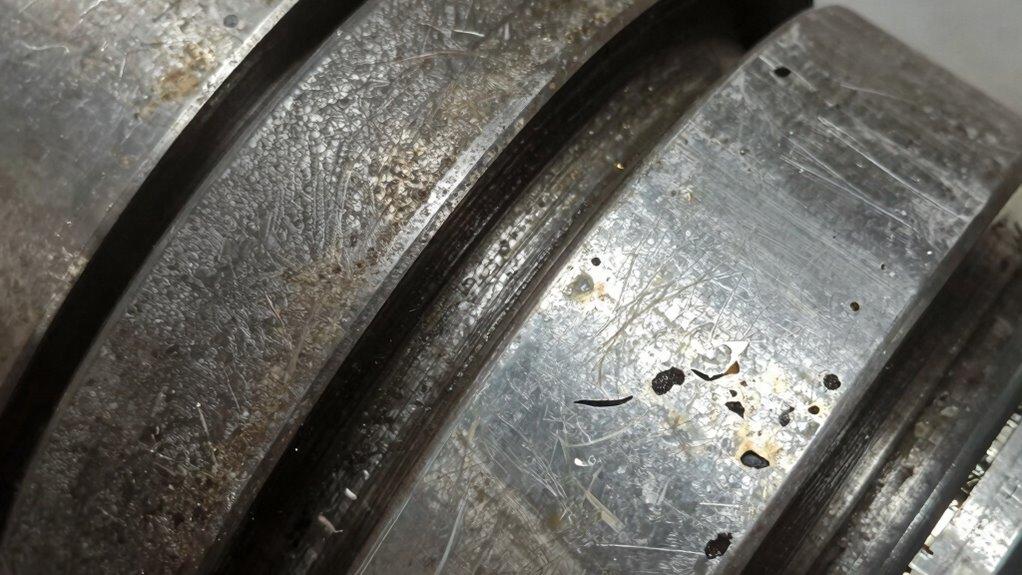

To identify lubrication starvation in wear patterns, look for signs like metal-to-metal contact, scoring, or rough surface textures on components. These issues occur when the oil film is insufficient, leading to increased friction and abnormal wear. You might notice unusual noises, increased vibrations, or elevated temperatures, all indicating compromised lubrication. If these signs sound familiar, exploring further can help you better understand how to detect and prevent lubrication starvation effectively.
Key Takeaways
- Look for uneven or rough wear patterns such as scoring, scratches, or grooves on the metal surfaces.
- Check for increased debris levels and larger, irregular particles in the lubricant during analysis.
- Monitor for abnormal noises like knocking or grinding during operation, indicating metal-to-metal contact.
- Observe elevated temperatures that surpass normal operating ranges, signaling insufficient lubrication.
- Conduct regular inspections of wear patterns and debris to detect early signs of lubrication starvation.
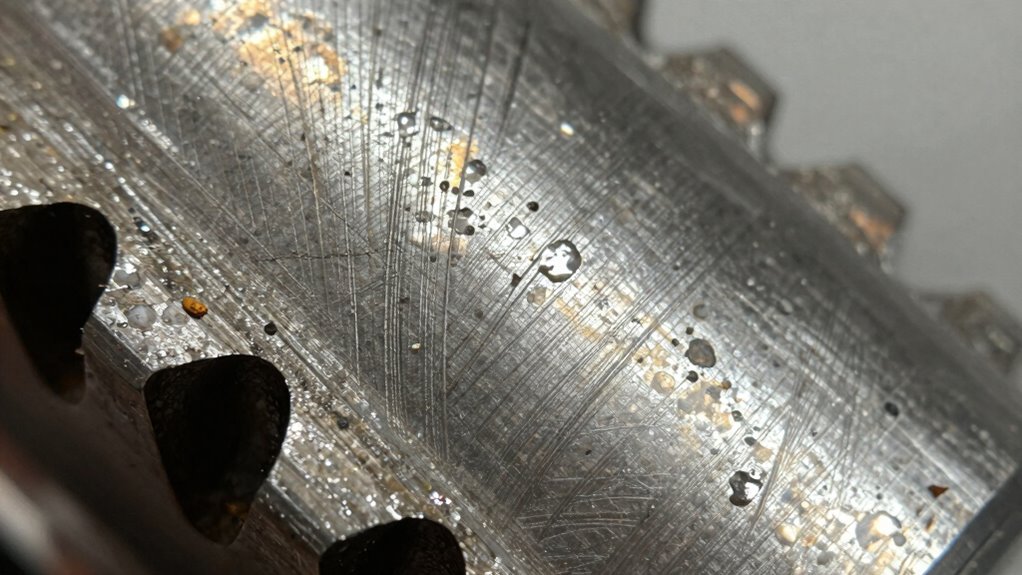
Have you ever wondered how to detect lubrication starvation before it causes serious damage? Recognizing early signs can save you from costly repairs and machine downtime. One of the most telling indicators is the condition of the oil film that separates moving parts. When lubrication is insufficient, the oil film becomes thin or even breaks down completely, exposing metal surfaces directly to each other. This direct contact accelerates wear and creates distinctive wear patterns that can be identified during inspections. If you notice increased metal-to-metal contact, it’s often a sign that lubrication isn’t reaching critical areas properly.
Early signs of lubrication failure include thin oil films and increased metal-to-metal contact.
Another key clue is the presence of wear debris in the lubricant. Wear debris consists of tiny particles shed from metal surfaces during operation. When lubrication is adequate, these particles are minimal and uniformly distributed. However, when lubrication starvation occurs, the amount and size of debris tend to increase dramatically. Larger, irregular particles indicate more aggressive wear, often caused by insufficient oil film thickness. By regularly analyzing oil samples, you can detect an abnormal rise in wear debris, giving you a heads-up before serious damage develops.
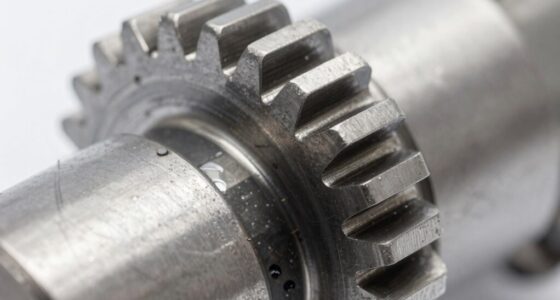
You should also pay attention to changes in equipment noise and vibrations. When lubrication fails, increased metal-to-metal contact produces abnormal sounds—such as knocking or grinding—and heightened vibrations. These symptoms are often accompanied by visible wear patterns on the components. For example, you may observe scoring or roughness on bearing surfaces or gear teeth, which points to inadequate lubrication. When these signs appear, it’s essential to investigate further, as they often correlate with compromised oil film integrity and elevated wear debris levels.
Monitoring temperature is another practical approach. When lubrication is lacking, friction between metal parts rises, causing components to heat up beyond normal operating ranges. Elevated temperatures can further degrade the oil, reducing its ability to form a protective film. Over time, this creates a vicious cycle of increased wear debris and worsening lubrication conditions. Installing temperature sensors and regularly checking readings can help you identify early issues, especially if you notice sudden spikes that coincide with abnormal wear patterns. Regular inspection of lubrication systems can also help prevent lubrication starvation by catching signs early.

Oil Analysis Kit Including TBN Test by TriboTech Solutions, Return Shipping Included
INCLUDES TBN TEST (TOTAL BASE NUMBER) Evaluates oil condition and additive status through TBN measurement, along with key…
As an affiliate, we earn on qualifying purchases.
As an affiliate, we earn on qualifying purchases.
Frequently Asked Questions
Can Lubrication Starvation Cause Silent Equipment Failure?
Yes, lubrication failure can cause silent breakdowns, making it hard to detect issues early. When lubrication starvation occurs, equipment can run with insufficient oil, leading to increased friction and wear without obvious signs. Over time, this silent damage weakens components, eventually causing unexpected failures. Regular maintenance and monitoring can help you catch lubrication issues before they turn into costly, silent equipment failures.
How Often Should Lubrication Levels Be Checked for Early Detection?
Like a trusty almanac guiding your ship, you should check lubrication levels daily for early detection. Rely on monitoring tools such as sight glasses, sensors, or automated systems to keep a close eye on lubrication frequency. Regular checks help spot starvation issues before they cause silent wear. Don’t wait for a breakdown—staying vigilant now can save you from costly repairs later, just as sailors relied on their charts in stormy seas.
Are There Specific Tools to Monitor Lubrication in Real-Time?
Yes, you can use lubrication sensors for real-time monitoring. These sensors detect lubrication levels and alert you immediately if there’s a drop, preventing starvation. They often integrate with your maintenance system, providing continuous data on lubrication performance. By using real-time monitoring tools, you guarantee your equipment stays properly lubricated, reducing wear and avoiding costly downtime. Investing in these sensors helps keep your machinery running smoothly and efficiently.
What Industries Are Most at Risk of Lubrication Starvation?
You should be most cautious in industries like manufacturing, mining, and power generation, where industrial lubrication is critical. These sectors rely heavily on machinery that’s prone to lubrication starvation, which can cause wear pattern analysis to reveal early signs of damage. By monitoring wear patterns and maintaining proper lubrication, you can prevent costly downtime and extend equipment lifespan in these high-risk industries.
Can Improper Lubrication Lead to False Wear Pattern Readings?
Yes, improper lubrication can lead to false wear pattern readings. When lubrication contamination occurs, debris mixes with the oil, skewing wear analysis. Additionally, if lubrication viscosity is too low or too high, it alters the wear patterns, making it seem like starvation when it’s a viscosity issue. These factors can mislead you, causing you to misdiagnose the equipment’s health, so always check lubricant quality and viscosity regularly.

PANCKY High Accuracy Metal Detector for Adults – Collapsible, Lightweight & IP68 Waterproof Search Coil with 10.55” Large Coil, 5 Modes & Backlit LCD, Gold & Relic Detector Kit
[DSP Enhanced Precision & Stability] Built with an advanced Digital Signal Processing (DSP) chip, this detector actively filters…
As an affiliate, we earn on qualifying purchases.
As an affiliate, we earn on qualifying purchases.
Conclusion
To identify lubrication starvation, you need to observe wear patterns, recognize signs of metal-to-metal contact, and analyze lubrication consistency. You must inspect surfaces carefully, compare wear zones diligently, and monitor lubrication performance regularly. By staying vigilant, maintaining thorough records, and acting promptly, you can prevent further damage, prolong equipment life, and guarantee peak operation. Recognize the signs early, understand the causes clearly, and address the issues promptly—because prevention is better than costly repairs later.
Norlake 145288 Probe, 5 Ft, Dixell, 18Nb-Ntc
Package Dimensions: 15.0 H x 1.8 L x 9.5 W (centimetres)
As an affiliate, we earn on qualifying purchases.
As an affiliate, we earn on qualifying purchases.

For Air Compressor Pneumatic Oil Injector Tool for For Air Tools Providing Automatic Lubrication and Easy Monitoring
[AUTOMATED LUBRICATION SOLUTION] This pneumatic oil injector automatically delivers lubrication to your tools, enhancing their longevity and reducing…
As an affiliate, we earn on qualifying purchases.
As an affiliate, we earn on qualifying purchases.