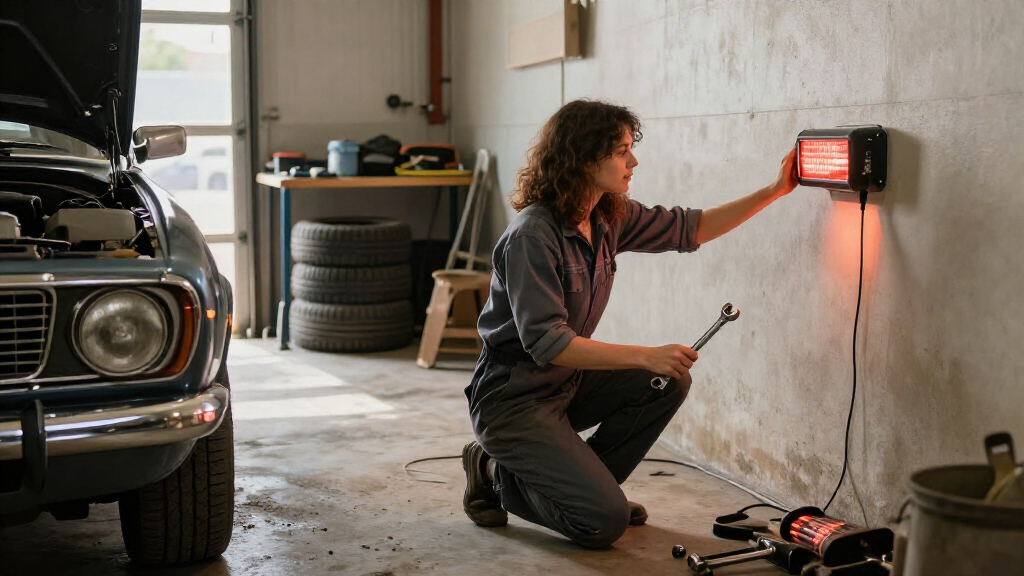

Garage infrared heaters vary widely: some are hardwired units meant to warm a work area, while others are portable spot heaters better suited to one person or bench. My best overall pick is the Dr. Infrared Heater DR-975, whose 7,500-watt, 240-volt design is the strongest match here for a dedicated garage installation. The Shinic 2-Pack ceiling heaters offer a more flexible 120-volt approach, while the Heat Storm Tradesman stands out for its multiple mounting options. The main tradeoffs are heating output versus electrical demands, and fixed installation versus portability. Read on for the full breakdown of what each option suits and where it falls short.

Get business pricing on garage and car supplies
- Business-only prices and quantity discounts
- Tax-exempt purchasing
- Multiple users, one account, clear invoices
Complete the kit


Key Takeaways
- The DR-975 is the clearest choice for a dedicated, high-output installation: its 7,500-watt, 240-volt format separates it from the many 1,500-watt plug-in options.
- Two Shinic ceiling-heater packages serve different needs: one emphasizes a remote and adjustable ceiling mount, while the other offers 1,500- and 750-watt settings for lower-output operation.
- Mounting flexibility is the Heat Storm Tradesman’s main differentiator: its tripod, wall, and ceiling mounts suit changing work areas better than a fixed ceiling unit.
- Several products are specialized rather than whole-garage solutions: the greenhouse, patio, and compact portable heaters make more sense for localized warmth or adjacent uses.
- Electrical compatibility shapes the shortlist: the high-output hardwired DR-975 calls for a different installation plan from the 120-volt and 1,500-watt choices.
| Dr. Infrared Heater DR-975 7,500-Watt 240-Volt Hardwired Garage Heater | 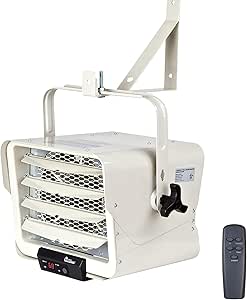 | Best for Large, Permanently Heated Garages | Heating output: 7,500 watts | Voltage and amperage: 240 volts; 31.25 A | Power connection: Hardwired; power cord not included | VIEW LATEST PRICE | See Our Full Breakdown |
| Shinic 2-Pack 120V Electric Garage Heater with Remote and Adjustable Ceiling Mount |  | Best Two-Zone Radiant Setup | Quantity: Two heaters | Heating element: Dual quartz tubes | Heat settings: 750 watts and 1,500 watts per heater | VIEW LATEST PRICE | See Our Full Breakdown |
| Dr. Infrared Heater DR218 Greenhouse Heater, 3000W |  | Best for Damp Garage Workspaces | Heating output: 3,000 watts | Electrical: 240 volts; 12.5 A; requires a 240-volt, 20-amp outlet | Heating method: Radiant | VIEW LATEST PRICE | See Our Full Breakdown |
| Briza 1500W Infrared Patio Heater with Remote and Adjustable Stand |  | Best Flexible-Mount Heater | Power settings: 900 watts, 1,200 watts, or 1,500 watts | Electrical: 120 volts; 12.5 A | Heating method: Carbon infrared radiant heat | VIEW LATEST PRICE | See Our Full Breakdown |
| DR. INFRARED HEATER DR-238 Indoor and Outdoor Carbon Infrared Heater with Remote, Black |  | Best Fixed-Mount Indoor-Outdoor Pick | Heating type: Carbon infrared radiant heater | Heat settings: 900 watts, 1,200 watts, and 1,500 watts | Electrical: 120 volts; 60 Hz; 12.5 A | VIEW LATEST PRICE | See Our Full Breakdown |
| Heat Storm Tradesman 1500-Watt Infrared Heater with Tripod, Wall, and Ceiling Mounts |  | Best for Flexible Placement | Heating power: 1,500 watts | Heat output: 5,200 BTU | Heating method: Carbon-fiber infrared | VIEW LATEST PRICE | See Our Full Breakdown |
| DR. INFRARED HEATER DR-239 3000W Indoor/Outdoor Infrared Heater |  | Best for High-Output Fixed Installation | Model: DR-239 | Power: 3,000 W | Heat output: 10,260 BTU | VIEW LATEST PRICE | See Our Full Breakdown |
| DR. INFRARED HEATER Portable Infrared Space Heater with Remote and Thermostat |  | Best for Thermostat-Controlled Zoning | Heating output: 1,500 W high; 1,000 W low | Listed coverage: 150–200 sq ft | Voltage: 120 V | VIEW LATEST PRICE | See Our Full Breakdown |
| Heat Storm Phoenix 1500-Watt Wi-Fi Infrared Wall Heater |  | Best for Smart Supplemental Heat | Model: HS-1500-PHX-WIFI | Power: 1,500 W | Voltage: 110 V | VIEW LATEST PRICE | See Our Full Breakdown |
| Shinic 2-Pack 120V Ceiling-Mounted Electric Garage Heaters, 1500W/750W |  | Best for Two Work Zones | Quantity: 2 heaters | Wattage: 750 W or 1,500 W per heater | Voltage: 120 V | VIEW LATEST PRICE | See Our Full Breakdown |
| Comfort Zone Ceiling-Mount Dual Quartz Heater with Halogen Light |  | Best for a Ceiling-Mounted Work Zone | Heating method: Radiant, dual quartz | Heat output: 1,500 watts | Heat settings: 2 | VIEW LATEST PRICE | See Our Full Breakdown |
| DR. INFRARED HEATER DR-298 1500W Portable Infrared Space Heater |  | Best for Flexible Mounting and Portable Use | Heating method: Radiant carbon infrared | Power settings: 900W, 1,200W, or 1,500W | Heat output: 5,200 BTU | VIEW LATEST PRICE | See Our Full Breakdown |
| garage infrared heater | Heating method |
|---|---|
| Dr. Infrared Heater DR-975 7,5 | Forced air; spiral steel metal sheath element |
| Shinic 2-Pack 120V Electric Ga | — |
| Dr. Infrared Heater DR218 Gree | Radiant |
| Briza 1500W Infrared Patio Hea | Carbon infrared radiant heat |
| DR. INFRARED HEATER DR-238 Ind | — |
| Heat Storm Tradesman 1500-Watt | Carbon-fiber infrared |
| DR. INFRARED HEATER DR-239 300 | — |
| DR. INFRARED HEATER Portable I | — |
| Heat Storm Phoenix 1500-Watt W | — |
| Shinic 2-Pack 120V Ceiling-Mou | — |
| Comfort Zone Ceiling-Mount Dua | Radiant, dual quartz |
| DR. INFRARED HEATER DR-298 150 | Radiant carbon infrared |
More Details on Our Top Picks
Dr. Infrared Heater DR-975 7,500-Watt 240-Volt Hardwired Garage Heater
The DR-975 is the strongest fit here for a garage that needs substantial, fixed heat rather than a portable spot warmer. Its 7,500-watt forced-air output and stated coverage of up to 800 square feet give it a different job from the 1,500-watt Shinic and Briza heaters, which are better suited to localized or supplemental warmth. Five adjustable louvers let you aim airflow toward a work area, while the remote thermostat makes temperature changes easier after ceiling or wall mounting. The tradeoff is a serious installation commitment: it requires a hardwired 240-volt connection, and the power cord is not included. Choose it for a dedicated workshop; skip it if you need a plug-in heater or direct radiant warmth without moving air.
Pros:- 7,500 watts of forced-air heat suits larger spaces better than the 1,500-watt Shinic or Briza options.
- Remote-controlled thermostat supports temperature adjustment after installation.
- Five adjustable louvers help direct airflow toward a work area.
- Wall- or ceiling-mounting bracket is included, and the motor is fully enclosed.
Cons:- Requires hardwired 240-volt installation; no power cord is included.
- A separate external wall thermostat is an additional purchase.
- Forced-air heat moves air rather than providing the direct radiant warmth of quartz or carbon models.
Best for: Owners of larger garages or workshops who can arrange a dedicated 240-volt hardwired installation and want fixed, thermostat-controlled heat.
Not ideal for: Renters and occasional users who need a plug-in heater, or buyers who cannot provide hardwired 240-volt service.
- Heating output:7,500 watts
- Voltage and amperage:240 volts; 31.25 A
- Power connection:Hardwired; power cord not included
- Recommended wire:8 AWG copper
- Stated coverage:Up to 800 square feet
- Heating method:Forced air; spiral steel metal sheath element
- Controls and airflow:Remote-controlled thermostat; five adjustable louvers
- Mounting and safety:Wall or ceiling mount; overheat protection; UL and CUL listed
Our verdict“Choose the DR-975 for a large garage with suitable 240-volt wiring; pick a plug-in radiant model if simpler installation matters more.”
Shinic 2-Pack 120V Electric Garage Heater with Remote and Adjustable Ceiling Mount
This two-heater set makes sense when warmth needs to reach separate work areas, rather than heat one large volume of garage air. Each unit uses dual quartz tubes to direct radiant heat toward people and objects, unlike the DR-975’s forced-air approach. Five heat and lighting modes, remote control, and up to 90 degrees of tilt add flexibility, while the built-in halogen work light is useful in a dim garage. Each heater tops out at 1,500 watts, so the pair is better viewed as two targeted zones than a substitute for the DR-975’s higher-output fixed system. The units are described for ceiling mounting, which frees floor space but limits placement flexibility; buyers also need to supply the remote batteries.
Pros:- Two heaters can direct radiant warmth at separate work areas.
- Each unit offers 750-watt and 1,500-watt heat settings.
- Up to 90-degree tilt helps aim heat without moving the unit.
- Built-in halogen light, remote control, grounded plug, and overheat auto-off add practical utility.
Cons:- Ceiling mounting is required for the described installation, limiting placement options.
- No thermostat is listed for maintaining a set room temperature.
- Remote control batteries are not included.
Best for: DIYers who work at two stations in a garage and want ceiling-mounted radiant warmth plus task lighting at each area.
Not ideal for: Buyers seeking thermostat-controlled whole-garage heat, or anyone who cannot install ceiling-mounted units.
- Quantity:Two heaters
- Heating element:Dual quartz tubes
- Heat settings:750 watts and 1,500 watts per heater
- Electrical:120 volts; 12.5 A
- Stated coverage:300–400 square feet
- Controls and modes:Remote control; five heating and lighting modes
- Mounting and adjustment:Ceiling-mounted; tilt adjustable up to 90 degrees
- Lighting and safety:Built-in halogen work light; overheat auto-off; 3-prong grounded plug; ETL listed
Our verdict“Pick the Shinic two-pack for two ceiling-mounted work zones, but choose the DR-975 for higher-output, thermostat-controlled garage heating.”
Dr. Infrared Heater DR218 Greenhouse Heater, 3000W
The DR218 is a niche choice for buyers who need a portable radiant heater in a damp or splash-prone workspace, not a conventional plug-in garage heater. Its IPX4 splash-resistant housing and enclosed heating system distinguish it from the indoor-only Shinic ceiling units, while its 13-pound floor-standing form can be moved where warmth is needed. Two heat settings and an adjustable thermostat offer more control than the Briza’s three preset power levels, though the listed maximum temperature is 104°F. This model’s greenhouse focus also comes with a major electrical caveat: it requires a 240-volt, 20-amp outlet, unlike the standard 120-volt Briza and DR-238. Check the supply before choosing it, and do not treat splash resistance as approval for every wet or outdoor setting.
Pros:- IPX4 splash-resistant housing suits splash-prone spaces better than indoor-only models.
- Portable 13-pound floor-standing design can be repositioned.
- Two heat settings and an adjustable thermostat provide temperature control.
- Enclosed heating system and overheat protection support low-maintenance operation.
Cons:- Requires a 240-volt, 20-amp outlet, unlike the 120-volt Briza and DR-238.
- Maximum temperature setting is 104°F.
- Floor placement uses workspace space and lacks the ceiling-mount option of the Shinic.
Best for: Owners of greenhouse-style garage workspaces who need portable radiant heat and have a compatible 240-volt, 20-amp outlet.
Not ideal for: Buyers with only standard 120-volt outlets, or anyone seeking a wall- or ceiling-mounted heater with remote control.
- Heating output:3,000 watts
- Electrical:240 volts; 12.5 A; requires a 240-volt, 20-amp outlet
- Heating method:Radiant
- Heat control:Two heat settings; adjustable thermostat
- Stated coverage:600 square feet
- Maximum temperature:104°F
- Protection:IPX4 splash-resistant; overheat protection
- Form and dimensions:Floor-standing; 10 × 10 × 13 inches; 13 pounds
Our verdict“Choose the DR218 for a splash-prone garage workspace with compatible 240-volt power, not for a standard-outlet garage.”
Briza 1500W Infrared Patio Heater with Remote and Adjustable Stand
The Briza is the most adaptable placement option in this group: use its tripod stand, or mount it on a wall or ceiling to keep the floor clear. That flexibility gives it an edge over the DR-238, which is listed for wall or ceiling mounting, and the ceiling-only Shinic pair. Its carbon infrared heat comes in three settings, with a remote and 1–9-hour timer for convenient operation. The IP55 rating also makes it suitable for indoor and outdoor use, though the listed outdoor coverage is only 100 square feet, so it is a targeted comfort heater rather than a broad outdoor solution. For garage buyers, the stated indoor coverage is 800–1,000 square feet, but this is still a 1,500-watt unit—not a replacement for the hardwired DR-975 when sustained high-output heat is the priority.
Pros:- Tripod, wall, and ceiling mounting provide more placement options than the DR-238.
- Three heat settings and remote-controlled 1–9-hour timer support convenient adjustments.
- IP55 rating supports indoor and outdoor use.
- Tip-over automatic shutoff adds a safety feature when using the stand.
Cons:- Corded 120-volt power limits placement to locations near a suitable connection.
- Listed outdoor coverage is 100 square feet.
- At 1,500 watts, it cannot match the DR-975’s stated output for a large, fixed-heating setup.
Best for: Garage owners who want one 120-volt infrared heater that can move between a tripod stand and fixed wall or ceiling mounting.
Not ideal for: Buyers needing high-output whole-garage heat, or those expecting broad outdoor coverage from a single heater.
- Power settings:900 watts, 1,200 watts, or 1,500 watts
- Electrical:120 volts; 12.5 A
- Heating method:Carbon infrared radiant heat
- Mounting:Wall or ceiling mount; adjustable tripod stand
- Controls and timer:Remote control; 1–9-hour timer
- Stated coverage:800–1,000 square feet indoors; 100 square feet outdoors
- Weather resistance:IP55; indoor and outdoor use
- Safety and dimensions:Tip-over automatic shutoff; 35.5 × 4 × 4 inches; 3 kg
Our verdict“Choose the Briza when mounting flexibility and indoor-outdoor use matter more than the higher output of a hardwired garage heater.”
DR. INFRARED HEATER DR-238 Indoor and Outdoor Carbon Infrared Heater with Remote, Black
The DR-238 is a straightforward choice for buyers who want a permanent infrared heater that can serve both a garage and an outdoor area. Its IP55 rating and weather-resistant anodized aluminum housing separate it from the indoor-only Shinic heaters, while wall and ceiling brackets come included. Three settings, topping out at 1,500 watts, let you adjust output without changing the mounting position. Compared with the Briza, the DR-238 gives up the tripod stand and timer but keeps a clean fixed-installation approach; compared with the DR-975, it is far easier to place on a standard 120-volt connection but delivers much less power. There is no thermostat, so it will not maintain a chosen room temperature automatically. The power cord is required, and buyers should plan placement around it.
Pros:- IP55 rating and weather-resistant anodized aluminum housing support indoor and outdoor use.
- Three heat settings provide 900-, 1,200-, and 1,500-watt options.
- Wall and ceiling mounting brackets and remote control are included.
- ETL listed.
Cons:- No thermostat is listed, so it cannot automatically maintain a set temperature.
- Corded 120-volt operation limits mounting locations to reach of a suitable connection.
- Its 1,500-watt maximum is far below the DR-975’s 7,500-watt output.
Best for: Garage owners who want a fixed wall- or ceiling-mounted infrared heater that can also be used in a suitable outdoor area.
Not ideal for: Buyers who need thermostat-based temperature maintenance, a floor-standing heater, or the high output of a hardwired 240-volt model.
- Heating type:Carbon infrared radiant heater
- Heat settings:900 watts, 1,200 watts, and 1,500 watts
- Electrical:120 volts; 60 Hz; 12.5 A
- Indoor and outdoor protection:IP55; weather-resistant anodized aluminum housing
- Mounting:Wall or ceiling; mounting brackets included
- Controls:Remote control; no thermostat listed
- Dimensions and weight:35 × 8 × 4 inches; 8 pounds
- Certification and warranty:ETL listed; 1-year limited components warranty
Our verdict“Choose the DR-238 for fixed indoor-outdoor radiant warmth on 120 volts, but choose the DR-975 if your garage needs substantially more output.”
Heat Storm Tradesman 1500-Watt Infrared Heater with Tripod, Wall, and Ceiling Mounts
The Tradesman suits a garage that needs targeted heat in changing work zones. Its 1,500-watt carbon-fiber element delivers radiant warmth without fan noise, and the included tripod lets me reposition it instead of committing to a permanent install. Wall and ceiling or pole mounting hardware add options the wall-only Heat Storm Phoenix lacks. That flexibility comes with a modest listed coverage of 156 square feet, so it is better for warming a bench or a person than serving as the main heat source for a large, open garage. Its IPX4 rating supports covered outdoor use, not exposure to rain. I’d choose it over the DR-239 when portability and a standard 120-volt connection matter more than higher output; the DR-239 delivers 3,000 watts but needs 220–240 volts and fixed mounting.
Pros:- Tripod, wall, and ceiling or pole mounting hardware provide unusual placement flexibility.
- Carbon-fiber radiant heat works without fan noise.
- Runs on 120 volts, avoiding the 220–240-volt supply required by the DR-239.
- IPX4 construction supports use in covered outdoor spaces.
Cons:- Listed heating coverage is limited to 156 square feet.
- IPX4 protection is intended for covered spaces, not direct weather exposure.
- A 1,500-watt output is less suited to heating a large garage than the 3,000-watt DR-239.
Best for: Garage owners who want to move radiant heat between a workbench, vehicle bay, and other small zones, with the option to mount it later.
Not ideal for: People heating a large, open garage or needing a heater exposed to uncovered weather; its listed coverage is 156 square feet and outdoor use is for covered areas.
- Heating power:1,500 watts
- Heat output:5,200 BTU
- Heating method:Carbon-fiber infrared
- Listed coverage:156 sq ft
- Voltage:120 V
- Mounting options:Tripod, wall, ceiling, or pole
- Weather resistance:IPX4
- Safety feature:Tip-over shutoff
- Power cord:8 ft
Our verdict“Choose the Tradesman if you want quiet, focused heat that can move around the garage or be mounted in several ways.”
DR. INFRARED HEATER DR-239 3000W Indoor/Outdoor Infrared Heater
The DR-239 is the strongest fit here when a garage needs more radiant output from a fixed position. Its 3,000 watts and 10,260 BTU output exceed the 1,500-watt Heat Storm Tradesman and Phoenix, making it better suited to a larger work area or a garage that needs more than a small personal heat zone. The tradeoff is electrical and installation commitment: this heater requires a 220–240 V supply and mounts to a wall or ceiling, unlike the Tradesman’s 120-volt plug-in flexibility. Its IP55-rated anodized aluminum housing makes it the more weather-ready choice compared with the Tradesman’s IPX4 rating, though outdoor placement still needs to suit the installation. Remote control, two power levels, and overheat protection add useful control without putting the unit on the floor.
Pros:- 3,000-watt output provides more radiant heat than the 1,500-watt models in this group.
- IP55-rated anodized aluminum construction supports indoor and outdoor applications.
- Wall or ceiling mounting keeps the heater off the floor.
- Remote control, two power levels, timer, and overheat protection support convenient operation.
Cons:- Requires a 220–240 V electrical supply.
- Wall or ceiling mounting makes it less flexible to relocate than the Heat Storm Tradesman.
- Installation must suit the heater’s fixed mounting position and electrical requirements.
Best for: Garage owners with a 220–240-volt circuit who want a wall- or ceiling-mounted heater for a larger work zone or indoor/outdoor use.
Not ideal for: Renters, anyone without a suitable 220–240-volt supply, or buyers who need a portable heater they can move between work areas.
- Model:DR-239
- Power:3,000 W
- Heat output:10,260 BTU
- Voltage:220–240 V
- Amperage:12.5 A
- Mounting type:Wall or ceiling mount
- Weather resistance:IP55
- Material:Anodized aluminum
- Safety certification:ETL Listed
Our verdict“Pick the DR-239 if your garage has the required 220–240-volt supply and you want higher-output radiant heat in a fixed location.”
DR. INFRARED HEATER Portable Infrared Space Heater with Remote and Thermostat
This DR. INFRARED HEATER stands out for its temperature-sensing probe and automatic mode, features that make it more hands-off than the Tradesman’s remote-controlled, angle-adjustable setup. Two heat levels let me choose between 1,000 and 1,500 watts, while the digital display, timer, and remote provide more control than the straightforward Heat Storm Phoenix. For a garage, the probe can help regulate a selected area rather than relying only on manual switching. Mounting options include a wall, ceiling, or hanging chain, so despite the portable name, the listed setup is primarily for a corded, positioned installation. Its stated coverage of 150–200 square feet keeps it in the small-zone category; it is not a substitute for the 3,000-watt DR-239 when a higher-output fixed heater is needed. The description gives both IPX5 and IP55 water-resistance statements, so I would verify the rating before choosing an exposed location.
Pros:- Temperature-sensing probe and automatic mode provide more control than a basic manual heater.
- Two settings offer 1,000- or 1,500-watt operation.
- Wall, ceiling, and hanging-chain mounting options keep the floor clear.
- Remote, timer, digital display, and overheat protection are included.
Cons:- Corded electric operation still requires a nearby power connection.
- Listed coverage of 150–200 square feet limits it to smaller heating zones.
- The product description states both IPX5 and IP55 water-resistance ratings, leaving the exact rating unclear.
Best for: Garage users who want a 120-volt radiant heater with a probe, thermostat-style automatic control, and several mounting choices for a defined work zone.
Not ideal for: Buyers who need high output for a large garage, a truly cordless or freely movable heater, or a clearly verified weather rating for exposed outdoor placement.
- Heating output:1,500 W high; 1,000 W low
- Listed coverage:150–200 sq ft
- Voltage:120 V
- Amperage:12.5 A
- Temperature range:30°F–120°F
- Mounting options:Wall, ceiling, or hanging chain
- Controls:Digital display, thermal probe, remote, and timer
- Water resistance stated:IPX5 and IP55 in product description
Our verdict“Choose this model for probe-based temperature control in a smaller garage zone, but verify the water-resistance rating before outdoor use.”
Heat Storm Phoenix 1500-Watt Wi-Fi Infrared Wall Heater
The Phoenix is the most convenient choice for someone who wants to manage garage heat remotely rather than reposition a heater. Wi-Fi control and custom schedules distinguish it from the Tradesman, which can move between locations but does not list app connectivity. At 1,500 watts, the Phoenix is better understood as a supplemental zone heater: the listed figures are up to 150 square feet for primary heating or up to 750 square feet for supplemental heating, with results depending on insulation. That makes it a poor match for an uninsulated garage needing full-room warmth, especially compared with the 3,000-watt DR-239. Wall mounting saves floor space, and a cool-touch grille plus tip-over shutoff add safety features. However, this version has no included feet, so it is not a freestanding alternative if wall installation is inconvenient.
Pros:- Wi-Fi supports remote temperature adjustments and custom heating schedules.
- Wall-mounted design leaves the floor available for tools and vehicles.
- Digital thermostat, touchscreen controls, and remote provide several ways to adjust operation.
- Cool-touch grille and tip-over shutoff are listed safety features.
Cons:- Wall-mounted version does not include feet for freestanding use.
- Primary coverage is listed at up to 150 square feet, and performance depends on insulation.
- At 1,500 watts, it is less suited to higher-output heating than the 3,000-watt DR-239.
Best for: Garage owners who want scheduled, Wi-Fi-controlled supplemental heat in a smaller or reasonably insulated space and can mount the unit on a wall.
Not ideal for: People who need portable placement, a freestanding heater, or primary heat for a large, poorly insulated garage.
- Model:HS-1500-PHX-WIFI
- Power:1,500 W
- Voltage:110 V
- Heating coverage:Up to 150 sq ft primary; up to 750 sq ft supplemental
- Mounting type:Wall mount
- Connectivity:Wi-Fi
- Controls:Touchscreen with digital thermostat
- Safety features:Tip-over shutoff and cool-touch grille
- Maximum temperature setting:99°F
Our verdict“Pick the Phoenix if scheduled Wi-Fi control matters more than portability and you need supplemental heat for a defined garage zone.”
Shinic 2-Pack 120V Ceiling-Mounted Electric Garage Heaters, 1500W/750W
This Shinic two-pack is the clear choice when a garage needs radiant heat in two separate spots, such as a bench and a vehicle work area. Each ceiling-mounted quartz heater offers 750- or 1,500-watt operation and can rotate up to 90 degrees, letting the user aim heat where it is needed. The built-in halogen work light adds practical visibility, a feature none of the Heat Storm models here list. Compared with the portable Tradesman, the Shinic units take more commitment to install and are less suited to changing locations; unlike the Wi-Fi Phoenix, they rely on pull-string controls rather than app-based scheduling. Their radiant output warms people and objects in front of each unit, so I would not treat this pair as whole-garage air heating. Grounded plugs and overheat auto-off help, but each unit still needs a suitable ceiling position and outlet.
Pros:- Two heaters allow heat to be directed at separate work areas.
- Each unit has 750- and 1,500-watt settings with five heat-and-light settings.
- Rotates up to 90 degrees to aim radiant heat where it is useful.
- Built-in halogen work lights add task-area visibility.
Cons:- Ceiling installation requires suitable mounting locations and is less flexible than the tripod-mounted Tradesman.
- Radiant heat is directed toward people and objects rather than described as whole-room heating.
- Pull-string controls lack the Wi-Fi scheduling available on the Heat Storm Phoenix.
Best for: DIYers who want two ceiling-mounted radiant heat zones with work lights for separate garage tasks or work areas.
Not ideal for: Renters or garage owners who cannot install ceiling-mounted units, need app-based controls, or expect whole-room heating from radiant fixtures.
- Quantity:2 heaters
- Wattage:750 W or 1,500 W per heater
- Voltage:120 V
- Heating type:Radiant quartz
- Mounting type:Ceiling mount
- Adjustability:Rotates up to 90°
- Settings:5 heat and light settings
- Lighting:Built-in halogen work light
- Safety features:Overheat auto-off and grounded three-prong plug
Our verdict“Choose the Shinic pair if you want two adjustable ceiling heat zones with integrated work lights and can accommodate the installation.”
Comfort Zone Ceiling-Mount Dual Quartz Heater with Halogen Light
The Comfort Zone pairs targeted quartz radiant heat with a built-in halogen work light, making it a practical fit for a fixed garage bench or workshop area. Its ceiling mount keeps the floor clear, while the head tilts up to 90 degrees to aim warmth toward a task rather than heating the whole room. Two heat settings provide some adjustment, though its 1,500-watt output and 150-square-foot stated coverage make it better suited to a work zone than a large, chilly garage. Unlike the portable DR. INFRARED HEATER DR-298, it has no freestanding option or remote; its pull-string controls are straightforward, but placement depends on an appropriate overhead spot and the six-foot cord reaching an outlet. The light can run without the heater, adding useful task lighting, though installation is less flexible than a portable unit.
Pros:- Ceiling mounting leaves floor and bench space unobstructed.
- Adjustable tilt helps direct radiant warmth toward a specific work area.
- Halogen light can operate independently for task lighting.
- Pull-string controls and overheat protection are included.
Cons:- Requires an appropriate overhead mounting location, limiting placement flexibility.
- The six-foot cord may not reach an outlet from the preferred mounting point.
- Its 1,500-watt output and stated 150-square-foot coverage are a modest fit for larger garages.
Best for: Garage and workshop owners who want overhead radiant warmth and a work light above a fixed bench while keeping floor space open.
Not ideal for: Renters or people who need to move heat between work areas, or anyone without a suitable ceiling location and accessible outlet.
- Heating method:Radiant, dual quartz
- Heat output:1,500 watts
- Heat settings:2
- Stated heating coverage:150 sq. ft.
- Power:120 volts, 12.5 A
- Mounting and tilt:Ceiling mount; adjustable tilt up to 90 degrees
- Work light:Halogen, Type G9, 120V, 60Hz, 25W
- Dimensions and weight:5.25 × 26.5 × 14.25 in; 8 lb
- Safety:Overheat protection
Our verdict“Choose this for a fixed garage work zone where overhead heat and independent task lighting matter more than portability or remote controls.”
DR. INFRARED HEATER DR-298 1500W Portable Infrared Space Heater
The DR-298 is the more adaptable choice for a garage that serves several purposes: it can stand on its baseplate or mount to a wall or ceiling, and its three power settings let you choose between 900, 1,200, and 1,500 watts. A remote and six-hour timer add control that the pull-string-operated Comfort Zone lacks. Its carbon infrared element provides radiant heat, while the aluminum housing and indoor/outdoor rating suit spaces where a fixed ceiling unit may be inconvenient. The tradeoff is its footprint: at 39 inches tall when freestanding, it needs room, and the baseplate must be installed before that mode works. Its 1,500-watt ceiling also keeps it in the portable zone-heater category rather than matching the higher output of the DR-975 hardwired garage heater. Tip-over and over-temperature protection are included, but mounting choice and setup still require planning.
Pros:- Freestanding, wall-mounted, and ceiling-mounted configurations offer flexible placement.
- Three power settings let users adjust output to the task and space.
- Remote control and a timer of up to six hours make operation more convenient.
- Tip-over and over-temperature protection are included.
Cons:- Freestanding operation requires installing the baseplate.
- Its 39-inch height takes up noticeable floor space when used freestanding.
- The 1,500-watt maximum is less suited to large garages than a higher-output hardwired heater such as the DR-975.
Best for: Garage owners who want one infrared heater they can move between indoor and outdoor areas or switch between freestanding and mounted use.
Not ideal for: Buyers seeking a compact, permanent heater for a crowded garage, or those who need higher output than a 1,500-watt unit provides.
- Heating method:Radiant carbon infrared
- Power settings:900W, 1,200W, or 1,500W
- Heat output:5,200 BTU
- Power:120 V, 12.5 A
- Temperature range:50°F to 90°F
- Timer and controls:Up to 6 hours; remote control
- Mounting options:Freestanding, wall-mounted, or ceiling-mounted
- Use and housing:Indoor/outdoor; aluminum housing
- Dimensions and weight:25 × 11.5 × 39 in (D × W × H); 10.7 lb
Our verdict“Pick the DR-298 if flexible placement, remote operation, and timer control matter more than a compact footprint or high-output garage heating.”

How We Picked
I ranked these garage infrared heaters by how well their design fits common garage jobs: warming a regular work area, directing heat at a person or bench, and providing flexible heat without a permanent installation. I compared stated wattage and voltage, mounting choices, portability, controls, and whether a model’s described use is a natural fit for a garage. Output matters, but it cannot be separated from the electrical supply and installation the heater requires.
The DR-975 ranks first for buyers setting up a dedicated garage heater because its 7,500-watt, 240-volt format is distinct from the lower-output household options. The Shinic ceiling units and Heat Storm Tradesman rank well for different combinations of mounting convenience and flexibility. Portable, patio, and greenhouse models sit lower as general garage recommendations because their formats suggest more localized or specialized use. I also account for drawbacks: a strong fixed unit is less adaptable, while portable low-wattage models may not suit buyers trying to warm a large, cold garage.
| garage infrared heater | Heating method |
|---|---|
| Dr. Infrared Heater DR-975 7,5 | Forced air; spiral steel metal sheath element |
| Shinic 2-Pack 120V Electric Ga | — |
| Dr. Infrared Heater DR218 Gree | Radiant |
| Briza 1500W Infrared Patio Hea | Carbon infrared radiant heat |
| DR. INFRARED HEATER DR-238 Ind | — |
| Heat Storm Tradesman 1500-Watt | Carbon-fiber infrared |
| DR. INFRARED HEATER DR-239 300 | — |
| DR. INFRARED HEATER Portable I | — |
| Heat Storm Phoenix 1500-Watt W | — |
| Shinic 2-Pack 120V Ceiling-Mou | — |
| Comfort Zone Ceiling-Mount Dua | Radiant, dual quartz |
| DR. INFRARED HEATER DR-298 150 | Radiant carbon infrared |
Factors to Consider When Choosing Garage Infrared Heaters
Choosing a heater starts with matching the job to the room, not simply picking the highest wattage. My shortlist includes hardwired, ceiling-mounted, wall-mounted, tripod, and portable designs, so the right choice depends on your electrical setup and how you use the garage.
Match Heater Output to the Area You Need Warm
Decide whether you want warmth across a work zone or heat directed toward one person, vehicle bay, or bench. A high-output unit such as a 7,500-watt heater is a different class of installation from a 1,500-watt portable model, but wattage alone does not tell you how evenly a room will feel warm. Garage size, ceiling height, insulation, drafts, and door opening frequency all affect results. A common mistake is buying a compact spot heater and expecting it to condition an entire uninsulated garage. If you mainly work at one bench, localized radiant heat can make more sense than trying to heat unused space. For a regularly occupied larger area, look at the electrical requirements and placement before settling on a lower-output option.
Check Voltage and Installation Before Choosing a High-Output Unit
Voltage and connection type can decide which heaters are even practical for your garage. The DR-975 is a 240-volt hardwired model, unlike the 120-volt Shinic packages and many portable heaters in this lineup. Before buying, check your available circuit, outlet type, and whether a permanent connection calls for a qualified installer. Do not assume an adapter makes a mismatched heater safe or suitable. A lower-voltage option may be simpler to place, but it is not a direct substitute for a higher-output unit when the heating task is larger. Include installation needs in your decision, not as a detail to sort out after delivery.
Choose a Mounting Style That Fits Your Work Layout
Ceiling and wall mounting keep a heater off the floor and can free space for tools, vehicles, and storage. A tripod model, such as the Heat Storm Tradesman, gives you more freedom to aim heat as a work area changes, though it occupies floor space and may need repositioning. Portable heaters are easiest to move between a garage and another room, but cords and placement can constrain where they work. Ceiling units are less convenient to relocate once installed, so map the heating direction and clearance before mounting. Avoid choosing a location based only on where a bracket fits; consider the area you occupy and nearby combustible materials. The best mounting style is the one that provides useful coverage without getting in the way.
Separate Direct Radiant Warmth From Whole-Room Expectations
Infrared heaters are often chosen to warm people and objects directly, which can feel different from heating all the air in a room. That distinction matters in a garage where doors open, air leaks, and cold surfaces can remain noticeable. If you spend time at one station, targeted radiant heat may suit the task without needing to warm every corner. If you expect consistent warmth throughout the garage, assess insulation and drafts alongside heater output. A portable unit can be convenient for spot comfort, but convenience does not automatically make it a whole-space solution. Set expectations around where the heat is aimed before judging a model by wattage alone.
Pay for Controls and Features You Will Actually Use
Remote controls, thermostats, multiple heat settings, and Wi-Fi can make daily operation easier, but they do not replace a suitable output and placement plan. A remote is useful when a ceiling heater is mounted out of reach; adjustable output can help when one setting feels excessive for a smaller work area. Wi-Fi may appeal to someone who wants to adjust a wall heater without walking over to it, while a simple portable model may be easier for occasional use. Compare the controls with your routine rather than treating each feature as a reason to buy. Also check what the product description confirms about settings and mounting, rather than assuming accessories or capabilities are included. Spend extra attention on features that solve a real access or comfort problem.
Treat Garage Safety as a Placement and Electrical Issue
Garage heaters share space with vehicles, shelving, tools, dust, and sometimes fuels or finishing products, so placement deserves careful thought. Follow the manufacturer’s clearances and mounting directions, and keep the heater away from anything that could contact a hot surface. A ceiling-mounted unit can reduce floor-level obstruction, but it still needs appropriate clearance and a suitable electrical connection. Portable heaters need a stable position and a cord route that will not become a trip hazard or sit under a vehicle. Do not use an indoor or outdoor label as a substitute for checking the exact installation instructions for your setting. When electrical capacity or wiring is uncertain, get qualified guidance before operating a high-output model.
Frequently Asked Questions
Is a 120-volt garage heater enough for my workspace?
A 120-volt heater can suit a smaller work area or provide targeted warmth near a bench, but it may not meet expectations for a large, drafty garage. The Shinic ceiling models and several portable options are built around lower-voltage use than the 240-volt DR-975. Think about how much space you want to warm and how often the garage door opens, rather than treating voltage as a measure of comfort by itself. If you need heat across a larger area, check the heater’s output and your circuit capacity before choosing. A 120-volt model is most appealing when accessible power and simpler placement matter more than high output.
Should I choose a hardwired heater or a plug-in portable model?
A hardwired heater makes more sense when you want a fixed installation and have the electrical capacity for it; the DR-975 is the standout example in this group. A plug-in portable heater is easier to move and may suit an occasional work session or a single station. The tradeoff is that portability and lower installation demands do not guarantee enough output for a whole garage. Check voltage, circuit requirements, mounting instructions, and the expected heating area before deciding. If you are unsure whether existing wiring can support a chosen unit, ask a qualified electrician rather than relying on an adapter or extension cord.
Will a ceiling-mounted infrared heater warm the whole garage?
Not necessarily; radiant heat may make the area it is aimed toward feel warmer without bringing every part of the garage to the same temperature. Ceiling mounting can keep equipment out of the way and direct heat toward a work zone, but room size, insulation, ceiling height, and air leaks still matter. A single lower-output ceiling unit is a better fit for localized comfort than an automatic answer for a large, uninsulated space. If broad coverage is your goal, compare output and placement carefully and consider whether the garage itself needs draft control or insulation work. Choose the heater around the area where people spend time, not just the available mounting spot.
When does a tripod-mounted heater make more sense than a fixed ceiling unit?
A tripod-mounted heater is useful when your work area changes, you want to aim heat at different tasks, or permanent installation is not practical. The Heat Storm Tradesman is the most flexible mounting option here because it can also be wall- or ceiling-mounted. A fixed ceiling unit is a cleaner choice when you have a stable work zone and want the floor clear. The tripod adds a stand to the garage and may need to be moved as vehicles or tools shift. Choose flexibility when layout changes often; choose fixed mounting when predictable placement matters more.
Can I use a patio or greenhouse infrared heater in a garage?
Some models in this roundup are described for indoor and outdoor use, while others have a greenhouse or patio focus, so check the specific unit’s instructions before using it in a garage. Intended use can signal that a heater is better suited to a targeted or specialized setting than to regular garage heating. Confirm power requirements, mounting rules, clearances, and any restrictions related to the garage environment. Do not infer that an outdoor rating automatically makes a heater suitable near fuels, dust, or stored materials. If your main goal is routine garage warmth, a purpose-fit garage heater is usually the clearer match.
Conclusion
For a dedicated garage installation, my best overall pick is the Dr. Infrared Heater DR-975, provided your space and electrical setup suit a 240-volt hardwired unit. For a more accessible 120-volt route, the Shinic ceiling-heater packages are my best value-style picks, with the remote-equipped adjustable-mount version appealing to buyers who want easier overhead operation. The best premium choice for flexible placement is the Heat Storm Tradesman, thanks to its tripod, wall, and ceiling mounting options. Beginners should start by checking their available voltage and desired heating area, then favor a straightforward 120-volt ceiling or portable option over a high-output hardwired installation. For specialized needs, choose the DR-218 for greenhouse use, or a portable DR-298 or DR-238 when you want localized heat rather than a fixed whole-garage setup.