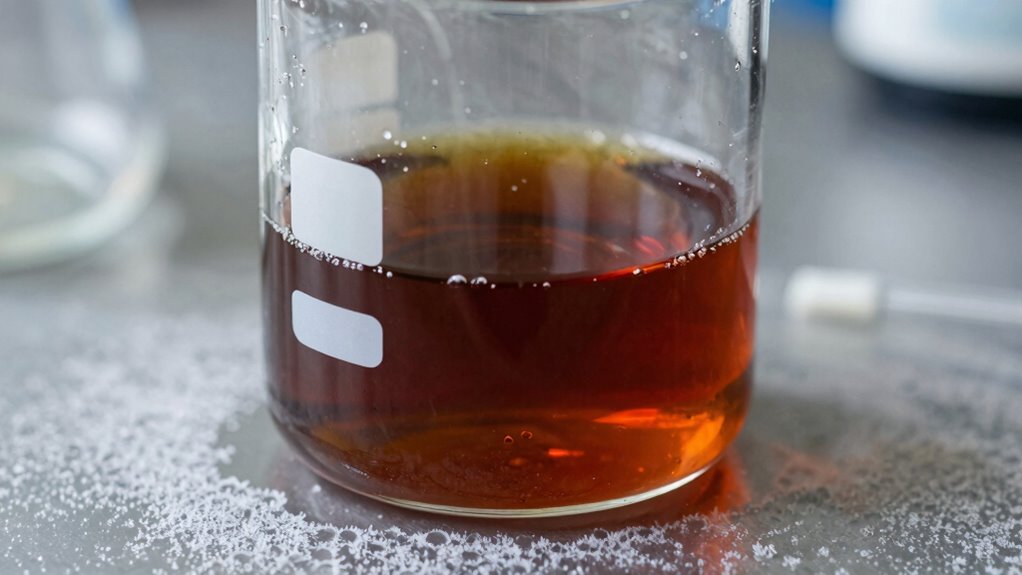

Pour point depressants improve cold-weather oil performance by preventing wax crystals from growing large and obstructive, which can block flow or damage machinery. They work by modifying crystal formation, encouraging smaller, irregular crystals that maintain fluidity at low temperatures. Selecting the right additive depends on compatibility with your oil and operating conditions. Understanding how these additives influence crystal growth reveals why cold performance isn’t just about low temperature viscosity—keep exploring to learn more.
Key Takeaways
- Pour point depressants modify wax crystal structures to prevent large, plate-like formations that hinder oil flow at low temperatures.
- They promote the formation of smaller, irregular wax crystals, maintaining lubrication properties in cold conditions.
- Compatibility with oil formulation is essential to ensure effective performance without phase separation.
- The chemical structure of additives influences their ability to alter crystal morphology and improve cold flow.
- Proper selection ensures reliable cold-start performance and reduces equipment issues caused by thickened oils.
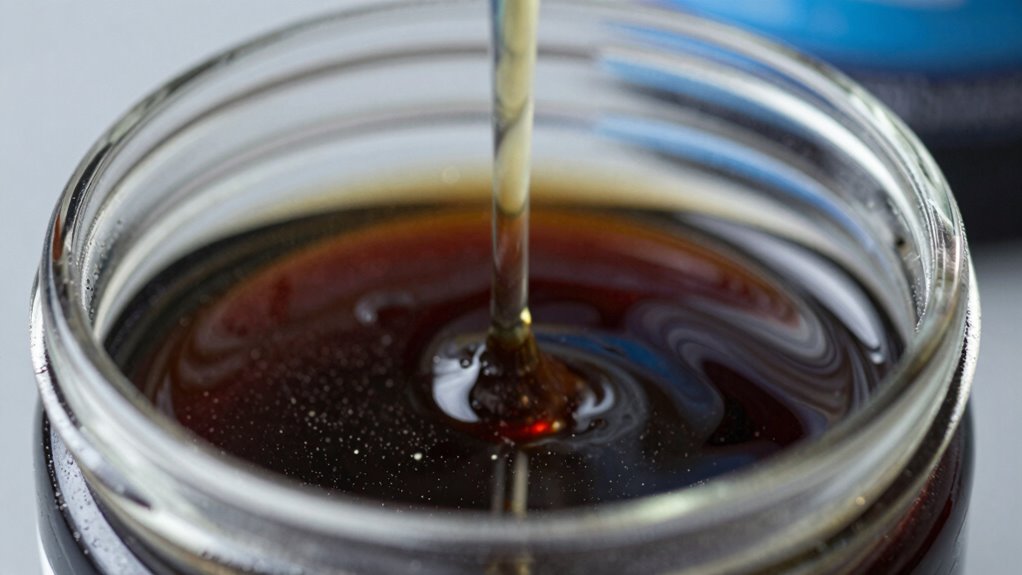
Pour point depressants are additives that prevent lubricating oils from solidifying at low temperatures, guaranteeing they flow smoothly when it’s cold. When temperatures drop, the wax crystals in oil tend to grow and interlock, forming a solid mass that impedes flow. This is where pour point depressants come into play, modifying how these wax crystals form and grow. The key to their effectiveness lies in their ability to influence crystal modification, which involves altering the size, shape, and structure of wax crystals to prevent them from creating a solid barrier. By doing so, they help the oil retain its fluidity, allowing machinery to operate reliably in cold environments.
Understanding how these additives work requires attention to additive compatibility. Not all pour point depressants work seamlessly with every oil formulation. Compatibility issues can lead to phase separation or reduced performance, so selecting the right additive for your specific lubricant is vital. When properly matched, the additive integrates well into the oil matrix, guaranteeing consistent modification of wax crystals without compromising other properties like viscosity or thermal stability. This compatibility extends to the type of base oil, the presence of other additives, and the operating conditions, making it essential to work with suppliers who can recommend compatible formulations.
Select compatible additives to ensure optimal performance and prevent phase separation in lubricants.
The process of crystal modification with pour point depressants involves the additive interacting with wax molecules as they begin to crystallize. Instead of growing into large, plate-like crystals that can clog flow paths, the wax forms smaller, irregular shapes that don’t hinder movement. This change in crystal morphology is pivotal; it maintains the oil’s flowability at lower temperatures. The effectiveness of this process depends heavily on the chemical structure of the additive and its ability to induce beneficial crystal modifications without adversely affecting other oil properties.
In practice, selecting a pour point depressant isn’t just about picking an additive labeled “cold flow improver.” You need to consider the specific wax composition in your oil, the operating temperature range, and how the additive interacts with your base oil and other additives. A well-chosen additive ensures ideal crystal modification, providing reliable cold-start performance and reducing the risk of equipment damage or failure due to thickened oils. When crystal modification occurs properly and additive compatibility is maintained, you get a lubricant that maintains its intended flow characteristics even in the coldest conditions, making your machinery more dependable and efficient.

Synthetics, Mineral Oils, and Bio-Based Lubricants: Chemistry and Technology (Chemical Industries)
As an affiliate, we earn on qualifying purchases.
As an affiliate, we earn on qualifying purchases.
Frequently Asked Questions
How Do Pour Point Depressants Affect Fuel Efficiency?
Pour point depressants improve your fuel efficiency by reducing fuel viscosity in cold conditions. They enable the fuel to flow more easily through your engine, preventing thickening that hampers combustion. With better viscosity modification, your engine starts more reliably and runs smoother in low temperatures. This means less energy is wasted overcoming fuel flow resistance, ultimately enhancing your overall fuel economy during winter months and ensuring consistent engine performance.
Are Pour Point Depressants Compatible With All Types of Lubricants?
Think of pour point depressants as puzzle pieces—they don’t fit perfectly with every lubricant. Not all lubricants are compatible because of additive interactions that can cause clumping or reduced performance. You need to check lubricant compatibility before blending pour point depressants, ensuring they work seamlessly together. Always consult manufacturer guidelines to avoid issues, because mixing incompatible components can hinder cold-start performance and damage your equipment.
What Environmental Impacts Do Pour Point Depressants Have?
You should be aware that pour point depressants can impact the environment through biodegradability concerns and aquatic toxicity. Some formulations break down slowly, potentially accumulating in ecosystems, while others may harm aquatic life if they leach into water sources. To minimize damage, select products with proven biodegradability and low aquatic toxicity, and handle them responsibly to protect ecosystems and water quality.
How Long Do Pour Point Depressants Typically Last in Storage?
Pour point depressants typically last 1 to 3 years in storage, like a candle burning steadily before flickering out. Your storage stability depends on proper conditions—cool, dry places—and avoiding temperature swings. Over time, additive degradation can reduce effectiveness, so regularly check quality. To keep them working their best, use within the recommended timeframe and store them in sealed, temperature-controlled environments.
Can Pour Point Depressants Be Used in Bio-Based or Synthetic Oils?
Yes, you can use pour point depressants in bio-based oils and synthetic oils. They’re designed for broad synthetic compatibility and help improve cold flow properties across various formulations. When selecting a depressant, make certain it’s compatible with your specific oil type to avoid any adverse effects. Proper formulation and testing will guarantee ideal cold performance, whether you’re working with eco-friendly bio oils or synthetic blends.

Mannol NS-3 Synthetic CVT Transmission Fluid, 1L Bottle, Ensures Smooth Gear Shifts, Reduces Wear and Tear, Provides Cold Weather Protection
Made for CVT Systems: This transmission fluid oil is specifically designed to be compatible with CVT-equipped vehicles requiring…
As an affiliate, we earn on qualifying purchases.
As an affiliate, we earn on qualifying purchases.
Conclusion
Understanding pour point depressants isn’t just about lowering temperatures; it’s about revealing your oil’s full potential in cold conditions. Think of these additives as your secret weapon, keeping flow smooth and preventing your engine from freezing up when you need it most. Don’t let cold weather catch you off guard—embrace the power of pour point depressants and keep your engine running like a well-oiled machine, no matter how icy the road gets.
wax crystal modifiers for lubricants
As an affiliate, we earn on qualifying purchases.
As an affiliate, we earn on qualifying purchases.
low temperature oil flow improvers
As an affiliate, we earn on qualifying purchases.
As an affiliate, we earn on qualifying purchases.