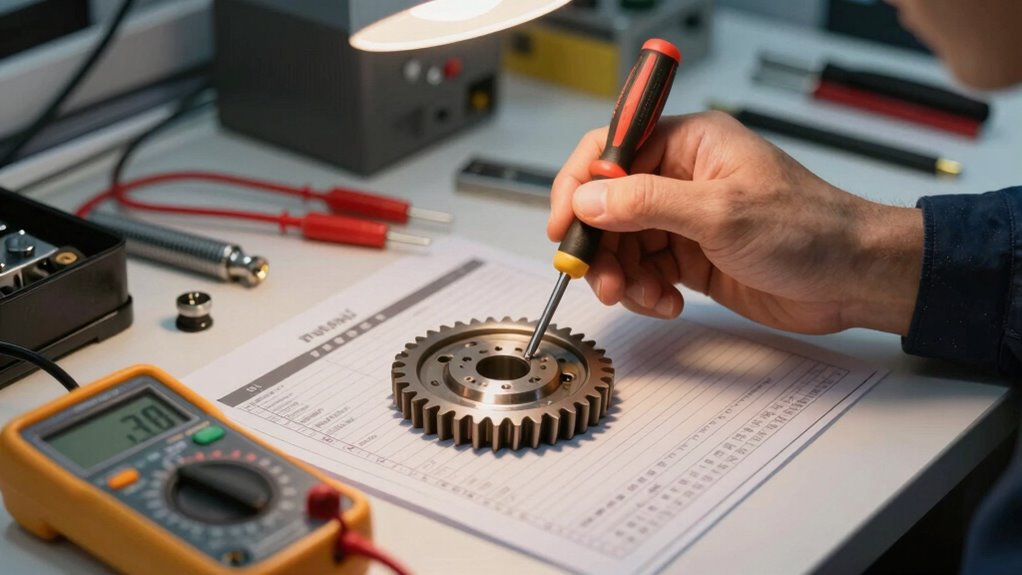

To diagnose gear whine, start by gathering your tools and preparing your vehicle on a level surface. Check the gear oil for proper level and condition, then inspect gear teeth and bearings for wear or damage. Listen carefully during different driving conditions—accelerating, decelerating, or cruising—and note when the noise is loudest. If issues persist, follow the step-by-step checklist to identify causes or decide if professional help is needed. Keep going to learn how to troubleshoot effectively.
Key Takeaways
- Inspect gear oil quality and level to identify lubrication issues causing gear whine.
- Listen carefully during different driving conditions to pinpoint when the noise occurs.
- Examine gear teeth and bearings for wear, damage, or misalignment using visual and tactile checks.
- Use diagnostic tools like a mechanic’s stethoscope to locate whether the noise originates from gears or bearings.
- Follow a step-by-step approach to rule out common causes before seeking professional help for persistent issues.

Lisle 52500 Mechanic’s Stethoscope
Quickly pinpoints the source of noises in engines, transmissions, differentials and bearings.
As an affiliate, we earn on qualifying purchases.
As an affiliate, we earn on qualifying purchases.
What Is Gear Whine and Why Does It Happen?

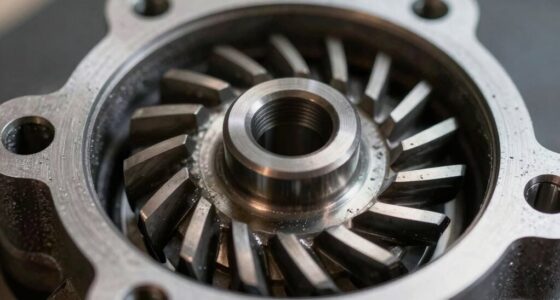
Gear whine is a high-pitched noise that comes from your vehicle’s transmission or differential when gears are engaged and moving under load. It’s a type of transmission noise caused by gear meshing and contact. When gears aren’t properly lubricated, increased friction can produce this whine or whining sound. Poor gear lubrication leads to metal-on-metal contact, which amplifies noise and can cause damage over time. Usually, gear whine indicates that gears are under stress or misaligned, but it’s often related to the condition of the lubricant and its ability to cushion gear teeth. If you notice this noise, it’s a sign you should check your gear lubrication and consider maintenance before more serious issues develop. Additionally, understanding the role of lubrication in gear performance can help prevent such issues and maintain your vehicle’s smooth operation. Proper lubrication also reduces gear wear and prolongs the lifespan of transmission components. Ensuring that the correct lubricant type and quality is used is crucial for optimal gear function and noise reduction. Regular inspections and maintenance practices can help identify lubrication issues early and prevent costly repairs.

Oil Analysis Premier Kit by Under My Hood with return postage included
NOT FOR USE ON AIRCRAFT!
As an affiliate, we earn on qualifying purchases.
As an affiliate, we earn on qualifying purchases.
Gather Your Tools and Prepare Your Vehicle for Inspection
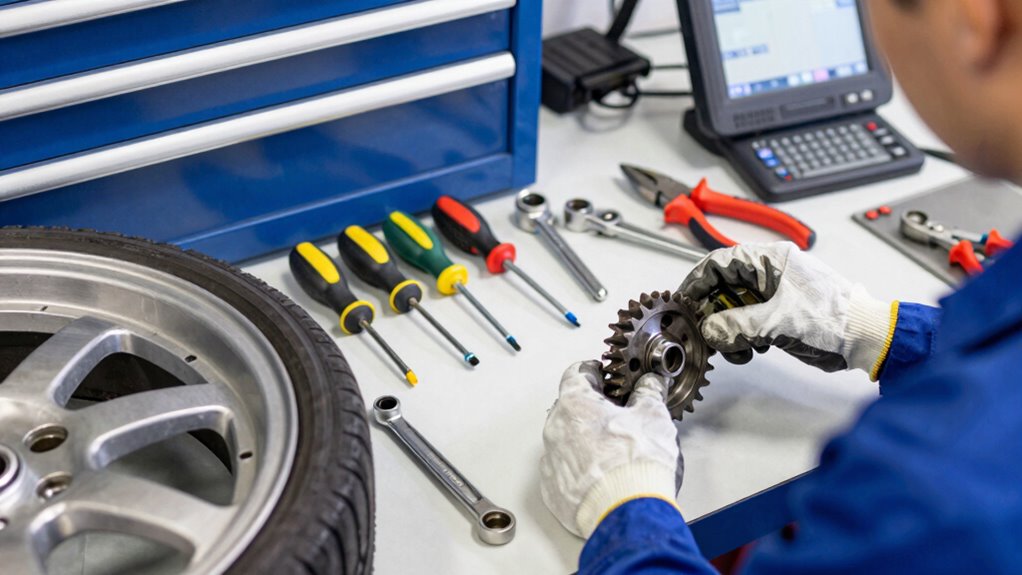
Before you start inspecting your vehicle, gather the essential tools on your checklist to guarantee you’re prepared. Make sure your vehicle is parked on a level surface, with the parking brake engaged and the engine turned off. This way, you can accurately assess the gear whine without any interference or safety concerns. Additionally, having performance parts like a quality flywheel or engine upgrades on hand can help you better understand potential causes of noise. Understanding regional flavors and how they influence vehicle performance can also provide valuable context during diagnosis. Being aware of digital safety practices can help you protect your vehicle’s electronic systems during inspections. Incorporating balance and motivation strategies can also keep you focused and patient throughout the diagnostic process. Recognizing common gear whine patterns can further assist in pinpointing the root cause more efficiently.
Tools Checklist
Gathering the right tools is essential to accurately diagnose gear whine. You’ll need a set of precision tools for lubrication analysis, including a flashlight, a mechanic’s stethoscope, and a gear noise frequency analyzer if available. These tools help you listen closely to identify whether the noise stems from insufficient lubrication or worn gears. A high-quality inspection mirror allows you to examine tricky areas, while a digital camera can document any visible damage. Make sure your vehicle is parked on a level surface, with the parking brake engaged. Have your vehicle’s service manual nearby for reference. Properly prepared tools and a stable setup ensure you can pinpoint the source of gear whine efficiently, avoiding unnecessary guesswork. Additionally, always adhere to safety tips such as wearing eye protection and working in a well-ventilated area to prevent accidents during your inspection. Paying attention to diagnostic procedures can help streamline your inspection process and improve accuracy. Being familiar with gear noise characteristics can also help you interpret the signals more effectively during diagnosis. Also, understanding Gold IRA markets can provide valuable context if your vehicle’s maintenance relates to specialized components or systems. Incorporating sound analysis techniques can further enhance your ability to distinguish subtle noise differences and improve diagnostic precision.
Vehicle Preparation
Are you ready to start the inspection? Before diving into gear whine diagnosis, you need to prepare your vehicle properly. This means gathering your tools and making sure your vehicle is ready for inspection. Focus on lubrication maintenance by checking the gear oil level and condition. A gear oil analysis can reveal wear patterns or contamination that contribute to whining. Additionally, ensure that your whole-home water system components are functioning correctly, as issues there can sometimes produce similar noises or symptoms. Proper vehicle prep helps you identify issues early and makes the diagnosis smoother. It is also beneficial to check the lubrication system for any leaks or deficiencies that might affect gear performance. Regularly inspecting the gear oil quality and level can prevent potential problems before they escalate. Understanding large number conversions can be helpful when dealing with measurements or specifications related to vehicle parts or fluids. Incorporating US tax law updates can help you understand potential deductions or credits related to vehicle maintenance and repairs.

Motor Pinion Gear Puller Remover Tools Set For Rc Helicopter Motor Pinion Parts
PINION GEAR PULLER. This gear puller is designed for pulling pinion gears off small and medium-sized motors such…
As an affiliate, we earn on qualifying purchases.
As an affiliate, we earn on qualifying purchases.
How to Check for Common Causes of Gear Whine
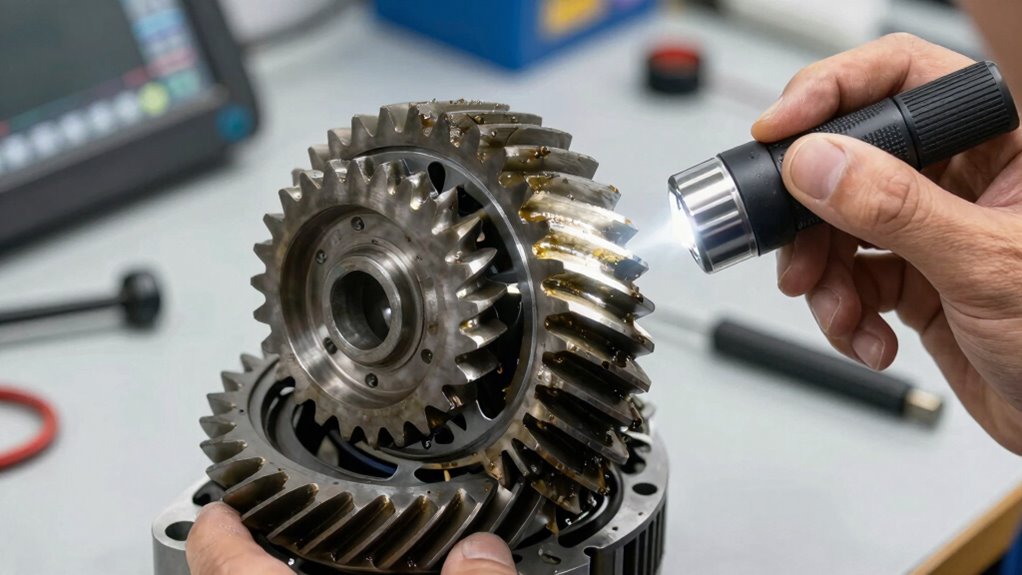
To identify the common causes of gear whine, start by inspecting the gear oil. Low or contaminated oil can cause differential noise, leading to increased whine. Ascertain the oil level is correct and it’s clean; dirty or degraded oil hampers gear meshing. Next, check gear alignment—misaligned gears create uneven contact, amplifying gear whine. Look for signs of improper installation or worn gear teeth that may cause misalignment. If the gears are not properly aligned, vibration and noise will be more pronounced. Also, inspect for worn or damaged bearings, which can contribute to excessive noise. Addressing these issues early can prevent further damage and help restore quiet operation. Proper oil, correct gear alignment, and healthy bearings are key to diagnosing and fixing gear whine. Regular maintenance checks can help catch these issues before they escalate. Additionally, reviewing gear lubrication practices ensures optimal performance and longevity of the gear system.
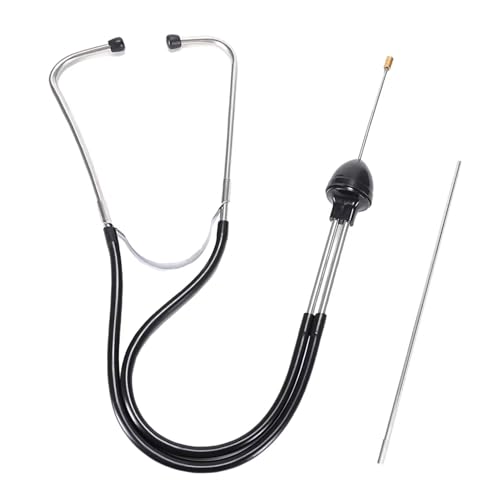
BFXM Car Mechanic Stethoscope, Automotive Stethoscope Engine Diagnostic Tool, Automotive Tools Universal for Car Truck SUV Motorcycle RV
Accurate Location: The mechanical stethoscope has a sensitive acoustic chamber to pinpoint the source of the noise, helping…
As an affiliate, we earn on qualifying purchases.
As an affiliate, we earn on qualifying purchases.
How to Listen for Gear Whine: When and Where Does It Occur?

Listening for gear whine requires paying close attention to when and where the noise occurs during vehicle operation. Notice if it happens only during acceleration, deceleration, or steady cruising. Use diagnostic tools like a stethoscope or a phone app to pinpoint the sound’s origin. Pay attention to noise frequencies; higher-pitched whines often indicate specific gear issues. Keep these points in mind:
Listen closely to gear whine during acceleration, deceleration, or steady cruise to identify its source.
- Occurs during specific driving conditions (e.g., acceleration or cruising)
- Changes with vehicle speed or engine load
- More prominent in certain gears or RPM ranges
- Use of diagnostic tools helps isolate the sound source
- Recognizing gear whine patterns can assist in diagnosing underlying mechanical problems
Additionally, understanding piercing care and hygiene can help prevent infections that might complicate vehicle or equipment issues.
Inspect Gear Mesh and Bearings for Wear and Damage
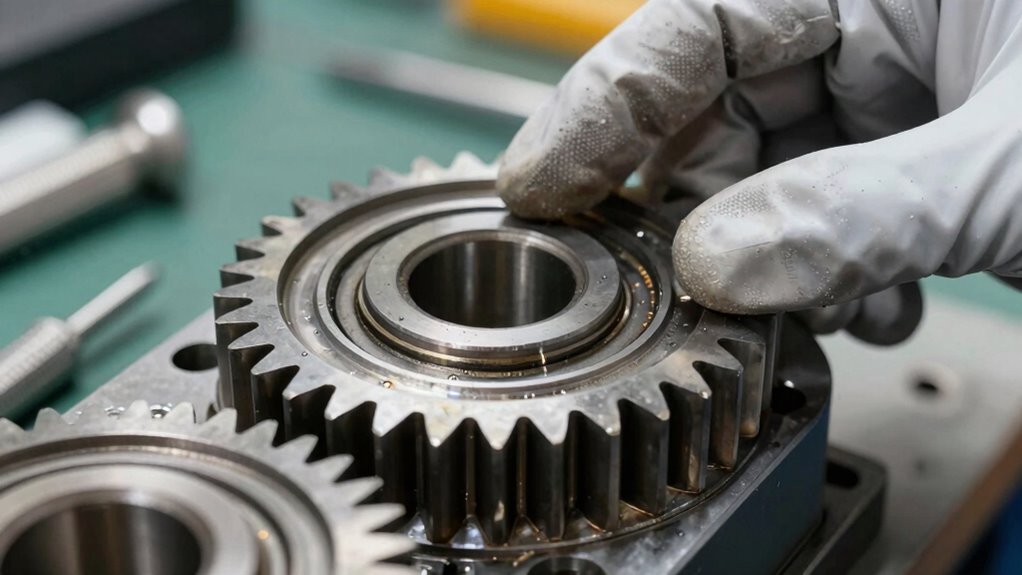
Start by checking the gear teeth for signs of wear or chipping that could cause noise. Then, examine the bearings for excessive play or looseness, which may indicate damage. Finally, look closely at the surface of the gears and bearings for any cracks, scoring, or other surface damage that needs attention.
Check Gear Tooth Wear
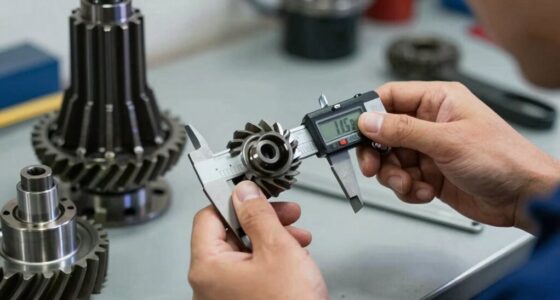
Inspecting gear mesh and bearings for wear and damage is essential for diagnosing gear whine issues effectively. One key step is checking for gear tooth wear, which can cause noise and reduce performance. During gear mesh analysis, look for uneven or chipped gear teeth, pitting, or signs of pitting and scoring that indicate excessive wear. Focus on the contact patterns; abnormal patterns often signal misalignment or worn teeth. Examine the gear teeth under magnification if possible. Also, assess the gear tooth surface for discoloration or corrosion. Remember, early detection of gear tooth wear can prevent costly repairs. Keep an eye out for these issues to ensure smooth operation and longevity. Regular inspections and gear mesh analysis are your best tools for catching problems early.
Inspect Bearing Play
Have you checked for excessive bearing play, as it can substantially contribute to gear whine? Bearing play affects gear backlash, causing noise and vibration. To assess, gently move the gear or bearing side to side; if there’s noticeable movement, it indicates wear. Excessive bearing play can increase gear backlash, leading to increased noise. Visualize this with the following:
| Gear Position | Bearing Condition | Play Level | Noise Level | Wear Signs |
|---|---|---|---|---|
| Loaded | Good | Minimal | Quiet | None |
| Slightly Worn | Slight looseness | Moderate | Slight whine | Minor |
| Worn | Loose | Excessive | Loud whine | Visible |
| Damaged | Damage present | High | Severe noise | Severe |
| Replaced | New | None | Quiet | None |
Regularly inspect bearing play to prevent gear backlash issues that cause gear whine.
Look for Surface Damage
After checking for bearing play, it’s important to examine the gear mesh and bearings for surface damage. Look closely at the gear surface for any signs of wear, pitting, or scoring that could indicate problems. Damaged gear surfaces can cause abnormal noise and vibrations, contributing to gear whine. Inspect the contact areas where gears mesh for uneven wear patterns or cracks. Also, check the bearings for surface damage like roughness or corrosion. Surface damage on gears or bearings often points to misalignment or inadequate lubrication. Addressing surface damage early helps prevent further deterioration and costly repairs down the line. Keep an eye out for:
- Gear surface pitting or scoring
- Cracks or chips on gear teeth
- Rough or worn bearing surfaces
- Signs of corrosion or rust
How to Test Drive and Replicate Gear Whine Under Different Conditions
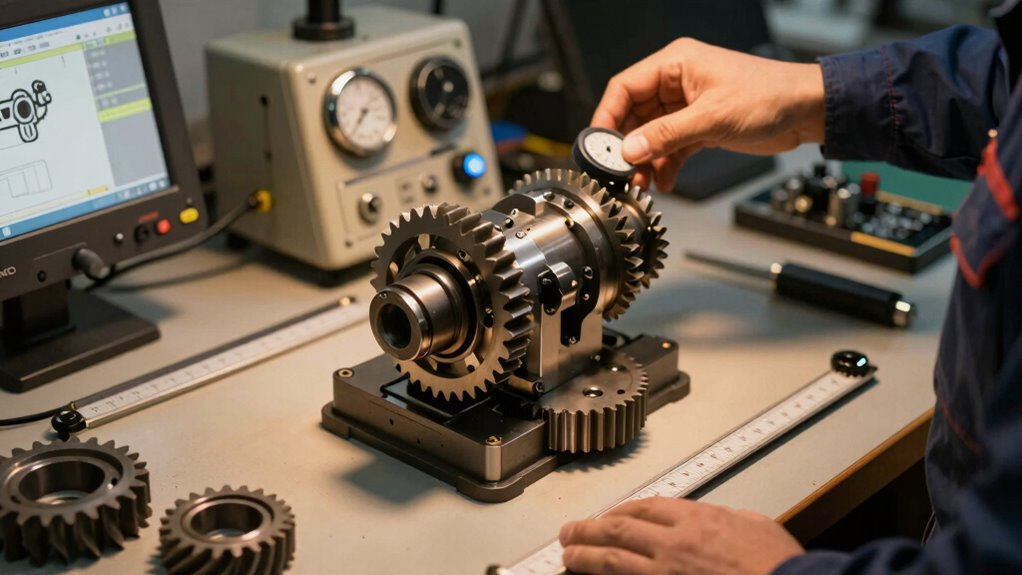
To effectively diagnose gear whine, you need to replicate the noise under controlled driving conditions. Start by testing your vehicle at different speeds and loads, paying close attention to when the whine occurs. Note if it’s louder during acceleration, deceleration, or steady cruising. Try engaging different gears to see if the gear noise changes or intensifies. Pay attention to transmission vibrations, which can sometimes amplify or mask the gear whine. Use smooth, gradual inputs to avoid introducing external factors. Test on various road surfaces and inclines to identify if terrain affects the noise. Recording your observations helps pinpoint specific conditions that trigger the gear noise, making it easier to diagnose whether the issue stems from the gears, bearings, or other transmission components.
When Should You Decide to Call a Professional?
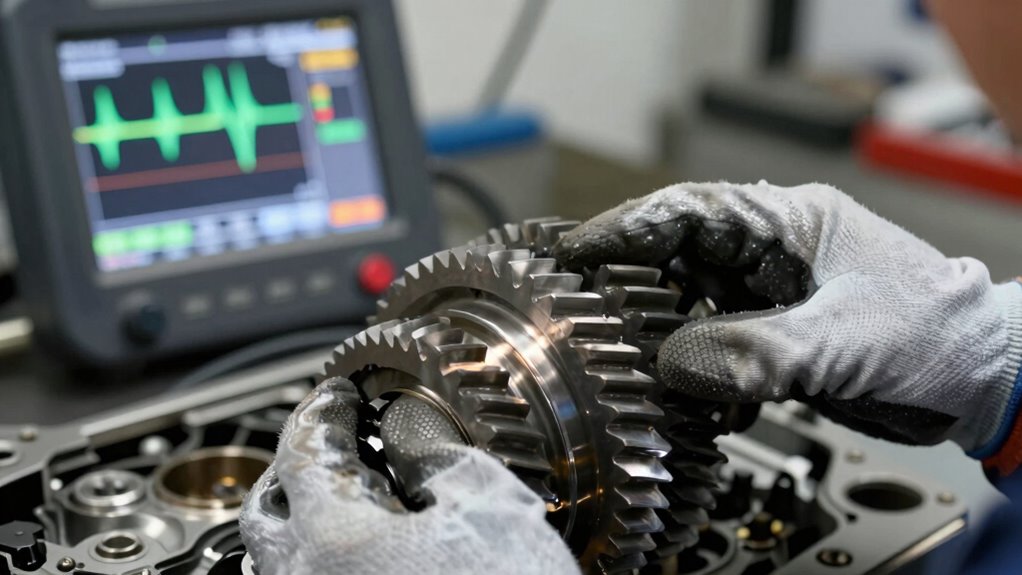
While testing your vehicle can help identify the conditions that cause gear whine, some issues are beyond simple troubleshooting. When the problem persists despite your attempts, it’s time to call a professional. Consider these signs:
- The gear whine worsens despite DIY repairs or troubleshooting efforts
- Unusual noises accompany grinding or slipping
- The noise occurs consistently at certain speeds or loads
- You’re concerned about high cost considerations of potential repairs
A professional diagnosis guarantees accurate repair without risking further damage. If you’re unsure whether the issue is manageable on your own or if repair costs seem excessive, consulting an expert saves time and money. Don’t ignore persistent or worsening noise—sometimes, professional intervention is the safest and most cost-effective choice.
Can You Fix Gear Whine Yourself? Simple Troubleshooting Steps
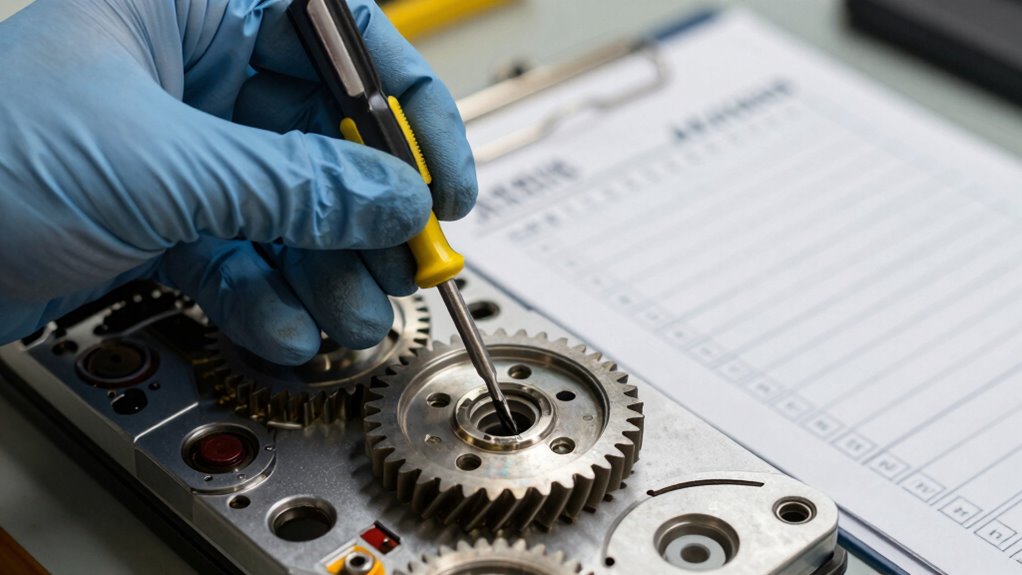
You can often troubleshoot gear whine yourself with some basic steps before calling a professional. Start by checking your vehicle’s lubrication maintenance—ensure the gear oil level is correct and the oil isn’t dirty or contaminated. If the gear oil looks degraded, consider performing a gear oil analysis to identify any issues like metal particles or wear additives breaking down. Proper lubrication reduces gear noise and prevents excessive wear. Also, inspect for any signs of misalignment or damaged gears, which can contribute to whine. Tighten loose components and ensure mounting points are secure. While these steps can often reduce or eliminate gear whine temporarily, remember that more complex issues might require expert diagnosis and repair. Keep an eye on the situation and plan for professional help if needed.
When Is It Time to Seek Help From a Gear Specialist?
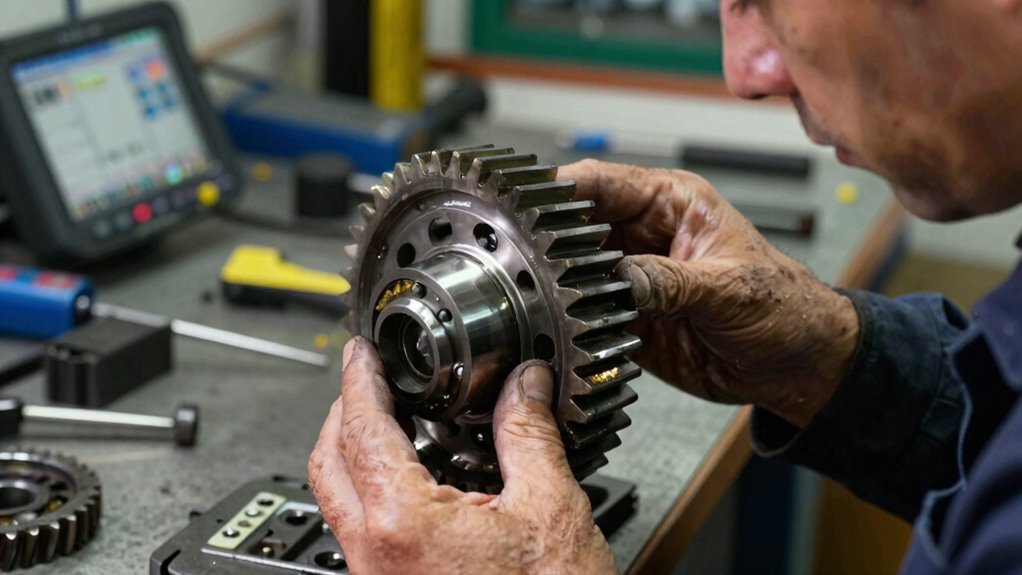
Recognizing when gear whine signals a serious problem is essential to preventing costly damage. If your noise persists despite basic troubleshooting, it’s time to consult a gear specialist. They excel at signal analysis to determine whether the noise indicates misalignment, wear, or imminent failure. You should seek help if you notice:
- The noise worsens under load or changes with speed
- The sound is high-pitched and constant
- Basic noise mitigation efforts have no effect
- You experience unusual vibrations or gear slippage
A gear expert can perform advanced diagnostics, pinpoint the root cause, and recommend proper repairs. Relying on their expertise guarantees proper signal analysis, reduces noise, and preserves your equipment’s longevity. Don’t delay if issues escalate beyond simple fixes.
Frequently Asked Questions
How Long Does It Typically Take to Diagnose Gear Whine?
The diagnosis duration for gear whine usually takes between a few hours to a full day, depending on the troubleshooting timeline and complexity. You’ll need to systematically check components, listen carefully, and test different scenarios. If you follow the 7-step checklist, you can speed up the process and pinpoint the issue faster. Be patient, as thorough troubleshooting guarantees accurate diagnosis and prevents future problems.
Can Gear Whine Indicate Impending Transmission Failure?
Gear whine can be a warning sign of impending transmission failure, so don’t ignore it. This noise often indicates issues with gear alignment or worn components, which impact transmission health. While gear whine doesn’t always mean failure is imminent, addressing it early can prevent costly repairs. If you notice persistent gear whine, get your transmission checked promptly to maintain ideal transmission health and avoid future breakdowns.
Are There Specific Driving Habits That Cause Gear Whine?
Your driving style and gear engagement habits can definitely cause gear whine. If you frequently shift gears abruptly or ride the clutch, it puts extra stress on the transmission, leading to noise. Consistently engaging gears at high RPMs or not allowing the transmission to warm up properly can also contribute to gear whine. To minimize this, shift smoothly and avoid aggressive gear engagement, especially during cold starts.
What Are the Costs Involved in Professional Gear Whine Repair?
Ever wondered how much professional gear whine repairs cost? The repair expenses can vary widely depending on the issue, with cost estimates typically ranging from a few hundred to over a thousand dollars. Factors like parts needed and labor rates influence the total. While it might seem costly, investing in proper diagnosis and repair can extend your vehicle’s lifespan and prevent more expensive damages down the line.
How Can I Prevent Gear Whine From Recurring After Repairs?
To prevent gear whine from recurring, you should regularly review your lubrication practices, ensuring gears are properly lubricated without overdoing it. Use high-quality gear materials designed for durability, which reduces wear and noise over time. Keep an eye on gear alignment and avoid harsh shifting or excessive loads. Regular maintenance and inspections will help spot potential issues early, maintaining smooth operation and minimizing the chances of gear whine returning.
Conclusion
Identifying gear whine can save you time and money—did you know that nearly 60% of drivetrain issues are resolved through proper diagnosis? By following this 7-step checklist, you’ll gain confidence in pinpointing the problem early. Remember, if the noise persists or worsens, consulting a professional is your best bet. Staying proactive not only extends your vehicle’s lifespan but also keeps you safe on the road.