
Your differential may run hot due to design factors like gear type, material selection, and cooling features that affect how heat is generated and released. High gear ratios, aggressive driving, and poor lubrication can also contribute to excessive temperatures. Features like vents, fins, and the gear tooth shape influence heat dissipation and friction. Understanding these design aspects can help you identify why your diff heats up and what you can do to manage it better.

Get garage and car supplies delivered free — and shop member deals
- Fast, free delivery on millions of items
- Access to Prime Big Deal Days deals on October 6–7
- Prime Video, Amazon Music and more included
Key Takeaways
- Gear material and tooth design influence friction levels and heat generation during operation.
- Differential housing shape and surface area affect heat dissipation efficiency.
- Proper placement of cooling fins, vents, or fans enhances airflow and reduces hotspots.
- Gear ratios determine torque transfer and heat buildup within the differential.
- Lubricant type and viscosity impact heat transfer and thermal management.
As an affiliate, we earn on qualifying purchases.
Why Does My Differential Run Hot?
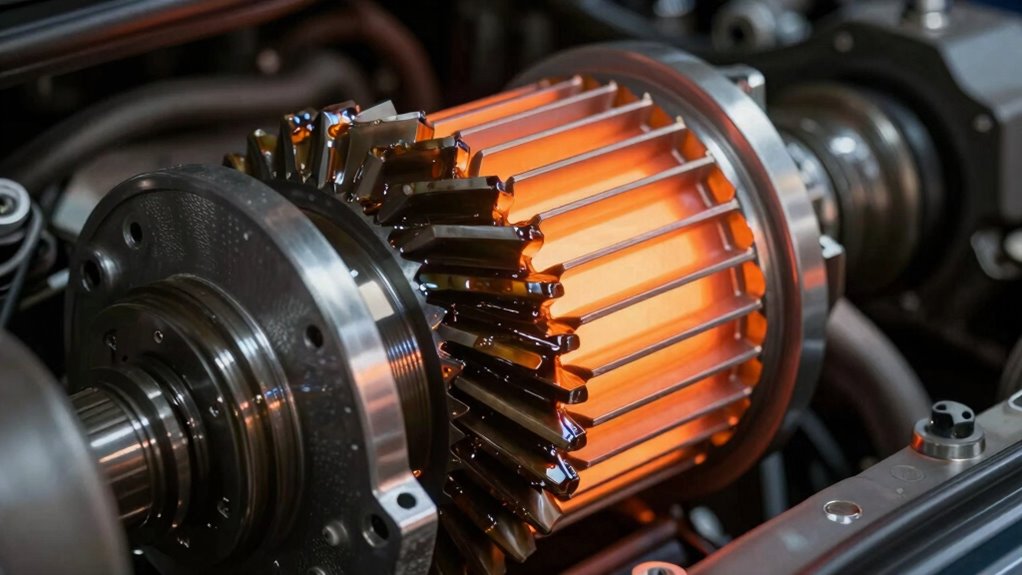
Your differential can run hot for several reasons, especially if it’s under heavy load or high-stress conditions. One common cause is ventilation issues, which prevent heat from escaping efficiently. Poor airflow around the differential causes heat buildup, increasing operating temperatures. External cooling systems, like differential coolers or additional fans, can help mitigate this heat. Without proper cooling, friction and internal components generate excessive heat, risking damage over time. Ensuring adequate ventilation and external cooling improves heat dissipation, keeping your differential within safe temperature ranges. Additionally, regular maintenance to remove debris blocking vents or cooling fins can significantly improve airflow and cooling efficiency. Consider upgrading your cooling setup if temperatures remain high. Proper heat management is essential to prolong your differential’s lifespan and maintain ideal performance. Additionally, understanding how ventilation impacts heat dissipation can help you optimize your cooling strategies effectively, especially when considering thermal regulation techniques to prevent overheating. Furthermore, implementing temperature monitoring can provide real-time data to help prevent thermal issues before they cause damage, and selecting appropriate materials for components can also influence heat transfer efficiency.
differential heat dissipation fins
As an affiliate, we earn on qualifying purchases.
As an affiliate, we earn on qualifying purchases.
How Gearing Causes Differential Overheating
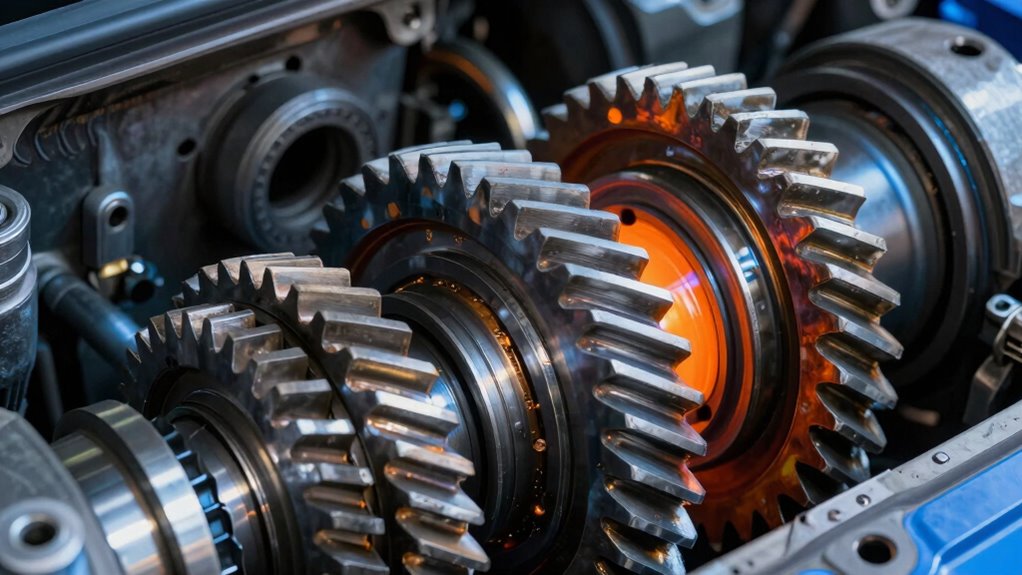
Gearing plays a significant role in causing differential overheating because the type and design of gears directly influence the amount of friction generated during operation. A higher gear ratio often means increased torque and load on the gears, which raises heat levels. Additionally, the gear material impacts heat dissipation; softer metals or inadequate lubricants can increase friction and heat buildup. Steel gears, for example, can handle more stress and generate less heat if properly maintained, while composite or softer materials may wear faster and produce more friction. The gear design, including tooth shape and contact pattern, also affects how efficiently power transfers and how much heat is generated. Proper gear maintenance and selecting the right materials can help mitigate these overheating problems. Recognizing material properties plays a crucial role in understanding how different components respond to stress and heat, especially when considering heat dissipation techniques to improve performance.
As an affiliate, we earn on qualifying purchases.
How Gear Ratios Impact Differential Temperatures
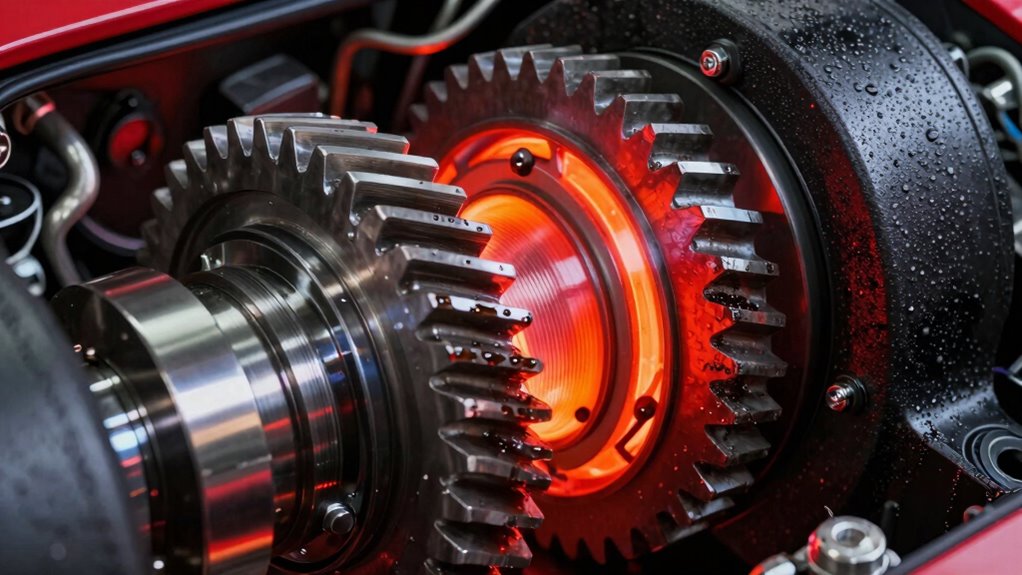
The gear ratio in a differential determines how torque is distributed between the wheels and influences the amount of heat generated during operation. A higher gear ratio means each revolution of the driveshaft results in more wheel rotations, increasing torque transfer to the wheels. This heightened torque transfer causes the gears to work harder, generating more heat. Conversely, a lower gear ratio reduces torque transfer and heat buildup, but may limit acceleration. Your choice of gear ratio directly affects differential temperatures, especially during aggressive driving or heavy loads. If the gear ratio is too high for your driving style, it can cause excessive heat and accelerate wear. Understanding this relationship helps you select the appropriate gear ratio to balance performance and thermal management. Proper thermal management techniques can help mitigate heat buildup and extend the lifespan of your differential components.
differential temperature monitor
As an affiliate, we earn on qualifying purchases.
As an affiliate, we earn on qualifying purchases.
How Driving Load and Conditions Affect Differential Heat
Driving load and conditions play a significant role in how much heat builds up in your differential. When you carry heavy loads or tow, the increased torque causes more friction and thermal expansion within the gears and bearings. Harsh driving conditions, like off-road terrain or stop-and-go traffic, intensify heat transfer because components undergo more stress and movement, raising overall temperatures. Continuous high loads reduce the differential’s ability to dissipate heat efficiently, leading to quicker overheating. As parts expand thermally, clearances may narrow, further increasing friction and heat. Additionally, understanding thermal management techniques can help mitigate excessive heat buildup during demanding conditions. Proper cooling strategies depend on controlling these dynamic factors effectively. Moreover, the lubrication quality used also impacts heat dissipation, with higher-quality oils helping to reduce overall operating temperatures. Different design factors, such as gear material and differential housing design, also influence how efficiently heat is managed within the system. Recognizing heat transfer mechanisms enables better maintenance practices and component choices. Maintaining proper ventilation and airflow around the differential can significantly improve cooling efficiency. Understanding how these factors influence heat buildup helps you anticipate when your differential might run hot and highlights the importance of managing operating conditions to prevent damage.
Why Lubrication Quality and Quantity Matter for Cooling
Your differential’s cooling relies heavily on proper lubrication. If the lubricant’s viscosity isn’t balanced, it won’t flow efficiently to carry away heat. Ensuring adequate lubricant flow and quality is key to preventing overheating. Using the right lubrication technique can also help maintain optimal temperature levels in your differential. Additionally, selecting the correct sound quality and levels in your setup can prevent unnecessary strain on the system, ensuring consistent performance. Regular maintenance and monitoring of oil quality can further enhance the longevity and efficiency of your differential. Maintaining proper lubrication is essential for optimal differential operation and avoiding system failures.
Lubricant Viscosity Balance
Maintaining the right consistency of lubricant is essential because it directly influences how effectively heat is dissipated from engine components. If the lubricant is too thick, it hampers flow and traps heat; if too thin, it fails to provide proper lubrication and cooling. Synthetic lubricants often incorporate viscosity modifiers to sustain ideal flow across temperature ranges. These additives help balance viscosity, ensuring consistent cooling performance. Consider the table below, which highlights key viscosity factors:
| Factor | Effect | Importance |
|---|---|---|
| Viscosity modifiers | Stabilize viscosity at different temps | Prevents overheating or thinning |
| Operating temperature | Higher temps reduce viscosity | Needs balancing for cooling |
| Lubricant formulation | Affects flow and heat transfer | Critical for diff cooling |
| Additive quality | Impacts viscosity stability | Ensures consistent cooling |
Additionally, temperature fluctuations can significantly influence viscosity, making the use of proper additives even more crucial for maintaining optimal cooling.
Adequate Lubricant Flow
Proper lubricant flow guarantees that heat generated by engine components is effectively carried away, preventing overheating and potential damage. Using high-quality synthetic oils ensures better flow consistency and thermal stability under stress. Adequate lubrication depends on proper oil circulation, which relies on effective oil filtration to remove contaminants that can clog passages and reduce flow. When oil filtration is maintained, it keeps the lubrication system clean, allowing synthetic oils to perform at their best. Maintaining oil filter efficiency is essential for optimal lubrication and cooling performance, as a clogged filter can significantly impede flow. Ensuring your differential has enough lubricant flow, with clean oil and proper filtration, keeps temperatures in check and prolongs the life of your drivetrain. Effective oil filtration plays a crucial role in maintaining optimal lubrication and cooling efficiency. Good flow is essential for cooling and overall system health. Additionally, regular maintenance of filtration components helps prevent contaminant buildup, which can compromise the entire lubrication system. Regularly monitoring fluid quality helps detect early signs of degradation, ensuring consistent performance.
Which Materials Help Keep Your Differential Cool?
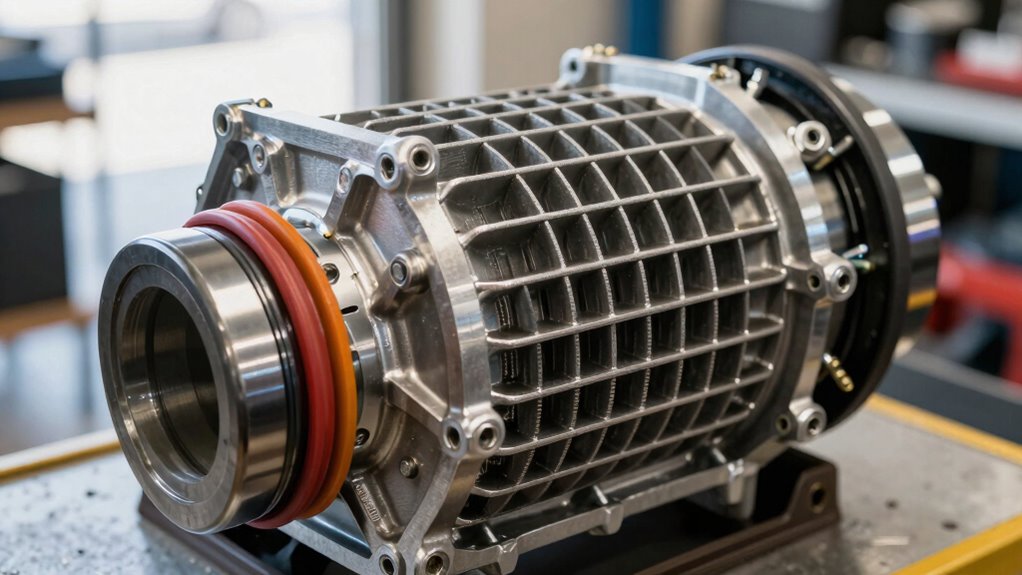
Using high-quality lubricants helps dissipate heat more effectively, keeping your differential cooler during operation. Aluminum and copper components also improve heat transfer, preventing overheating. Choosing the right materials can make a significant difference in maintaining ideal temperatures.
High-Quality Lubricants
High-quality lubricants play a fundamental role in keeping your differential cool during intense driving conditions. Synthetic lubricants are particularly effective because they offer better thermal conductivity than conventional oils, allowing heat to dissipate more efficiently. This improved heat transfer helps prevent overheating, reducing wear and prolonging the lifespan of your differential. Additionally, synthetic oils maintain their viscosity at higher temperatures, guaranteeing consistent lubrication and minimizing friction. Proper lubrication reduces heat buildup, which is essential when your differential faces demanding loads or aggressive driving. By choosing high-quality synthetic lubricants, you can enhance cooling performance and protect your differential from excessive heat. Ultimately, investing in top-tier lubricants is a simple yet indispensable step to ensure your differential stays cool under pressure.
Aluminum and Copper Components
Aluminum and copper components are essential for enhancing heat dissipation in your differential. Aluminum alloys are lightweight and have excellent thermal conductivity, helping to transfer heat away efficiently. Copper conductors, known for their superior electrical and thermal properties, also play a key role in managing heat. Using these materials reduces the risk of overheating during intense driving conditions. Incorporating aluminum alloys and copper conductors into your differential design ensures better heat flow, prolonging component life and maintaining peak performance.
- Aluminum alloys provide lightweight strength and thermal efficiency
- Copper conductors excel in heat conduction
- Improved heat dissipation reduces thermal buildup
- These materials help prevent differential overheating
- Enhanced cooling leads to better overall durability
Design Features That Promote Better Heat Dissipation
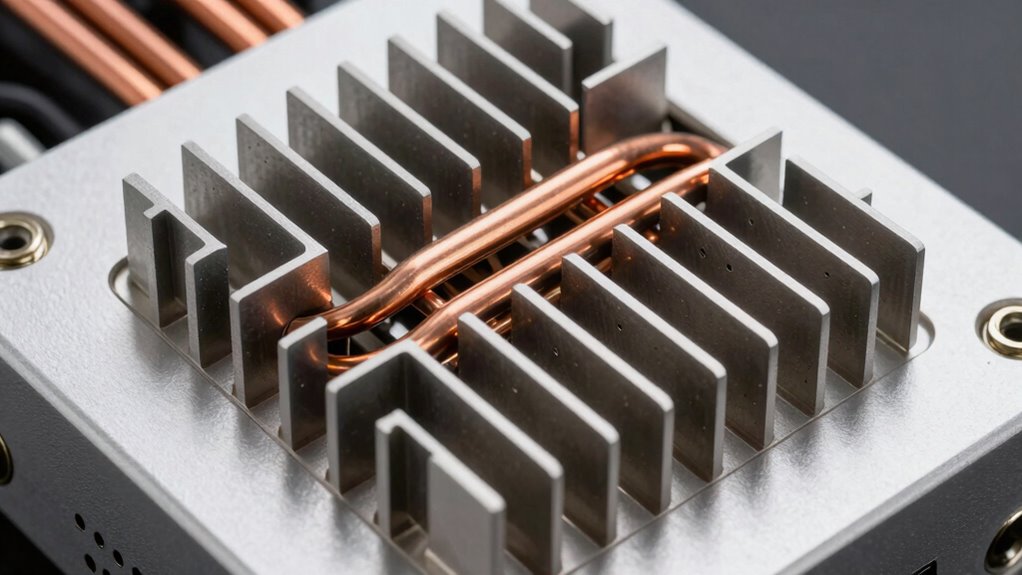
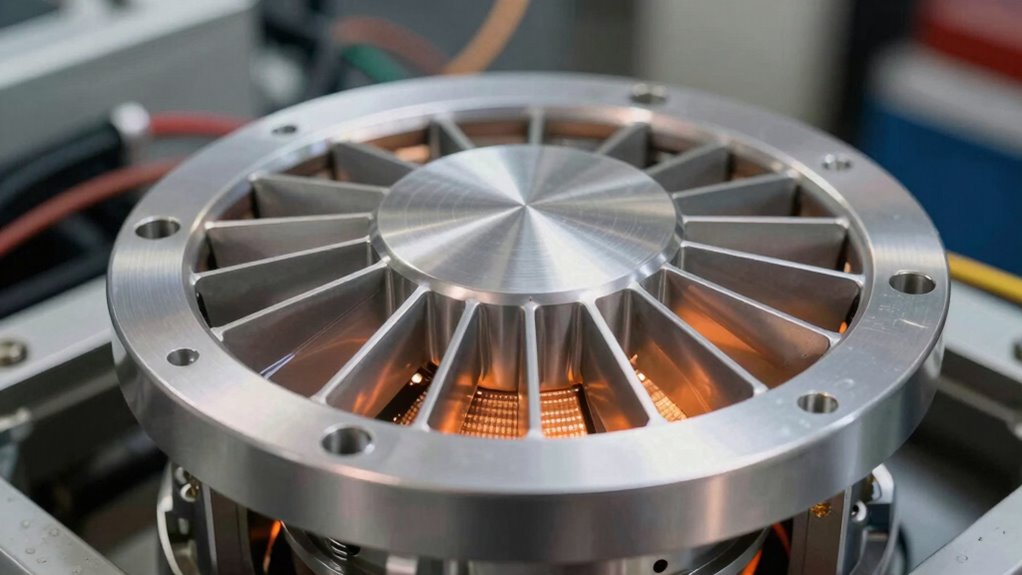
Effective heat dissipation begins with smart design features that facilitate airflow and minimize heat buildup. Incorporating cooling fins increases surface area, allowing heat to escape more efficiently. Vented covers promote airflow over critical components, preventing hotspots. Proper placement of these features ensures better thermal management. Here’s a visual to clarify:
| Feature | Function | Benefit |
|---|---|---|
| Cooling fins | Increase surface area | Faster heat transfer |
| Vented covers | Allow airflow into the housing | Reduce internal heat buildup |
| Vent holes | Enable heat escape | Prevent overheating |
| Fin orientation | Maximize airflow across fins | Enhance cooling efficiency |
| Material choice | Conduct heat away quickly | Maintain optimal temps |
How Gear Tooth Geometry Influences Heat Generation
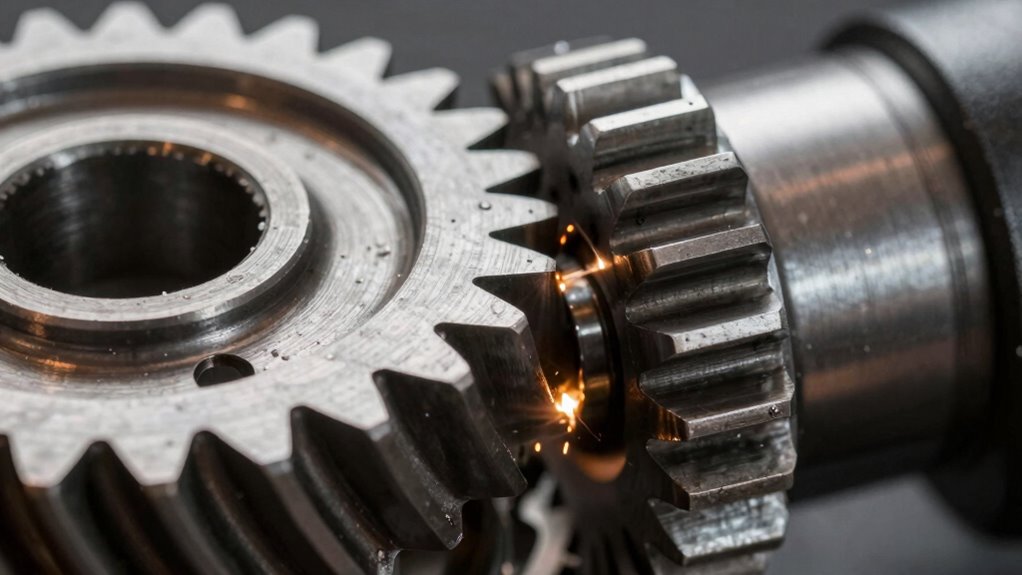
Your gear tooth geometry plays a key role in heat generation, especially through tooth profile optimization. When you shape teeth to distribute contact stress evenly, you reduce localized heating. This careful design helps keep your gears cooler and extends their lifespan.
Tooth Profile Optimization
The geometry of gear teeth plays a crucial role in determining heat generation during operation. Optimizing the gear tooth profile ensures smoother contact and reduces friction, which directly impacts heat buildup. Proper tooth shapes help maintain a consistent lubrication film, minimizing metal-to-metal contact and heat. By refining the gear tooth profile, you can improve load distribution, decreasing localized stress and heat hotspots. This leads to more efficient power transfer and longer gear life. Additionally, an optimized profile reduces vibrations and noise, further lowering heat from dynamic forces. Focus on designing gear teeth with gradually varying angles and smooth curves to enhance lubrication retention and minimize resistance. Ultimately, thoughtful tooth profile optimization is key to managing heat and ensuring your differential runs cooler and more reliably.
Contact Stress Distribution
Gear tooth geometry directly influences how contact stresses are distributed across mating surfaces, which in turn affects heat generation. When load distribution is uneven due to blade angles or tooth shape, certain areas experience higher contact stress. These concentrated stresses generate more heat, accelerating wear and risking gear failure. Properly designed gear tooth profiles spread load evenly, reducing peak contact stress and minimizing heat buildup. By optimizing gear geometry, you ensure a more uniform load distribution, lowering the risk of hot spots that cause excessive heat. Understanding how contact stress varies across the tooth surface helps you design gears that run cooler, last longer, and perform more reliably under demanding conditions. Effective gear design therefore hinges on managing contact stress to control heat generation.
Common Lubrication Failures That Cause Overheating
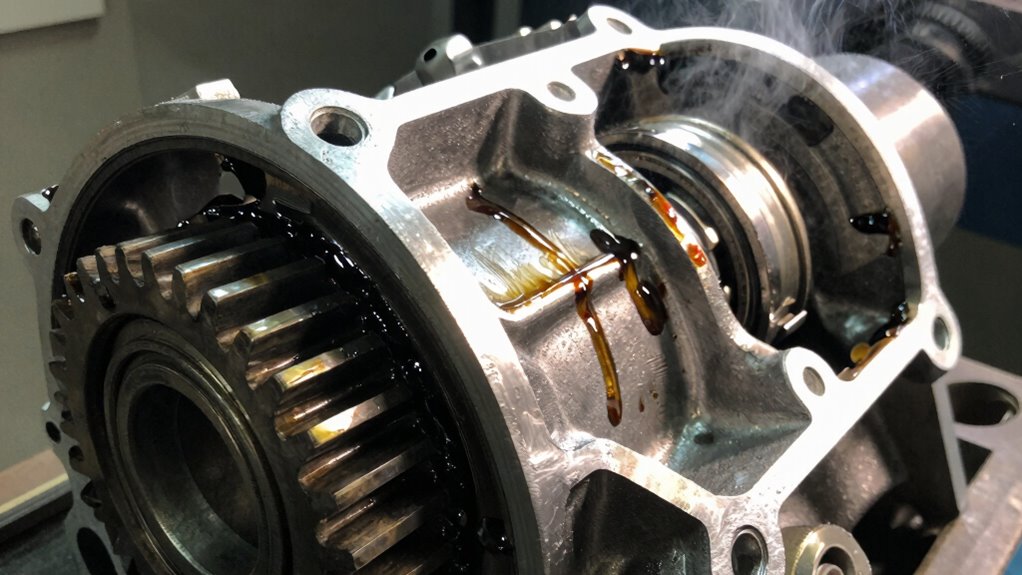
Lubrication failures are a leading cause of overheating in mechanical systems, often resulting from inadequate maintenance or improper selection. These failures disrupt proper heat dissipation, causing excessive friction and temperature rises. Common issues include lubrication breakdowns, where oil degrades or becomes contaminated, reducing its effectiveness. Seal failures also play a significant role, allowing lubricant leaks that lead to insufficient lubrication. When lubrication isn’t maintained properly, metal-to-metal contact increases, generating heat and accelerating component wear. To prevent these problems, regularly check oil quality, ensure seals are intact, and use appropriate lubricants. Staying vigilant about lubrication health helps keep your differential running cool and prevents costly damage. Proper lubrication management is critical to minimizing overheating risks caused by these failures.
Signs of Overheating and How to Improve Differential Cooling
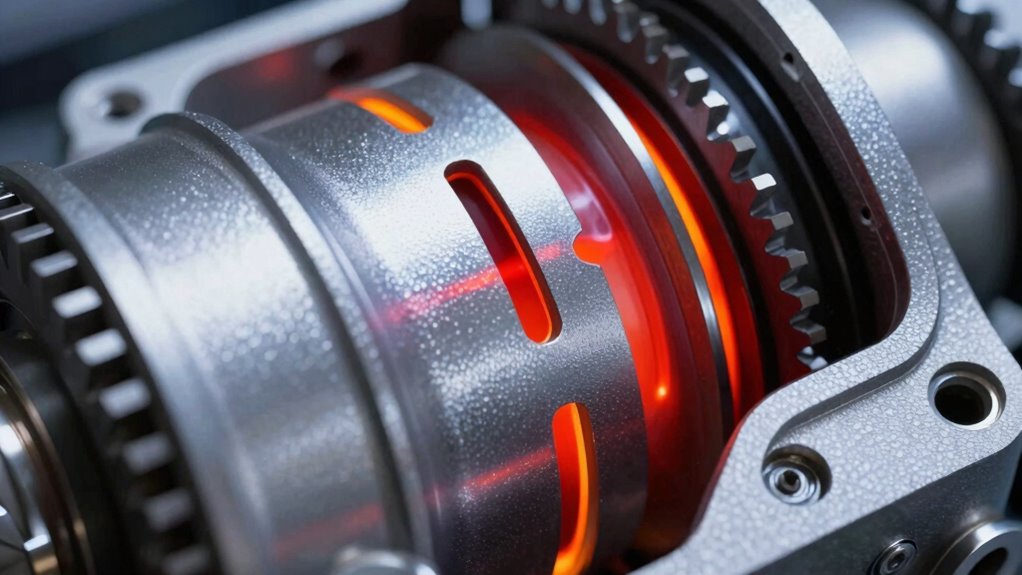
How can you tell if your differential is overheating? Look for signs like excessive heat coming from the housing, a burning smell, or hot-to-the-touch surfaces after driving. You might also notice fluid thinning or foaming, which indicates lubrication breakdown. To improve cooling, consider effective ventilation strategies, such as adding vents or fans to promote airflow and dissipate heat. Reducing thermal insulation around the differential can also help heat escape more efficiently. Proper ventilation prevents heat buildup, while minimizing thermal insulation ensures heat doesn’t get trapped. Regularly check for signs of overheating and adjust your ventilation and insulation setup accordingly. Keeping your differential cool not only prolongs its lifespan but also maintains ideal performance during demanding driving conditions.
Frequently Asked Questions
How Does Differential Size Affect Heat Dissipation Efficiency?
When differential size varies, heat dissipation efficiency is affected because larger components have more surface area, improving cooling. Your lubrication quality plays a vital role by reducing friction-generated heat, while material conductivity determines how quickly heat spreads away from hot spots. Smaller parts may heat up faster due to limited surface area, but good lubrication and high-conductivity materials help maintain ideal temperature, ensuring your differential runs cooler and more efficiently.
What Role Do Ambient Temperature and Airflow Play in Overheating?
Ambient temperature and airflow substantially impact overheating, as higher temperatures reduce heat dissipation, while good airflow helps carry away heat. You should consider thermal insulation, which can trap heat if poorly managed, and ambient humidity, which can hinder airflow and cooling efficiency. By controlling airflow and maintaining ideal ambient conditions, you prevent your diff from running hot, ensuring better performance and longevity.
Can Aftermarket Modifications Worsen Differential Heat Issues?
Think of your differential like a car engine—aftermarket modifications, like bigger gears or performance parts, can turn up the heat. These changes often strain the cooling system and increase lubricant viscosity, making it harder to dissipate heat. If you don’t upgrade cooling components accordingly, heat builds up faster, risking damage. So, you must balance modifications with proper cooling to keep your differential running smoothly and cool.
How Do Manufacturing Tolerances Influence Heat Generation?
Manufacturing tolerances impact heat generation by affecting material properties and lubrication effectiveness. When tolerances are tight, parts fit precisely, reducing friction and heat. Looser tolerances create gaps, increasing movement and friction, which generates more heat. Proper tolerances ensure ideal contact, improving lubrication effectiveness and minimizing heat buildup. You should prioritize precise manufacturing to keep differential temperatures in check, enhancing performance and durability.
Are There Specific Differential Designs Better Suited for High-Performance Vehicles?
Think of your high-performance vehicle like a vintage racecar—certain differential designs excel. Limited-slip differentials with robust differential materials and optimized gear ratios handle heat better, providing durability and traction under stress. For racing or spirited driving, a helical or Torsen differential offers smoother power transfer and less heat buildup. These designs are tailored to high-performance needs, ensuring your car stays cool and responsive even during intense drives.
Conclusion
So, next time your differential runs hot, remember it’s often a mix of design choices and driving habits. Sometimes, a simple gear ratio tweak or better lubrication can make all the difference. It’s funny how a small change in lubrication or gear tooth shape can prevent overheating, almost like they’re secretly working together. Pay attention to signs of heat and keep your differential well-maintained—sometimes, it’s the little details that keep everything running smoothly.
Halloween Picks
halloween
As an affiliate, we earn on qualifying purchases.