
Aluminum housings heat up quickly and dissipate heat efficiently due to their high thermal conductivity, keeping temperatures stable and preventing overheating. In contrast, cast iron retains heat longer, leading to more consistent internal temperatures but slower heat transfer. This difference affects how systems respond to heat loads and environment. If you keep exploring, you’ll uncover more about how these materials influence temperature behavior and system performance.
Key Takeaways
- Aluminum’s high thermal conductivity enables rapid heat transfer and quick cooling, maintaining stable temperatures during operation.
- Cast iron’s lower thermal conductivity causes slower heat transfer and longer heat retention, leading to more stable internal temperatures.
- Aluminum’s natural oxide layer provides corrosion resistance, ensuring consistent thermal performance over time.
- Cast iron is prone to rust, which can disrupt heat transfer and cause temperature fluctuations.
- Aluminum is more durable in harsh environments, maintaining thermal properties longer, while cast iron requires protective coatings to prevent corrosion.
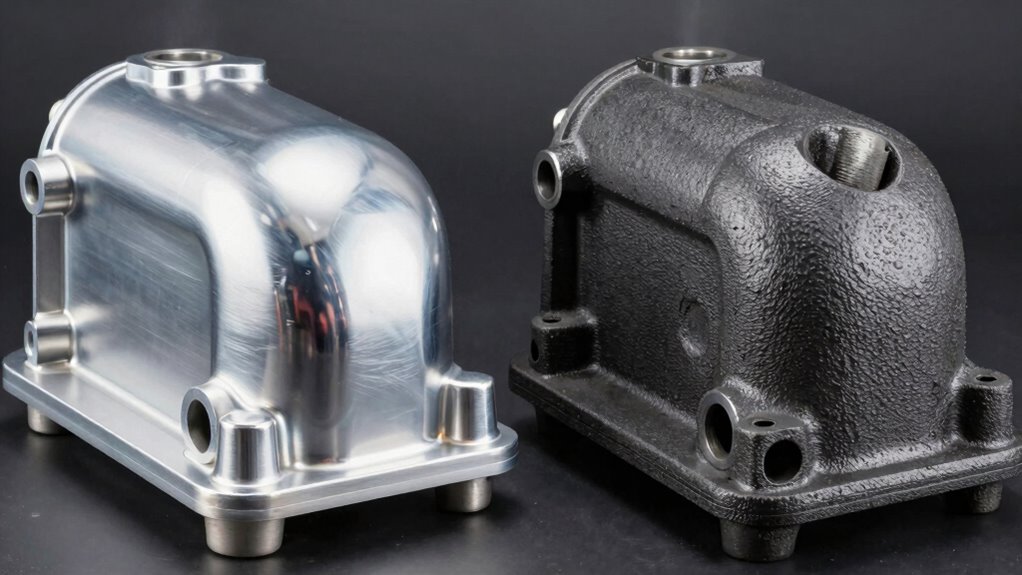
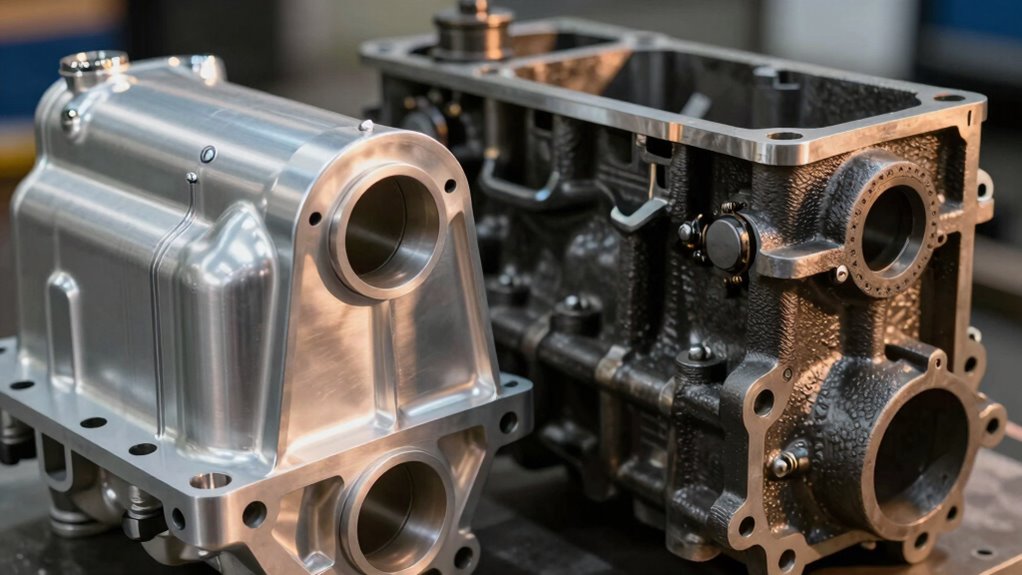
When choosing between aluminum and cast iron housings, understanding their differences is essential for making the right decision. One of the key factors to consider is how each material handles heat, which directly impacts temperature behavior and system performance. Aluminum has a high thermal conductivity, meaning it transfers heat more efficiently than cast iron. This allows heat to dissipate quickly from components housed within aluminum enclosures, helping prevent overheating and maintaining stable operating temperatures. If your application involves high heat loads or requires rapid cooling, aluminum’s ability to conduct heat makes it a strong candidate. Conversely, cast iron’s lower thermal conductivity results in slower heat transfer, which can help retain heat within the housing, offering a more stable environment in certain scenarios. This characteristic might be advantageous in applications where maintaining a consistent temperature is critical, such as in some engine or machinery housings. Additionally, aluminum’s thermal management capabilities make it particularly suitable for environments where controlling temperature fluctuations is vital for system reliability.
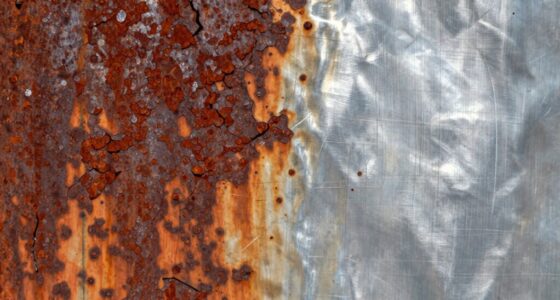
Corrosion resistance is another vital aspect that influences temperature behavior over time. Aluminum naturally forms a thin oxide layer that protects it from corrosion, making it highly resistant to environmental factors like moisture and chemicals. This resistance ensures that aluminum housings stay intact and functional over long periods, even in harsh conditions. Cast iron, on the other hand, is more susceptible to corrosion if not properly treated or coated. Rust can form when exposed to moisture, weakening the material and potentially causing heat transfer issues or structural failure. As corrosion progresses, it can create uneven surfaces or gaps, disrupting thermal contact and affecting temperature regulation within the housing. Hence, aluminum’s superior corrosion resistance not only extends the lifespan of the housing but also helps maintain predictable thermal performance over time.
When you’re selecting a housing material, you’ll need to weigh these thermal and corrosion properties against other factors like weight, cost, and mechanical strength. Aluminum’s excellent thermal conductivity and corrosion resistance make it ideal for applications demanding efficient heat dissipation and durability in corrosive environments. Cast iron’s slower heat transfer may benefit scenarios requiring heat retention, but its susceptibility to rust means you’ll need additional protective coatings or maintenance. Ultimately, understanding these differences helps you choose the material that aligns best with your specific thermal management needs and environmental conditions. By considering how each material behaves in terms of thermal conductivity and corrosion resistance, you can guarantee optimal system performance, longevity, and safety.

FUSCH Upgraded Aluminum Coolant Thermostat Housing Assembly Compatible With Chevy Cruze 2011-2016 Chevrolet Sonic Trax 2012-2021 Buick Encore 2013-2021 1.4L Replace#25200455 55565336 55579010 902-808
【Replace Part Number】:The engine coolant thermostat housing assembly fit for chevy cruze buick encore 1.4l replace part number:25200455…
As an affiliate, we earn on qualifying purchases.
As an affiliate, we earn on qualifying purchases.
Frequently Asked Questions
How Do Manufacturing Processes Impact Housing Thermal Behavior?
Manufacturing processes impact housing thermal behavior by affecting manufacturing precision and material porosity. Precise manufacturing guarantees tight fits and consistent wall thickness, leading to predictable heat transfer. Conversely, higher porosity from less controlled processes traps air pockets, reducing thermal conductivity and causing uneven temperature distribution. You can optimize thermal performance by choosing manufacturing methods that minimize porosity and maximize precision, ensuring your housing behaves reliably under thermal stress.
Are There Specific Applications Where Aluminum Outperforms Cast Iron?
You’ll find aluminum outperforms cast iron in lightweight applications and high-performance engines. Its lower weight improves vehicle handling and reduces overall weight, boosting efficiency. Aluminum’s excellent thermal conductivity helps manage heat better, preventing overheating in high-performance engines. Plus, its ease of machining allows for complex designs, making it ideal for racing or sports cars where performance and weight savings are critical.
How Does Housing Material Influence Overall Engine Cooling Efficiency?
Your housing material greatly influences engine cooling efficiency through heat conductivity and thermal expansion. Aluminum, with its higher heat conductivity, dissipates heat faster, improving cooling. It also has a higher thermal expansion rate, allowing it to better accommodate temperature changes without cracking. Cast iron, while durable, retains heat longer and expands less, potentially leading to hotspots. Choosing aluminum helps maintain suitable engine temperatures and enhances overall cooling performance.
Can Hybrid Housings Combine Aluminum and Cast Iron Benefits?
Sure, hybrid housings mix aluminum’s lightness with cast iron’s durability, but don’t expect a perfect union. Material compatibility can be tricky, risking corrosion or failure if not engineered properly. Plus, the cost implications often outweigh the benefits, making them less practical for most. So, while it sounds clever, you might find it’s more about balancing compromises than gaining true advantages in cooling or strength.
What Maintenance Considerations Differ Between Aluminum and Cast Iron Housings?
You need to consider corrosion resistance and repair procedures when maintaining aluminum versus cast iron housings. Aluminum resists corrosion better, so it requires less frequent treatment, but when damaged, repairs often involve specialized welding or patching. Cast iron, however, is prone to rust and cracks, so you’ll need to focus on rust prevention and more extensive repairs like welding or replacing parts. Regular inspections help catch issues early.
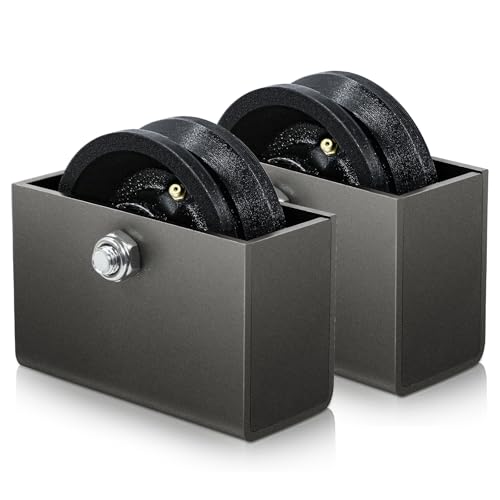
SY America 4" x 1.5" Cast Iron V-Groove Wheel with Steel Housing, 600 lbs Load Capacity Each, Heavy Duty Boxed Track Wheel for Sliding Gate, Rail System, Cart, and Machinery, Black, 2 Pack
HEAVY DUTY CAST IRON V-GROOVE WHEEL: Solid cast iron construction provides superior strength and durability, supporting up to…
As an affiliate, we earn on qualifying purchases.
As an affiliate, we earn on qualifying purchases.
Conclusion
So, as you’ve seen, aluminum and cast iron housings each have their unique thermal behaviors. But the real question remains: which material truly dominates under extreme conditions? The answer isn’t straightforward, and the choice could make all the difference in your application. Are you ready to dive deeper and uncover the hidden factors that could tip the scales? The next move could change everything—if you’re willing to explore further.
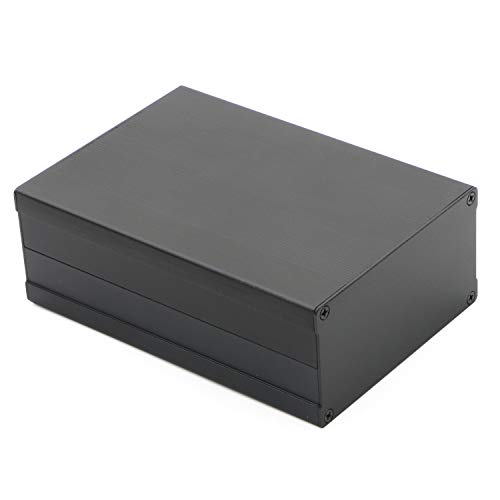
JIUWU Aluminum Project Box PCB Enclosure Case Sand Blast Reinforced Split for Audio Amplifier DIY Power Supply Signal Amplifier, 4.17×2.16×5.90 inch (LWH)
Excellent Craftsmanship: The project box is made of heavy-duty extruded aluminium construction with an aluminium enclosure to ensure…
As an affiliate, we earn on qualifying purchases.
As an affiliate, we earn on qualifying purchases.

Circuit Board PCB Instrument Aluminum Cooling Box DIY Electronic Project Enclosure Case Shell Box for Electronic Products Heat dissipating
Split Type Design: The aluminum box adopts split type design, you can assemble and design the box you…
As an affiliate, we earn on qualifying purchases.
As an affiliate, we earn on qualifying purchases.