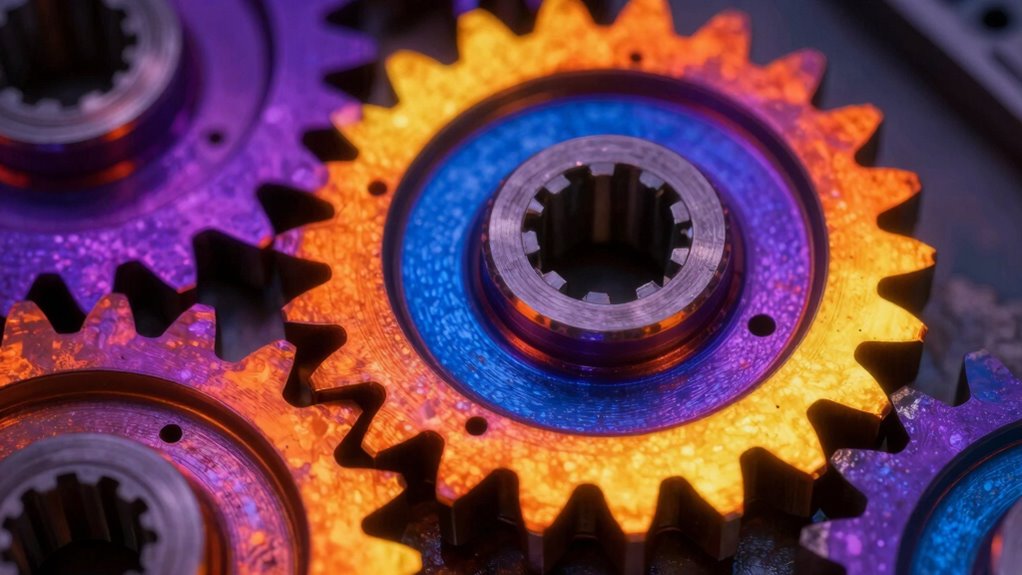
Heat discoloration on gears shows how hot they’ve gotten during use. Light straw or brown indicates moderate temperatures and proper lubrication, while dark straw and blue hues suggest higher heat levels approaching thermal limits. Purple or violet signals excessive heat, risking damage or failure. Black discoloration points to severe overheating. Recognizing these colors helps you identify issues early and take action. Keep exploring to understand what each color truly reveals about your gear’s condition.

Get garage and car supplies delivered free — and shop member deals
- Fast, free delivery on millions of items
- Access to Prime Big Deal Days deals on October 6–7
- Prime Video, Amazon Music and more included
Key Takeaways
- Light straw indicates moderate heat, usually caused by proper lubrication; darker hues suggest higher temperatures and potential issues.
- Blue and purple colors imply the gear is nearing its thermal tolerance or overheating, risking material failure.
- Black or severe discoloration signals excessive heat from lubrication failure, wear, or intense operational stress.
- Discoloration patterns, combined with surface damage like pitting or cracks, help diagnose overheating early.
- Monitoring gear surface colors helps assess thermal history and prevent damage by addressing heat-related issues promptly.
gear heat discoloration indicator
As an affiliate, we earn on qualifying purchases.
As an affiliate, we earn on qualifying purchases.
What Is Heat Discoloration on Gears?
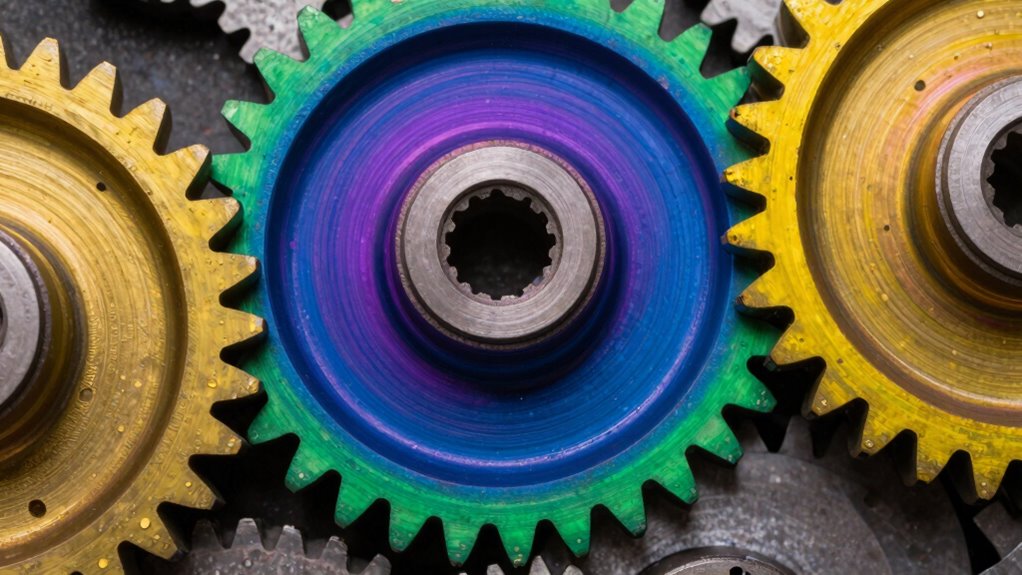
Have you ever noticed a change in the color of your gears after they’ve been in use? That’s heat discoloration, which occurs when the gear surface reaches high temperatures during operation. This change isn’t random; it results from heat affecting the material properties of the gear. When gears heat up excessively, lubrication issues often come into play, causing increased friction and localized hotspots. As the temperature rises, oxidation and thermal stress alter the gear’s surface, leading to visible discoloration. Different materials react uniquely to heat, so the color change can also indicate the gear’s material composition. Recognizing this discoloration helps you understand whether the gear has been subjected to abnormal heat levels, which could compromise its performance and lifespan. Material properties influence how heat impacts gear surfaces, making it important to consider the specific materials used in your gears. Additionally, understanding the thermal response of particular gear materials can aid in predicting and preventing potential damage caused by heat. The thermal conductivity of the material plays a significant role in how quickly heat is dissipated across the gear surface, affecting the discoloration pattern. A thorough understanding of heat transfer mechanisms can assist in designing gears that better resist discoloration and thermal stress.
As an affiliate, we earn on qualifying purchases.
What Do Different Heat Colors on Gears Mean?
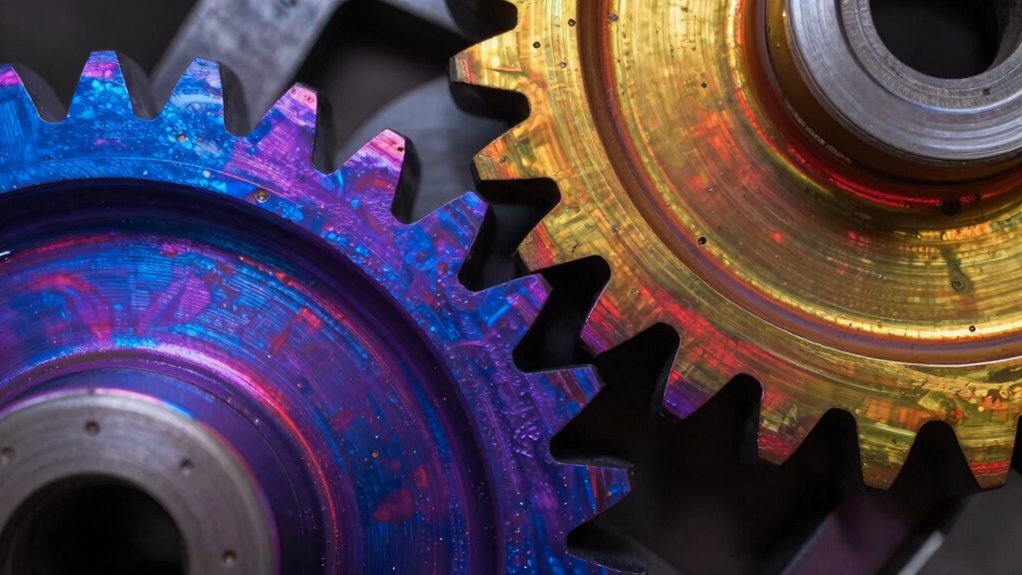
Different heat colors on gears serve as visual indicators of the temperature they’ve reached during operation. Recognizing these colors helps you assess gear condition and potential issues. For example:
Heat colors on gears reveal operating temperatures, aiding in quick condition assessment and preventing potential failures.
- Light straw suggests moderate heat, typical for well-lubricated gears.
- Dark straw indicates higher temperatures, possibly due to insufficient lubrication.
- Blue hues often mean gear material is approaching its tolerance limit.
- Purple or violet signals excessive heat, risking gear failure.
- Black discoloration points to severe overheating, often caused by lubrication effects or worn gear material.
Understanding these colors depends heavily on gear material and lubrication effects. Different materials respond uniquely to heat, altering color appearance. Proper lubrication can delay or prevent damaging heat discoloration, extending gear life and maintaining *superior* operation.
As an affiliate, we earn on qualifying purchases.
How Temperature Changes Cause Gear Color Variations
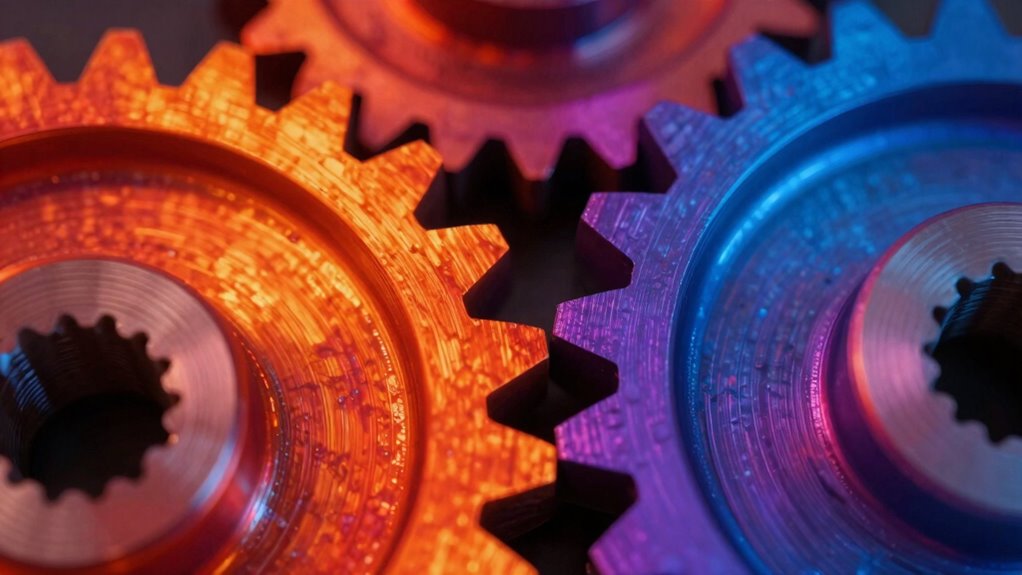
As the temperature of a gear rises during operation, its surface color changes in response to the heat absorbed by the material. This variation results from thermal expansion, which causes the metal to expand and alter its surface properties. As temperatures increase, the gear’s color shifts from light straw to deep blue, indicating higher heat levels. These changes can accelerate material fatigue, weakening the gear over time. Recognizing these color variations helps you understand the internal stresses caused by heat. Color change patterns serve as visual indicators of the gear’s thermal history and potential for wear. Additionally, understanding the thermal effects on gear materials can aid in predicting their lifespan and maintenance needs. Proper wiring practices are essential to minimize heat buildup and prevent damage in gear systems. Awareness of how heat impacts gear performance can also lead to more effective preventive maintenance strategies and extend the operational life of machinery.
gear overheating detection tools
As an affiliate, we earn on qualifying purchases.
As an affiliate, we earn on qualifying purchases.
Signs That Gear Heat Discoloration Indicates a Problem?
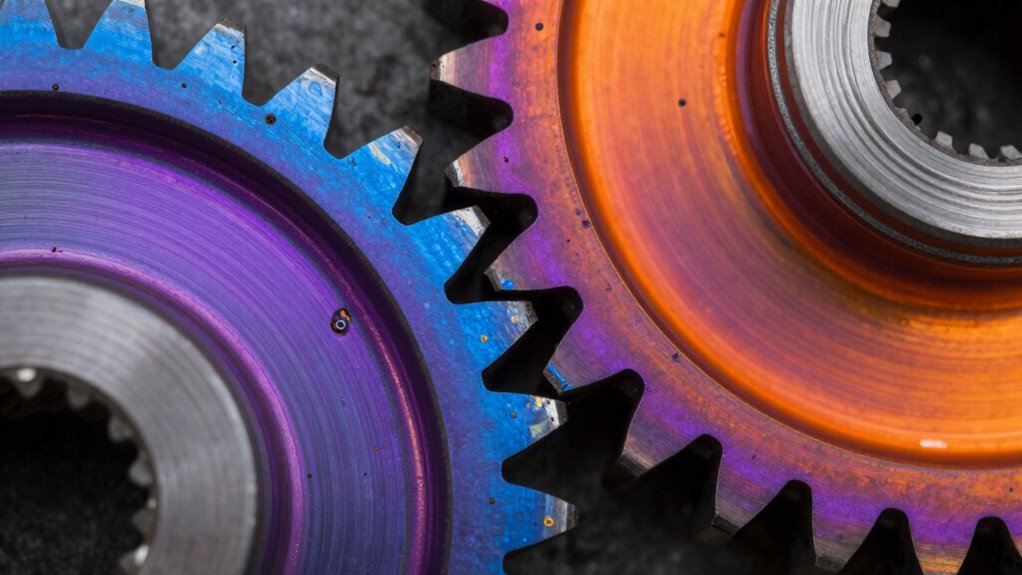
If you notice excessive wear or unusual discoloration patterns on your gears, it could signal a problem. These signs often indicate overheating or stress that may lead to gear failure. Recognizing these visual cues early helps prevent costly damage and downtime. Monitoring gear temperature can provide additional insight into potential issues before they become severe, especially when combined with visual inspection of the gear surfaces. In addition, understanding material properties can help diagnose whether the discoloration is within normal operating ranges or indicative of a developing failure. Being aware of regional flavor profiles can also aid in understanding the origins of certain metallic residues or discolorations linked to specific manufacturing processes. Moreover, awareness of spiritual symbolism associated with colors can sometimes offer intuitive insights into underlying issues.
Signs of Excessive Wear
Heat discoloration on gears often signals that excessive wear is occurring, which can compromise the gear’s performance and lifespan. If you notice this, look for signs like uneven gear movement, increased noise, or difficulty engaging gears. These issues often stem from lubrication issues or material fatigue, accelerating wear. You might also see pitting, scoring, or cracks developing on the gear surface—clear indicators of underlying problems. Proper color accuracy in inspections can help identify subtle discoloration patterns that signal early wear.
Signs of excessive wear include:
- Uneven or rough gear teeth
- Increased vibrations during operation
- Slipping or gear disengagement
- Visible surface damage or cracks
- Reduced efficiency and increased friction
Addressing these signs early helps prevent severe damage and extends gear longevity. Regular maintenance and proper lubrication are key to avoiding these wear indicators.
Unusual Discoloration Patterns
Unusual discoloration patterns on gears can reveal more than just surface changes; they often signal underlying issues with heat buildup that could lead to failure. When you see irregular colors, it might be due to the gear material reacting differently to excessive heat or inconsistent lubrication effects. For example, if a gear shows blotchy or uneven hues, it suggests localized overheating, which stresses the material and weakens its integrity. Gears made from different materials react uniquely to heat; some may turn blue, while others shift to purple or brown. These abnormal colors often indicate that lubrication isn’t effectively dissipating heat or protecting the gear surface. Recognizing these patterns early helps you identify potential problems before they cause costly damage or complete gear failure.
How to Prevent and Fix Gear Heat Discoloration
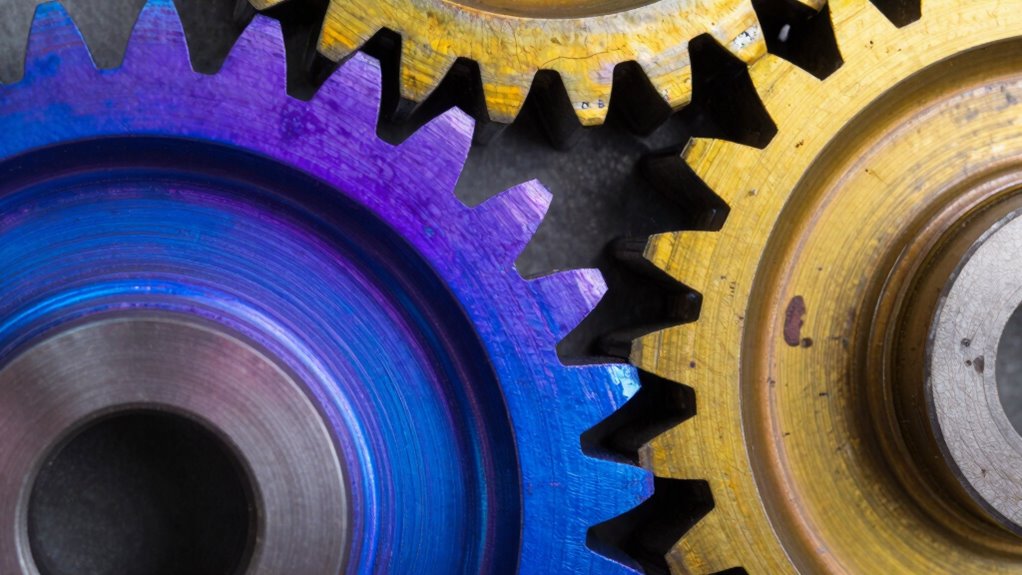
To prevent and fix gear heat discoloration, you need to control operating temperatures and guarantee proper lubrication. Effective lubrication strategies reduce friction and heat buildup, minimizing discoloration risks. Selecting the right materials for gears is vital, as some materials withstand heat better than others. Additionally, make sure your gears are well-maintained with consistent inspections. Consider these approaches:
- Use high-quality, temperature-resistant lubricants
- Apply appropriate lubrication frequency and amounts
- Opt for gear materials with good thermal properties
- Incorporate cooling systems or fans
- Regularly monitor gear temperature and wear
- Early warning signs can help detect overheating issues before discoloration occurs.
Key Takeaways for Managing Gear Heat Discoloration
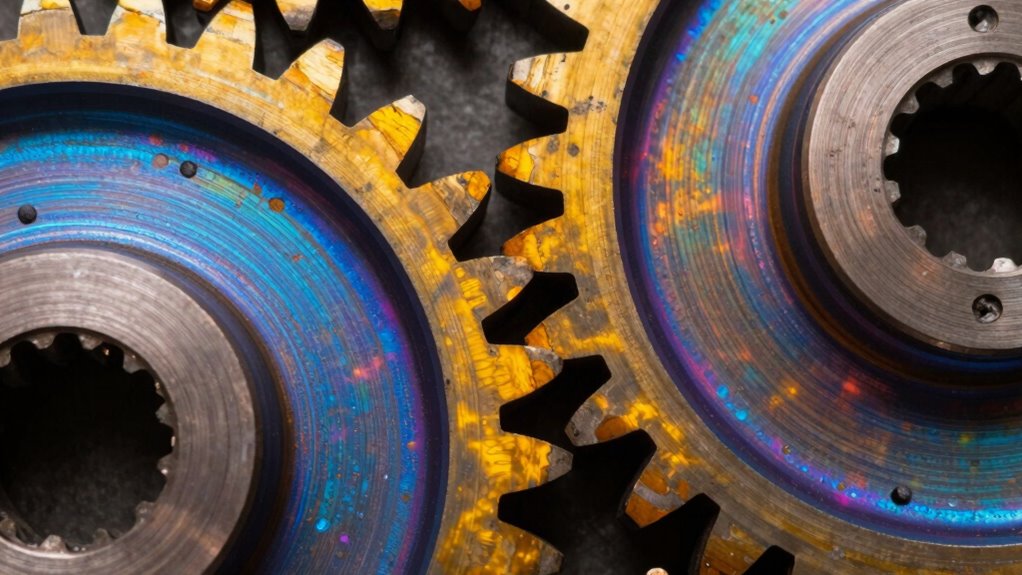
Managing gear heat discoloration effectively requires understanding the key strategies that help prevent damage and maintain ideal performance. First, implement proper lubrication strategies to reduce friction and heat buildup, ensuring the gears stay within safe temperature ranges. Regularly check and maintain lubrication levels, choosing the right type for your gear materials. Second, material selection plays a crucial role; opt for gear materials with high heat resistance and good thermal conductivity to dissipate heat efficiently. Combining these approaches helps prevent discoloration caused by overheating, extends gear lifespan, and maintains smooth operation. Additionally, consider cooling systems or modifications to reduce heat exposure in high-stress environments. By focusing on lubrication strategies and material selection, you can effectively manage heat discoloration and safeguard your gear performance.
Frequently Asked Questions
Can Heat Discoloration Affect a Gear’s Structural Integrity?
Yes, heat discoloration can affect a gear’s structural integrity. When gears experience high temperatures, thermal expansion occurs, which can lead to misalignment and increased wear. Additionally, discoloration often indicates lubrication failure, reducing friction protection. Over time, this combination weakens the gear material, increasing the risk of cracks or fractures. Addressing heat buildup and ensuring proper lubrication helps maintain gear strength and longevity.
Are Certain Gear Materials More Prone to Discoloration?
Certain gear materials are more prone to discoloration due to their material susceptibility to heat. For example, softer metals like aluminum and brass tend to discolor more easily compared to hardened steel. You can use color coding to quickly identify these differences, helping you assess potential heat exposure and material risks. By understanding these susceptibilities, you can better monitor gear conditions and prevent heat-related damage or failure.
How Long Does It Take for Heat Discoloration to Develop?
Discoloration can develop quickly, often within minutes to hours depending on heat exposure duration. The discoloration timeline varies based on factors like material and heat intensity, but generally, the longer your gears experience heat exposure, the more noticeable the color change becomes. You might see slight hues after short heat exposure, while prolonged overheating leads to more vivid and extensive discoloration. Regular monitoring helps catch these changes early.
Is Discoloration Always a Sign of Overheating or Damage?
Discoloration often signals overheating, but it isn’t always damage. About 60% of gears with color changes can be safely maintained if caught early, yet ignoring color interpretation risks severe wear. You should assess whether the hue indicates normal operation or excessive heat. Regular maintenance considerations include monitoring gear temperature and inspecting for cracks or pitting. If in doubt, consult a professional to prevent costly repairs down the line.
Can Heat Discoloration Be Reversed or Cleaned Off?
Heat discoloration on gears can’t be fully reversed or cleaned off, as it’s often a result of surface oxidation or chemical stains caused by high temperatures. To improve appearance, you can try cleaning with a gentle abrasive or chemical cleaner designed for metal surfaces. However, the discoloration might remain as a permanent sign of heat exposure. Regular maintenance and proper cooling help prevent further discoloration and damage.
Conclusion
So, next time your gears display a rainbow of colors, don’t panic—just remember it’s a sign they’re working too hard. Ironically, those vibrant hues might actually be warning you of trouble brewing beneath the surface. Keep an eye on temperature changes and take action early. After all, a little discoloration today could save you a costly repair tomorrow. Who knew a splash of color could be so telling?
Halloween Picks
halloween
As an affiliate, we earn on qualifying purchases.