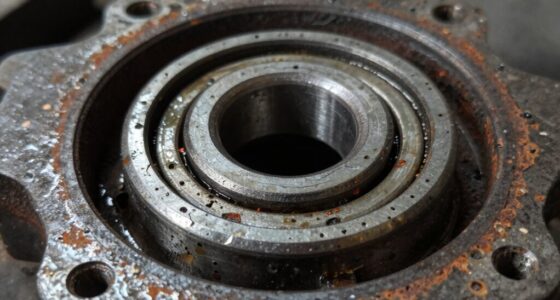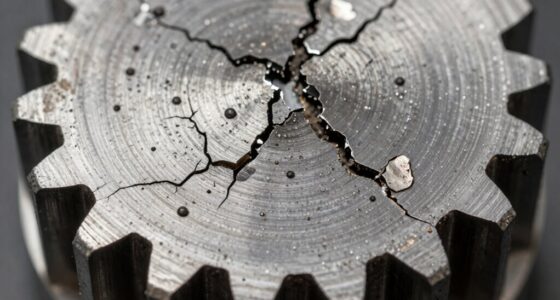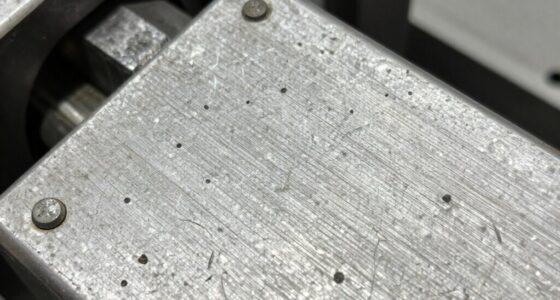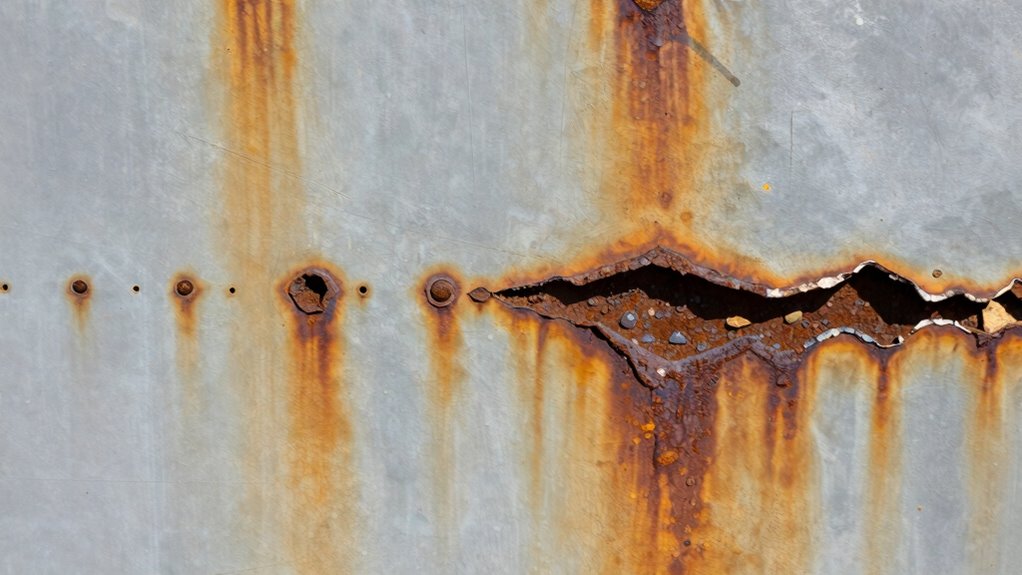

When tiny flaws like scratches or weak spots occur, they can break down protective oxide layers on metals, especially in chloride-rich environments. This exposes the metal’s surface and creates tiny, localized electrochemical cells that begin to form small pits. Over time, trapped ions and aggressive micro-environments inside these pits cause them to grow deeper and wider, turning small damage into large, visible corrosion. Continuing to explore will reveal how this process accelerates and how to prevent it.

Get garage and car supplies delivered free — and shop member deals
- Fast, free delivery on millions of items
- Access to Prime Big Deal Days deals on October 6–7
- Prime Video, Amazon Music and more included
Key Takeaways
- Small initial pits form when protective oxide layers are breached, often undetected early.
- Localized electrochemical reactions inside the pit trap ions, intensifying corrosion.
- Continuous environmental factors, like chloride levels and pH fluctuations, accelerate pit growth.
- The self-perpetuating process causes pits to deepen and widen over time.
- Early detection and preventive measures can halt progression from small damage to significant deterioration.
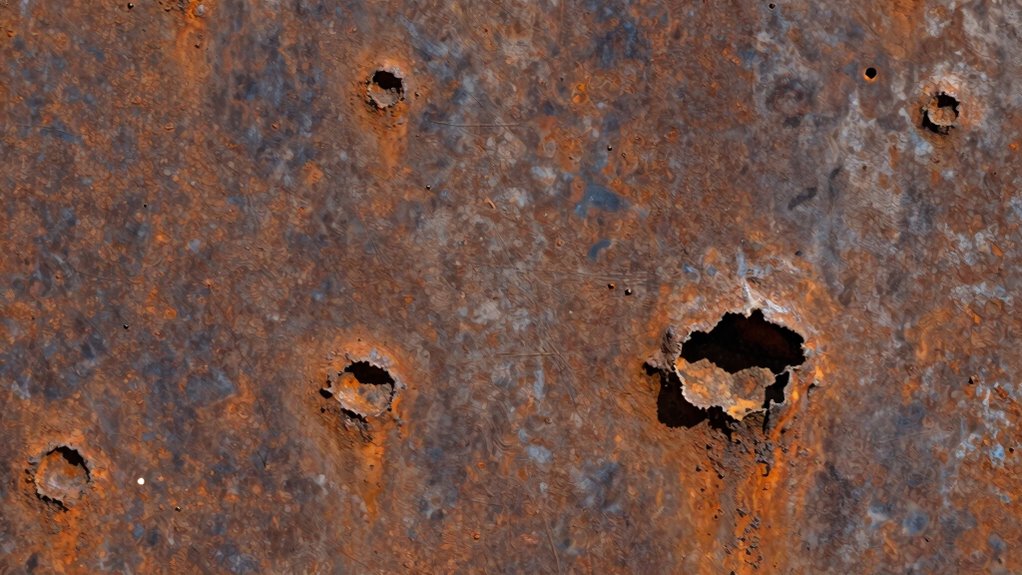
Have you ever wondered how pitting corrosion begins and progresses over time? It’s a subtle process, often starting unnoticed but capable of causing considerable damage if left unchecked. Pitting is a localized form of corrosion that results in small holes or cavities on the metal surface. To understand how these tiny defects evolve into major problems, you need to grasp the corrosion mechanisms involved. Pitting typically occurs when protective oxide layers on metals, such as stainless steel, are compromised. Factors like chloride ions, pH fluctuations, or mechanical damage can break down these barriers, exposing the metal beneath. Once the protective layer is breached, the exposed metal becomes a site for localized electrochemical reactions, creating tiny anodic areas surrounded by cathodic regions. This electrochemical imbalance fuels the corrosion process, leading to the formation of pits.
As pitting begins, it often appears as small, shallow spots that are difficult to detect early on. However, these initial pits are dangerous because they tend to concentrate corrosive agents, accelerating material loss within the confined space. The corrosion mechanisms at play involve the breakdown of passive films and the ensuing localized attack. Over time, the pits deepen and widen, sometimes penetrating significant thicknesses of material. The progression is insidious because the localized environment inside the pit becomes more aggressive—trapped chlorides and other ions intensify the corrosion. This self-perpetuating process allows the damage to grow even when the overall environment seems stable. Additionally, the passive film breakdown can be triggered by environmental factors, making it crucial to monitor conditions closely.
Preventive strategies are essential to stopping pitting before it causes structural failure. Regular inspection and maintenance are your first line of defense, helping you identify early signs of corrosion. Applying protective coatings can act as a barrier against aggressive agents, while cathodic protection systems can help reduce the electrochemical potential that drives pitting. Material selection also plays a role; using alloys with higher resistance to chloride-induced corrosion minimizes the risk. Additionally, controlling environmental factors—such as pH, chloride levels, and humidity—can considerably slow down the initiation and progression of pits. Implementation of these strategies isn’t just about fixing problems after they happen; it’s about creating conditions that make pitting less likely to start in the first place. By understanding the corrosion mechanisms behind pitting and adopting preventive strategies, you can extend the lifespan of your equipment and avoid costly repairs caused by small damage turning into big damage over time.
stainless steel corrosion protection coating
As an affiliate, we earn on qualifying purchases.
As an affiliate, we earn on qualifying purchases.
Frequently Asked Questions
Can Pitting Corrosion Be Completely Reversed?
You can’t fully reverse pitting corrosion once it occurs, but you can prevent further damage. Corrosion prevention methods like applying protective coatings or using corrosion-resistant materials help stop pitting from worsening. Proper material selection is vital; choose alloys or metals designed to resist pitting. Regular inspections and maintenance also play a key role in managing existing corrosion and preventing it from progressing into more serious damage.
What Industries Are Most Affected by Pitting Progression?
You’re likely aware that the oil and gas industry faces significant challenges from pitting progression. Imagine a refinery pipeline developing tiny corrosion pits that gradually worsen, risking leaks and shutdowns. This industrial impact leads to costly repairs and safety hazards. The economic consequences are severe, affecting production schedules and maintenance budgets. Such vulnerabilities highlight how pitting damage can escalate, emphasizing the importance of early detection and corrosion management in critical sectors.
How Does Environmental Exposure Influence Pitting Growth?
Environmental exposure accelerates pitting growth by exposing your materials to corrosive elements like salt, moisture, and chemicals. To combat this, you should use corrosion inhibitors and apply protective coatings that create a barrier against these aggressive agents. Regular inspections help you catch early signs of pitting, preventing small damage from escalating into major issues. Proper environmental management and maintenance are key to slowing down pitting progression and extending your equipment’s lifespan.
Are There Early Signs to Detect Pitting Damage?
You might think pitting damage is hard to spot early, but surface inspection and material testing reveal telltale signs. Look for tiny pits, discoloration, or surface roughness—these are your warning signs. Conduct regular visual checks and use non-destructive testing methods to catch pitting early. Catching it early means you can prevent small issues from escalating into costly, major damage, saving both time and resources.
What Advanced Techniques Are Used to Monitor Pitting Progression?
You can use advanced techniques like electrochemical analysis and non-destructive testing to monitor pitting progression. Electrochemical analysis helps detect corrosion activity and metal loss, while non-destructive testing methods such as ultrasonic testing, eddy current, and radiography allow you to assess damage without harming the component. Regularly applying these techniques enables you to identify early signs of pitting and track its development, preventing costly failures.
cathodic protection system for metal
As an affiliate, we earn on qualifying purchases.
As an affiliate, we earn on qualifying purchases.
Conclusion
As you see, small scratches and subtle surface slips swiftly shift into severe strikes, showcasing the silent strength of pitting progression. By spotting the signs and staying vigilant, you can prevent potential problems from piling up and becoming bigger, costly calamities. Remember, maintenance means monitoring minor marks before they morph into major messes. Stay sharp, stay safe, and stop small setbacks from spiraling into serious struggles. Protect your equipment, and patience will pay off with pristine performance.
metal pitting corrosion detection tools
As an affiliate, we earn on qualifying purchases.
As an affiliate, we earn on qualifying purchases.
metal protective paint for chloride environments
As an affiliate, we earn on qualifying purchases.
As an affiliate, we earn on qualifying purchases.
Halloween Picks
halloween
As an affiliate, we earn on qualifying purchases.