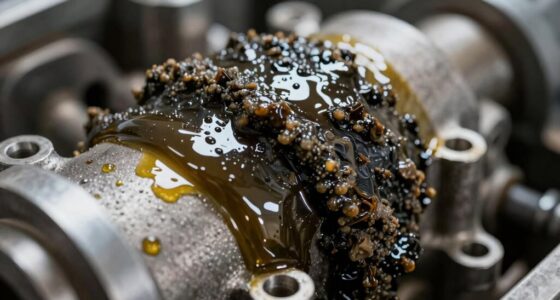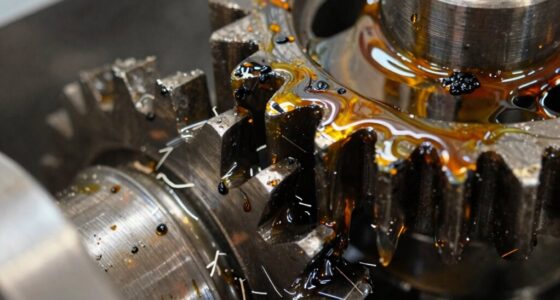

Base oil groups differ mainly in their refining process and chemical makeup, impacting gear oil performance. Group I oils, produced via solvent extraction, contain more impurities and are less stable. Group II oils, made through hydroprocessing, are cleaner and offer better performance. Group III oils are highly refined and provide excellent oxidative stability. Group IV oils are synthetic, offering superior low-temperature performance. Group V covers specialty oils. Understanding these distinctions helps you choose the right gear oil. Keep exploring to learn more details.
Key Takeaways
- Base oil groups are classified from I to V based on refining processes and chemical composition.
- Group I oils are solvent-extracted, contain higher sulfur and aromatics, and are less refined.
- Group II and III oils undergo hydroprocessing or hydrocracking for higher purity and stability.
- Group IV includes synthetic PAO oils with superior performance in low temperatures and oxidation resistance.
- Group V encompasses specialty oils like esters, mainly used as blending components for specific gear oil properties.

Have you ever wondered how base oils are classified for different lubrication needs? Understanding this classification is vital, especially when selecting gear oils for specific applications. Base oil groups are primarily determined by their manufacturing processes and chemical composition, which influence not only performance but also how well they work with various additives. These factors are key to ensuring excellent lubrication, wear protection, and longevity of your gear systems.
Understanding base oil classifications helps optimize gear oil performance and compatibility.
There are five main groups of base oils, numbered I through V, each with distinct manufacturing processes. Group I oils are produced through solvent extraction, resulting in a relatively high sulfur and aromatic content. They are the least refined and generally more economical but may lack the purity and stability of higher groups. Group II oils are made via hydroprocessing, which removes impurities like sulfur and aromatics, producing a more refined oil with better performance characteristics. Group III oils undergo further hydrocracking, making them even more refined, offering excellent oxidative stability and low volatility. These are often called synthetic oils in some contexts, though technically they are highly refined mineral oils.
Group IV oils are synthetic polyalphaolefins (PAOs), created through chemical synthesis rather than refining. They provide superior low-temperature performance, oxidation resistance, and longer service life. Group V oils encompass all other base oils not classified in the first four groups, including esters, aromatic oils, and other specialty oils. They are often used as blending components or for specific applications requiring unique properties.
When selecting a base oil for gear oils, consider how the manufacturing process impacts additive compatibility. Higher-quality oils, like those from Groups II through V, generally offer better compatibility with modern additive packages, including anti-wear agents and antioxidants. Compatibility is essential because incompatible additives can cause issues such as thickening, sediment formation, or reduced effectiveness. For example, synthetic oils like PAOs (Group IV) tend to work well with a wide range of additives, ensuring your gear oil maintains its protective properties over time.
Additionally, understanding the manufacturing process behind each base oil group helps in predicting its performance and longevity. Compatibility is essential because incompatible additives can cause issues such as thickening, sediment formation, or reduced effectiveness. For example, synthetic oils like PAOs (Group IV) tend to work well with a wide range of additives, ensuring your gear oil maintains its protective properties over time.
In contrast, lower-quality oils like Group I may require careful additive selection to prevent adverse reactions. The manufacturing process influences not just performance but also how additives interact, which ultimately affects the lubricant’s effectiveness and service life. When choosing a gear oil, understanding these classifications helps you make informed decisions that align with your equipment’s demands, ensuring reliable operation and minimizing maintenance costs.

Generic Republic Oil Red Synthetic PAO EP00 High Temp Grease 35LB | Compare to SHC 007 | ISO 460 Base Oil | Industrial | Trailer Hub | Lithium Complex | Gear Box Cases
Red Synthetic "PAO" EP00 Grease
As an affiliate, we earn on qualifying purchases.
As an affiliate, we earn on qualifying purchases.
Frequently Asked Questions
How Do Base Oil Groups Affect Gear Oil Performance?
Base oil groups influence gear oil performance by affecting viscosity compatibility and additive solubility. Higher-quality Group III oils offer better viscosity stability under varying temperatures, ensuring smooth gear operation. They also enhance additive solubility, preventing deposit formation and corrosion. Conversely, lower groups may lead to reduced viscosity control and poor additive dispersion, increasing wear and decreasing gear lifespan. Choosing the right group optimizes lubrication, protection, and overall gear efficiency.
Are Synthetic Base Oils Always Better for Gear Applications?
Synthetic base oils aren’t always better for gear applications, but they offer significant synthetic benefits, like improved thermal stability, lower pour points, and better oxidation resistance. These advantages come from advanced base oil chemistry, which enhances gear oil performance, especially under high stress or extreme temperatures. However, depending on your specific needs and operating conditions, conventional oils may still be suitable. So, assess your gear’s demands before choosing synthetic or conventional options.
How Do Base Oil Groups Influence Gear Oil Longevity?
Base oil groups greatly influence gear oil longevity by affecting additive compatibility and manufacturing standards. Higher group oils, like Group III and IV, typically offer better stability, enhanced performance, and longer service life. These oils maintain their protective qualities over time, resist oxidation, and reduce wear. Choosing the right group ensures your gear oil aligns with manufacturing standards, providing ideal protection and extending the oil’s effective lifespan.
What Are Environmental Impacts of Different Base Oil Groups?
Different base oil groups impact the environment mainly through environmental toxicity and renewable sourcing. Group I oils may release more toxins during disposal, affecting soil and water. Group III oils, often derived from more sustainable processes, reduce environmental harm. Choosing oils with renewable sourcing minimizes ecological footprints, while selecting low-toxicity options helps protect ecosystems. Your awareness of these factors can guide eco-friendly decisions in gear oil use and disposal.
Can Base Oil Group Classifications Change Over Time?
You might think base oil classification stays fixed, but it can alter over time as industry standards evolve. Advances in technology and environmental regulations push the industry to reassess and update classifications. This ensures gear oils meet new performance and sustainability demands. So, while your current classification might seem steady, it’s subject to change as the industry adapts to innovations and stricter standards, keeping your gear oils up-to-date.

Quicksilver SAE 90 High Performance Gear Lube for Outboards and Sterndrives, 32 oz
Lower unit gear oil formulated to protect against corrosion and excessive wear
As an affiliate, we earn on qualifying purchases.
As an affiliate, we earn on qualifying purchases.
Conclusion
Understanding the base oil groups helps you choose the right gear oil, but it’s no coincidence that most high-quality options often fall into Group III or IV. When you realize how these distinctions impact performance and longevity, it’s clear that selecting the right base oil isn’t just luck — it’s a smart move. Sometimes, the best choice aligns perfectly with your needs, proving that knowledge truly makes all the difference.
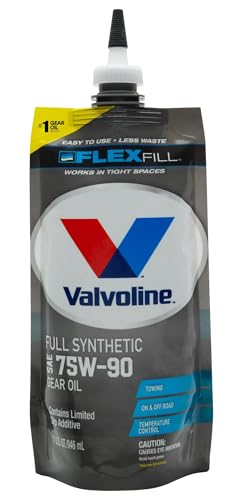
Valvoline FlexFill Advanced Full Synthetic Full Synthetic 75W-90 Gear Oil 1 QT FlexFill
FlexFill squeezable pouch releases 2X more fluid with less effort for 3X faster filling vs. traditional bottle packaging
As an affiliate, we earn on qualifying purchases.
As an affiliate, we earn on qualifying purchases.

Red Line 58204 Heavy Shockproof Gear Oil – 1 Quart
FULLY-SYNTHETIC FORMULAS – created from polyol ester base stocks, offer excellent lubrication under extreme conditions
As an affiliate, we earn on qualifying purchases.
As an affiliate, we earn on qualifying purchases.