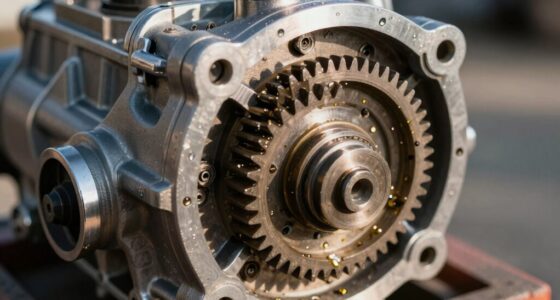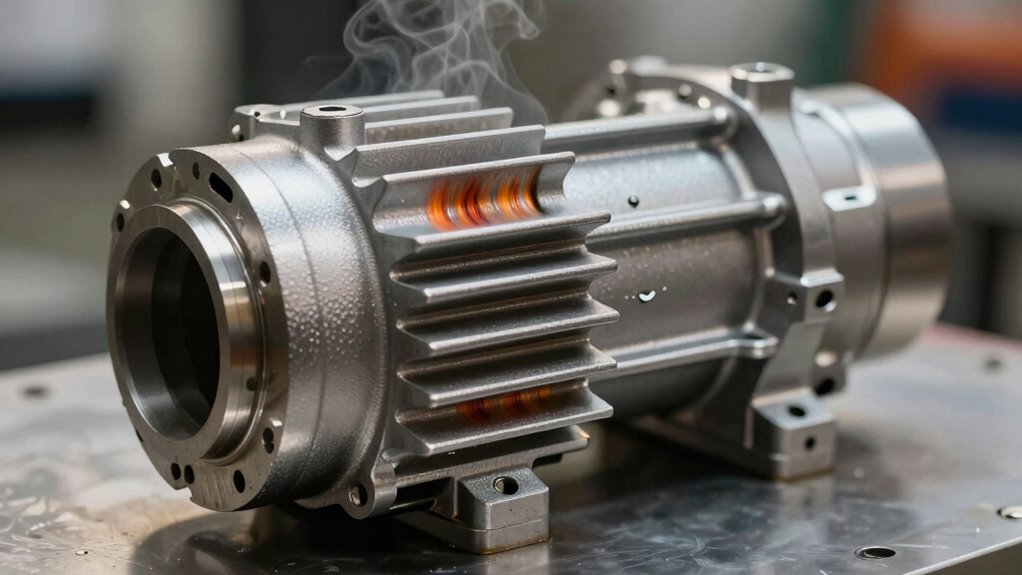

Gearboxes lose heat mainly through conduction and convection. Heat from friction and electrical resistance spreads inside the gears and housing via conduction, especially if high-conductivity materials are used. Then, convection carries the heat away at surfaces—either naturally as warm air rises or forced with fans or liquid coolants. Improving these pathways helps keep gearboxes cool and functioning smoothly. Keep exploring to discover how these processes work together to protect your machinery.
Key Takeaways
- Heat in gearboxes primarily dissipates through conduction within metal components and to external surfaces.
- Convection removes heat from gearbox surfaces via natural airflow or forced cooling methods like fans.
- Liquid cooling systems circulate coolants to absorb and transfer heat away from hot gearbox parts.
- Material choice and contact quality influence the efficiency of thermal conduction inside gearboxes.
- Effective heat dissipation combines conduction and convection to prevent hotspots and enhance equipment longevity.
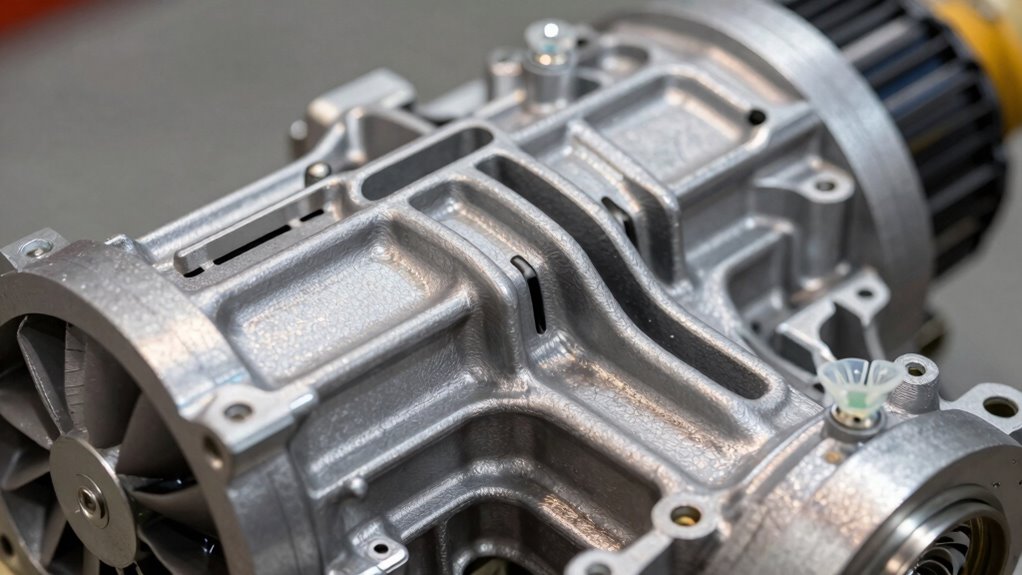
Have you ever wondered how heat escapes from electronic devices or machinery? It might seem straightforward, but the process involves several complex pathways that work together to keep equipment cool. When a machine operates, it generates heat through friction, electrical resistance, or chemical reactions. To prevent overheating, this heat needs to be efficiently transferred away from critical components. Two primary mechanisms facilitate this transfer: thermal conduction and convection. Understanding how these pathways work helps you appreciate the design choices behind effective heat dissipation in gearboxes and other machinery.
Thermal conduction is the process where heat moves through solid materials. Imagine touching a hot pan—heat travels from the pan’s surface to your hand, and in machinery, heat flows from hot spots inside the gearbox to cooler external surfaces. Materials with high thermal conductivity, such as metals like aluminum or copper, serve as excellent conductors, quickly transferring heat away from the source. In gearboxes, heat generated by gear meshing, bearing friction, or motor operation spreads through metal casings, gears, and shafts via conduction. This transfer is direct and essential for spreading heat evenly, preventing localized hot spots that could cause damage or reduce efficiency. The efficiency of thermal conduction depends on the material properties and the contact quality between different components. Proper thermal contact ensures minimal resistance, allowing heat to flow smoothly from hotter to cooler regions.
Convection mechanisms come into play once heat reaches the surface of the gearbox or other components. Convection involves the movement of fluids—air or liquid—carrying heat away from surfaces. In many gearboxes, air plays a significant role. As the surface heats up, it warms the surrounding air, causing it to rise and be replaced by cooler air in a continuous cycle. This natural convection helps carry heat away from the external casing. For enhanced cooling, fans or forced airflow are often used to increase convection rates, considerably improving heat removal. Liquid cooling systems, like oil baths or coolant channels, employ liquid convection, which is far more efficient than air. The circulating fluid absorbs heat from the hot surfaces and transports it to radiators or cooling fins, where it dissipates into the environment. This process not only cools the gearbox but also maintains ideal operating temperatures, ensuring longevity and reliability. Using thermal management strategies can significantly optimize these pathways and improve overall system performance.
In essence, heat dissipation in gearboxes relies on a combination of thermal conduction within solid components and convection mechanisms at the surfaces. These pathways work seamlessly to transfer heat away from critical parts, preventing failure and optimizing performance. By understanding and improving these paths—using better materials, enhanced airflow, or liquid cooling—you’re actively contributing to more efficient, durable machinery. Recognizing these mechanisms helps you make smarter design choices, whether in maintenance, upgrades, or troubleshooting, ensuring your gearboxes stay cool under pressure.

USANOOKS Microfiber Cleaning Cloth Grey - 12 Pcs (12.5"x12.5") - High Performance - 1200 Washes, Ultra Absorbent Microfiber Towel Weave Grime & Liquid for Streak-Free Mirror Shine - Car Washing Cloth
- High Absorbency Microfiber: Locks in 8-10x its weight in liquids
- Durable 2.5mm Thick Design: Enhanced grip and longevity during cleaning
- Lint-Free and Scratch-Resistant: Ensures streak-free, mirror-like shine
As an affiliate, we earn on qualifying purchases.
Frequently Asked Questions
How Does Lubricant Choice Affect Heat Dissipation?
Your lubricant choice considerably impacts heat dissipation. Thinner lubricants with low viscosity allow heat to transfer more efficiently, preventing overheating. Conversely, thicker lubricants with high viscosity trap heat, reducing cooling efficiency. Additives in lubricants can enhance thermal properties, helping dissipate heat better. By selecting the right viscosity and additives, you optimize heat transfer, maintain gear performance, and prolong gear life, ensuring your gearbox stays cool and operates smoothly.
Can External Cooling Methods Enhance Gearbox Heat Loss?
Yes, external cooling methods can substantially enhance gearbox heat loss. You can add cooling fins to increase surface area, promoting better heat transfer. Installing external fans helps by actively moving air over the gearbox, removing heat more efficiently. These methods work together to lower operating temperatures, improve performance, and extend the lifespan of your gearbox. Regularly maintaining and optimizing these cooling solutions ensures consistent and effective heat dissipation.
What Role Do Gear Design Changes Play in Heat Management?
Imagine you’re in a medieval blacksmith’s shop, but instead of forging swords, you’re designing gearboxes. Your gear design changes can markedly improve heat management by optimizing load distribution and reducing material fatigue. You might choose gear materials with better thermal properties or alter tooth geometry to spread stress evenly, decreasing hotspots. These modifications help gearboxes shed heat more effectively, extending their lifespan and ensuring smoother operation under heavy loads.
How Does Ambient Temperature Influence Heat Dissipation Efficiency?
Ambient temperature considerably influences heat dissipation efficiency in gearboxes. When the surrounding temperature increases, your gearbox struggles to transfer heat away effectively because of decreased thermal conductivity and less effective airflow optimization. Cooler environments help maintain ideal heat transfer, preventing overheating. To improve cooling, you should enhance airflow, use materials with better thermal conductivity, and guarantee proper ventilation, especially in hotter ambient conditions.
Are There Predictive Tools for Estimating Heat Loss in Gearboxes?
Yes, you can use thermal modeling and predictive algorithms to estimate heat loss in gearboxes. These tools analyze factors like temperature, material properties, and operating conditions to forecast heat dissipation accurately. By applying thermal modeling, you get a detailed understanding of heat flow, while predictive algorithms help you anticipate potential overheating issues. This approach enables you to optimize cooling strategies and improve gearbox performance effectively.

HOMEXCEL Microfiber Cleaning Cloth 12 Pack, 12.5 x 12.5 inch Microfiber Towels for Cars, Ultra Absorbent Washing Cloth, Lint Free Streak Free Cleaning Rags for Car, Kitchen, and Window (Grey)
- High Water Absorption: Excellent dirt and liquid absorption
- Gentle on Surfaces: Soft fabric prevents scratches
- Quick Drying: Rapidly absorbs water for streak-free drying
As an affiliate, we earn on qualifying purchases.
Conclusion
Remember, understanding how gearboxes lose heat isn’t just technical—it’s about staying ahead. By knowing the heat dissipation paths, you can optimize performance and prevent failures. As the saying goes, “A stitch in time saves nine.” Keep an eye on these pathways, and you’ll keep your gearboxes running smoothly, longer. Don’t wait for problems to surface—address heat management now, and you’ll save yourself time, money, and headaches down the road.

Amazon Basics Microfiber Car Drying Towels, Highly Absorbent, Lint Free, Scratch Free, Ultra-Soft, Car Detailing, Buffing and Polishing, 16" x 16", Yellow, 12-Pack
- Pack Size: 12 towels per pack
- Towel Dimensions: 16 x 16 inches
- Design: Double-sided with high and low pile
As an affiliate, we earn on qualifying purchases.
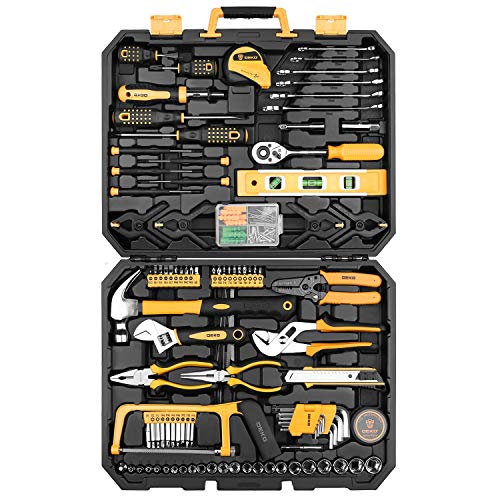
DEKOPRO 228 Piece Socket Wrench Auto Repair Tool Combination Package Mixed Tool Set Hand Tool Kit with Plastic Toolbox Storage Case
- High-Quality Steel Construction: Forged, chrome-finished, corrosion-resistant tools
- Comprehensive Tool Variety: Includes wrenches, ratchets, sockets, screwdrivers, and more
- Complete Repair Kit: Suitable for DIY, home, garage, and professional use
As an affiliate, we earn on qualifying purchases.