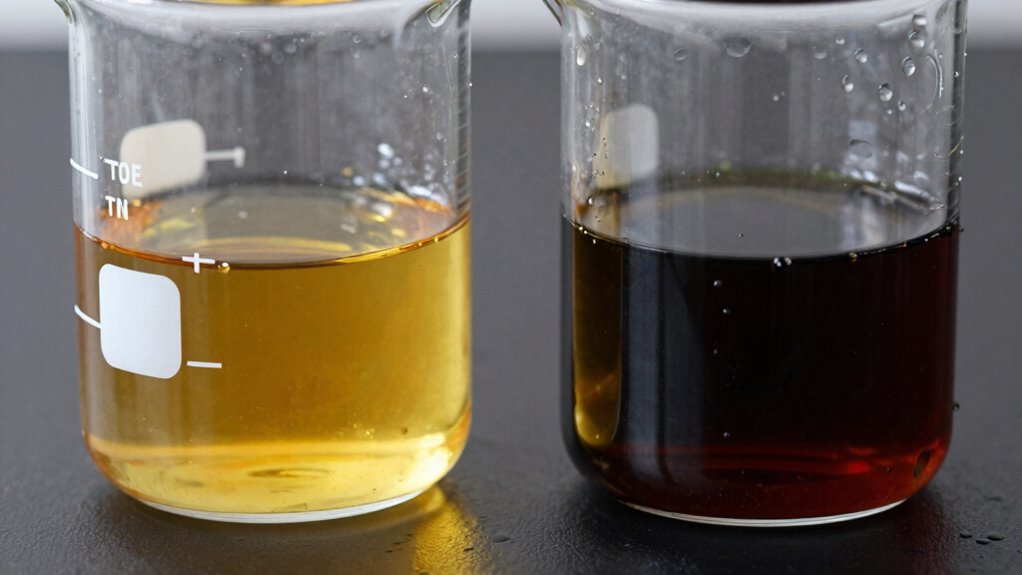

Pour point shows the lowest temperature where your gear oil stays pourable, while cold cranking measures how easily it flows when starting a cold engine. These properties differ because pour point focuses on the oil’s ability to remain liquid, and cold cranking relates to how well the oil moves under starting force. Understanding these behaviors helps you select the right oil for cold conditions. Keep exploring to get a clearer picture of how additives and viscosity influence performance.
Open a free Amazon Business account
Business pricing, bulk buying and tax-exempt orders.
As an affiliate, we earn on qualifying purchases.
Key Takeaways
- Pour point indicates the lowest temperature where oil remains pourable; cold cranking measures oil flow under startup conditions in cold temperatures.
- Oils with low pour points prevent solidification, while good cold cranking properties ensure easy engine or gear system startup.
- Viscosity index and additive technology influence how oil behaves at low temperatures, affecting both pour point and cranking performance.
- An oil’s pour point relates to its flowability when stationary, whereas cold cranking assesses flow under dynamic startup forces.
- Proper formulation with additives enhances low-temperature flow, making gear oils behave differently in cold conditions.
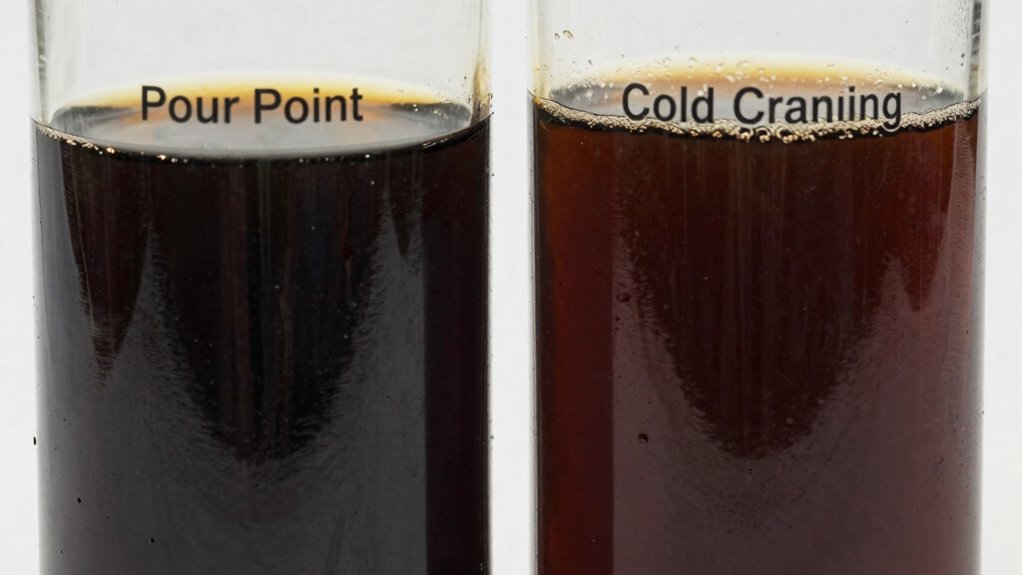
Understanding how gear oils perform in cold temperatures is essential for ensuring ideal machinery operation. When temperatures drop, the way gear oils behave can significantly impact the efficiency and longevity of your equipment. Two key factors in this behavior are the pour point and cold cranking properties. The pour point indicates the lowest temperature at which the oil remains pourable, while cold cranking refers to the oil’s ability to flow under the force of starting a cold engine or gear system. These characteristics are influenced heavily by the oil’s viscosity index and additive technology.
The viscosity index measures how much an oil’s viscosity changes with temperature. A high viscosity index means the oil maintains a more consistent thickness across a wide temperature range. This stability is crucial in cold conditions because it ensures the gear oil remains fluid enough to lubricate moving parts without becoming too thin or too thick. When selecting gear oils, you want one with a high viscosity index to prevent issues like increased wear during cold starts or sluggish operation because of overly thick oil. Additive technology plays a vital role here, as modern additive packages are designed to enhance low-temperature performance. These additives can improve the oil’s flow characteristics at low temperatures, effectively lowering the pour point and making sure the oil stays pumpable and able to circulate quickly when cold.
In colder climates, if the gear oil has a poor pour point, it risks solidifying or becoming too viscous, which leads to increased stress on the gear system during startup. This can cause wear, reduce efficiency, and even damage components over time. Conversely, if the oil can’t maintain its flow—despite a low pour point—it won’t adequately lubricate gears during initial operation, leading to increased friction and potential failure. That’s why selecting an oil with advanced additive technology that improves its cold cranking properties is essential. These additives often include pour point depressants and viscosity modifiers that work together to ensure the oil flows smoothly at low temperatures. Additionally, understanding how the viscosity index influences flow behavior can help in choosing the optimal gear oil for cold environments.
Ultimately, understanding how the viscosity index and additive technology influence gear oil behavior in cold conditions helps you make informed choices. You want an oil that not only resists thickening but also flows readily during startup, protecting your machinery and maintaining optimal performance. Recognizing these factors ensures you select gear oils tailored for cold climates, minimizing downtime and extending the lifespan of your equipment.
As an affiliate, we earn on qualifying purchases.
Frequently Asked Questions
How Do Additive Packages Influence Gear Oil Behavior?
You’ll find that additive packages, with their specialized additive chemistry, notably influence gear oil behavior. They enhance properties like lubricity and oxidation resistance, especially at low temperatures. Plus, good additive longevity ensures these benefits last longer, helping the oil perform consistently during cold starts and under heavy loads. By choosing gear oils with well-formulated additive packages, you ensure better protection, smoother operation, and extended oil life.
Can Temperature Fluctuations Affect the Pour Point and Cold Cranking Differently?
Did you know that temperature fluctuations can impact pour point and cold cranking differently? You’ll notice viscosity stability drops as temperatures rise, due to thermal expansion weakening oil structure, making it harder for the oil to flow at low temperatures. Conversely, cold cranking performance depends on how quickly the oil thickens as it cools. So, these variations influence gear oil behavior, affecting engine start-up and lubrication efficiency in diverse conditions.
Are Synthetic Gear Oils More Reliable Than Mineral Oils in Extreme Conditions?
Synthetic gear oils are generally more reliable than mineral oils in extreme conditions. You’ll find that synthetic oils outperform mineral oils because they resist breakdown at high temperatures and maintain better flow in cold weather. Synthetic vs mineral compares favorably, as synthetic oils offer enhanced stability, reduced wear, and longer-lasting lubrication. If you operate your equipment in harsh environments, choosing synthetic gear oil guarantees better reliability and protection for your gears.
How Does Gear Design Impact Oil Performance at Low Temperatures?
Think of your gear system like a dance team; perfect timing and contact matter. Your gear design influences how well the lubrication film forms at low temperatures, affecting gear contact. If gears are designed with tighter clearances or specific tooth profiles, they can maintain better oil flow and reduce friction when it’s cold. This guarantees the oil stays effective, preventing wear and helping your equipment perform smoothly even in freezing conditions.
What Maintenance Practices Optimize Gear Oil Performance Over Time?
You should follow regular lubrication schedules to guarantee ideal gear oil performance and prevent breakdowns. Check oil levels frequently and replace or top off as needed, especially before cold seasons. Contamination prevention is essential—use proper seals and filters to keep water and dirt out. Proper maintenance keeps the oil’s viscosity stable, reduces wear, and extends gear life, ensuring your equipment runs smoothly even in low temperatures.
As an affiliate, we earn on qualifying purchases.
Conclusion
Understanding pour point and cold cranking helps you choose the right gear oil, but remember, these specs tell only part of the story. While a low pour point means the oil flows easily in cold temperatures, a high cold cranking value ensures your engine starts smoothly even in harsh conditions. Don’t just focus on one; see them as complementary. Ultimately, selecting the right oil balances both, so your vehicle performs reliably no matter how cold it gets.
As an affiliate, we earn on qualifying purchases.
As an affiliate, we earn on qualifying purchases.
Flea & tick season Picks
flea and tick prevention
As an affiliate, we earn on qualifying purchases.