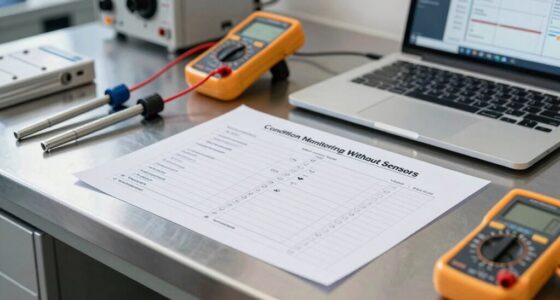

To write effective maintenance findings that help later, focus on capturing specific details about the failure, including what happened, when, and under what conditions. Use clear, precise language and include relevant data like measurements or test results. Describe the issue’s impact and link it to possible process or equipment causes. Proper documentation makes troubleshooting easier and supports future improvements. Keep learning how to refine your notes for better clarity and usefulness.

Get business pricing on garage and car supplies
- Business-only prices and quantity discounts
- Tax-exempt purchasing
- Multiple users, one account, clear invoices
Key Takeaways
- Use specific, factual language to clearly describe what failed, when, and under what conditions.
- Document detailed troubleshooting steps, observations, and test results for comprehensive understanding.
- Connect equipment failures to potential process issues, highlighting root causes rather than symptoms.
- Include relevant data, measurements, and visual evidence to support findings and analysis.
- Recommend targeted corrective actions and process improvements to facilitate future prevention and maintenance.
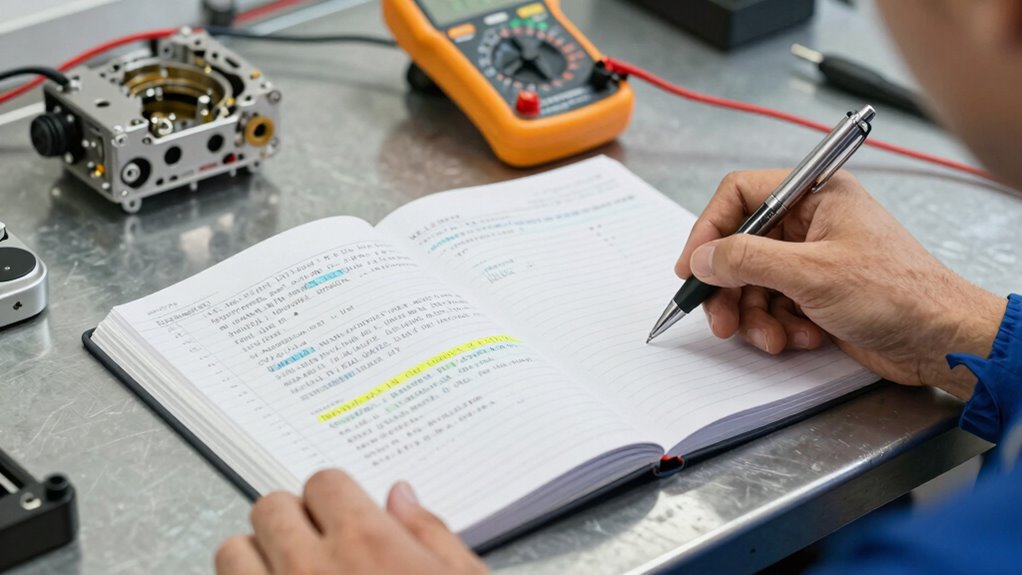
Have you ever wondered how organizations identify and resolve the underlying issues behind recurring problems? The key often lies in effective root cause analysis, which involves digging deep into the problem rather than just addressing surface symptoms. When equipment failure keeps happening or production stalls unexpectedly, it’s tempting to replace parts or adjust procedures without understanding why the failure occurred in the first place. That’s where well-written maintenance findings, or root cause notes, come into play. They serve as a record of what was discovered during troubleshooting, providing clarity for future reference and helping prevent similar problems from recurring.
To write meaningful root cause notes, you need to focus on capturing specific details about the failure or issue. Describe what failed, when it happened, and under what conditions. For example, if a conveyor belt keeps breaking down, note the exact circumstances—was the load too heavy? Was a particular part worn out? Including these specifics helps identify patterns and prevents assumptions from clouding judgment. When you document equipment failure, it’s essential to connect it to process optimization. Sometimes, recurring failures aren’t just isolated incidents but signs that the overall process needs adjustment. Maybe the maintenance schedule is too infrequent, or the operating parameters are too aggressive for the equipment’s design. Your notes should highlight these links, pointing out how process inefficiencies may contribute to repeated failures.
Capture specific details and link failures to process issues to prevent recurring problems.
Clear, concise language is crucial—avoid vague statements like “something went wrong.” Instead, specify what went wrong and why it matters. Use active voice to make your notes direct and easy to interpret. For example, instead of writing, “The machine was causing issues,” say, “The motor overheated due to insufficient cooling, leading to shutdowns.” This precision not only clarifies the root cause but also guides future actions. When documenting your findings, include all relevant data—measurements, visual inspections, and test results. This thorough approach ensures that anyone reviewing the notes understands the problem’s scope and can draw logical conclusions. Additionally, understanding how to properly dispose of equipment and materials after failure can prevent environmental issues and promote sustainability in maintenance practices.
Finally, your root cause notes should recommend corrective actions based on your findings. If equipment failure is linked to process issues, suggest adjustments like routine lubrication, better training for operators, or upgraded components. These notes then become a roadmap for continuous process optimization, reducing downtime and preventing costly failures down the line. By diligently writing detailed, accurate maintenance findings, you create a valuable knowledge base that helps your team resolve issues faster and improve overall equipment reliability.
maintenance troubleshooting tools
As an affiliate, we earn on qualifying purchases.
As an affiliate, we earn on qualifying purchases.
Frequently Asked Questions
How Do Root Cause Notes Impact Future Maintenance Planning?
Your fault documentation in root cause notes directly influences future maintenance planning. Clear, detailed findings help you identify patterns and recurring issues, enabling you to develop more effective maintenance strategies. When you accurately record causes and solutions, you reduce downtime and prevent similar faults. This proactive approach ultimately leads to more efficient resource allocation, improved equipment reliability, and better overall maintenance management.
What Are Common Mistakes to Avoid When Writing Root Cause Notes?
You should avoid using incorrect terminology and vague descriptions when writing root cause notes. These mistakes can lead to confusion and misinterpretation later. Be precise with technical language and clearly describe the issue, cause, and corrective actions. Don’t assume others will understand ambiguous details. Instead, focus on providing detailed, accurate, and consistent information to guarantee your notes are useful for future maintenance planning.
How Detailed Should Root Cause Notes Be for Effective Use?
Imagine you’re a detective in a noir film; your root cause notes should be just as detailed. Focus on maintenance accuracy and documentation clarity, providing enough specifics to trace issues later. Include key observations, conditions, and steps taken, but avoid overwhelming with unnecessary info. Clear, concise notes enable others to understand the what, why, and how, making troubleshooting and future repairs more efficient and effective.
Can Root Cause Notes Be Standardized Across Different Equipment Types?
You can standardize root cause notes across different equipment types, but keep in mind equipment variation. Use consistent documentation practices to guarantee clarity and ease of understanding, regardless of equipment differences. Create templates that cover common issues while allowing for specific details. This approach helps maintain documentation consistency, making future troubleshooting more efficient and ensuring everyone follows the same process, even with diverse machinery.
How Often Should Root Cause Notes Be Reviewed and Updated?
You should review and update root cause notes regularly, ideally on predetermined timing schedules—such as quarterly or after significant equipment changes. This keeps information accurate and relevant. Use consistent note formatting to make updates easier and guarantee clarity. By maintaining a routine, you catch evolving issues early and improve troubleshooting efficiency, ultimately preventing recurring problems and enhancing your maintenance process.
equipment failure diagnostic kit
As an affiliate, we earn on qualifying purchases.
As an affiliate, we earn on qualifying purchases.
Conclusion
By carefully crafting your root cause notes, you’re building a map that guides future fixes and prevents repeats. Think of these notes as your company’s memory—remembering lessons learned so you don’t have to reinvent the wheel. When you write clear, detailed findings, you’re not just solving today’s problem but paving the way for smoother operations tomorrow. So, treat your notes like a trusted friend—reliable, insightful, and always ready to help you avoid the same pitfalls twice.
As an affiliate, we earn on qualifying purchases.
As an affiliate, we earn on qualifying purchases.
Fall Picks
fall essentials
As an affiliate, we earn on qualifying purchases.