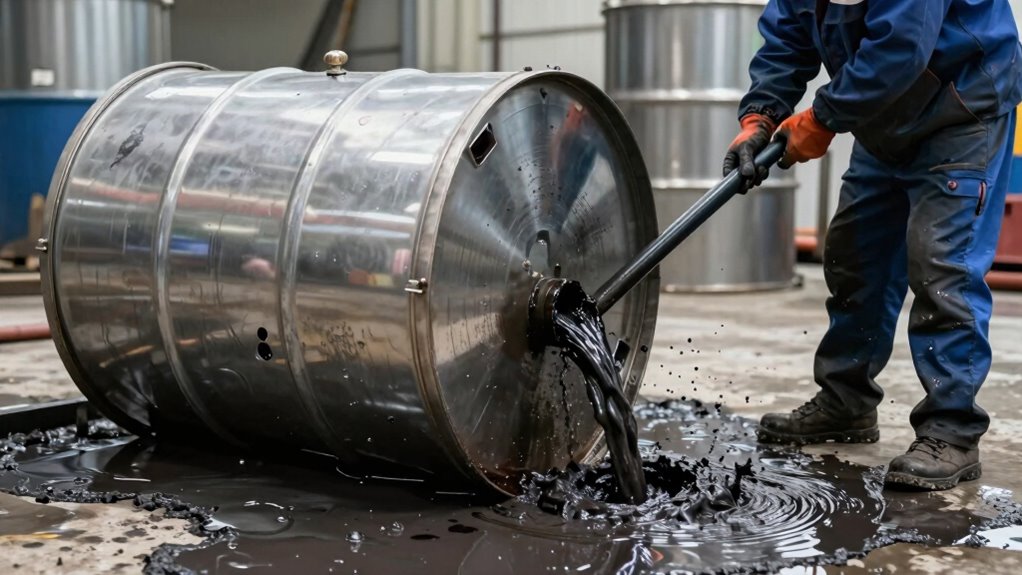

When comparing drum rolling and pumping, you should know both methods carry contamination risks. Pumping with proper equipment offers precision but still demands regular maintenance to prevent leaks and spills. Rolling drums involves physical handling, which increases the chance of dropping or tipping, leading to spills. Both methods require adherence to safety protocols to minimize environmental impact. To protect against contamination and hazards, understanding these risks in detail can help you make safer choices and handle drums more effectively.

Get business pricing on garage and car supplies
- Business-only prices and quantity discounts
- Tax-exempt purchasing
- Multiple users, one account, clear invoices
Key Takeaways
- Pumping offers precise liquid transfer, reducing spill risk but relies on well-maintained equipment to prevent leaks.
- Rolling drums minimizes transfer spills but increases contamination risk through drops or tipping on unstable surfaces.
- Equipment failure during pumping can cause leaks, while mishandling during rolling can lead to immediate spills.
- Proper handling, safety protocols, and monitoring are essential to minimize contamination regardless of method used.
- Surface stability and movement control significantly influence the contamination risk in both drum rolling and pumping.
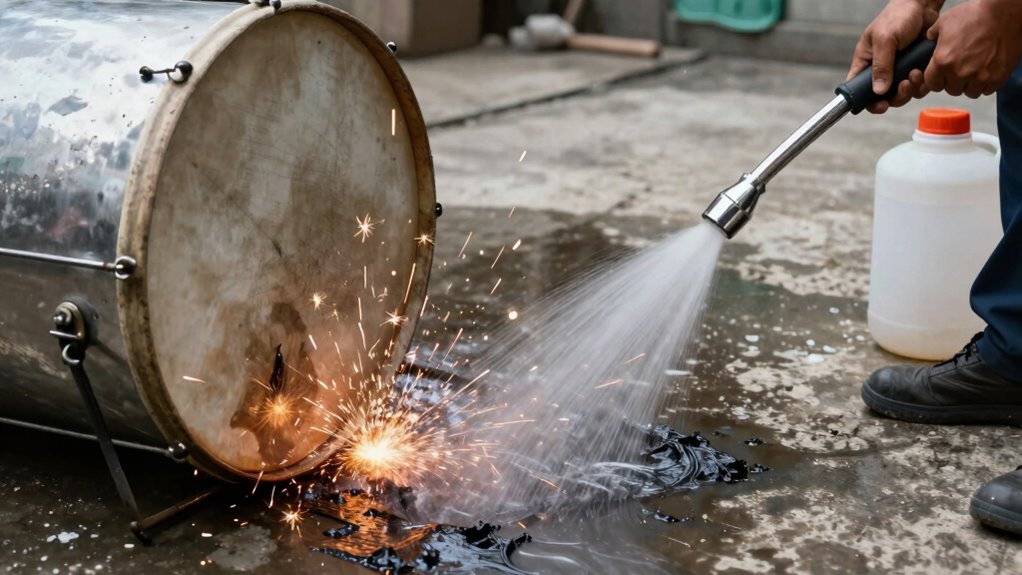
Have you ever wondered which method is more effective for moving or installing drums—rolling or pumping? Both techniques are common, but they come with different implications for safety protocols and environmental impact. When considering drum movement, you need to weigh not just efficiency but also how each method influences potential contamination risks. Safety protocols are critical because improper handling can lead to spills, leaks, or accidents that compromise worker safety and the environment. Pumping drums involves using specialized equipment to transfer liquids, which, if not maintained properly, might result in leaks or overflows. These incidents can cause hazardous material exposure, posing health risks and violating safety standards. Conversely, rolling drums requires physically moving them, often by hand or with carts, which can reduce the chance of accidental spills during transfer but introduces other concerns like musculoskeletal injuries or dropping the drum.
Choosing between rolling and pumping drums impacts safety, environmental risks, and handling efficiency.
From an environmental standpoint, pumping can be more precise, especially when transferring liquids into smaller containers or during controlled processes. This precision minimizes the chance of spillage, making it a safer choice for reducing environmental contamination. However, the equipment used in pumping, such as hoses and valves, must be properly maintained and checked regularly to prevent leaks that could release pollutants into the surroundings. If safety protocols aren’t strictly followed, the risk of environmental impact increases dramatically. On the other hand, rolling drums might seem straightforward, but they can lead to accidental drops or tip-overs, especially on uneven surfaces. Such accidents can cause immediate contamination of the area with hazardous substances, particularly if the drums contain chemicals or oils.
In addition, the weight and stability of drums during movement play a role in contamination risks. Pumping allows for controlled transfer, reducing the likelihood of spills and environmental release. But it demands adherence to safety protocols, like wearing protective gear and ensuring equipment is in good condition. Safety protocols should also include spill response procedures and proper disposal of residual materials. Rolling, while physically less complex, requires careful planning to avoid accidents that could result in contamination. The environmental consequences of mishandling drums—whether through spills during rolling or leaks during pumping—are significant, affecting soil, water sources, and local ecosystems.
Furthermore, utilizing proper measurement tools such as calibrated testing equipment can help monitor and minimize contamination during the transfer process. Ultimately, your choice between rolling and pumping should consider not just speed or convenience but also how each method aligns with safety protocols and environmental responsibility. Proper training, regular equipment checks, and adherence to safety standards are crucial regardless of the method you choose. By doing so, you minimize contamination risks, protect the environment, and ensure the safety of everyone involved.
As an affiliate, we earn on qualifying purchases.
Frequently Asked Questions
How Do Drum Material Differences Affect Contamination Risks?
Different drum materials critically impact contamination risks. For example, metal drums may corrode over time, releasing particles that contaminate your contents, while plastic drums are generally more resistant but can still degrade with exposure to certain chemicals. You should choose drum materials based on your specific product compatibility to minimize contamination risk. Proper maintenance and inspection are also essential to prevent material degradation and guarantee product purity.
Can Drum Rolling or Pumping Be Automated for Safety?
Yes, you can automate drum rolling and pumping to enhance safety. Automation safety features guarantee consistent operation, reducing human error, while transfer monitoring provides real-time insights into the process. You’ll benefit from precise control, minimized contamination risks, and improved safety protocols. Implementing automated systems allows you to monitor each transfer closely, catch issues early, and maintain high standards, making your operations safer, more efficient, and more reliable.
What Are the Environmental Impacts of Each Method?
You should consider that drum rolling can create contamination pathways through leaks or spills, risking soil and water pollution. Pumping, if not properly managed, also poses contamination risks but allows better control and containment. To minimize environmental impacts, you need effective environmental mitigation strategies like sealed systems and spill prevention measures. Both methods require careful planning to protect ecosystems, but pumping often offers improved control, reducing overall contamination risks.
How Do Contamination Levels Vary With Different Chemical Types?
You’ll find that contamination levels vary considerably with different chemical types due to chemical compatibility and contamination thresholds. For example, aggressive chemicals may react with drum materials, increasing contamination risk, especially if thresholds are exceeded. Less compatible chemicals require more careful handling; otherwise, contamination can occur quickly. Understanding each chemical’s compatibility and contamination thresholds helps you choose the safest method, minimizing risks associated with drum rolling or pumping.
Are There Industry Standards for Contamination Prevention During Transfer?
Think of industry standards as the shield guarding your operation. Yes, strict spill prevention measures and safety protocols are in place for transfer processes. They serve as your safety net, ensuring contamination risks are minimized. These standards guide you to use proper equipment, maintain cleanliness, and follow procedures diligently. By adhering to them, you protect your team, environment, and product, turning potential hazards into manageable tasks.
As an affiliate, we earn on qualifying purchases.
Conclusion
Now that you know the contamination risks, you realize choosing between drum rolling and pumping is like picking between fire and ice—each with its own dangers. If you ignore proper techniques, you could release a storm of contamination that’s almost biblical in scale. Don’t let careless methods turn your valuable fluids into a disaster zone. Stay vigilant, choose wisely, and protect your work from the colossal mess that poor handling can create. Your equipment—and your reputation—depend on it!
As an affiliate, we earn on qualifying purchases.
As an affiliate, we earn on qualifying purchases.
Fall Picks
fall essentials
As an affiliate, we earn on qualifying purchases.