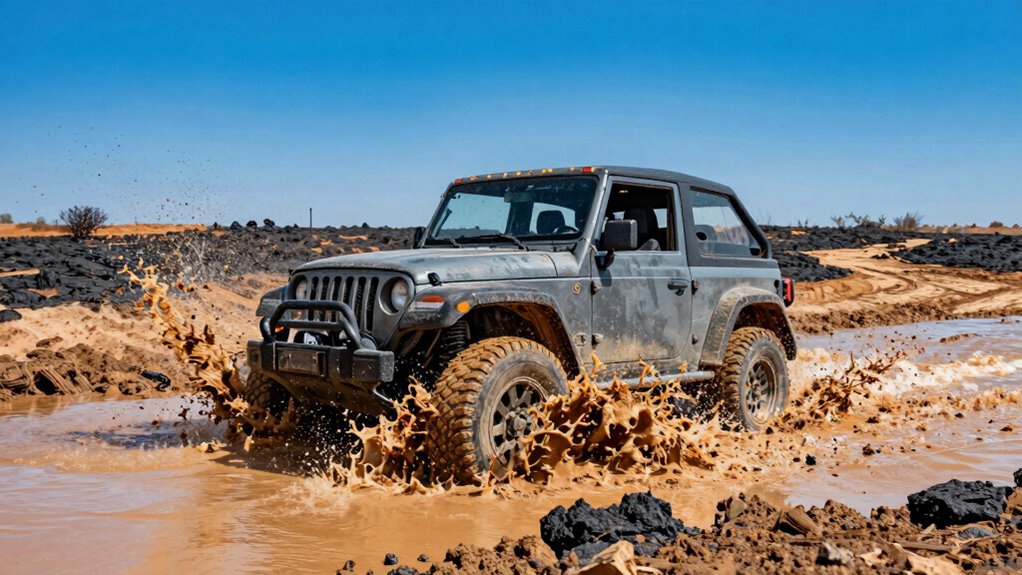

Off-road duty cycles describe how your vehicle performs under tough conditions like dirt, water, and heat, which impact tire traction, vehicle durability, and overall reliability. These cycles measure how well your vehicle withstands challenging environments such as muddy trails, water crossings, and extreme temperatures. Understanding these factors helps you select the right equipment and maintain safety. Keep exploring to discover how these conditions influence your off-road experience and vehicle performance in detail.

Get business pricing on garage and car supplies
- Business-only prices and quantity discounts
- Tax-exempt purchasing
- Multiple users, one account, clear invoices
Key Takeaways
- Off-road duty cycles measure vehicle performance under environmental stresses like dirt, water, and heat, affecting traction, durability, and operational limits.
- They quantify how terrain conditions impact tire grip, vehicle wear, and component resilience during demanding off-road activities.
- Duty cycles help in selecting appropriate equipment and maintenance strategies to withstand dirt, water immersion, and high temperatures.
- They evaluate vehicle ability to navigate loose, muddy terrain, water crossings, and hot environments safely and efficiently.
- Understanding these parameters ensures off-road vehicle durability and safety by accounting for environmental challenges in performance assessments.

Have you ever wondered how off-road duty cycles are defined and measured? When it comes to off-road vehicles, understanding duty cycles is essential because they determine how well your vehicle performs under demanding conditions. These cycles account for various factors like tire traction, vehicle durability, and environmental challenges such as dirt, water, and heat. Knowing how these elements interact helps you select the right equipment and prepare for tough terrains.
Tire traction plays a vital role in off-road duty cycles. As you navigate uneven, loose, or muddy surfaces, your tires must grip the terrain effectively to keep the vehicle moving forward. Poor traction can cause slippage, increase wear, and even lead to vehicle damage. Consequently, duty cycles measure how often and how intensely tires are subjected to different terrains, helping manufacturers evaluate how well tires will perform over time. High traction demands mean tires experience more stress, which can impact their longevity and your vehicle’s overall durability. To optimize performance, you need tires designed for specific conditions, ensuring they maintain grip without sacrificing lifespan.
Vehicle durability is another key aspect in defining off-road duty cycles. Whether you’re crossing rocky trails, wading through water, or enduring extreme heat, your vehicle must withstand these harsh environments without breakdowns. Duty cycles quantify how long a vehicle can operate under specific stress levels—like high torque on rugged dirt or sustained exposure to water and heat—before parts start to wear out or fail. This measurement helps you understand the limits of your vehicle’s components, so you’re better prepared for the demands of off-road adventures. For example, frequent exposure to water can lead to corrosion if your vehicle isn’t properly sealed, while extreme heat can cause overheating issues. These factors are integral when evaluating the durability of your vehicle in different duty cycles, ensuring you aren’t caught off guard during tough conditions.
Additionally, understanding appliance testing requirements can be crucial for ensuring safety and compatibility when using electrical equipment in off-road or rugged environments. In essence, off-road duty cycles are an all-encompassing way to gauge how vehicles perform in diverse and challenging environments. They incorporate tire traction—how well your tires grip and hold up against terrain—and vehicle durability—how long your vehicle can maintain performance without damage. By understanding these measurements, you can make informed decisions about equipment, maintenance, and driving techniques to maximize efficiency and safety. Whether you’re tackling muddy trails, crossing streams, or enduring high temperatures, knowing the duty cycle parameters helps you prepare for what’s ahead, ultimately ensuring your off-road experience is both successful and safe.
off-road tires for mud and water
As an affiliate, we earn on qualifying purchases.
As an affiliate, we earn on qualifying purchases.
Frequently Asked Questions
How Does Off-Road Duty Cycle Influence Vehicle Warranty Coverage?
Your off-road duty cycle directly impacts your vehicle warranty coverage, as it can trigger warranty coverage nuances based on how you use your vehicle. Manufacturers set specific standards for off-road conditions, and exceeding these can void certain warranty aspects. To protect your coverage, stay within manufacturer standards, avoid extreme dirt, water, or heat exposure that surpasses typical off-road use, and keep detailed records of your off-road activities.
Are Off-Road Duty Cycles Standardized Across Different Vehicle Manufacturers?
You’ll find that off-road duty cycles aren’t standardized across manufacturers, as each sets its own standards based on industry variability. Some companies design vehicles with specific duty cycles in mind, while others may have broader or different criteria. This means you should always check your manufacturer’s standards and warranty coverage details, because what qualifies as off-road duty in one brand might differ markedly from another, impacting warranty claims.
What Maintenance Is Required for Vehicles Operating Under High Off-Road Duty Cycles?
When operating under high off-road duty cycles, you should regularly check tire pressure to prevent flats and guarantee ideal traction. Maintain engine cooling by inspecting coolant levels and ensuring your cooling system works efficiently, especially after exposure to heat, dirt, or water. Keep filters clean, lubricate moving parts, and perform periodic inspections to prevent damage from harsh conditions. Proper maintenance helps your vehicle stay reliable and perform well in tough off-road environments.
How Do Off-Road Duty Cycles Impact Fuel Efficiency and Emissions?
Off-road duty cycles can increase your vehicle’s fuel consumption and emissions due to constant demanding conditions like dirt, water, and heat. While it might seem unavoidable, proper maintenance helps mitigate these effects, ensuring better emission control and efficiency. Regularly inspecting filters, adjusting tire pressure, and maintaining your engine can reduce environmental impact and save you money on fuel, making off-road work more sustainable and less costly over time.
Can Off-Road Duty Cycles Be Customized for Specific Terrains or Activities?
Yes, you can customize off-road duty cycles for specific terrains or activities. By focusing on terrain adaptation, you tailor the engine’s performance to handle dirt, water, or heat more effectively. Activity-specific customization guarantees your vehicle operates at its best whether you’re mudding, crossing water, or climbing hills. This personalization boosts efficiency and durability, giving you better control and performance tailored precisely to your off-road adventures.
waterproof vehicle underbody protection
As an affiliate, we earn on qualifying purchases.
As an affiliate, we earn on qualifying purchases.
Conclusion
Understanding the off-road duty cycles—dirt, water, and heat—gives you a clearer picture of what your vehicle can handle. But as you push boundaries, questions arise: will your vehicle withstand the relentless challenges ahead? Stay alert, because the true test begins when these elements collide in unexpected ways. Prepare yourself, because mastering these conditions might just be the key to unleashing your off-road adventures’ ultimate potential—and the surprises they hold.
high-temperature off-road vehicle cooling system
As an affiliate, we earn on qualifying purchases.
As an affiliate, we earn on qualifying purchases.
off-road vehicle maintenance kit
As an affiliate, we earn on qualifying purchases.
As an affiliate, we earn on qualifying purchases.
Fall Picks
fall essentials
As an affiliate, we earn on qualifying purchases.