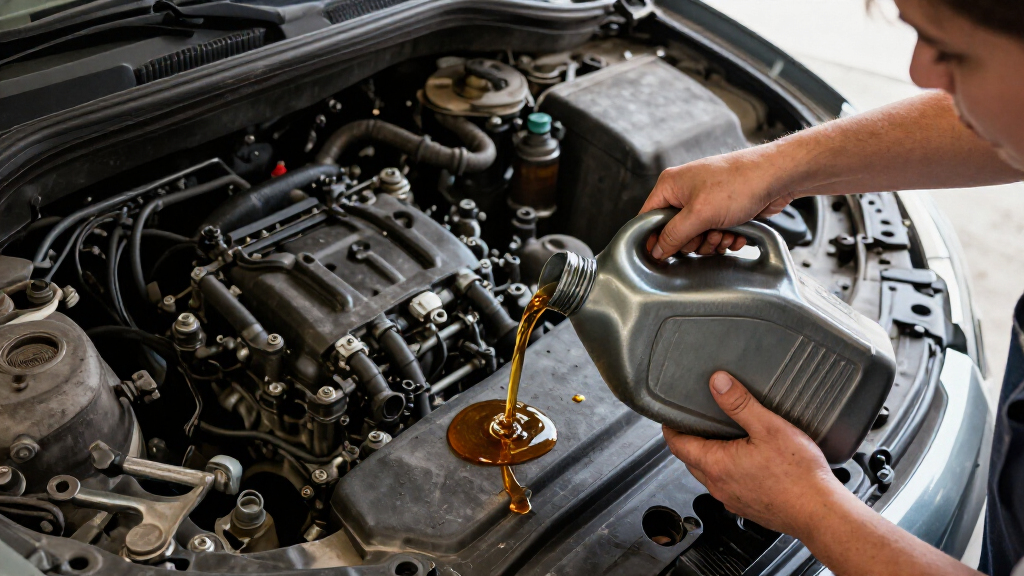

The best engine oil is the one that matches your owner’s manual, not simply the one with the most advanced label. My best overall pick is Mobil 1 Advanced Full Synthetic 5W-30 for its broad everyday appeal; Valvoline Advanced Full Synthetic 0W-20 is a strong fit for vehicles that specify 0W-20, while Castrol GTX High Mileage 5W-30 targets older, higher-mileage engines. The main tradeoffs are viscosity and vehicle compatibility, conventional or synthetic-blend versus full-synthetic formulation, and whether you need a specialized high-mileage or performance oil. A product that suits one engine may be unsuitable for another, even when the viscosity looks close. Read on for the full comparison and guidance on choosing by vehicle requirements and driving habits.

Get business pricing on garage and car supplies
- Business-only prices and quantity discounts
- Tax-exempt purchasing
- Multiple users, one account, clear invoices
Complete the kit


Key Takeaways
- Vehicle specification outranks brand preference: the lineup spans 0W-20, 5W-20, 5W-30, 5W-40, and 20W-50, so the right choice depends first on the viscosity and approvals your engine calls for.
- Mobil 1 Advanced Full Synthetic 5W-30 is the broadest everyday pick in this group: it avoids the narrower high-mileage and racing focus of several alternatives while offering a full-synthetic formulation.
- High-mileage oils serve a distinct purpose: Castrol GTX High Mileage, Mobil 1 High Mileage, Castrol EDGE High Mileage, and Valvoline MaxLife target aging engines, but their different viscosities are not interchangeable.
- The lineup includes oils with specialized fit limits: Valvoline VR1 20W-50 is aimed at particular performance applications, while Motul 8100 X-Clean EFE 5W-30 and 8100 X-Cess Gen 2 5W-40 require careful matching to vehicle specifications.
- Full synthetic is not automatically the right upgrade: the Castrol GTX synthetic-blend options can suit vehicles whose manuals permit that formulation, while switching types cannot compensate for using the wrong viscosity or specification.
| Castrol GTX High Mileage 5W-30 Synthetic Blend Motor Oil, 5 Quarts |  | Best for High-Mileage Engines | Brand: Castrol | Viscosity: 5W-30 | Oil type: Synthetic blend | VIEW LATEST PRICE | See Our Full Breakdown |
| Valvoline Advanced Full Synthetic SAE 0W-20 Motor Oil, 5 qt |  | Best for Cold Starts and Hybrids | Brand: Valvoline | Viscosity: SAE 0W-20 | Oil type: Full synthetic | VIEW LATEST PRICE | See Our Full Breakdown |
| Motul 8100 X-clean EFE 5W-30 Full Synthetic Motor Oil, 5L |  | Best for Emissions-System Compatibility | Brand: Motul | Viscosity: 5W-30 | Oil type: Full synthetic | VIEW LATEST PRICE | See Our Full Breakdown |
| Castrol GTX 5W-30 Synthetic Blend Motor Oil, 5 Quarts |  | Best Value General-Purpose Blend | Brand: Castrol | Viscosity: SAE 5W-30 | Oil type: Synthetic blend | VIEW LATEST PRICE | See Our Full Breakdown |
| Castrol EDGE 5W-30 Full Synthetic Motor Oil, 5 Quarts |  | Best for Full-Synthetic 5W-30 Protection | Brand: Castrol | Viscosity: 5W-30 | Oil type: Full synthetic | VIEW LATEST PRICE | See Our Full Breakdown |
| Valvoline VR1 Racing SAE 20W-50 Motor Oil, 5 QT |  | Best for Flat-Tappet and Racing Engines | Brand: Valvoline | Viscosity: SAE 20W-50 | Oil type: Conventional racing oil | VIEW LATEST PRICE | See Our Full Breakdown |
| Mobil 1 High Mileage Full Synthetic Motor Oil, 0W-20, 5 Quart |  | Best for High-Mileage 0W-20 Vehicles | Brand: Mobil 1 | Oil type: Full synthetic | Viscosity: SAE 0W-20 | VIEW LATEST PRICE | See Our Full Breakdown |
| Castrol GTX Full Synthetic 5W-30 Motor Oil, 5 Quarts |  | Best for Broad 5W-30 Protection | Brand: Castrol | Viscosity grade: 5W-30 | Oil type: Full synthetic | VIEW LATEST PRICE | See Our Full Breakdown |
| Castrol EDGE 0W-20 Advanced Full Synthetic Motor Oil, 5 Quarts |  | Best for Extended-Interval 0W-20 Service | Brand: Castrol | Viscosity grade: 0W-20 | Oil type: Full synthetic | VIEW LATEST PRICE | See Our Full Breakdown |
| Mobil 1 Advanced Fuel Economy Full Synthetic Motor Oil, 0W-20, 5 Quart |  | Best for Fuel-Economy-Focused 0W-20 Drivers | Brand: Mobil 1 | Oil type: Full synthetic | Viscosity: SAE 0W-20 | VIEW LATEST PRICE | See Our Full Breakdown |
| Castrol EDGE High Mileage 5W-30 Advanced Full Synthetic Motor Oil, 5 Quarts |  | Best for High-Mileage 5W-30 Engines | Brand: Castrol | Oil type: Advanced full synthetic | Viscosity grade: 5W-30 | VIEW LATEST PRICE | See Our Full Breakdown |
| LIQUI MOLY Molygen New Generation 5W-30 Fully Synthetic Motor Oil (5 Liter) |  | Best for Friction-Focused Protection | Brand: LIQUI MOLY | Oil type: Fully synthetic motor oil | Viscosity grade: 5W-30 | VIEW LATEST PRICE | See Our Full Breakdown |
| Mobil 1 Advanced Full Synthetic Motor Oil, 5W-30, 5 Quart |  | Best for Cold-Start 5W-30 Protection | Brand: Mobil 1 | Oil type: Full synthetic | SAE viscosity grade: 5W-30 | VIEW LATEST PRICE | See Our Full Breakdown |
| Valvoline MaxLife Full Synthetic High Mileage 5W-20 Motor Oil, 5 qt |  | Best for High-Mileage 5W-20 and Hybrid Engines | Brand: Valvoline | Oil type: Full synthetic | Viscosity grade: 5W-20 | VIEW LATEST PRICE | See Our Full Breakdown |
| Motul 8100 X-Cess Gen 2 SAE 5W-40 Full Synthetic Motor Oil – 5 Liter |  | Best for Approved European Performance Engines | Brand: Motul | Oil type: Full synthetic | Viscosity grade: SAE 5W-40 | VIEW LATEST PRICE | See Our Full Breakdown |
| engine oil | Brand | Oil type | Viscosity | Volume |
|---|---|---|---|---|
| Castrol GTX High Mileage 5W-30 | Castrol | Synthetic blend | 5W-30 | 5 quarts (160 fluid ounces) |
| Valvoline Advanced Full Synthe | Valvoline | Full synthetic | SAE 0W-20 | — |
| Motul 8100 X-clean EFE 5W-30 F | Motul | Full synthetic | 5W-30 | 5 liters |
| Castrol GTX 5W-30 Synthetic Bl | Castrol | Synthetic blend | SAE 5W-30 | — |
| Castrol EDGE 5W-30 Full Synthe | Castrol | Full synthetic | 5W-30 | 5 quarts (160 fluid ounces) |
| Valvoline VR1 Racing SAE 20W-5 | Valvoline | Conventional racing oil | SAE 20W-50 | 5 QT (160 fluid ounces) |
| Mobil 1 High Mileage Full Synt | Mobil 1 | Full synthetic | SAE 0W-20 | — |
| Castrol GTX Full Synthetic 5W- | Castrol | Full synthetic | — | 5 quarts |
| Castrol EDGE 0W-20 Advanced Fu | Castrol | Full synthetic | — | — |
| Mobil 1 Advanced Fuel Economy | Mobil 1 | Full synthetic | SAE 0W-20 | — |
| Castrol EDGE High Mileage 5W-3 | Castrol | Advanced full synthetic | — | 5 quarts (160 fluid ounces) |
| LIQUI MOLY Molygen New Generat | LIQUI MOLY | Fully synthetic motor oil | — | 5 liters (169.05 fluid ounces) |
| Mobil 1 Advanced Full Syntheti | Mobil 1 | Full synthetic | — | — |
| Valvoline MaxLife Full Synthet | Valvoline | Full synthetic | — | — |
| Motul 8100 X-Cess Gen 2 SAE 5W | Motul | Full synthetic | — | 5 liters |
More Details on Our Top Picks
Castrol GTX High Mileage 5W-30 Synthetic Blend Motor Oil, 5 Quarts
For an engine past 75,000 miles, this Castrol GTX blend focuses on needs that a general-purpose oil does not: its seal conditioners are intended to help reduce leaks, while Phosphorus Replacement Technology is designed to support emissions-system life. It also targets sludge and wear, making it a more tailored choice for an older vehicle than the standard Castrol GTX 5W-30. The tradeoff is its synthetic-blend base; buyers prioritizing a full-synthetic formulation or longer service intervals may prefer Castrol EDGE 5W-30, subject to the vehicle maker’s schedule. This oil is not a universal fix for worn seals, and the right viscosity and specifications still depend on the owner’s manual. I would choose it for an eligible high-mileage gasoline engine, not as a default for a newer car.
Pros:- Formulated for vehicles with over 75,000 miles
- Seal conditioners are intended to help reduce oil leaks
- Phosphorus Replacement Technology is designed to support emissions-system life
- Targets sludge buildup and engine wear
Cons:- Synthetic blend rather than full synthetic
- High-mileage formulation may be unnecessary for newer engines
- Seal conditioners cannot repair mechanically damaged seals
Best for: Owners of gasoline vehicles with more than 75,000 miles who want a 5W-30 blend with seal-conditioning and emissions-system-focused features.
Not ideal for: Owners of newer or lower-mileage engines, or drivers seeking a full synthetic for extended intervals; confirm the vehicle’s required viscosity and approvals before choosing it.
- Brand:Castrol
- Viscosity:5W-30
- Oil type:Synthetic blend
- Volume:5 quarts (160 fluid ounces)
- API specifications:API SP, SN PLUS, SN, SM
- ILSAC specification:GF-6
- Ford specifications:WSS-M2C946-B1, WSS-M2C961-A1
- Manufacturer part number:03102C
Our verdict“Choose this Castrol blend for an eligible high-mileage engine when leak and wear support matter more than a full-synthetic formulation.”
Valvoline Advanced Full Synthetic SAE 0W-20 Motor Oil, 5 qt
This Valvoline earns a distinct place for drivers whose manuals call for 0W-20, particularly those who want a full synthetic suited to many gasoline cars and hybrids. Its low-temperature flow is intended to help oil circulate during cold starts, while the formulation targets wear, deposits, and heat. That makes it a different proposition from the 5W-30 Castrol options here: neither viscosity is an upgrade over the other unless it matches the engine’s specification. Compared with Motul 8100 X-clean EFE 5W-30, Valvoline’s appeal is its 0W-20 grade and broad hybrid suitability, not specialized low-SAPS emissions-system positioning. Its main limitation is fit: the listed Ford, Chrysler, and GM specifications do not make it suitable for every vehicle. Match the manual’s viscosity and approval requirements before buying.
Pros:- Full-synthetic formulation targets wear, deposits, and heat
- 0W-20 viscosity is designed for cold-start flow
- Suitable for many gasoline vehicles and hybrid applications
- Lists API SQ and ILSAC GF-7A certifications
Cons:- Vehicle compatibility depends on matching the exact manual requirements
- Not a substitute for the 5W-30 or other viscosity grades required by some engines
Best for: Hybrid and gasoline-car owners whose manufacturer specifies 0W-20 and who want full-synthetic protection with cold-start flow.
Not ideal for: Drivers whose manuals call for another viscosity or approvals not listed for this oil; do not select 0W-20 based on climate alone.
- Brand:Valvoline
- Viscosity:SAE 0W-20
- Oil type:Full synthetic
- Size:5 quarts (160 fluid ounces)
- Certifications:ILSAC GF-7A; API SQ, SP, SN with SN PLUS
- Ford specification:WSS-M2C962-A1
- Chrysler specification:MS-13340
- GM specification:dexos1 Gen 3
Our verdict“Pick Valvoline when your hybrid or gasoline vehicle specifies 0W-20 and you want a full synthetic with cold-start-focused performance.”
Motul 8100 X-clean EFE 5W-30 Full Synthetic Motor Oil, 5L
Motul’s strongest case is its low-SAPS formulation, designed to protect diesel particulate filters and gasoline particulate filters while meeting listed European and GM approvals. For a vehicle that specifically requires ACEA C2 or C3 and one of its named OEM standards, that targeted fit can matter more than a general-purpose 5W-30. Compared with Castrol EDGE 5W-30, which emphasizes full-synthetic wear protection and broad listed specifications, the Motul is the more specialized choice for emissions-equipped engines. Its 5-liter container also differs from the four 5-quart products in this batch, so check the quantity your service requires. The tradeoff is compatibility: low-SAPS oil is not automatically the right choice for older engines or vehicles without the matching approval. I would use it only when the manual calls for a compatible standard.
Pros:- Low-SAPS chemistry is designed to protect DPF and GPF systems
- Full-synthetic formulation targets fuel economy and reduced friction
- Lists BMW LL-04, MB 229.52, VW 505.01, and GM Dexos2 approvals
- ACEA C2/C3 specifications suit engines requiring those standards
Cons:- Specialized approvals narrow the vehicles it suits
- A 5-liter container differs from the 5-quart size of several alternatives
- May be a poor match for older engines without compatible emissions requirements
Best for: Owners of modern BMW, Mercedes, VW, or GM vehicles whose manuals specify a compatible ACEA C2/C3 or listed OEM approval, especially with DPF or GPF equipment.
Not ideal for: Drivers of older vehicles without emissions-control requirements, or anyone whose manual does not list a compatible Motul specification.
- Brand:Motul
- Viscosity:5W-30
- Oil type:Full synthetic
- Volume:5 liters
- ACEA standards:C2/C3
- API specification:API SN
- OEM approvals:BMW LL-04; MB 229.52; VW 505.01; GM Dexos2
- Manufacturer part number:109471
Our verdict“Choose Motul when your emissions-equipped vehicle specifically calls for its low-SAPS chemistry and listed approvals.”
Castrol GTX 5W-30 Synthetic Blend Motor Oil, 5 Quarts
For a gasoline engine that calls for 5W-30, this standard Castrol GTX blend offers a straightforward alternative to high-mileage or specialty oils. Its stated focus is sludge prevention, high-temperature deposits, and viscosity breakdown, with current listed API and ILSAC specifications plus two Ford requirements. Unlike Castrol GTX High Mileage 5W-30, it does not add a high-mileage positioning or seal-conditioner claim, so it makes more sense for drivers who want a conventional-use blend rather than mileage-specific features. Compared with full-synthetic Castrol EDGE 5W-30, it gives up the full-synthetic base and the stated extended-interval design. That simpler formulation is its tradeoff, not a reason to ignore the manual: the listing identifies gasoline engines, and the exact required specifications should still match.
Pros:- Targets sludge buildup and high-temperature deposits
- Designed to resist viscosity breakdown
- Lists API SQ/SP/SN PLUS/SN and ILSAC GF-7
- Includes listed Ford WSS-M2C946-B1 and WSS-M2C961-A1 specifications
Cons:- Synthetic blend rather than full synthetic
- Not specifically formulated for high-mileage engines
- Listing identifies gasoline engines, so other engine applications are not indicated
Best for: Gasoline-car and truck owners whose manuals specify 5W-30 and who want a synthetic blend meeting the listed API, ILSAC, or Ford requirements.
Not ideal for: Owners needing a full synthetic, a high-mileage-specific formula, or oil for an engine type beyond the listing’s stated gasoline-engine compatibility.
- Brand:Castrol
- Viscosity:SAE 5W-30
- Oil type:Synthetic blend
- Size:5 quarts (160 fluid ounces)
- Compatible engines:Gasoline engines
- API specifications:API SQ, SP, SN PLUS, SN
- ILSAC specification:GF-7
- Ford specifications:WSS-M2C946-B1, WSS-M2C961-A1
Our verdict“Choose standard Castrol GTX when your gasoline vehicle calls for 5W-30 and you do not need a high-mileage or full-synthetic formula.”
Castrol EDGE 5W-30 Full Synthetic Motor Oil, 5 Quarts
Castrol EDGE is the most broadly positioned full-synthetic 5W-30 in this group, with listed API and ILSAC standards alongside GM, Chrysler, and Ford specifications. Its stated strengths—wear protection, viscosity control, and thermal stability—make it a natural step up in formulation from the Castrol GTX synthetic blends. The product is designed for oil-change intervals of up to 20,000 miles or one year, but that is a ceiling tied to the vehicle’s requirements, not a schedule every owner should adopt. Compared with Motul 8100 X-clean EFE 5W-30, EDGE has a wider general-use pitch, while Motul is more specifically aimed at low-SAPS emissions-system needs and European approvals. EDGE’s tradeoff is that its extended-interval claim can be misapplied; follow the manual and service-monitor guidance instead of assuming every engine can run that long.
Pros:- Full-synthetic formulation
- Designed for wear protection, viscosity control, and thermal stability
- Lists API SQ/SP/SN PLUS/SN and ILSAC GF-7
- Lists several GM, Chrysler, and Ford specifications
Cons:- The stated maximum interval may not suit a particular vehicle or driving conditions
- More general-purpose positioning than Motul’s low-SAPS emissions-system focus
- 5W-30 is unsuitable where the manufacturer specifies another viscosity
Best for: Car and truck owners whose manuals specify 5W-30 and a compatible listed specification, and who want a full synthetic with a stated extended-interval capability.
Not ideal for: Drivers whose vehicles require another viscosity or a specialized approval not listed, or anyone planning to stretch oil changes beyond the vehicle maker’s schedule.
- Brand:Castrol
- Viscosity:5W-30
- Oil type:Full synthetic
- Volume:5 quarts (160 fluid ounces)
- Vehicle compatibility:Cars and trucks
- API specifications:API SQ, SP, SN PLUS, SN
- ILSAC specification:GF-7
- Designed oil-change interval:Up to 20,000 miles or one year, whichever comes first; follow vehicle requirements
Our verdict“Choose Castrol EDGE for a compatible 5W-30 engine when you want a full synthetic, but keep oil-change timing within the vehicle’s own requirements.”
Valvoline VR1 Racing SAE 20W-50 Motor Oil, 5 QT
Valvoline VR1 Racing 20W-50 is the specialist choice here: its high zinc content targets wear on cams and bearings in pushrod and flat-tappet engines, while thermal stability and anti-foaming additives suit high-compression use. Its conventional racing formulation and friction modifiers are aimed at demanding track or street applications, not everyday compatibility across modern cars. Compared with Castrol GTX Full Synthetic 5W-30, VR1 prioritizes anti-wear needs in particular engine designs over broad vehicle coverage and synthetic formulation. That focus comes with a firm limitation: the high zinc and phosphorus content makes it unsuitable for vehicles with catalytic converters, and it is not intended for wet-clutch motorcycles. I’d choose it only when the engine’s requirements match its racing-oriented formula.
Pros:- High zinc content targets wear on flat-tappet cams and bearings.
- Thermal stability and anti-foaming additives suit high-compression operation.
- Friction modifiers are intended to reduce heat under pressure and support horsepower.
- Compatible with gasoline and partial alcohol fuels.
Cons:- Not recommended for vehicles with catalytic converters because of its high zinc and phosphorus content.
- Not suitable for motorcycles with wet clutches.
- The 20W-50 viscosity and racing focus make it a poor fit for engines that call for a different grade or general-purpose oil.
Best for: Owners of pushrod or flat-tappet gasoline engines used in racing or street service who need a high-zinc 20W-50 oil and do not have a catalytic converter.
Not ideal for: Drivers of modern emissions-equipped cars or motorcycles with wet clutches, since the product is not recommended for catalytic converters or wet-clutch use.
- Brand:Valvoline
- Viscosity:SAE 20W-50
- Oil type:Conventional racing oil
- Volume:5 QT (160 fluid ounces)
- API service:SL
- Fuel compatibility:Gasoline and partial alcohol fuels
- Manufacturer part number:881172
Our verdict“Choose VR1 for a compatible flat-tappet or pushrod engine that needs racing-oriented 20W-50 protection, not for a typical modern passenger car.”
Mobil 1 High Mileage Full Synthetic Motor Oil, 0W-20, 5 Quart
For a vehicle past 75,000 miles that specifies 0W-20, Mobil 1 High Mileage combines a full synthetic base with additives intended to fight sludge and friction-related deposits. That makes it more specifically aimed at an aging engine than Mobil 1 Advanced Fuel Economy 0W-20, which focuses on fuel economy and broad protection rather than high-mileage use. The listed protection interval reaches up to 15,000 miles, but the claim carries an asterisk without its conditions in the supplied details, so I would follow the vehicle manual and oil-life guidance rather than treat that figure as universal. It meets ILSAC GF-7, but it is only a sensible pick when 0W-20 matches the engine’s required grade.
Pros:- Formulated specifically for vehicles with 75,000 or more miles.
- Additives are intended to help prevent sludge and reduce friction-related deposits.
- Full synthetic formulation meets ILSAC GF-7.
- Listed for protection up to 15,000 miles between oil changes.
Cons:- The 15,000-mile claim is marked with an asterisk, but the conditions are not provided.
- Its 0W-20 viscosity is unsuitable for engines requiring another grade.
- Manufacturer warranty details require contacting the manufacturer.
Best for: Owners of cars with 75,000 miles or more whose manuals specify 0W-20 and who want a synthetic oil formulated to help control sludge and deposits.
Not ideal for: Owners whose engines require another viscosity grade, or buyers seeking clearly stated conditions for a long drain interval.
- Brand:Mobil 1
- Oil type:Full synthetic
- Viscosity:SAE 0W-20
- Container size:5 quarts (160 fluid ounces)
- Recommended mileage:75,000+ miles
- Listed protection interval:Up to 15,000 miles
- Standard:ILSAC GF-7
Our verdict“Pick this for a high-mileage vehicle that calls for 0W-20, but don’t rely on the stated extended interval without checking the applicable conditions.”
Castrol GTX Full Synthetic 5W-30 Motor Oil, 5 Quarts
Castrol GTX Full Synthetic 5W-30 earns its place through a wide set of stated protections and vehicle specifications, making it a versatile option for cars and trucks that call for this grade. Its claims cover wear, sludge control, and resistance to viscosity breakdown, with support for oil-change intervals up to 10,000 miles. Compared with Castrol EDGE 0W-20, GTX serves a different viscosity requirement and has a shorter stated interval; EDGE’s longer claim may appeal to some owners, but only when 0W-20 is the correct grade. GTX lists API, ILSAC, GM, and Ford specifications, which helps narrow compatibility, though buyers still need to match the exact approval in their manual. The provided details do not specify a notable weakness, but the 10,000-mile figure should not override vehicle-specific service guidance.
Pros:- Full synthetic formulation is aimed at severe operating conditions.
- Claims protection against wear, sludge, and viscosity breakdown.
- Lists API, ILSAC, GM dexos1 Gen 3, and Ford specifications.
- Supports stated oil-change intervals of up to 10,000 miles.
Cons:- The 10,000-mile interval is an upper claim, not a substitute for the vehicle’s maintenance schedule.
- The 5W-30 grade is not appropriate for engines requiring another viscosity.
- The supplied product details do not describe specific limitations or interval conditions.
Best for: Car and truck owners whose manuals call for 5W-30 and who want a full synthetic with multiple listed API, ILSAC, GM, and Ford specifications.
Not ideal for: Owners whose vehicles require 0W-20 or another viscosity, or buyers whose manuals call for an approval not listed for this oil.
- Brand:Castrol
- Viscosity grade:5W-30
- Oil type:Full synthetic
- Volume:5 quarts
- Vehicle compatibility:Car, truck
- API specifications:API SQ/SP/SN PLUS/SN
- Other listed specifications:ILSAC GF-7; GM dexos1 Gen 3; Ford WSS-M2C947-B1; Ford WSS-M2C962-A1
- Manufacturer part number:15E6DE
Our verdict“Choose GTX Full Synthetic when your car or truck specifies 5W-30 and its listed approvals match the manual.”
Castrol EDGE 0W-20 Advanced Full Synthetic Motor Oil, 5 Quarts
Castrol EDGE 0W-20 is the extended-interval option in this group, with a stated recommendation of up to 20,000 miles or one year, whichever comes first. That exceeds the listed intervals for Mobil 1 Advanced Fuel Economy 0W-20 and Mobil 1 High Mileage 0W-20, both of which specify up to 15,000 miles, but the longer claim should not replace the vehicle maker’s schedule or oil-life monitor. EDGE also lists approvals and standards spanning API, ILSAC, GM, Chrysler, and Ford, giving buyers several compatibility points to verify. Its 0W-20 grade and full synthetic formulation suit only engines that call for that viscosity. The one-year limit also matters for low-mileage drivers: elapsed time can set the change point well before the mileage figure.
Pros:- Full synthetic 0W-20 formulation.
- Lists wear protection, viscosity control, and thermal stability as performance aims.
- Meets or exceeds multiple API, ILSAC, GM, Chrysler, and Ford specifications.
- States an interval of up to 20,000 miles or one year, whichever comes first.
Cons:- The one-year limit can apply before reaching the stated mileage interval.
- Extended service depends on the vehicle maker’s requirements and actual use.
- Not suitable for engines that specify a viscosity other than 0W-20.
Best for: Owners of cars, hybrids, or trucks that specify 0W-20 and whose maintenance guidance permits an extended synthetic oil interval.
Not ideal for: Drivers whose manuals call for another viscosity or shorter service intervals, and low-mileage owners who expect the 20,000-mile figure to remove the one-year limit.
- Brand:Castrol
- Viscosity grade:0W-20
- Oil type:Full synthetic
- Container size:5 quarts (160 fluid ounces)
- Compatible vehicle types:Cars, hybrids, trucks
- Listed change interval:Up to 20,000 miles or 1 year, whichever comes first
- Specifications:API SQ/SP/SN PLUS/SN; ILSAC GF-7; GM dexos1 Gen 3; Chrysler MS 6395; Ford WSS-M2C947-B1 and WSS-M2C962-A1
- Warranty:12 months
Our verdict“Pick EDGE if your vehicle specifies 0W-20 and its maintenance guidance supports the listed extended interval, while observing the one-year limit.”
Mobil 1 Advanced Fuel Economy Full Synthetic Motor Oil, 0W-20, 5 Quart
When the manual specifies 0W-20 and fuel economy is a priority, Mobil 1 Advanced Fuel Economy makes a focused case: its formula is designed to support fuel economy while guarding against sludge, deposits, oxidation, and timing-chain wear. It also covers cars, trucks, and hybrids. Compared with Castrol EDGE 0W-20, Mobil 1 lists a shorter maximum interval—up to 15,000 miles or one year—while EDGE states up to 20,000 miles or one year. That makes EDGE more appealing for buyers prioritizing the longer stated interval, while Mobil 1’s emphasis is fuel economy and a defined set of engine-protection targets. Its ILSAC GF-7 standard is useful for checking suitability, but neither the grade nor the interval should supersede the vehicle’s manual.
Pros:- Formulated to support fuel economy.
- Aims to protect against sludge, deposits, oxidation, and timing-chain wear.
- Suitable for cars, trucks, and hybrid vehicles.
- Meets ILSAC GF-7 and lists protection up to 15,000 miles or one year.
Cons:- The listed interval ends at 15,000 miles or one year, whichever comes first.
- Castrol EDGE 0W-20 has a longer stated mileage interval.
- Only fits engines for which 0W-20 is the specified viscosity.
Best for: Drivers of cars, trucks, or hybrids that specify 0W-20 and want a full synthetic formulated with fuel economy as a priority.
Not ideal for: Owners whose engines require a different viscosity, or buyers seeking the longest stated interval among the 0W-20 options in this group.
- Brand:Mobil 1
- Oil type:Full synthetic
- Viscosity:SAE 0W-20
- Container size:5 quarts (160 fluid ounces)
- Vehicle compatibility:Cars, trucks, and hybrid vehicles
- Listed protection interval:Up to 15,000 miles or 1 year, whichever comes first
- Standard:ILSAC GF-7
- Flash point:224 °C
Our verdict“Choose this Mobil 1 when your vehicle calls for 0W-20 and fuel-economy support matters more than the longer interval stated for Castrol EDGE.”
Castrol EDGE High Mileage 5W-30 Advanced Full Synthetic Motor Oil, 5 Quarts
For an engine past 75,000 miles that calls for 5W-30, Castrol EDGE High Mileage puts leak, oil-burnoff, and deposit control ahead of broad, new-car versatility. Its Phosphorus Replacement Technology is intended to protect emissions equipment, while the full-synthetic formula is specified for oil-change intervals of up to 15,000 miles. That makes it a more targeted choice than the standard Castrol EDGE 5W-30 Full Synthetic, which is not specifically formulated around high-mileage concerns. The tradeoff is fit: this oil is not the right pick simply because it is synthetic; the engine must call for 5W-30, and its high-mileage formulation may be unnecessary for a newer vehicle. The long interval is a product claim, not a substitute for following the vehicle maker’s service schedule.
Pros:- Formulated for vehicles with more than 75,000 miles
- Phosphorus Replacement Technology is intended to help protect emissions equipment
- Designed to reduce leaks, oil burnoff, and deposit buildup
- Supports claimed oil-change intervals of up to 15,000 miles
Cons:- High-mileage formulation may be unnecessary for newer engines
- 5W-30 viscosity must match the vehicle’s requirements
- Long-interval claim does not override the manufacturer’s maintenance schedule
Best for: Owners of vehicles with more than 75,000 miles whose manuals specify 5W-30 and who want a synthetic oil aimed at reducing leaks and oil consumption.
Not ideal for: Owners of newer or lower-mileage vehicles, or anyone whose engine requires a different viscosity or specification; the high-mileage focus may not suit their needs.
- Brand:Castrol
- Oil type:Advanced full synthetic
- Viscosity grade:5W-30
- Volume:5 quarts (160 fluid ounces)
- Compatibility:Vehicles with over 75,000 miles
- Specifications:API SP, SN PLUS, SN, SM; ILSAC GF-6
- Container:Bottle
- Manufacturer part number:15906E
Our verdict“Choose this for a 75,000-mile-plus vehicle that specifies 5W-30 and needs a high-mileage-focused synthetic, not as a universal replacement for standard oil.”
LIQUI MOLY Molygen New Generation 5W-30 Fully Synthetic Motor Oil (5 Liter)
LIQUI MOLY Molygen New Generation suits buyers drawn to a friction-focused formula rather than a high-mileage-specific blend or a product with listed OEM approvals. Its MFC Molecular Friction Control technology is designed to reduce friction and deposits, with high shear stability for demanding operating conditions. Compared with Mobil 1 Advanced Full Synthetic 5W-30, whose supplied data names ILSAC GF-7 and cold-start performance, Molygen’s product details emphasize friction control and shear stability instead. That distinction may appeal to drivers prioritizing those stated formula aims, but the provided specifications do not list API or ILSAC approvals, so buyers should verify suitability against their vehicle manual before choosing it. The fluorescent green color is another practical difference: it is unusual, though it does not replace checking the oil level or condition.
Pros:- MFC technology is designed to reduce friction
- Formulated to help prevent deposit formation
- High shear stability is intended for demanding operating conditions
- Five-liter container provides a stated volume of 169.05 fluid ounces
Cons:- The supplied product data does not list API, ILSAC, or OEM approvals
- Fluorescent green color may be unfamiliar during oil handling
- 5W-30 must match the vehicle maker’s viscosity requirement
Best for: Drivers whose vehicle calls for 5W-30 and who want a synthetic oil emphasizing friction reduction, deposit control, and stability under demanding conditions.
Not ideal for: Owners who need a clearly listed API, ILSAC, or OEM approval to match their manual, or who prefer a conventional-looking oil for routine service.
- Brand:LIQUI MOLY
- Oil type:Fully synthetic motor oil
- Viscosity grade:5W-30
- Volume:5 liters (169.05 fluid ounces)
- Technology:MFC Molecular Friction Control
- Color:Fluorescent green
- Container:Bottle
- Manufacturer part number:20228
Our verdict“Pick Molygen when friction-control features are your priority and its specifications match your manual; choose a better-documented alternative if you need listed approvals.”
Mobil 1 Advanced Full Synthetic Motor Oil, 5W-30, 5 Quart
Mobil 1 Advanced Full Synthetic 5W-30 earns this role through its stated cold-start performance and ILSAC GF-7 specification, giving buyers concrete details to compare with their vehicle’s requirements. Its Triple Action Formula is designed to reduce friction, deposits, and sludge, while the product claims protection for up to 15,000 miles or one year, whichever comes first. Compared with Castrol EDGE High Mileage 5W-30, Mobil 1 is not presented as a high-mileage-specific oil; it makes more sense for owners seeking general full-synthetic protection rather than a formula aimed at leaks and oil consumption. The main limitation is that 5W-30 and the listed standard still need to fit the vehicle. The interval claim also has a one-year cap and should not supersede the owner’s manual.
Pros:- Meets the listed ILSAC GF-7 standard
- Designed for cold-start and low-temperature performance
- Triple Action Formula targets friction, deposits, and sludge
- Claims protection for up to 15,000 miles or one year, whichever comes first
Cons:- Vehicle compatibility must be checked against the owner’s manual
- The protection claim is capped at one year even if mileage is lower
- Does not have the high-mileage focus of Castrol EDGE High Mileage 5W-30
Best for: Drivers of vehicles that specify 5W-30 and ILSAC GF-7 who want full-synthetic oil with stated cold-start performance and a capped extended-protection claim.
Not ideal for: Owners of vehicles requiring another viscosity or specification, or drivers specifically seeking high-mileage seal and oil-consumption support.
- Brand:Mobil 1
- Oil type:Full synthetic
- SAE viscosity grade:5W-30
- Container size:5 quarts (160 fluid ounces)
- Standard:ILSAC GF-7
- Formula:Triple Action Formula
- Flash point:230 °C
- Manufacturer part number:124317
Our verdict“Choose Mobil 1 when your vehicle calls for 5W-30 and ILSAC GF-7 and cold-start performance matters more than a dedicated high-mileage formula.”
Valvoline MaxLife Full Synthetic High Mileage 5W-20 Motor Oil, 5 qt
Valvoline MaxLife Full Synthetic High Mileage is the lineup’s targeted option for higher-mileage engines that call for 5W-20, with seal conditioners intended to reduce leaks and oil consumption. Its listed fit for hybrid vehicles makes it a distinct alternative to Castrol EDGE High Mileage 5W-30: both focus on engines at or above 75,000 miles, but they serve different viscosity needs, and Valvoline specifically names hybrid compatibility. The product also lists API SQ and ILSAC GF-7A plus several manufacturer specifications, useful checks for owners matching oil to a manual. The tradeoff is just as specific: this is not a general high-mileage choice for every car. A vehicle that calls for 5W-30, or lacks a matching approval, needs another option.
Pros:- Seal conditioners are intended to help reduce leaks and oil consumption
- Designed for vehicles with 75,000 miles or more
- Suitable for hybrid vehicles according to the product data
- Lists API SQ, ILSAC GF-7A, and several manufacturer specifications
Cons:- 5W-20 fit is vehicle-specific and cannot be substituted for 5W-30 without approval
- High-mileage formulation may not suit lower-mileage vehicles
- Buyers must match the listed manufacturer specifications to their vehicle
Best for: Owners of vehicles with at least 75,000 miles—including compatible hybrids—that specify 5W-20 and benefit from a seal-conditioner-focused formula.
Not ideal for: Drivers whose manuals call for 5W-30 or another viscosity, or whose vehicle does not match the listed specifications.
- Brand:Valvoline
- Oil type:Full synthetic
- Viscosity grade:5W-20
- Container size:5 quarts (160 fluid ounces)
- Recommended mileage:Vehicles with 75,000 miles or more
- Specifications:ILSAC GF-7A; API SQ, SP, SN with SN PLUS
- Listed manufacturer specifications:Ford WSS-M2C960-A1; Chrysler MS-13340
- Pack quantity:1
Our verdict“Choose MaxLife for a higher-mileage vehicle or compatible hybrid that specifically calls for 5W-20 and matches its listed standards.”
Motul 8100 X-Cess Gen 2 SAE 5W-40 Full Synthetic Motor Oil – 5 Liter
Motul 8100 X-Cess Gen 2 5W-40 is the specialist choice here, built around a broad set of listed European OEM approvals rather than the high-mileage priorities of Castrol EDGE High Mileage 5W-30 or the ILSAC GF-7 focus of Mobil 1 Advanced Full Synthetic 5W-30. Its BMW Longlife-01, Mercedes-Benz MB-Approval 229.5, and Porsche A40 approvals, among others, make it relevant when a vehicle manual calls for one of those standards. The 5W-40 grade, high-temperature viscosity data, and -45°C pour point are also aimed at engines facing heat and cold starts. This specificity is the tradeoff: it is not a universal 5W-30 replacement, and the supplied data warns against modern diesel engines with DPFs and identifies it as not meeting Longlife-04. Match the approval and engine type before buying.
Pros:- Lists approvals for BMW, Mercedes-Benz, Porsche, VW, Renault, Fiat, and GM-Opel applications
- 5W-40 grade and stated thermal stability suit specified performance applications
- Pour point of -45°C supports cold-weather starting conditions
- HTHS viscosity is listed as 3.8 mPa·s at 150°C
Cons:- Not suitable for modern diesel engines equipped with DPFs, according to the supplied data
- Does not meet BMW Longlife-04
- 5W-40 and its approvals make it unsuitable for vehicles requiring other specifications
Best for: Owners of compatible European performance or luxury vehicles whose manuals call for 5W-40 and one of Motul’s listed OEM approvals.
Not ideal for: Drivers of modern diesel vehicles with DPFs, vehicles requiring BMW Longlife-04, or any engine whose manual specifies a different viscosity or approval.
- Brand:Motul
- Oil type:Full synthetic
- Viscosity grade:SAE 5W-40
- Volume:5 liters
- HTHS viscosity:3.8 mPa·s at 150°C
- Viscosity index:186
- Pour point:-45°C (-49°F)
- OEM approvals:BMW Longlife-01; Mercedes-Benz MB-Approval 229.5/226.5; Porsche A40; VW 502 00/505 00; Renault RN0710/RN0700; Fiat 9.55535-H2/M2/N2/Z2; GM-Opel LL B-025
- Total base number:10.2 mg KOH/g
Our verdict“Choose Motul only when your European vehicle specifically permits 5W-40 and matches one of its listed approvals, and avoid it for DPF-equipped diesels.”

How We Picked
I ranked these oils by how clearly they serve a real buyer need and how broadly that need applies. The first screen is viscosity and intended application: an oil only makes sense if it matches the engine maker’s requirements. I then weighed formulation, high-mileage or performance focus, and the clarity of each product’s role, while treating stated vehicle approvals and specifications as more meaningful than broad claims on a label.
Everyday versatility gives a product an advantage, but specialization can earn a higher place for buyers who need it. That is why a general-purpose full synthetic leads, while high-mileage, fuel-economy, racing, and European-oriented options appear as targeted alternatives rather than universal upgrades. Synthetic blends remain in the roundup for drivers whose manuals allow them and who prefer a simpler formulation choice. I also account for the main drawback of each pick: a narrow use case, a viscosity that fits fewer engines, or the need to verify exact approvals before purchase.
| engine oil | Brand | Oil type |
|---|---|---|
| Castrol GTX High Mileage 5W-30 | Castrol | Synthetic blend |
| Valvoline Advanced Full Synthe | Valvoline | Full synthetic |
| Motul 8100 X-clean EFE 5W-30 F | Motul | Full synthetic |
| Castrol GTX 5W-30 Synthetic Bl | Castrol | Synthetic blend |
| Castrol EDGE 5W-30 Full Synthe | Castrol | Full synthetic |
| Valvoline VR1 Racing SAE 20W-5 | Valvoline | Conventional racing oil |
| Mobil 1 High Mileage Full Synt | Mobil 1 | Full synthetic |
| Castrol GTX Full Synthetic 5W- | Castrol | Full synthetic |
| Castrol EDGE 0W-20 Advanced Fu | Castrol | Full synthetic |
| Mobil 1 Advanced Fuel Economy | Mobil 1 | Full synthetic |
| Castrol EDGE High Mileage 5W-3 | Castrol | Advanced full synthetic |
| LIQUI MOLY Molygen New Generat | LIQUI MOLY | Fully synthetic motor oil |
| Mobil 1 Advanced Full Syntheti | Mobil 1 | Full synthetic |
| Valvoline MaxLife Full Synthet | Valvoline | Full synthetic |
| Motul 8100 X-Cess Gen 2 SAE 5W | Motul | Full synthetic |
Factors to Consider When Choosing Best Engine Oils
Before comparing labels, I would narrow the choice by vehicle requirements and use case. These broader checks help prevent common selection errors that a product shortlist alone cannot resolve.
Start With the Owner’s Manual, Not the Oil Label
Find the required viscosity and performance specification in the owner’s manual or manufacturer service information before choosing a product. Viscosity grades such as 0W-20 and 5W-30 are not interchangeable by default, even if both oils are full synthetic. Some engines also require a named industry or automaker approval, and matching only the viscosity can miss that requirement. Check whether the manual permits more than one grade and whether any allowed grade depends on climate or operating conditions. A bottle’s front label may highlight broad compatibility, but the detailed specification is the better cross-check. When requirements are unclear, confirm them with a vehicle maker or qualified technician rather than guessing from engine age or brand.
Choose Formulation for the Vehicle, Not the Marketing Claim
Conventional, synthetic-blend, and full-synthetic oils describe formulation choices, but none overrides the required specification. A full synthetic can be a sensible fit when the manual calls for it or the vehicle’s service guidance supports it, but the label alone does not promise a longer service interval. A blend may be suitable when permitted and can provide a straightforward option without paying for features your vehicle does not require. Avoid treating “synthetic” as a cure for wear, leaks, or neglected maintenance. Follow the vehicle’s oil-change schedule and any severe-service guidance regardless of the formulation. The useful comparison is whether each product meets your engine’s requirements and maintenance plan.
Treat High-Mileage Oils as a Use Case, Not a Mileage Rule
High-mileage products are designed for engines with substantial service history, but the odometer alone does not decide whether they are appropriate. Check the oil grade first, then consider the engine’s age, condition, and manufacturer guidance. Do not move to a thicker grade just because an engine has more miles unless the manual or a qualified mechanic supports that change. A high-mileage label also does not repair mechanical wear or resolve the source of an oil leak. If the car runs normally and the prescribed oil remains suitable, changing product categories may offer little practical benefit. For an older engine showing symptoms, diagnosis matters more than choosing a bottle with a high-mileage claim.
Match Specialized Oils to Their Exact Application
Performance, racing, and European-oriented oils can be useful when their specifications match the engine, but those labels do not make them universal choices. Racing-oriented oil is not a default street-oil upgrade; check whether it meets the protections and approvals required for regular road use. Likewise, products such as Motul’s X-Clean EFE and X-Cess Gen 2 should be chosen by verifying their published specifications against the vehicle’s manual. A familiar viscosity number is only part of the match. If the application or approval is not clear on the product information, confirm it before buying. Specialized oils make the most sense when the vehicle or driving context calls for their particular specification.
Consider Climate and Driving Pattern Without Guessing
The “W” portion of an oil’s viscosity grade relates to cold-temperature performance, while the second number describes viscosity at operating temperature. That can make the manual’s approved cold-start grade relevant for drivers who face frequent low-temperature starts, but climate does not authorize a grade the vehicle maker has not allowed. Short trips, towing, long idling, track use, and dusty conditions may count as severe service for some vehicles. Check the maintenance schedule for how those patterns affect oil-change timing. Do not extend intervals just because a product is synthetic or marketed for long-lasting performance. The vehicle’s schedule and operating conditions should guide maintenance decisions.
Compare Container Size and Service Needs Before Buying
Several oils here come in five-quart or five-liter containers, but container size alone does not tell you how much your engine needs. Check the vehicle’s refill capacity and whether the filter change alters the amount required. Buying the correct volume reduces leftover oil and mid-service shortages, especially when the engine takes more than one container. Keep any remaining oil sealed and stored according to its label, and do not mix grades casually to use up leftovers. If you change oil yourself, also account for the correct filter, safe handling, and proper disposal of used oil. A convenient pack is only a good choice if its quantity and product specification suit the vehicle.
Frequently Asked Questions
Can I use 5W-30 if my vehicle manual specifies 0W-20?
Do not assume those grades can be swapped. Follow the manual’s listed viscosity and specifications, including any alternate grades it explicitly permits for certain temperatures or conditions. A different grade can affect how the oil flows during cold starts and how it behaves at operating temperature. If the manual gives no alternate option, ask the vehicle maker or a qualified technician before changing grades. Choosing a full synthetic does not make a mismatched viscosity suitable.
Is a high-mileage oil necessary once a car passes 100,000 miles?
No single mileage threshold makes high-mileage oil mandatory. The vehicle’s required viscosity and approvals still come first, followed by its condition and maintenance history. A high-mileage label is a product category, not a repair, so it will not fix a leak or worn engine component. If the engine runs well on its prescribed oil, switching may not provide a clear need-based advantage. For new noise, smoke, or oil loss, have the cause checked rather than relying on a different bottle.
Does full-synthetic oil let me extend the oil-change interval?
Not by itself. Use the interval specified by the vehicle maker, including any oil-life-monitor guidance, and account for severe-service rules that apply to your driving. Oil formulation does not supersede the maintenance schedule, and driving patterns such as repeated short trips or towing can affect service needs. Do not extend an interval solely because the product is full synthetic or carries a long-life claim. If your manual allows flexible intervals, follow its stated method for deciding when service is due.
Can I mix two engine oils if I need a top-up?
For an urgent top-up, the safest choice is an oil that matches the vehicle’s required viscosity and specification. Mixing different brands is generally less important than avoiding a dangerously low oil level, but mixing should not replace choosing the correct oil for routine service. Do not combine grades or formulations casually when the result may fall outside the vehicle’s requirements. Check the manual and product labels, then return to one suitable oil at the next service. If you are unsure which product is compatible, ask a qualified technician.
What should I check before buying an oil marketed for European or racing use?
Check the precise approvals and performance specifications listed for the oil, then compare them with the vehicle manual. Marketing terms do not establish compatibility, and a European-oriented or racing label does not mean the oil suits every engine in that group. Confirm the viscosity, required approvals, and whether the oil is intended for the vehicle’s road-use conditions. Some racing-focused oils may have a narrower use case than everyday passenger-car oils. If the specification match is uncertain, verify it with the vehicle maker or a knowledgeable service professional before filling the engine.
Conclusion
For most drivers whose manuals specify 5W-30, I would start with Mobil 1 Advanced Full Synthetic 5W-30 as the best overall choice in this lineup. For a value-focused option, consider Castrol GTX 5W-30 Synthetic Blend only if your vehicle permits a blend; beginners can use that same straightforward route by matching the manual before buying. The best premium pick is Castrol EDGE 5W-30 Full Synthetic for buyers specifically seeking that full-synthetic line, while drivers with a qualifying high-mileage vehicle should compare Castrol GTX High Mileage 5W-30 or the grade-matched Mobil 1 and Valvoline high-mileage options. For specific needs, choose Valvoline Advanced Full Synthetic 0W-20 or Mobil 1 Advanced Fuel Economy 0W-20 when that grade is prescribed, and consider Motul or VR1 only when their exact specifications fit the application. The final choice should follow your vehicle’s required grade and approvals, not the roundup ranking alone.