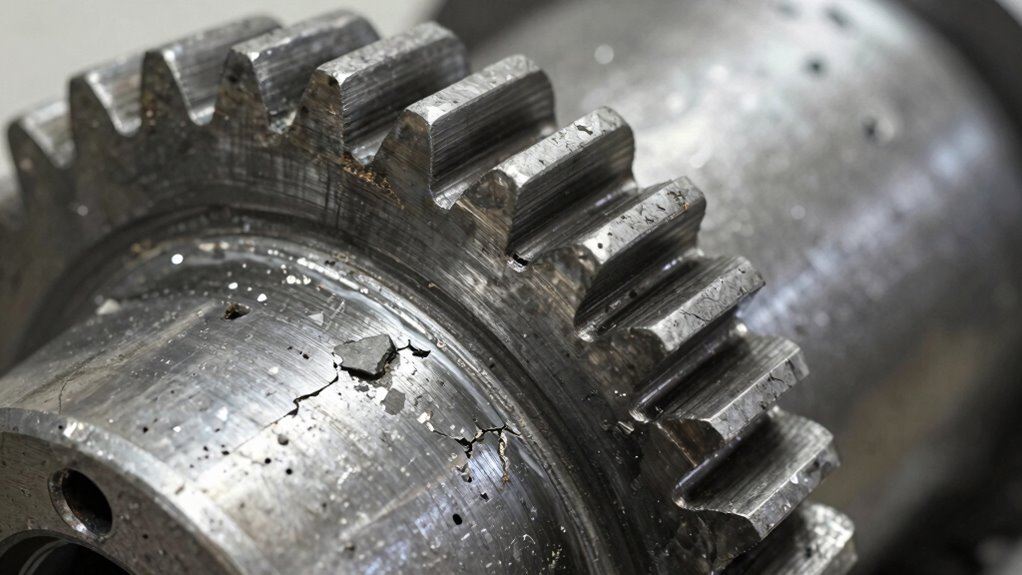

When gears are overloaded, you’ll notice damage like surface pitting, scoring, and spalling on the teeth. Microscopic cracks develop and grow over time, weakening the tooth structure. This often leads to early failure and increased wear. Signs often appear near high contact pressure zones, indicating excessive load or misalignment. If you want to understand how these signs develop and how to prevent them, keep exploring how overload affects gear teeth.

Get business pricing on garage and car supplies
- Business-only prices and quantity discounts
- Tax-exempt purchasing
- Multiple users, one account, clear invoices
Key Takeaways
- Microscopic cracks develop and grow on gear teeth under overload conditions.
- Pitting and surface spalling indicate excessive stress and material fatigue.
- Scoring marks and uneven wear patterns reveal uneven load distribution.
- Accelerated wear and early failure point to overload-induced damage.
- Damage often localizes near high contact pressure zones caused by overload.
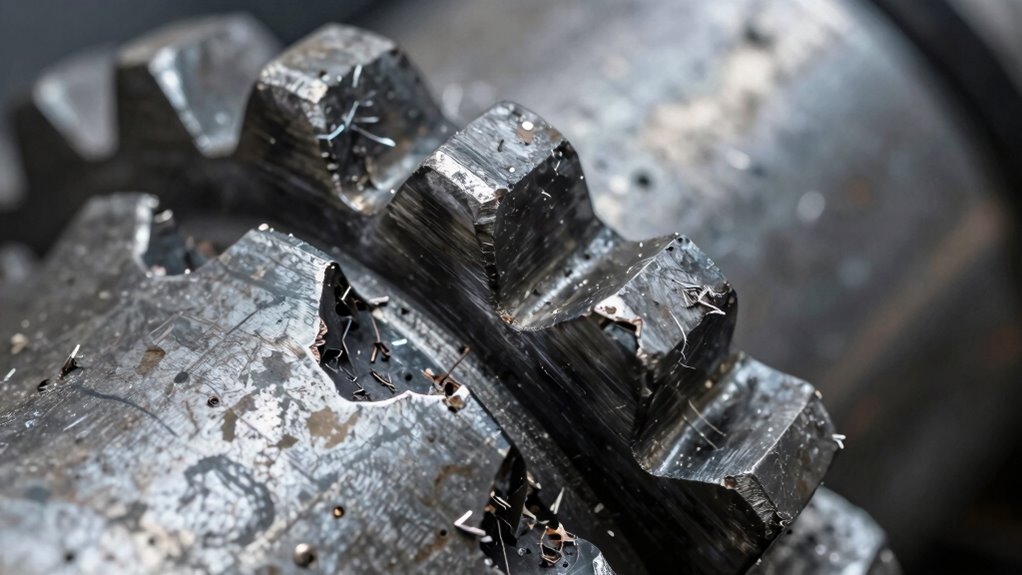
Have you ever wondered what causes gear teeth to break or wear prematurely? One common culprit is overload, which can profoundly impact the gear’s integrity over time. When a gear experiences excessive load beyond its designed capacity, it puts stress on the gear teeth, leading to damage. This overload doesn’t always happen suddenly; often, it’s a gradual process where repeated stress causes material fatigue. Material fatigue occurs when the gear teeth are subjected to cyclic loads, causing microscopic cracks to develop and grow with each cycle. Over time, these cracks weaken the gear tooth structure, making it more susceptible to breaking under even normal operating conditions. Additionally, misalignment issues often go hand-in-hand with overload problems. If the gears aren’t properly aligned, uneven load distribution occurs, concentrating stress on specific teeth rather than spreading it evenly. This localized stress accelerates wear and can cause early failure of gear teeth. Misalignment issues might stem from improper installation, worn bearings, or deformation of supporting components, but regardless of the cause, they amplify the effects of overload. When gears are misaligned, the contact pattern between teeth becomes uneven, leading to higher contact pressure in certain areas. This increased pressure causes faster wear and can induce fatigue cracks, especially if the load is high or sustained. As these cracks develop, the gear tooth becomes weak and more prone to breakage. Overload combined with misalignment creates a vicious cycle—excessive force exacerbates misalignment, which then intensifies material fatigue and wear. Recognizing early signs of overload-related damage is essential; common indicators include pitting, scoring, or spalling on the gear teeth, especially near the areas of highest contact. If you notice these issues, it’s important to inspect for underlying causes like improper load management or misalignment. Regular inspections can also catch early signs of fatigue and misalignment issues before they escalate into serious damage. Understanding how overload manifests in gear tooth damage helps you take proactive steps to maintain gear health. Ensuring proper load management and gear system maintenance can significantly reduce the risk of damage. By addressing excessive loads promptly and correcting alignment issues, you extend the service life of your gears and avoid costly failures. Remember, gears are designed to handle specific loads; exceeding those limits not only accelerates wear but also jeopardizes the entire mechanical system. Staying vigilant about material fatigue and misalignment issues is key to safeguarding your equipment and ensuring smooth, reliable operation.
gear tooth damage inspection tools
As an affiliate, we earn on qualifying purchases.
As an affiliate, we earn on qualifying purchases.
Frequently Asked Questions
Can Overload Damage Be Repaired Without Replacing Gear Components?
Yes, overload damage can sometimes be repaired without replacing gear components. You need to address material fatigue by smoothing or reshaping damaged teeth and improve load distribution to prevent future issues. However, this depends on the extent of the damage; minor fatigue and deformation may be fixed through grinding or welding, but severe damage usually requires gear replacement. Always assess carefully to ensure reliable operation post-repair.
What Are Early Signs of Overload in Gear Systems?
Did you know that gear fatigue can begin after just 10,000 load cycles? Early signs of overload in gear systems include abnormal noise, increased vibration, and slight play or looseness. You might also notice uneven gear wear or minor pitting. These indicators suggest that your gears are experiencing excessive load, which can lead to more serious damage if not addressed promptly. Regular inspections help catch overload early.
How Does Overload Impact Gear Lubrication Needs?
Overload increases the load on your gear teeth, which raises friction and heat, making lubrication more critical. You’ll need to increase lubrication frequency to prevent wear and overheating. Proper lubrication guarantees gear teeth stay protected from excessive wear, especially under overload conditions. Neglecting this can accelerate damage and reduce gear lifespan, so regularly checking and maintaining adequate lubrication is essential for wear prevention when operating under heavy loads.
Are Certain Gear Materials More Resistant to Overload Damage?
Think of gear materials as armor in a battle; some are forged from steel with high resilience, making them more resistant to overload damage. Materials like hardened steel or alloy steels boast superior durability, standing firm against stress. Resistance testing reveals which materials can withstand extreme forces without deformation. Choosing high-resistance materials guarantees your gears won’t buckle under pressure, keeping your machinery running smoothly and reducing costly damage.
How Can Overload Be Prevented in High-Torque Applications?
To prevent overload in high-torque applications, you should focus on gear design and overload mitigation strategies. Select gears made from durable materials, optimize gear ratios, and guarantee proper sizing to handle torque loads. Incorporate overload protection devices, like shear pins or torque limiters, and regularly inspect gear systems for signs of stress. These steps help you maintain gear integrity, prevent damage, and extend the lifespan of your gear systems.
As an affiliate, we earn on qualifying purchases.
Conclusion
When you push your gears beyond their limit, you’re like a weightlifter overestimating their strength—eventually, something’s gotta give. Overload isn’t just a bump in the road; it’s the silent thief that steals your gear’s health, leading to cracks and damage. Stay attentive and keep your gear’s workload in check. Think of it as giving your machine a gentle pat instead of a harsh shove—your gear will thank you with a longer, smoother life.
As an affiliate, we earn on qualifying purchases.
As an affiliate, we earn on qualifying purchases.
Fall Picks
fall essentials
As an affiliate, we earn on qualifying purchases.