
Overloading quietly damages gearboxes by causing heat buildup and stress that often go unnoticed until it’s too late. Excessive loads generate heat faster than the lubrication system can handle, leading to oil breakdown and increased wear. Over time, microscopic cracks form and grow, weakening components without obvious signs. This silent deterioration can lead to sudden failure if ignored. Want to understand how to spot these issues early? Keep going to learn more.
Key Takeaways
- Overloading generates heat that accelerates lubricant breakdown, leading to increased friction and unnoticed wear.
- Excessive load causes microscopic cracks in gears and shafts, gradually weakening components without immediate signs.
- Heat and fatigue from overloading work together to silently degrade gear material integrity over time.
- Continuous stress exceeds design limits, causing internal damage that often remains undetected until catastrophic failure.
- Lack of visible symptoms makes overloading damage difficult to detect early, allowing issues to accumulate silently.
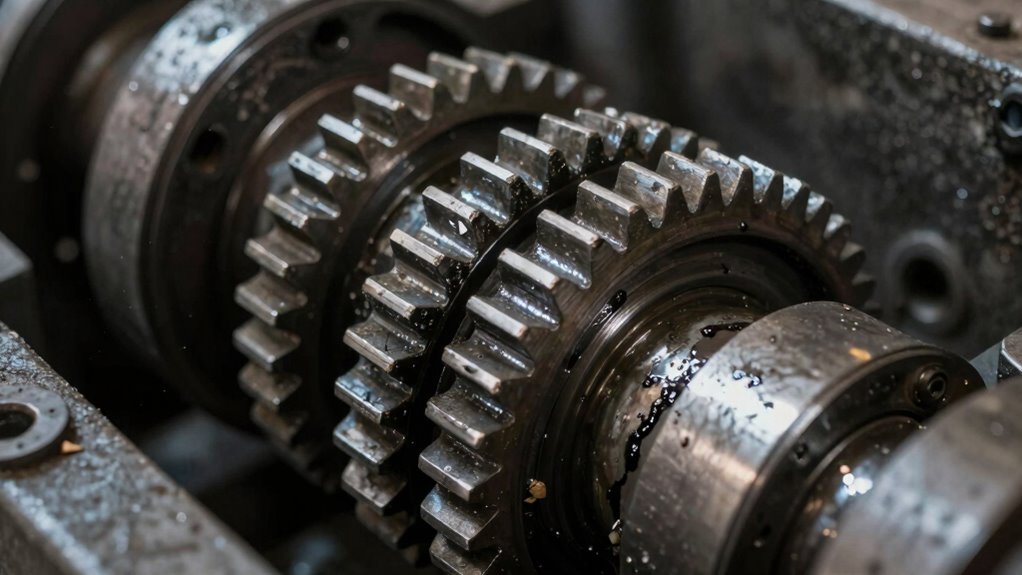
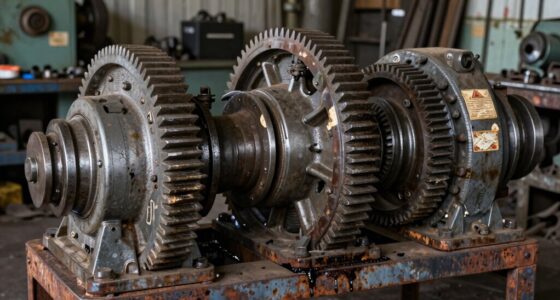
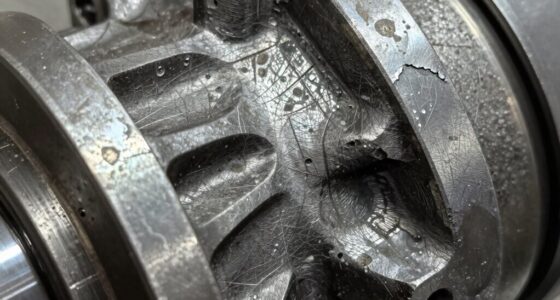
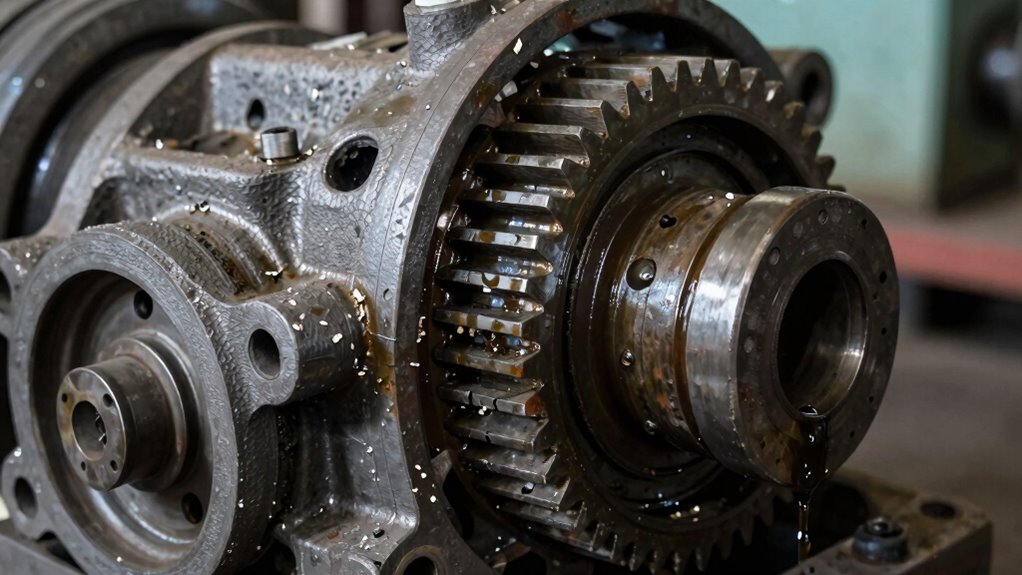
Have you ever wondered what happens when a gearbox is pushed beyond its limits? It’s not always obvious at first, but overloading silently chips away at its components, leading to eventual failure. One of the main issues you’ll encounter is lubrication challenges. When a gearbox is subjected to excessive load, heat builds up faster than the lubrication system can handle. This heat causes the oil to break down prematurely, losing its ability to reduce friction effectively. Without proper lubrication, metal parts begin to grind against each other, accelerating wear and increasing the risk of damage. Over time, the lubricant’s protective layer diminishes, exposing gears and bearings to direct metal-to-metal contact that hastens deterioration. Understanding lubrication challenges highlights how critical proper maintenance is to prevent silent damage. Beyond lubrication problems, material fatigue plays a significant role in the gearbox’s decline. Every time you overload the system, the gears and shafts endure stress that exceeds their design limits. While they might seem fine initially, these repeated stresses cause microscopic cracks to develop within the metal. Over time, these tiny cracks grow and coalesce, weakening the structural integrity of the components. The fatigue process is insidious because it happens gradually, often without immediate signs of trouble. You might not notice any unusual noise or vibration until the damage becomes severe enough to cause a catastrophic failure. What makes overloading particularly dangerous is how quietly it destroys the gearbox. You might not see any immediate signs of trouble; the components continue to operate under stress, slowly degrading. The heat generated from excessive load adds to the problem by thinning the lubricant and increasing wear rates. Meanwhile, the ongoing material fatigue weakens the gears, making them more susceptible to breaking under stress. This combination of lubrication challenges and material fatigue means your gearbox is doomed to fail eventually, often at the most inconvenient time. Understanding these hidden dangers emphasizes the importance of adhering to manufacturer guidelines and avoiding overloading. Regular inspections, proper lubrication practices, and respecting load capacities can save you from costly repairs and downtime. Overloading might seem like a quick way to get more work done, but in reality, it’s quietly eroding the very foundation of your gearbox’s longevity. The damage is cumulative, and once the cracks reach a critical point, repairs become more complex and expensive. So, take care of your gearboxes now — because ignoring the signs of overloading only leads to silent, inevitable destruction.

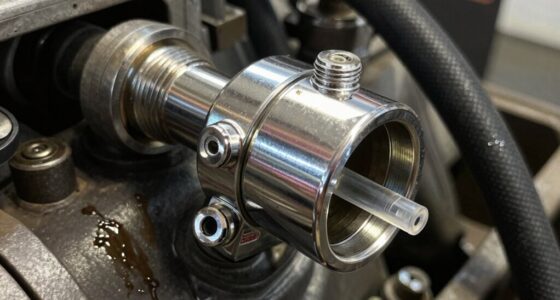
Saihisday 5N0317027B Transmission Oil Cooler Line Temperature Valve Assembly Replacement for Tiguan 2008-2018 6-Speed Automatic Gearbox AQ450 Replaces 5N0317825 5N0317825A
- Part Numbers Replaced: Multiple OEM part numbers supported
- Vehicle Compatibility: Fits Tiguan 2008-2018 with 6-Speed Automatic
- Material Quality: Made of durable, heat-resistant metal
As an affiliate, we earn on qualifying purchases.
As an affiliate, we earn on qualifying purchases.
Frequently Asked Questions
How Can I Tell if My Gearbox Is Overloaded?
You can tell if your gearbox is overloaded by checking for overload indicators like unusual noise, excessive heat, or vibrations. Also, inspect the gearbox lubrication; if it appears burnt or contaminated, it’s a sign of overloading. Regularly monitor strain gauges or torque measurements to catch early signs of overload. If you notice these signs, reduce the load immediately to prevent damage and guarantee proper lubrication for smooth operation.
What Are the Long-Term Effects of Slight Overloading?
Slight overloading can cause gearbox fatigue over time, weakening its internal components and reducing lifespan. You might notice decreased operational efficiency, with increased noise or vibrations as signs. If you ignore these issues, it can lead to premature failure, costly repairs, and downtime. To prevent long-term damage, regularly monitor load levels and maintain proper lubrication, ensuring your gearbox operates smoothly and lasts longer.
Does Overloading Cause Immediate Gearbox Failure?
Imagine a gearbox overload like a sudden crack in a dam—immediate failure isn’t always the case. Usually, it quietly weakens internal components, leading to gradual damage. Sudden failure can happen if the overload exceeds the gearbox’s limit drastically, but more often, the damage accumulates silently until it causes a catastrophic breakdown. So, while immediate failure isn’t guaranteed, overloading considerably increases the risk of sudden failure over time.
Are There Specific Industries More Prone to Overloading Gearboxes?
Certain industries, like manufacturing, mining, and construction, are more prone to overloading gearboxes. These sectors often push equipment beyond industry standards and load capacity to meet tight deadlines or increase output. You should regularly monitor load conditions and adhere to recommended load capacities, as overloading can quietly damage gearboxes over time. Staying within industry standards helps prevent premature failures and extends your gearboxes’ lifespan.
Can Regular Maintenance Prevent Damage From Overloading?
Maintenance can definitely help you prevent damage from overloading. Regularly check gearbox lubrication to keep parts moving smoothly and prevent overheating. Installing overload sensors alerts you to excessive loads before serious harm occurs. Routine inspections and timely servicing catch issues early, saving you costly repairs. By staying proactive with proper lubrication and overload detection, you strengthen your gearbox’s resilience, ensuring it endures even under challenging conditions.
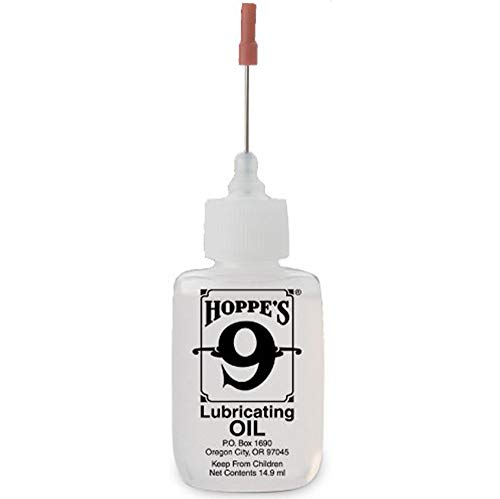
Hoppe's No. 9 Lubricating Oil, 14.9 ml Precision Bottle
- Country of Origin: United States
- Package Height: 1 inch
- Package Length: 1 inch
As an affiliate, we earn on qualifying purchases.
As an affiliate, we earn on qualifying purchases.
Conclusion
Don’t disregard the danger of overloading your gearbox. It may seem minor, but over time, it quietly causes costly catastrophes. By being mindful and managing loads meticulously, you prevent premature wear and costly repairs. Remember, small stresses can silently sabotage your system’s strength. Stay vigilant, avoid overloading, and keep your gearboxes going smoothly. Protect your investment with proper precautions—because prevention is the best plan to preserve your machinery’s longevity and performance.
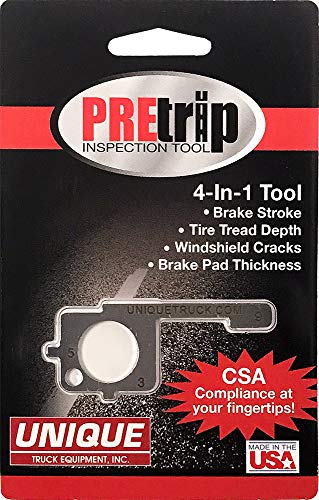
Unique Truck Equipment Pre-Trip Inspection Tool – 4-in-1 Inspection Tool for Drivers and Mechanics
- Tire Tread Depth Inspection: Check tire tread on driver and steer tires
- Brake Stroke Inspection: Quickly assess brake stroke compliance
- Brake Lining Thickness Gauge: Go-No-Go gauge for brake lining
As an affiliate, we earn on qualifying purchases.
As an affiliate, we earn on qualifying purchases.
gearbox stress testing equipment
As an affiliate, we earn on qualifying purchases.
As an affiliate, we earn on qualifying purchases.