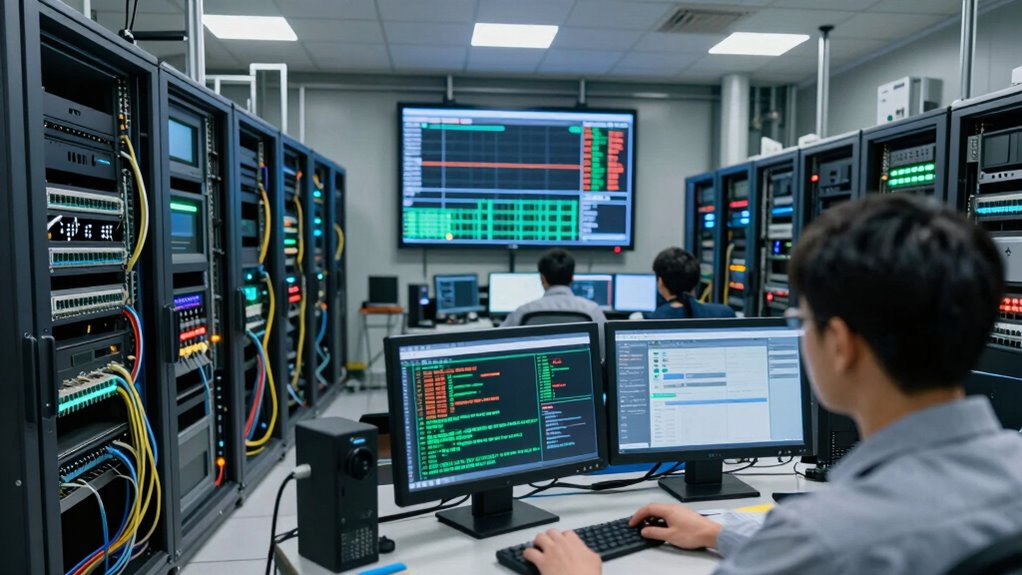
Sampling from the wrong port can seriously jeopardize your process data, leading to misleading readings and faulty decisions. It compromises data integrity, causes unnecessary adjustments, and may even result in equipment damage or safety issues. Ensuring you select the correct sampling point and verify sensor calibration is essential for accurate, reliable information. Staying vigilant and following proper procedures helps prevent costly mistakes—if you want to learn more about avoiding this industrial data disaster, keep exploring these key tips.
Key Takeaways
- Sampling from incorrect ports leads to unrepresentative data, causing flawed process decisions.
- Choosing the wrong port undermines data accuracy, risking process inefficiencies or safety hazards.
- Proper port verification and flow checks are essential to ensure samples reflect true process conditions.
- Inadequate staff training and maintenance increase the likelihood of sampling errors and data distortions.
- Adhering to correct procedures and calibration practices safeguards data integrity and operational safety.

Have you ever sampled from the wrong port and wondered how it affected your results? It’s a common mistake that can have serious consequences in industrial environments. When you select an incorrect sampling port, you compromise the integrity of your data from the start. Proper sensor calibration is essential to guarantee that sensors are reading accurately, but if the sampling port isn’t chosen correctly, even perfectly calibrated sensors can provide misleading information. This small oversight can cascade into larger issues, affecting decision-making, process control, and overall safety.
Sampling from the wrong port may seem like a minor error, but it undermines data integrity at its core. Data integrity means that your measurements are consistent, accurate, and trustworthy. When you use an incorrect port, the data collected may not reflect the true state of your system or process, leading to false readings or overlooked problems. For example, if you’re monitoring fluid levels, temperature, or chemical concentrations, sampling from an unrepresentative location can produce skewed results. Over time, these inaccuracies can cause you to make misguided adjustments, waste resources, or even cause equipment failures.
To prevent this, focus on correct sensor calibration and sampling procedures. Before collecting data, verify that your sensors are calibrated properly for the specific conditions they’ll encounter. Calibration ensures that the sensor’s output aligns with known standards, which is crucial for maintaining data integrity. Simultaneously, confirm that you’re sampling from the right port—one that truly reflects the process you’re monitoring. This might involve consulting schematics, performing flow checks, or validating sample locations regularly. Ignoring these steps can lead to discrepancies that distort your understanding of the process.
Additionally, it’s essential to establish clear protocols for sampling and sensor maintenance. Train staff to double-check port selection and calibration status before taking measurements. Implement routine audits to verify that sampling points are correctly identified and that sensors remain calibrated over time. These practices help catch errors early before they influence critical decisions. Remember, even a small mistake in port selection can introduce errors that compromise your entire data set, leading to costly errors or safety risks.
In the end, safeguarding data integrity starts with attention to detail. Proper sensor calibration and correct port sampling are fundamental. They ensure that your data accurately reflects reality, empowering you to make informed decisions, optimize processes, and uphold safety standards. Don’t let a simple mistake like sampling from the wrong port jeopardize your operation—invest in correct procedures now to prevent costly errors down the line.

Sensokart Pressure and Vacuum Hand Pump Calibrator (Range:-13 to 435 psi) for Calibration Labs and Field Calibrations (with Pressure/Vacuum Gauge, Range: -14 to 362 PSI) | Model SK-2200-DPG
- Calibration Range: -14 to 362 PSI (Vacuum & Pressure)
- Dual Functionality: Generates pressure and vacuum
- Application: Calibrates gauges, transmitters, sensors
As an affiliate, we earn on qualifying purchases.
As an affiliate, we earn on qualifying purchases.
Frequently Asked Questions
How Can Companies Detect Sampling Errors Early?
To detect sampling errors early, you should perform regular sampling validation and port verification. By consistently checking your data sources and confirming you’re sampling from the correct port, you catch potential issues before they escalate. Implement automated alerts for anomalies and discrepancies, and document your validation processes. This proactive approach guarantees you identify errors quickly, maintaining data integrity and preventing costly industrial data disasters.
What Are the Long-Term Impacts of Data Mis-Sampling?
You face long-term impacts like persistent sampling bias that distort your data insights and erode data integrity over time. This can lead to flawed decision-making, reduced operational efficiency, and lost trust among stakeholders. If unchecked, these issues compound, making your data unreliable and your business vulnerable to strategic errors. Regularly auditing your sampling methods helps prevent these long-term consequences and maintains the accuracy of your data.
Are There Industry Standards for Proper Sampling Methods?
You should follow industry standards for proper sampling methods, which include strict sampling protocols and thorough data validation. These standards guarantee your data accurately reflects the system you’re monitoring, reducing errors caused by incorrect sampling. By adhering to established protocols, you prevent data misinterpretation and maintain system integrity. Always validate your data after sampling, confirming it aligns with expected parameters, to avoid costly mistakes and ensure reliable decision-making.
What Tools Assist in Verifying Correct Sampling Ports?
Imagine a toolkit as your guiding compass, helping you verify sampling ports. You rely on calibration protocols to guarantee instruments read accurately, and sampling validation checks confirm you’re sampling from the correct port. Tools like portable analyzers, flow meters, and port identification labels serve as your navigational aids. They help prevent errors, ensuring data integrity and smooth industrial operations by guiding you precisely where you need to sample.
How Does Sampling Error Affect Decision-Making Accuracy?
Sampling error can considerably impact your decision-making accuracy by introducing sampling bias, which skews data and leads to incorrect conclusions. When data integrity is compromised, you might make choices based on unreliable information, risking operational inefficiencies or safety issues. Ensuring proper sampling techniques maintains data quality and reduces errors, enabling you to make better-informed decisions that truly reflect the system’s state and support ideal outcomes.
sampling port verification devices
As an affiliate, we earn on qualifying purchases.
As an affiliate, we earn on qualifying purchases.
Conclusion
If you keep sampling from the wrong port, you’ll end up with data that’s as useful as a floppy disk in a cloud storage world. Remember, accuracy isn’t just a modern luxury; it’s as essential as the compass was to sailors of yore. Don’t let your data lead you astray like a ship lost at sea. Double-check your sources, stay vigilant, and avoid the industrial data disaster that comes from trusting the wrong port.

Plast-O-Matic GGMEV1-PP Gauge Guard
- Package Height: 10.0 cm
- Package Length: 5.8 cm
- Package Width: 8.6 cm
As an affiliate, we earn on qualifying purchases.
As an affiliate, we earn on qualifying purchases.

Sacred Sampling Heavy Metals Water Test Kit — Laboratory Analysis for Heavy Metals | Mail-in Drinking Water Sample Collection Kit | Accredited & Certified ICP-MS Laboratory Result
- Complete Professional Testing Kit: Includes sample bottles, guide, and shipping label
- Tests for 13 Heavy Metals: Measures aluminum, arsenic, barium, cadmium, and more
- EPA Method ICP-MS Analysis: Uses advanced ICP-MS technology for precise detection
As an affiliate, we earn on qualifying purchases.
As an affiliate, we earn on qualifying purchases.