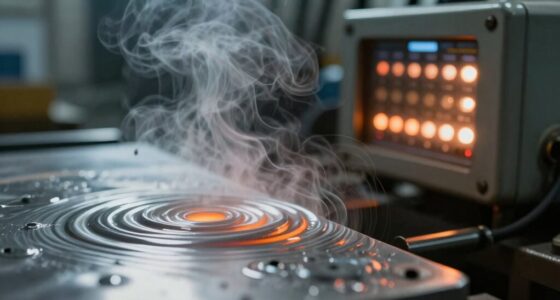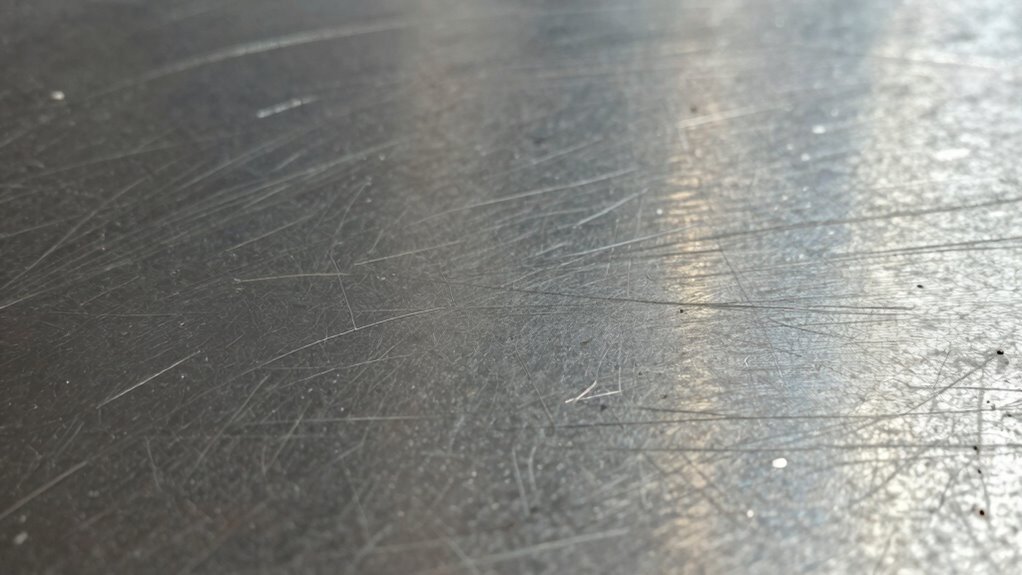

To identify abrasive wear in wear patterns, look for straight, narrow scratches or grooving on the surface that align with the sliding direction. Feel for increased roughness or gritty textures and check for debris like dirt or metal shavings embedded in the surface. Consistent, linear wear marks suggest abrasive action, especially if surface roughness has risen beyond normal levels. Continuing further will help you recognize detailed signs and preventive measures to mitigate this type of wear.
Key Takeaways
- Look for straight, narrow scratches or gouges aligned with contact direction.
- Identify surface roughness increases and surface irregularities beyond baseline measurements.
- Detect debris like dirt or grit embedded in the surface or environment.
- Observe wear patterns that are linear or angular, indicating sliding abrasive action.
- Use profilometry to quantify surface roughness and monitor its progression over time.
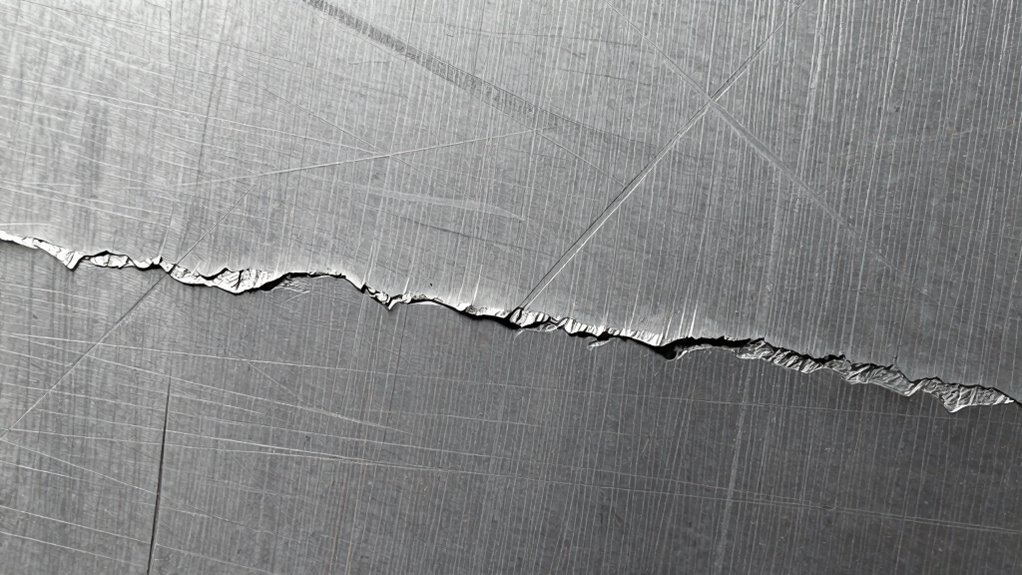
Have you ever noticed unusual scratching or roughness on a machine’s surface? If so, it might be a sign of abrasive wear. Recognizing these signs early can save you time and money by preventing further damage. One of the key indicators is changes in surface roughness, which often results from material removal caused by abrasive particles. When these particles embed into or slide across the surface, they remove tiny amounts of material, gradually altering the surface’s texture. Over time, this process creates distinctive wear patterns that can be spotted upon close inspection.
To identify abrasive wear, start by examining the surface for irregularities. You may notice a pattern of scratches, gouges, or a roughened texture that wasn’t there before. These marks are typically linear or angular, aligned with the direction of motion or contact. The surface roughness becomes more pronounced as the material removal accelerates, leading to a gritty feel or a visibly uneven surface. Using a surface profilometer can help quantify roughness levels, making it easier to compare against baseline measurements or industry standards. An increase in surface roughness is a telltale sign that abrasive particles are actively eroding the material.
Irregular scratches and increased roughness signal abrasive wear on machine surfaces.
Next, pay attention to the context and operating conditions. Abrasive wear often occurs when hard particles—like dirt, grit, or metal shavings—are introduced into the working environment. These particles act as abrasives, grinding against the machine components and progressively removing material. If you notice a sudden increase in surface roughness after a period of operation, consider whether contaminated materials or insufficient lubrication might be responsible. Regular inspections and keeping the environment clean can help prevent or slow down abrasive wear.
Another way to identify abrasive wear is by analyzing the wear patterns. Unlike corrosion or adhesive wear, which tend to produce irregular or localized damage, abrasive wear often exhibits straight, narrow grooves or scratches that follow a consistent direction. These patterns indicate that particles are sliding across the surface in a specific direction, gradually removing material. Over time, the accumulation of these scratches can lead to significant degradation of surface quality, affecting performance. Recognizing these distinctive wear patterns early can help in diagnosing the cause and implementing corrective measures.

AMTAST Surface Roughness Meter Digital Surface Gauge Handheld Surface Roughness Tester Meter with 22 Parameters Portable Profilometer for Accurate Surface Measurement (Model AMT220)
- Innovative Design: Transformers-inspired lightweight profilometer
- Wide Compatibility: Supports ISO, DIN, ANSI, JIS standards
- Clear OLED Display: 128×64 high-brightness graphical screen
As an affiliate, we earn on qualifying purchases.
As an affiliate, we earn on qualifying purchases.
Frequently Asked Questions
Can Abrasive Wear Occur Without Visible Surface Damage?
Yes, abrasive wear can occur without visible surface damage. You might notice surface discoloration or micro cracking that indicates abrasive action, even if the surface looks intact. These subtle signs suggest material removal at a microscopic level, which can eventually lead to more visible wear. Keep an eye out for discoloration and tiny cracks, as they often signal ongoing abrasive wear before major surface damage becomes apparent.
How Does Abrasive Wear Differ From Corrosive Wear?
Oh, the drama of wear types! Abrasive wear, with its scratching and gouging, differs sharply from corrosive wear, which silently eats away through chemical reactions. You can tell them apart by examining material hardness—abrasive particles cut like tiny blades—versus corrosion, which shows pitting and surface etching. Wear particle analysis helps you identify whether hard debris caused the damage or if chemical reactions did, saving your equipment from further destruction.
What Role Do Lubrication Conditions Play in Abrasive Wear?
Lubrication conditions are essential in controlling abrasive wear. When lubrication effectiveness drops, metal particles or contaminants can become trapped between surfaces, increasing abrasion. Poor lubrication allows dirt and debris to act as abrasives, accelerating wear. Conversely, proper lubrication minimizes direct contact, reducing contamination impact and protecting your equipment from abrasive damage. Regular maintenance and selecting the right lubricant are key to preventing abrasive wear caused by lubrication issues.
Are Certain Materials More Prone to Abrasive Wear?
You might worry that some materials are more prone to abrasive wear, but it’s actually about their hardness and surface finish. Harder materials resist abrasive particles better, reducing wear. If your surfaces have a smooth finish, they’re less vulnerable to abrasive damage because rough surfaces trap particles more easily. So, choosing materials with higher hardness and maintaining a good surface finish can dramatically extend your equipment’s lifespan and prevent costly failures.
Can Abrasive Wear Be Completely Prevented?
Abrasive wear can’t be completely prevented because it’s driven by the wear mechanism involving material hardness differences. However, you can minimize it by selecting materials with higher hardness, applying protective coatings, and ensuring proper lubrication. Regular maintenance and adjusting operating conditions also help reduce abrasive wear. While total prevention isn’t possible, these steps considerably extend your equipment’s lifespan and improve performance, making abrasive wear less damaging overall.

2Pcs Inductance Tester,Type-C Detectors Inductance Tester, Motherboards Coils Tester for Quick Fault Detection Check Tool for PC&Phone Repair
- Instant Fault Detection: Non-contact testing for quick results
- Type-C Universal Connectivity: Compatible with smartphones, tablets, laptops
- One-Press Start: Simple, plug-and-play operation
As an affiliate, we earn on qualifying purchases.
As an affiliate, we earn on qualifying purchases.
Conclusion
By paying attention to the sharp edges, uneven surfaces, and scratch marks, you can effectively identify abrasive wear. Recognize the signs early, understand the causes behind the wear, and take action to prevent further damage. Stay vigilant, keep inspecting, and maintain your equipment regularly. Detecting abrasive wear isn’t just about spotting the flaws; it’s about safeguarding your machinery, extending its lifespan, and ensuring peak performance every time you use it.

Copkim 1 Pcs Inspection Mirror Kit 17.5 Inches Long 360° Rotation Welding Mirror with Magnetic Base Adjustable Mount for Mechanical Maintenance/Automotive Inspection
- Dual Inspection Mirrors: Includes two 17.5-inch mirrors for versatility
- Durable Metal Construction: Built with long-lasting metal surface and finishes
- Magnetic Base for Stability: Secure attachment to metal surfaces
As an affiliate, we earn on qualifying purchases.
As an affiliate, we earn on qualifying purchases.

SUNNYSONG Professional Surface Roughness Tester with Detachable Drive Metal Surface Roughness Gauges KR310
- Portable Handheld Design: Suitable for production sites and mobile use
- Comprehensive Measurement Functions: Displays parameters and contour graphics
- Easy to Operate: Fast, stable, and accurate measurements
As an affiliate, we earn on qualifying purchases.
As an affiliate, we earn on qualifying purchases.