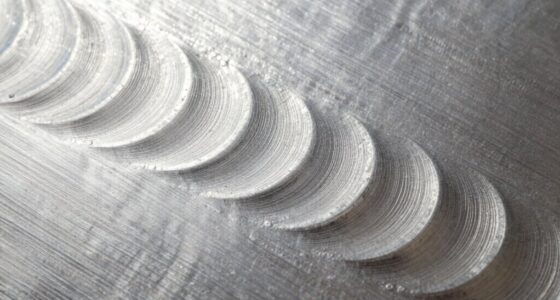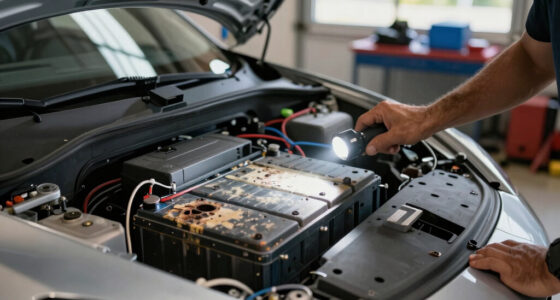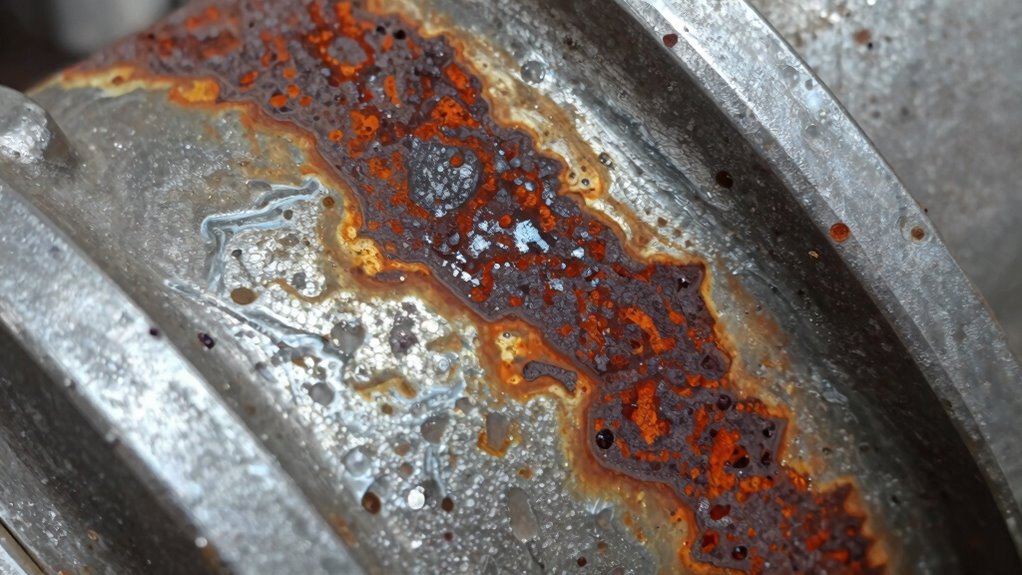
To identify corrosion wear in gearboxes, look for visible signs like rust, discoloration, and surface pitting on gear components. Check for areas where moisture has trapped and caused surface deterioration, often accompanied by increased grime or dirt buildup. Listen for unusual noises and feel for vibration changes during operation, which may suggest internal damage. Recognizing these signs early helps prevent further damage—continue exploring to discover how to spot corrosion before it worsens.
Key Takeaways
- Inspect gear surfaces regularly for rust, discoloration, or corrosion spots, especially in moisture-prone areas.
- Use magnification tools or borescopes to detect tiny cracks, pitting, or surface roughness caused by corrosion.
- Monitor lubricant quality for signs of contamination, sludge buildup, or viscosity changes indicating deterioration.
- Listen for abnormal noises like squealing or grinding, which may signal corrosion-related wear.
- Check for increased vibration or unusual operation patterns linked to compromised gear surfaces due to corrosion.
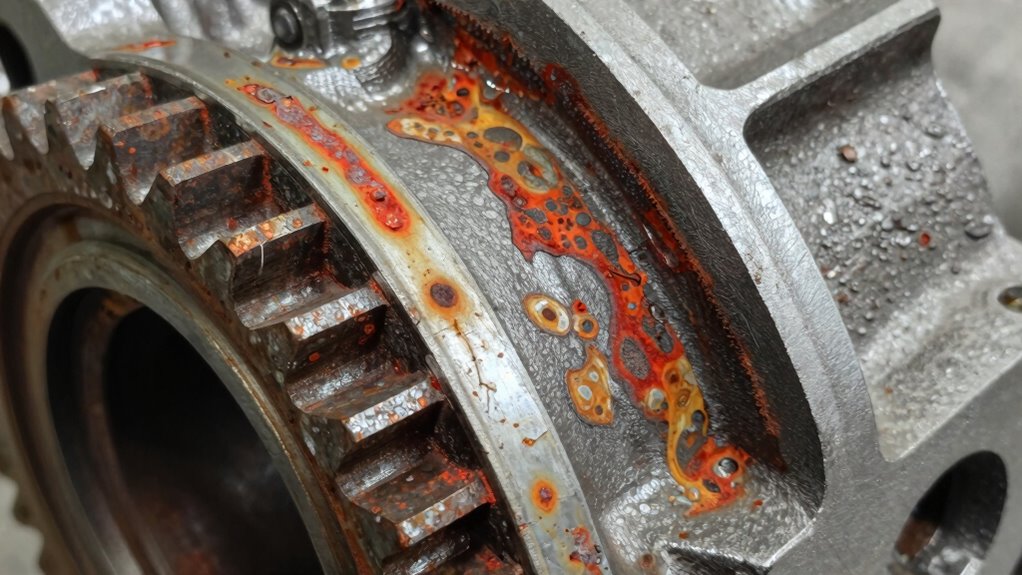
Corrosion wear is a common issue that can substantially compromise the performance and longevity of gearboxes. When corrosion begins to set in, it often signals underlying problems that need immediate attention. One of the primary signs is the presence of lubrication issues. If you notice that the lubricant becomes contaminated more quickly or if there’s a persistent buildup of sludge and debris, it could be a sign that corrosion is developing inside the gearbox. Corroded surfaces tend to trap dirt and moisture, which can interfere with proper lubrication, leading to increased friction and wear. This cycle accelerates damage, making it vital to monitor lubricant quality and replace it regularly. Pay close attention to unusual changes in viscosity or the appearance of the lubricant—these are often early indicators of corrosion-related deterioration. Regular maintenance checks can help detect early signs of corrosion before extensive damage occurs.
Material fatigue is another critical factor linked to corrosion wear. Over time, corrosion weakens the structural integrity of gearbox components, causing them to become more susceptible to fatigue failure. Look for signs like tiny cracks or pitting on gear teeth and bearing surfaces. These are often the first visible signs that corrosion is undermining the material’s strength. When corrosion progresses, it causes uneven surface roughness, which increases localized stress on the components during operation. This stress can lead to premature fatigue failure, resulting in gear misalignment, increased vibration, or even catastrophic breakdowns. Regular inspections, especially after periods of downtime or when the gearbox has been exposed to harsh environments, can help you detect these signs early. Use magnification tools or borescopes to examine gear teeth and surfaces for pitting, discoloration, or corrosion spots.
Another way to identify corrosion wear is by listening for unusual noises during operation. Corrosion often causes irregularities on gear surfaces, which can lead to increased vibration and abnormal sounds such as squealing or grinding. These noises are often early clues that corrosion has compromised the gear’s smooth operation. Additionally, visual inspection remains one of your most reliable tools. Look for rust or discoloration, especially in areas where moisture may collect or where protective coatings have worn away. If corrosion is visible, it’s likely that the internal components are also affected, even if they aren’t immediately apparent. Recognizing corrosion indicators early can save significant repair costs and downtime.

Transmission Fluid Tester Kit Gasoline & Diesel Gearbox Oil Diagnostic Tool High-Precision Diagnostic Analysis Tool with 31.5in Probe Transmittance/Temperature Testing, 2.8in Display (4 Batteries)
- Advanced optical transmission oil probe: Measures light transmittance for wear particles
- High-precision temperature sensor: Provides accurate oil temperature readings (-10°C to 125°C)
- Universal transmission oil analysis: Diagnoses gasoline and diesel transmission fluids
As an affiliate, we earn on qualifying purchases.
As an affiliate, we earn on qualifying purchases.
Frequently Asked Questions
Can Corrosion Wear Occur Without Visible Signs?
Yes, corrosion wear can occur without visible signs. You should perform pitting detection and lubrication analysis regularly to catch early corrosion signs that aren’t visible. Pitting detection helps identify tiny, localized corrosion spots, while lubrication analysis reveals contamination or chemical changes indicating corrosion processes. By monitoring these factors, you can detect corrosion wear early, preventing costly damage and ensuring your gearbox stays in excellent condition.
What Environmental Factors Accelerate Corrosion in Gearboxes?
Ironically, the very environment meant to support your gearbox can hasten its demise. Environmental contaminants like salt, chemicals, and dirt, combined with moisture ingress, create a perfect storm that accelerates corrosion. These factors weaken protective layers and promote rust, leading to wear and failure. To protect your gearboxes, keep environments clean, seal all openings, and control humidity levels—because neglecting these factors invites corrosion to take hold faster than you’d expect.
How Does Corrosion Wear Impact Gearbox Performance?
Corrosion wear considerably impacts your gearbox performance by causing lubrication degradation and material fatigue. As corrosion progresses, it creates rough surfaces that increase friction and reduce lubrication effectiveness, leading to overheating and faster wear. Over time, material fatigue weakens gearbox components, risking sudden failures. You’ll notice decreased efficiency, increased noise, and potential breakdowns, emphasizing the importance of early corrosion detection to maintain ideal gearbox operation and longevity.
Are There Specific Tests to Detect Early Corrosion Wear?
Start with surface analysis and electrochemical testing to detect early corrosion wear. Surface analysis involves examining the gearbox surfaces for subtle signs of deterioration, while electrochemical testing measures corrosion potential and rate. These techniques help you identify corrosion in its infancy, preventing costly damage. By routinely applying these tests, you can catch corrosion wear early, ensuring ideal gearbox performance and longevity.
What Are the Best Preventive Measures Against Corrosion?
You can prevent corrosion by applying protective coatings like paint or sealants to your gearbox surfaces, creating a barrier against moisture and chemicals. Regularly using proper lubrication techniques also helps protect metal parts from corrosion, reducing exposure to corrosive elements. Make sure to inspect and maintain these measures consistently, especially in harsh environments. Combined, protective coatings and effective lubrication markedly extend your gearbox’s lifespan and keep corrosion at bay.

Endoscope Camera with Light,1920P HD Borescope with 8 Adjustable LED Lights
- High-Resolution Imaging: 1920P HD view for detailed inspection
- Universal Compatibility: Plug-and-play with iOS and Android devices
- Long, Flexible Cable: 16.4ft semi-rigid, shape-holding cable
As an affiliate, we earn on qualifying purchases.
As an affiliate, we earn on qualifying purchases.
Conclusion
So, next time your gearbox starts acting up, don’t ignore those sneaky signs of corrosion wear. Remember, ignoring corrosion is like ignoring a leaky faucet—eventually, it’ll flood your entire system. Spotting it early keeps your machinery happy and your wallet intact. So, be the hero who catches corrosion before it turns your gearbox into a rust-covered relic. After all, nobody wants a gearbox that looks like it’s been through a rust Olympics!
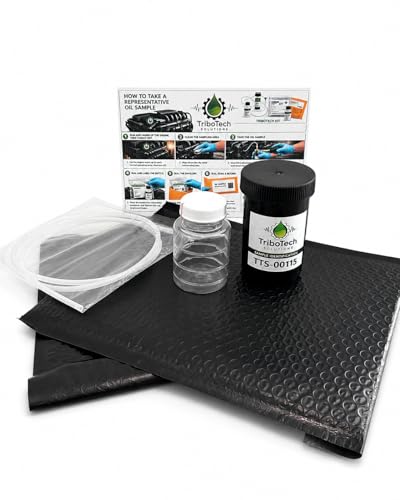
TriboTech Basic Oil Analysis Kit, Return Shipping Included, Oil Test Kit for Engines, Transmissions, Gearboxes and Hydraulic Systems
- Comprehensive Oil Analysis: Monitors wear, contamination, and condition
- Multi-Parameter Testing: Analyzes metals, additives, viscosity, and more
- Universal Compatibility: Suitable for engines, transmissions, hydraulics, and gearboxes
As an affiliate, we earn on qualifying purchases.
As an affiliate, we earn on qualifying purchases.

Headlamp Rechargeable, 230° Wide Beam Head Lamp LED with Motion Sensor for Adults – Camping Accessories Gear, Waterproof Head Light Flashlight for Hiking, Running, Repairing, Fishing, Cycling
- Wide Beam Coverage: 230° illumination for broad visibility
- Spotlight Function: Focus on specific areas
- Motion Sensor Activation: Hands-free on/off with wave
As an affiliate, we earn on qualifying purchases.
As an affiliate, we earn on qualifying purchases.