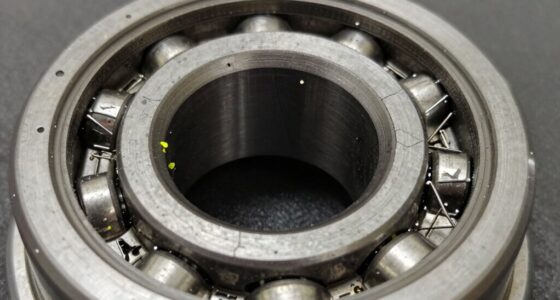
To spot a failing bearing before it gets loud, pay attention to signs like unusual vibrations, which may feel like shaking or oscillations in equipment. Listen for abnormal noises such as grinding, squealing, or knocking sounds. Check the lubrication, ensuring it’s sufficient and clean, since dry or contaminated grease can signal trouble. Look for signs of wear like pitting or scoring. If you want to catch issues early, noticing these signs can save you costly repairs—keep exploring to learn more.

Get business pricing on garage and car supplies
- Business-only prices and quantity discounts
- Tax-exempt purchasing
- Multiple users, one account, clear invoices
Key Takeaways
- Regularly check lubrication levels and quality; dry or contaminated grease indicates potential failure.
- Listen for early abnormal noises like squealing or grinding during operation.
- Monitor for unusual vibrations or oscillations that suggest internal issues.
- Inspect bearings for visible signs of wear such as pitting, scoring, or uneven surfaces.
- Observe equipment for increased heat or temperature rise around the bearing area.

A failing bearing can cause serious damage if not identified early, so it’s important to know the signs. One of the earliest indicators of trouble is lubrication issues. When a bearing isn’t properly lubricated, it can lead to increased friction and heat, accelerating wear and tear. You might notice that the bearing feels unusually hot or that there’s a lack of smoothness during operation. Insufficient or contaminated lubricant can cause metal-to-metal contact, which not only hampers performance but also damages the bearing material over time. Regularly check lubrication levels and quality; if you see signs of dried or contaminated grease, it’s a clear warning that the bearing isn’t operating effectively.
Early bearing failure signs include overheating and rough operation due to lubrication issues.
Another key sign to watch for is bearing material wear. Over time, the components inside a bearing can deteriorate due to constant movement and stress. When wear occurs, you may observe pitting, scoring, or uneven surfaces on the bearing’s rollers or races. This degradation weakens the overall structure, making the bearing more prone to failure. Often, bearing material wear is subtle at first, but it can be detected by increased vibration or slight abnormal noises during operation. If these signs are ignored, the wear can escalate, leading to larger cracks or even complete failure of the bearing.
Listening for changes in sound is also vital. A healthy bearing should operate quietly, with only a smooth humming or whirring. As it begins to fail, you might hear grinding, squealing, or knocking sounds. These noises often originate from increased friction caused by lubrication issues or material wear. The noise tends to grow louder over time, signaling that the internal components are deteriorating and that the bearing is nearing failure. Addressing these auditory signs early can prevent costly repairs and downtime.
Vibration is another telltale sign. When a bearing starts to fail, it often causes irregular vibrations in the equipment. This is because the internal components lose their proper alignment or become imbalanced due to wear. If you notice unusual shaking or oscillations during operation, it’s likely a sign that the bearing’s internal condition has deteriorated. Ignoring these vibrations can result in further damage to surrounding parts or the entire machine. Additionally, monitoring bearing condition regularly can help catch issues before they become critical.
As an affiliate, we earn on qualifying purchases.
Frequently Asked Questions
Can a Bearing Fail Without Any Noise?
Yes, a bearing can fail without making noise. You can detect silent failures through vibration analysis, which reveals unusual patterns indicating issues, and lubricant analysis, which uncovers contamination or degradation. Regular monitoring helps catch problems early, even if there’s no audible sign. By paying attention to these diagnostics, you prevent unexpected breakdowns, ensuring your equipment runs smoothly without the bearing failure going unnoticed until it’s too late.
How Does Temperature Indicate Bearing Failure?
You can tell a bearing is failing by monitoring its temperature, as thermal expansion from overheating is a key sign. If it gets too hot, it often indicates lubrication breakdown or excessive friction, which accelerates wear. Regularly check for abnormal heat, especially during operation, to catch issues early. Elevated temperatures signal that the bearing needs attention before it leads to complete failure, saving you costly repairs.
Are There Visual Signs of Bearing Deterioration?
You can spot bearing deterioration through visual inspection by looking for signs like discoloration, pitting, or cracks on the bearing surface. Regular oil analysis also helps identify metal particles or contaminants indicating wear. If you notice any abnormal signs during visual checks or find metal debris in the oil, it’s a clear warning that your bearing needs attention before it fails completely. Stay vigilant and conduct routine inspections.
What Tools Are Best for Early Bearing Detection?
You should use vibration analysis and ultrasonic testing tools to detect early bearing issues. Vibration analysis helps you identify subtle changes in vibration patterns that signal wear or imbalance. Ultrasonic testing allows you to listen for high-frequency sounds indicating lubrication problems or surface fatigue. Combining these tools gives you a thorough early warning system, enabling you to catch bearing failures before they become loud or cause major damage.
How Often Should Bearings Be Inspected to Prevent Failure?
You should inspect your bearings regularly, ideally every few months, to prevent failure. Incorporate good lubrication practices during each inspection to guarantee smooth operation and reduce wear. Use vibration analysis tools to detect early signs of wear or imbalance, which helps catch issues before noise increases. Consistent inspections, combined with proper lubrication and vibration monitoring, keep your bearings running smoothly and extend their lifespan.
As an affiliate, we earn on qualifying purchases.
Conclusion
If you ignore the warning signs, a failing bearing can turn your machinery into a deafening, flaming disaster faster than you can say “breakdown.” By catching the subtle hints early—like unusual noises or vibrations—you could save yourself from catastrophic failure, costly repairs, and hours of downtime. Don’t let a small problem blow up into a massive, unrepairable mess. Stay vigilant, spot the signs early, and keep your equipment running smoothly and quietly for years to come.
As an affiliate, we earn on qualifying purchases.
industrial bearing vibration monitor
As an affiliate, we earn on qualifying purchases.
As an affiliate, we earn on qualifying purchases.
Evergreen bestsellers Picks
bestsellers
As an affiliate, we earn on qualifying purchases.