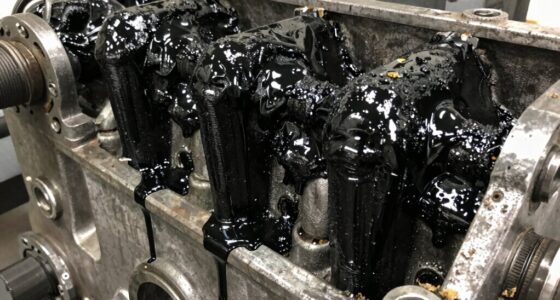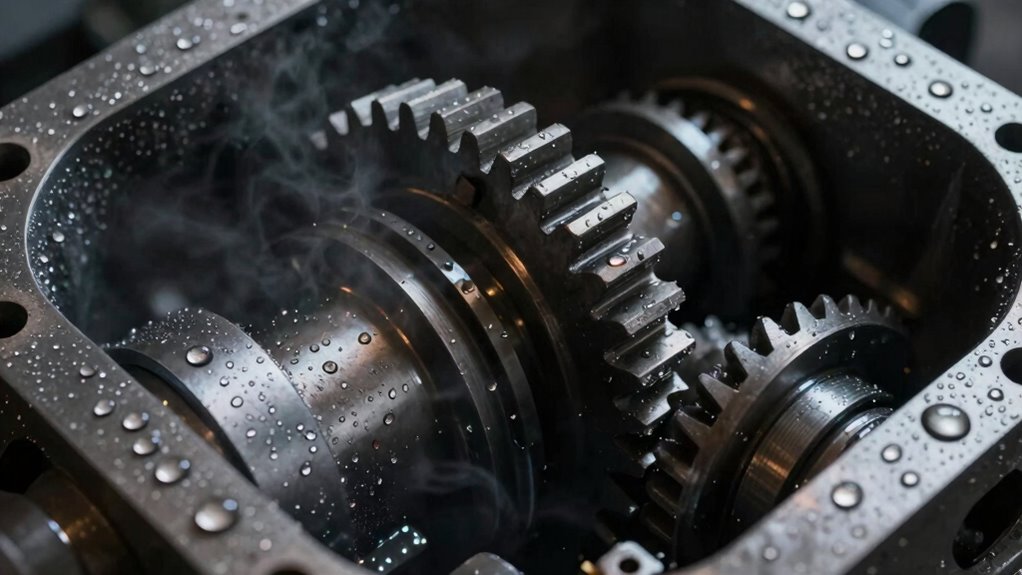

Condensation in gearboxes often stems from unexpected temperature changes and moisture entering through inadequate seals or venting, especially in humid environments. Fluctuating temperatures cause internal surfaces to cool quickly, forming water droplets and introducing moisture that can lead to corrosion and gear damage. Many overlook these sources, risking premature wear. To protect your gearboxes, it’s important to understand the actual causes and how to prevent this moisture buildup—there’s more to uncover to keep your equipment running smoothly.

Get garage and car supplies delivered free — and shop member deals
- Fast, free delivery on millions of items
- Access to Prime Big Deal Days deals on October 6–7
- Prime Video, Amazon Music and more included
Key Takeaways
- Temperature fluctuations and environmental humidity cause internal condensation, often overlooked in initial gearbox design.
- Inadequate sealing allows moist external air to contact internal components, leading to water accumulation.
- Daily temperature swings increase dew point crossing, resulting in moisture formation inside gearboxes.
- Moisture in oil reduces lubrication efficiency and promotes rust, causing long-term gear damage.
- Regular maintenance, proper sealing, and environmental control are essential to prevent unexpected condensation issues.
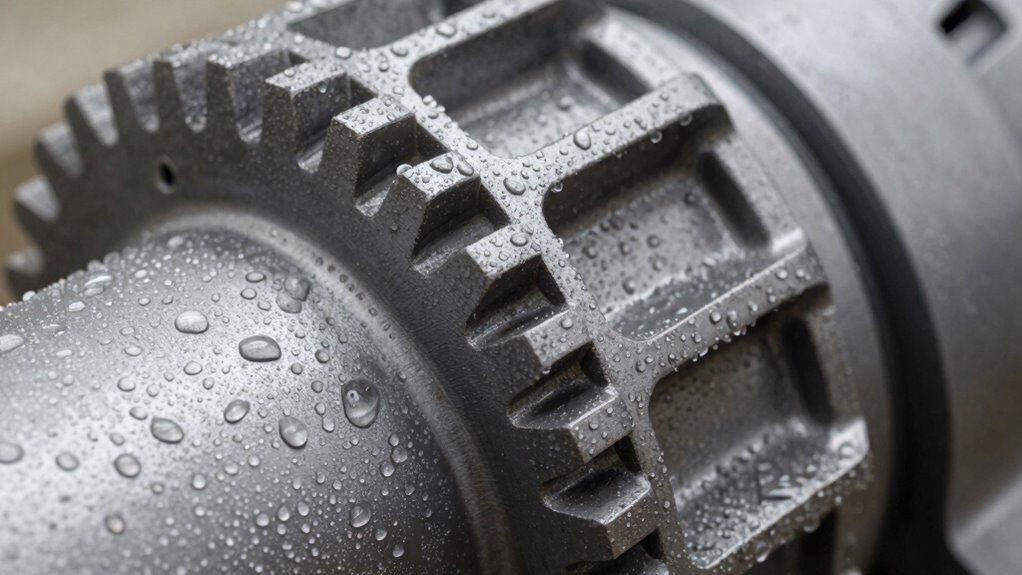
Have you ever wondered why your gearbox sometimes shows signs of moisture or corrosion? It’s a common issue that often catches operators off guard, especially since it can silently degrade performance over time. The culprit is usually condensation—moisture that forms inside the gearbox due to temperature fluctuations and environmental conditions. This moisture creates lubrication challenges because it contaminates the gear oil, reducing its ability to protect moving parts. When lubricants become diluted with water, their lubricating properties diminish, leading to increased wear, corrosion, and ultimately, premature equipment failure. Addressing this issue requires a clear understanding of how condensation forms and implementing effective maintenance strategies.
Condensation occurs when warm, moist air comes into contact with the cooler surfaces inside your gearbox. As the temperature drops, the moisture in the air condenses into water droplets on the internal components. This process can happen during daily temperature swings, especially in environments with high humidity or poor climate control. If not managed, this moisture accumulates over time, leading to corrosion of gears, shafts, and bearings. It can also cause the formation of rust, pitting, and other surface damages that compromise the gearbox’s integrity. Recognizing the signs early—such as cloudy oil, water separation in the lubricant, or visible rust—is vital for preventing more severe damage.
Condensation inside gearboxes causes corrosion, rust, and damage, especially during temperature swings and in humid environments.
Implementing maintenance strategies tailored to combat condensation is key. Regularly checking the oil for signs of water contamination is a good starting point. Using oil sample analysis or visual inspections can help detect early moisture presence. Installing breathers with moisture absorbents or desiccants can noticeably reduce the influx of humid air into the gearbox. Additionally, maintaining a stable operating temperature minimizes temperature swings, which are a primary driver of condensation. Keeping gearboxes in a controlled environment or ensuring proper sealing can also prevent moisture ingress. Some facilities employ heating elements or insulation to keep internal temperatures above the dew point, thereby reducing the likelihood of condensation forming. Regular lubrication and drainage routines help remove any accumulated water before it causes damage. Furthermore, considering the role of proper sealing and environmental control measures can significantly decrease the chances of moisture buildup inside gearboxes.
Ultimately, understanding the lubrication challenges posed by condensation and adopting proactive maintenance strategies can extend your gearbox’s lifespan. By controlling environmental factors, monitoring oil quality, and using appropriate sealing and ventilation methods, you create an environment less conducive to moisture buildup. This reduces corrosion risks, maintains ideal lubrication, and ensures your equipment operates smoothly for longer periods. Keeping an eye on these factors might seem simple, but they’re essential steps in safeguarding your machinery from the hidden, yet damaging, effects of condensation inside gearboxes.
gearbox moisture breather with desiccant
As an affiliate, we earn on qualifying purchases.
As an affiliate, we earn on qualifying purchases.
Frequently Asked Questions
How Does Condensation Affect Gearbox Lifespan?
Condensation shortens your gearbox’s lifespan by increasing humidity buildup inside it. This moisture accelerates corrosion risks, damaging gears and bearings over time. As corrosion weakens components, it leads to increased wear, failures, and costly repairs. To prevent this, you should monitor humidity levels and guarantee proper ventilation or sealing. Regular maintenance and moisture control are vital to safeguarding your gearbox against the damaging effects of condensation.
Can Condensation Occur in Sealed Gearboxes?
Think of a sealed environment like a cozy jar; even there, moisture can build up if internal humidity rises. Yes, condensation can occur in sealed gearboxes. Despite being airtight, temperature fluctuations cause the air inside to cool or warm, leading to moisture formation. This hidden dampness can damage gears over time, so it’s vital to manage internal humidity and guarantee proper venting or desiccant use to prevent condensation.
What Are the Signs of Moisture-Related Damage?
You’ll notice signs of moisture-related damage during inspections, such as rust, discoloration, or corrosion on gear surfaces. Use moisture indicators and check for unusual vibrations or noise, which can signal lubricant contamination. Regular inspection techniques, including visual checks and fluid analysis, help detect early damage. If you observe these signs, address the issue promptly to prevent further wear and costly repairs.
How Often Should I Check for Condensation?
You should perform regular inspection frequency checks for moisture detection at least once a month, especially in environments prone to humidity changes. During each inspection, look for signs of condensation such as water droplets or increased humidity inside the gearbox. More frequent checks are advisable if your equipment operates in high-moisture settings or experiences temperature fluctuations. Staying vigilant helps prevent moisture-related damage and keeps your gearboxes running smoothly.
Are There Specific Lubricants That Prevent Condensation?
You should choose lubricants with specific additives designed to prevent condensation, such as moisture-displacing or anti-corrosion additives. Synthetic oils often offer better resistance to moisture buildup compared to conventional oils, helping to minimize condensation. Using lubricants formulated with these additives guarantees your gearbox stays dry and protected, reducing the risk of rust and damage. Always check manufacturer recommendations to select the best lubricant for your equipment’s environment.
As an affiliate, we earn on qualifying purchases.
Conclusion
To prevent condensation in your gearboxes, you need to stay vigilant and address moisture sources promptly. Think of it like keeping a delicate flower dry in a humid room—you have to be proactive. Regular maintenance, proper sealing, and monitoring moisture levels can save you from costly repairs. Don’t let unseen moisture sneak in like a thief in the night; take action now to keep your gearboxes running smoothly and reliably for the long haul.
As an affiliate, we earn on qualifying purchases.
gearbox temperature control heater
As an affiliate, we earn on qualifying purchases.
As an affiliate, we earn on qualifying purchases.
Halloween Picks
halloween
As an affiliate, we earn on qualifying purchases.