
Many people miss that bearing cage failures often stem from subtle issues like improper lubrication or material fatigue. These causes lead to uneven stress, cracks, and ultimately breaking of the cage over time. You might not notice early signs, but neglecting lubrication or using worn materials considerably increases failure chances. Recognizing these hidden factors can save your machinery from costly breakdowns—keep going to uncover the full picture behind these often overlooked failure modes.
Key Takeaways
- Inadequate lubrication and contamination often go unnoticed but significantly accelerate cage fatigue and cracking.
- Material fatigue from repeated stress cycles causes microscopic cracks that are easily missed during routine inspections.
- Poor lubrication practices lead to uneven stress distribution, increasing the risk of unnoticed early cage failures.
- High operating loads and rapid rotations can cause subtle damage that is often overlooked until catastrophic failure occurs.
- Early signs like discoloration or minor cracks are frequently missed, delaying maintenance and increasing failure risk.
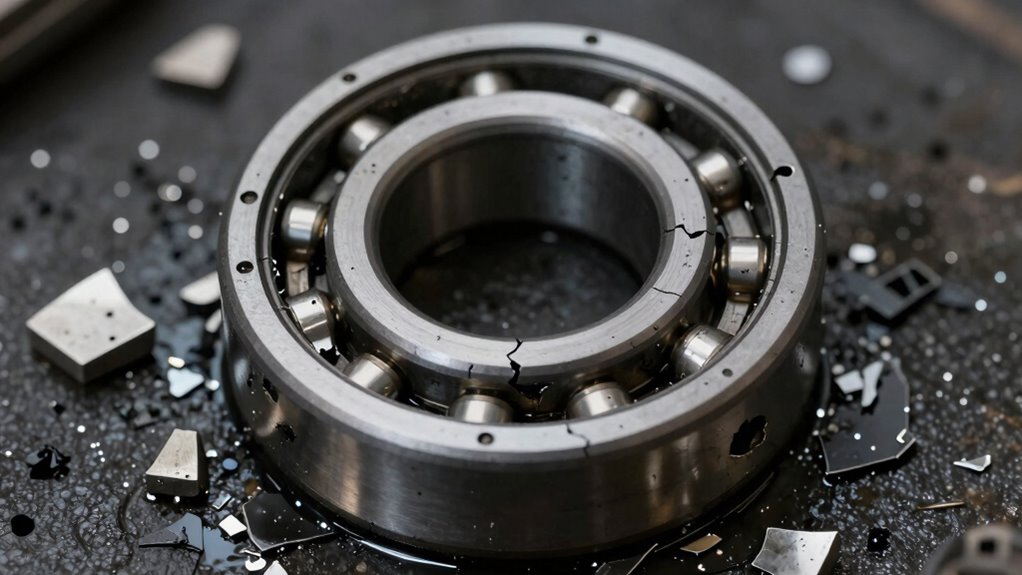
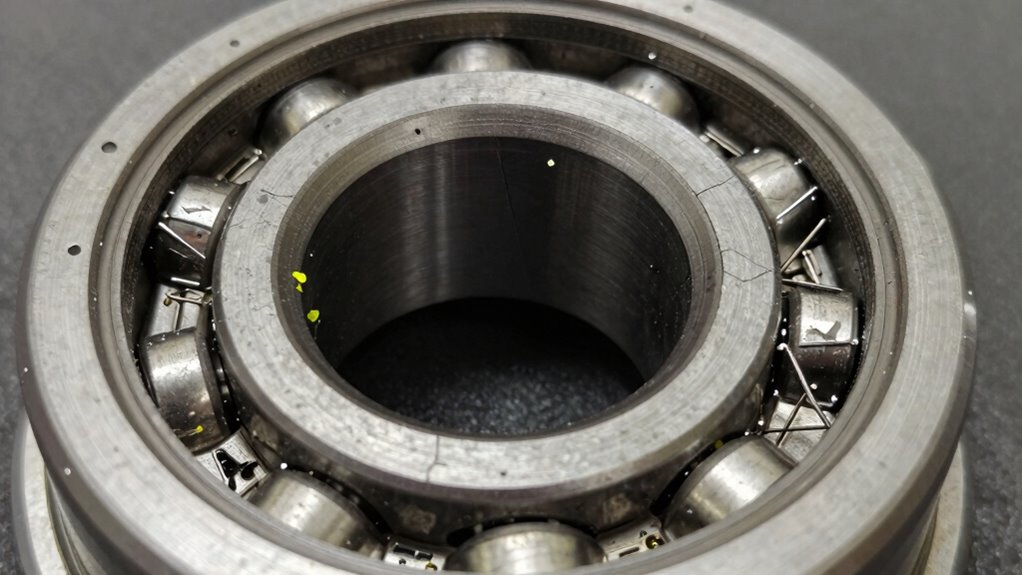
Have you ever wondered what causes bearing cage failures and how they impact machinery performance? One often overlooked factor is the combination of lubrication challenges and material fatigue. When bearings operate under demanding conditions, inadequate lubrication can lead to increased friction and heat, accelerating wear on the cage. Without proper lubrication, the cage can experience uneven stress distribution, making it more prone to cracking or fracturing over time. This deterioration might not happen suddenly; instead, it develops gradually, often going unnoticed until a failure occurs. Material fatigue also plays a pivotal role. Repeated stress cycles weaken the cage’s structural integrity, especially if the material isn’t chosen or treated properly. Over time, microscopic cracks form and propagate, causing the cage to become brittle and more susceptible to breakage. These issues often go hand in hand. Poor lubrication exacerbates the effects of material fatigue, accelerating failure rates. If you overlook lubrication challenges, you might not realize how quickly the cage can deteriorate, especially under high loads or rapid rotation speeds. The cage’s role is essential—it keeps rolling elements in position and ensures smooth rotation. When it fails, the consequences can be severe: increased vibration, noise, and ultimately, machinery downtime. Often, people focus on the bearing balls or rollers, neglecting the cage’s health, but a compromised cage can lead to catastrophic failures. Recognizing early signs of material fatigue, such as small cracks or discoloration, can help prevent sudden breakdowns. Proper lubrication practices, including using the right type of lubricant and maintaining correct application intervals, are fundamental in mitigating these issues. Additionally, selecting cage materials with high fatigue resistance and suitable properties for the operating environment can greatly extend bearing life. Regular inspections and monitoring for early signs of wear or fatigue can save you money and reduce unplanned downtime. Making sure that lubrication challenges are addressed effectively—by avoiding contamination, using appropriate lubricants, and maintaining correct lubrication schedules—supports the cage’s longevity. Remember, the failure mode people often miss isn’t just a simple breakage; it’s the slow, progressive damage caused by material fatigue compounded by lubrication issues. When these factors align, the cage becomes vulnerable to cracks and fractures that compromise the entire bearing assembly. By paying close attention to lubrication practices and understanding material fatigue’s role, you can prevent a lot of avoidable failures. Additionally, understanding the exfoliation of dead skin cells can help in maintaining cleaner, healthier surfaces in bearing environments. Taking proactive steps to manage these challenges not only improves machinery reliability but also enhances overall operational efficiency.
Liberty Oil, 4oz 100% Synthetic Oil for Lubricating Skateboard and Roller Blade Wheel Bearings
Protects, Cleans, and Lubricates Wheel Bearings
As an affiliate, we earn on qualifying purchases.
As an affiliate, we earn on qualifying purchases.
Frequently Asked Questions
How Can Bearing Cage Failures Be Detected Early?
You can detect bearing cage failures early by regularly performing vibration analysis and thermal imaging. Vibration analysis reveals abnormal patterns indicating cage issues before they escalate. Thermal imaging helps identify hotspots caused by increased friction or misalignment. By monitoring these signs consistently, you catch cage failures early, minimizing downtime and costly repairs. Incorporate these diagnostic tools into your maintenance routine for proactive bearing health management.
What Materials Are Most Resistant to Cage Failure?
You’ll find that choosing advanced composite materials for bearing cages offers remarkable resistance to failure, especially under demanding conditions. Material selection plays a vital role, and composites like reinforced polymers provide durability and lightweight strength. These cages can considerably reduce wear and tear, helping your machinery run smoothly longer. By opting for composite cages, you’re embracing innovation that safeguards your equipment’s longevity and performance, giving you peace of mind with every rotation.
Do Operating Conditions Influence Cage Failure Rates?
Yes, operating conditions considerably influence cage failure rates. High speeds, excessive loads, contamination, and lubrication issues can cause increased stress on the cage, leading to fatigue and failure. You should regularly monitor these conditions to prevent cage failure. Proper maintenance, choosing suitable materials, and ensuring ideal operating parameters help reduce the risk. By controlling these factors, you can extend bearing life and improve machinery reliability.
How Does Lubrication Impact Cage Longevity?
Think of lubrication as your bearing’s shield, protecting its delicate cage. Proper lubrication regimes ensure smooth operation, reducing friction and wear, which extend cage longevity. If contamination effects sneak in, they can compromise this shield, causing premature failure. Without adequate lubrication, the cage suffers from increased stress and heat, leading to cracks or breakage. Regular maintenance and choosing the right lubrication are your best defenses to keep the cage robust.
Are Certain Bearing Designs More Prone to Cage Failure?
You’ll find that certain bearing designs, especially those with specific design variations, are more prone to cage failure. These vulnerabilities often stem from manufacturing flaws or suboptimal design choices, like inadequate clearance or material selection. By understanding how design variations influence stress distribution and potential flaws, you can select bearings that are less susceptible to cage failure, improving overall durability and performance.

Nextpal 12 Pcs Bike Wheel Ball Bearings, Retainer Cages 3 Sizes for Front Rear Hub Wheel and Bottom Bracket at-Home, Bicycle Repair Maintenance Parts Ensuring Smooth Rolling
Durable Steel and Lubrication: Crafted from durable steel, these bearing retainers are built for strength and longevity. For…
As an affiliate, we earn on qualifying purchases.
As an affiliate, we earn on qualifying purchases.
Conclusion
You might think bearing cage failures are straightforward, but sometimes, the tiniest overlooked detail causes the biggest surprise. It’s ironic how a simple overlooked crack or misalignment can go unnoticed until it suddenly leads to complete failure, just when you least expect it. So, stay vigilant—what seems minor today could be the critical coincidence that saves your machinery tomorrow. Sometimes, it’s those small, missed signs that make all the difference in preventing unexpected breakdowns.

QYvtsor Fishing Reel Maintenance Tool Set – Bearing Inspection Testing Stick & Repair Tackle Tools, Ideal for Reel Bearing Checks & Repairs During Fishing Gear Maintenance
Premium Aluminum Alloy Construction: This fishing reel maintenance tool is made of high-quality aluminum alloy, ensuring solid performance…
As an affiliate, we earn on qualifying purchases.
As an affiliate, we earn on qualifying purchases.

Vibrometer, High-precision Digital Vibration Analyzer Tester, 0.1~199.9M/s² Peak, 0.1~199.9mm/s Effective Value, with Long and Short Probes, for Preventive Inspection Of Mechanical Equipment Failure
Accurate range: Accurate range ensures more accurate measurements and minimizes measurement errors
As an affiliate, we earn on qualifying purchases.
As an affiliate, we earn on qualifying purchases.